Bug Spray in a Southern June
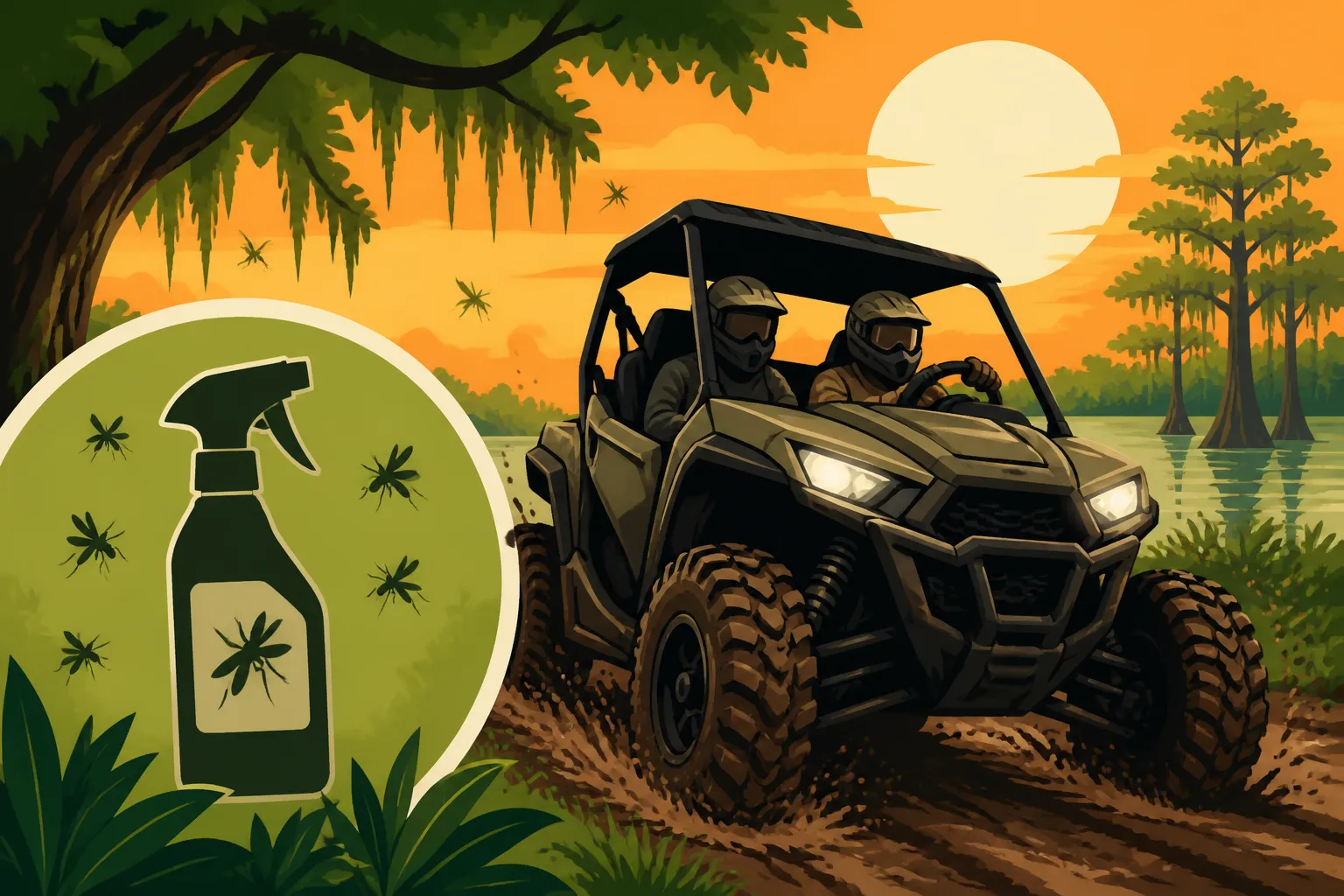
A June ride in Mississippi can turn miserable fast when mosquitoes swarm at the staging area, ticks cling to brush, and sweat washes your protection away. The answer is more than spraying once before you leave home. This guide explains how to choose and use repellents, protect clothing and skin, and build bug checks into an ATV or UTV riding day.
Why bugs are part of a Mississippi June ride
Heat, humidity, and habitat work together
In June, riding conditions can mean heavy humidity, damp ground, and plenty of vegetation along the route. Mosquitoes are especially frustrating when you stop to unload, take a break, or regroup. Ticks and chiggers are more likely to be a concern when riders brush against grass, leaf litter, and low vegetation. A ride that feels fine while you’re moving can become uncomfortable when everyone is standing around a trailhead.
That is why bug protection should be part of your ride plan, not something you remember only after the first bite. Check your gear before loading the trailer, and consider where you will spend time off the machine. A shaded lunch stop or a slow wait at a gate can leave you exposed much longer than the ride itself.
Weather and trail conditions can change how much contact you have with vegetation. If recent rain has left trails wet or overgrown, check local conditions before you go. Mississippi Trail Conditions After Rain can help you think through how weather affects the day, while Packing for Southern Humidity covers other comfort issues that tend to show up alongside biting insects.
Know which protection solves which problem
A repellent applied to exposed skin can help deter certain biting insects, while treated clothing can provide another layer of protection. Neither approach is a reason to ignore ticks, chiggers, or mosquitoes entirely. Repellents work best when you select a product labeled for the intended use and follow its directions closely.
A useful way to think about your kit is to pair prevention with routine checks. Repellent may reduce exposure, long sleeves can limit bare skin, and a tick check can catch an insect that has made it past those measures. No single step replaces the others.
| Riding situation | Practical protection | What to remember |
|---|---|---|
| Unloading or taking a break | Use a skin repellent according to its label and cover exposed skin with clothing where practical | Reapply only as directed, especially if you sweat heavily |
| Riding through brush or tall grass | Wear long sleeves, long pants, and closed footwear | Tuck clothing where practical and check for ticks afterward |
| Hot, sweaty ride | Carry the repellent in a secure, accessible place | Sweat and rubbing can affect protection; follow the product label |
| Youth riders | Choose a product suitable for the child’s age and have an adult apply it | Follow age limits and application instructions on the label |
| Camp or trailhead stop | Reduce standing time in exposed areas and inspect clothing | Don’t assume a bite-free ride means you have no ticks |
For a longer trip, a route and stop plan can help reduce unnecessary time lingering in brushy or wet areas. Some riders use onX Offroad to plan where they expect to ride and mark a meeting or stopping point, so the group is less likely to spread out and wait in an exposed spot. Keep a separate paper or offline backup if your route depends on reliable navigation.
Choosing and applying bug spray safely
Read the label before choosing a repellent
Look for a repellent labeled for the insects you want to deter and the way you plan to use it. Common active ingredients in skin repellents include DEET, picaridin, and oil of lemon eucalyptus. Products differ, so don’t assume every formula is suitable for every rider, age group, or use. The label is the place to check which insects the product is intended to repel, how to apply it, and when to reapply.
For a group ride, it’s tempting to buy one bottle and pass it around without much thought. Instead, check that the product is appropriate for each person who will use it. A product suitable for an adult may have different directions or restrictions for a child. If someone in the group has sensitive skin, allergies, or a history of reactions, read the label carefully and consider asking a healthcare professional or pharmacist about a suitable option.
Avoid choosing a product based only on a promise that it lasts “all day.” Riding in Mississippi heat can involve sweat, water, dust, and repeated wiping of the face and neck. The product’s instructions—not a guess based on the bottle’s front label—should guide when and how it is reapplied.
Apply repellent without coating everything
Use skin repellents only as directed. Apply them to exposed skin and, when the label allows, clothing. Don’t spray under clothing, onto cuts or irritated skin, or directly onto a child’s hands. To apply repellent to the face, put it on your hands first and then spread it carefully, avoiding eyes and mouth. Wash your hands afterward.
If you are also using sunscreen, follow the directions for both products. A common practical routine is to apply sunscreen first and repellent afterward, but check the product labels rather than assuming every combination works the same way. Combination sunscreen-and-repellent products can make reapplication confusing because sunscreen and repellent may have different directions.
Keep sprays away from food, water bottles, and vehicle controls. Apply them outdoors or in a well-ventilated area, and let treated skin or clothing dry before settling into the seat. If the product gets into your eyes or causes a reaction, follow the label’s first-aid instructions and seek medical help when needed.
Treat clothing differently from skin
Some products are designed for clothing or gear rather than direct application to skin. Permethrin products, for example, are intended for treating clothing or equipment according to their labels; they should not be applied to skin. Use the product only for the purpose stated on the packaging, and allow treated items to dry as directed before wearing or handling them.
Long sleeves and pants can also limit the amount of exposed skin, but they need to be comfortable enough to wear in the heat. Lightweight, breathable clothing may be more realistic than thick layers for a humid riding day. Choose garments that cover the legs and arms, and use closed-toe footwear with socks. After the ride, change out of dusty or damp clothes rather than wearing them around camp or home.
Keep treated items separate from clean clothing and food. If you treat garments before a trip, follow the product’s instructions for application, drying, storage, and washing. Don’t improvise by spraying a chemical onto your body, seat, or machine unless the label specifically allows that use.
Build a bug-smart routine into the ride
Before leaving home
Start with a quick check of the day’s plan. Confirm the riding area is open, review any posted restrictions, and think about how much time the group will spend walking, unloading, or standing at stops. Mississippi National Forest Riding Explained is a useful starting point for understanding that riding access depends on the specific area and its rules. At the trailhead, read posted notices and follow instructions about permitted routes and closures.
Pack repellent where you can reach it without unloading half the trailer. Put it in a sealed bag or compartment away from food and water. Bring clean clothing for after the ride, a small mirror if useful, and a way to remove a tick promptly. If the group includes children, make sure an adult is responsible for applying and carrying their repellent rather than leaving the bottle in a shared gear pile.
A map can make the plan easier to communicate, especially when people arrive separately or a group has several machines. Riders who use onX Offroad can mark a meeting spot and discuss where the group intends to stop before leaving the staging area. That can help avoid a long, unplanned wait while someone tries to figure out where everyone is. Always check the map against posted signs and local rules; a mapped route is not automatically an authorized route.
During the ride and at stops
Reapply only as directed on the product label. If the ride is long, assign someone to check the time and remind the group when the label indicates another application may be needed. Don’t spray while riding, near hot parts, or where the product could drift onto another person’s face. Stop in a safe place, get off the machine, and apply it carefully.
Try to choose break spots that are not right against tall grass or thick brush. Keep food and drinks covered, and avoid setting helmets, gloves, or jackets directly on the ground. These habits won’t eliminate insect contact, but they can reduce the amount of time gear sits in vegetation where insects may be present.
It also helps to agree on a regrouping point before riders separate. A navigation tool such as onX Offroad may help a group coordinate around a planned location, but the important part is having a clear plan everyone understands. Keep the group together where practical, communicate before changing routes, and don’t let a rider who feels unwell or overwhelmed by insects fall behind without anyone noticing.
After the ride
Do a tick check as soon as practical after leaving the trail. Check clothing and gear first, then inspect skin, including the scalp, behind the ears, under arms, around the waist, behind knees, and other warm or covered areas. Parents should check children, and riders may need help checking places that are hard to see. Showering and changing clothes can make the post-ride routine easier, but still examine your skin carefully.
If you find a tick attached, remove it promptly using fine-tipped tweezers if available. Grasp it close to the skin and pull steadily without twisting or crushing it. Clean the bite area and your hands afterward. If you develop concerning symptoms or have questions about a bite, contact a healthcare professional. Keep an eye out for unusual irritation or a rash as well; not every bite looks the same.
Inspect socks, cuffs, gloves, and riding gear before bringing them indoors. Wash or dry clothing according to its care instructions, and clean equipment as appropriate. These steps are easy to skip when everyone is tired and eager to head home, so make them part of the unload routine rather than an afterthought.
Make protection fit your group and riding area
Take extra care with children and new riders
Children may have different product restrictions from adults, so check the repellent label for age guidance before applying it. Adults should handle application and keep the product out of children’s hands. Don’t apply repellent to a child’s palms or near their eyes and mouth. For younger riders, clothing coverage and frequent checks can reduce reliance on repeated skin applications.
Set expectations before the group starts. Tell young riders to speak up if they feel bites, itching, dizziness, or irritation rather than quietly enduring it. Build a brief check into rest stops, especially after riding through brush or tall grass. If the day includes children who need closer supervision, Mississippi Trails for Kids can help you consider whether a riding area and outing are a good fit for your group.
Match the plan to the place
Bug protection is only one part of a comfortable, responsible ride. Public areas, private parks, wildlife management areas, and private land can have different access rules and expectations. Don’t assume a road or path is open simply because it appears on a map or because another rider used it previously. Check the relevant manager’s guidance and follow signs at the entrance and along the route.
If you’re choosing a stop or route for a group, use the same care you would with any other ride plan: confirm access, tell someone where you’re going, and keep a backup plan if conditions change. onX Offroad can be one tool for organizing a planned route or identifying a point to meet, but it should not replace local verification, posted directions, or permission from a landowner.
Before loading, consider the basics: repellent suited to the group, appropriate clothing, water, a safe place to stop, and a plan for tick checks afterward. That small amount of preparation can make the difference between spending the whole afternoon swatting and being able to enjoy the ride.
Disclaimer
This article is for general informational purposes only and does not constitute professional advice. Laws, prices and regulations vary by location and change over time. Consult a qualified professional for guidance on your specific situation.