Mississippi Trails for Kids
A family ride can go sideways before the engine even starts: a trail may be too wide for a child’s machine, too muddy for a new rider, or subject to age rules you didn’t know to check. This guide helps Mississippi families choose a sensible place to ride, prepare kids for the trail, and avoid common safety and access surprises.
Choosing a Mississippi riding area for kids
Start with the trail, not the machine
A child who is comfortable on a familiar field may feel overwhelmed by a wooded trail with roots, ruts, blind corners, or adult riders approaching from the other direction. Before choosing a destination, think about the youngest or least experienced rider in your group. A short, easy route with room to stop is usually a better first outing than a long loop chosen for its scenery or mileage.
Mississippi has public and private riding options, but they aren’t interchangeable. Public-land access may be limited to designated routes, while private parks set their own entry rules, age limits, and riding conditions. Start by checking the site’s official information and contacting the managing office or park if anything important is unclear. For an overview of public-land access, see [Mississippi National Forest Riding Explained](Mississippi National Forest Riding Explained).
Bethel OHV Trail is one Mississippi public riding area families may investigate, but don’t assume that every route there will suit every child or machine. Check current access information, trail conditions, and any width restrictions before loading up. [Bethel OHV Trails in Mississippi](Bethel OHV Trails in Mississippi) is a useful starting point, along with [Best Mississippi ATV Trails for Beginners](Best Mississippi ATV Trails for Beginners) and [Bethel's Width Limit in Mississippi](Bethel's Width Limit in Mississippi).
If you use a mapping app such as onX Offroad to plan, treat it as a planning aid, not permission to ride. Confirm that the route is open and authorized with the land manager or park. App maps can help you understand where a route appears to go, but they do not replace posted signs, gate closures, or local rules.
Compare trail settings before you commit
A beginner-friendly outing doesn’t have to mean a particular named trail. It means choosing a setting where your child can ride at a manageable pace and where the adults can supervise without trying to keep up with faster groups. A private park may have different route options or facilities than a public trail system, but it may also have its own age, waiver, or equipment requirements.
Use this comparison to decide what to ask before you leave home:
| Riding setting | What may work well for a family | What to confirm before the trip |
|---|---|---|
| Public OHV trail | A marked route and a chance to learn trail etiquette | Open status, allowed machine width, access rules, and age requirements |
| Private riding park | Park-specific rules and facilities that may suit a planned day out | Minimum ages, waiver requirements, route difficulty, fees, and operating conditions |
| Designated public-land roads | A defined route when riding is permitted there | Whether the road is open to OHVs and whether any seasonal or land-management restrictions apply |
| Private property with permission | Familiar surroundings and greater control over the pace | The owner’s permission, boundaries, hazards, and whether the route is appropriate for the child |
A map can make a route look simple while hiding the details that matter to a new rider: a steep or slippery section, a busy junction, a narrow bridge, or a stretch where there’s no easy place to pull over. When using onX Offroad or another mapping tool, look for route context and nearby access points, then verify that information with the property manager or official trail information. Don’t let a colored line on a screen make the decision for you.
For families who want to camp as part of a trip, confirm that the riding area and campground actually connect in a way that allows your machine to travel between them. A nearby campground is not automatically an authorized riding route. See [Mississippi Trails With Camping](Mississippi Trails With Camping) for more planning considerations.
Preparing children and machines for the ride
Match the machine to the rider
A child should be able to reach and operate the controls comfortably, understand how to stop, and manage the machine’s weight at low speed. The right fit is not determined by age alone. A machine that is too large or powerful can make small mistakes harder to correct, while an undersized machine can still be unsafe if the child cannot control it confidently.
Before heading to a trail, practice in a permitted, open area away from traffic and obstacles. Begin with starting and stopping, gentle turns, and controlled braking. Show the child how to shut off the engine and what to do if the machine stalls. Keep practice sessions short enough that fatigue doesn’t turn a calm lesson into rushed riding.
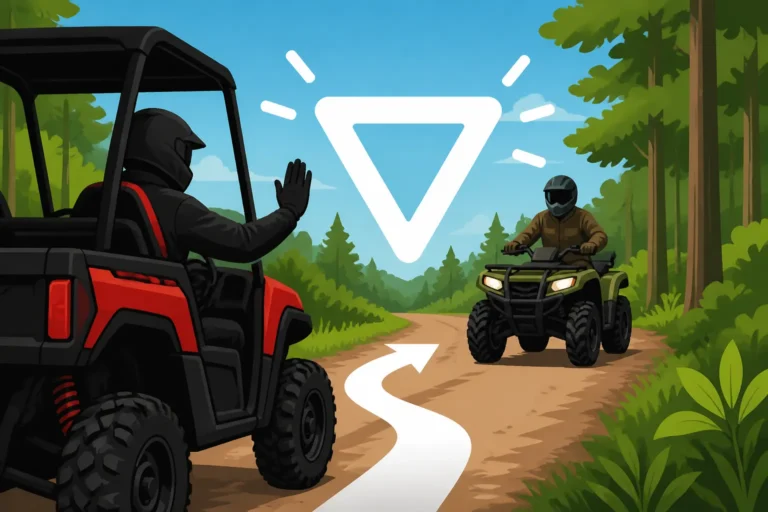
An adult should stay close enough to supervise and intervene, while giving the child enough space to learn at a controlled pace. On a group ride, agree on simple signals and a plan for stopping. Make sure the child knows not to ride out of sight, follow another machine through a confusing turn, or try to keep up with a faster rider. For a practical overview of expectations, read [Mississippi Rules for Riders Under 16](Mississippi Rules for Riders Under 16).
Check safety equipment and rules before arrival
A helmet that fits properly is essential, and other protective gear—such as eye protection, gloves, long sleeves, long pants, and sturdy over-the-ankle footwear—can help reduce the chance of scrapes and injuries. Gear should fit the child, not merely be available in an adult size. Loose clothing, unsecured straps, and footwear that can slip off are poor choices around a machine.
Rules can vary by land manager and riding venue. Before traveling, ask what identification, safety training documentation, helmets, or other equipment are required for a young rider. Mississippi’s requirements for young riders are worth checking alongside any additional park rules; [Mississippi Riders Under 16 Need a Safety Certificate](Mississippi Riders Under 16 Need a Safety Certificate) offers a focused starting point. State parks and private parks may have their own requirements too, so don’t assume that meeting one set of rules covers every location. See [Mississippi State Park Helmet Requirements](Mississippi State Park Helmet Requirements) and [Mississippi Private Park Age Minimums](Mississippi Private Park Age Minimums).
A quick pre-ride check can catch problems that are easy to miss at home. Inspect tires, brakes, throttle return, lights if needed, and any visible damage. Confirm that the child understands the route and knows where the group will stop. If the machine has been sitting for a while, or has recently been through mud or water, check it more carefully before putting a young rider on it.
Planning a calmer family ride
Keep the first outing short and flexible
A good first ride is one your child finishes feeling capable—not one that proves how much ground the family can cover. Plan a modest route, build in breaks, and be willing to turn around early. Heat, noise, rough terrain, and the concentration required to operate a machine can wear children down faster than adults expect.
Set the pace based on the youngest rider, not the most experienced adult. Keep enough distance between machines to avoid dust and sudden stops, but stay close enough to communicate. At intersections or confusing spots, stop together and regroup before continuing. Explain in advance that passing, racing, and riding beyond the agreed route are off-limits.
Check weather and trail information before leaving and again before you unload. Rain can change the feel of a route, especially for a child who is still learning to manage slippery ground. Mud can conceal ruts, rocks, and other hazards. If the trail is closed or conditions look beyond the group’s ability, choose another activity rather than trying to push through. [Mississippi Trail Conditions After Rain](Mississippi Trail Conditions After Rain) has more on why conditions deserve a fresh check.
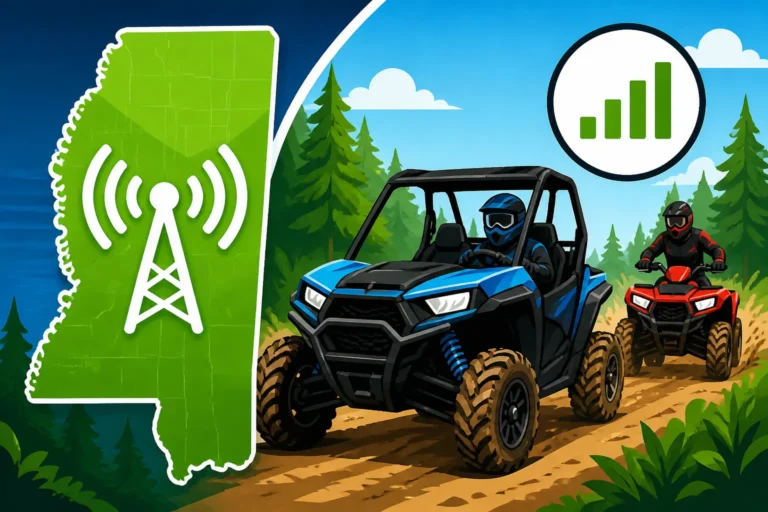
If you rely on onX Offroad while planning, download or review the information you’ll need before you enter an area where phone service may be unreliable. Carry a backup plan, such as a paper map or written directions, and agree on where to meet if the group gets separated. A phone map is helpful, but it should not be the only way your family knows where it is going.
Teach trail habits as part of the outing
Children learn a lot from watching adults. Slow down near other riders and at intersections, give people room, and follow posted instructions. Stay on authorized routes rather than cutting around a muddy section or riding around a closed gate. Explain why those choices matter: leaving the route can damage land, create conflicts, and put the family somewhere it is not allowed to ride.
Before the ride, talk through what your child should do if another machine approaches, if they lose sight of the group, or if their machine stops. A simple plan—stop in a safe place, turn off the machine if needed, and wait for the adult—can prevent a child from making a stressful situation worse. Review [Mississippi Trail Etiquette Locals Expect](Mississippi Trail Etiquette Locals Expect) for additional reminders about sharing riding areas respectfully.
Build the day around breaks rather than treating them as an interruption. Stop for water, check that helmets and gear are still comfortable, and ask how the child is feeling. If they seem frightened, unusually tired, or unable to focus, end the ride or take a longer break. A child who is ready to stop should never be pressured to continue just because the group planned a longer loop.
A practical family checklist
Before loading the trailer
Call or check official information for the riding area. Confirm that it is open, that your machine is allowed, and that the route suits the least experienced rider. Ask about age limits, required training or documents, helmet rules, waivers, and whether there are any temporary closures. If answers are unclear, get clarification before making the drive.
Check that each child’s machine fits and is in working order. Pack properly fitted helmets and protective clothing, water, snacks, basic first-aid supplies, and any required papers. If your route depends on a phone app such as onX Offroad, check the map beforehand and keep a backup way to navigate. Avoid planning a route that requires the child to ride beyond their comfort level just to get back to the vehicle.
A short checklist helps prevent the familiar parking-lot scramble:
- Confirm access, opening status, and trail restrictions.
- Verify the machine’s fit and basic mechanical condition.
- Pack correctly sized protective gear and water.
- Review the route and stopping points with the child.
- Agree on regrouping signals and what to do if separated.
- Recheck weather and conditions before unloading.
During and after the ride
At the trailhead, read posted signs rather than relying only on what you were told earlier. Conditions and access can change, and a sign at the entrance may contain instructions that aren’t shown on a general map. If a route looks unsafe or is marked closed, don’t use it.
During the ride, give your child frequent chances to speak up. Ask whether the pace feels comfortable and whether they want to stop. Keep the group together and avoid letting an experienced rider disappear ahead. If the child is struggling with the terrain, turn around or choose an easier route if one is permitted.
Afterward, check the machine for mud, loose parts, or damage, and talk about what felt easy or difficult. That conversation helps you choose a better next outing—perhaps a shorter route, more practice, or a different riding area. The goal is not to finish every trail; it’s to help kids build sound habits and enjoy riding without being pushed beyond their ability.
Disclaimer
This article is for general informational purposes only and does not constitute professional advice. Laws, prices and regulations vary by location and change over time. Consult a qualified professional for guidance on your specific situation.