Mississippi Rules for Towing a Trailer
You've got your trusty ATV or UTV, and you know it's a workhorse. Whether you're hauling deer out of the woods, moving feed across the farm, or bringing tools to a remote job site, hooking up a trailer just makes sense. It’s incredibly tempting to think about using that powerhouse to haul things on the road, too. But here in Mississippi, the rules around towing a trailer with your off-road machine, especially concerning public roads, can be a real head-scratcher and frankly, a bit frustrating for folks who just want to get work done. This guide is here to untangle all that confusion, breaking down exactly what Mississippi law says about using your ATV or UTV to pull a trailer, and how you can do it safely and legally where it's allowed.
The Core Reality: No Public Road Towing for ATVs/UTVs
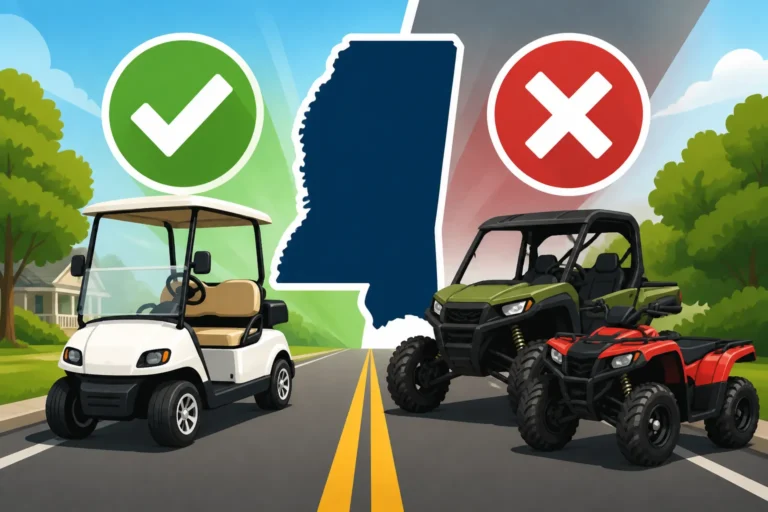
Let's cut right to the chase, because this is where a lot of riders hit a brick wall of frustration. In Mississippi, the state law is exceptionally clear and, frankly, quite restrictive when it comes to operating ATVs and UTVs on public roads. And if your machine isn't allowed on the asphalt, neither is the trailer it's pulling.
Understanding Mississippi's Broad Road Ban
Mississippi’s state law makes very few exceptions for ATVs and UTVs on public roads. The general rule is simple: if it's a public street, highway, or thoroughfare, your off-road machine doesn't belong there. This isn't just a suggestion; it's the law. The legal framework, particularly [Mississippi Code Section 63-31-3], classifies ATVs and UTVs as "off-road vehicles," which are explicitly restricted from public road use.
This fundamental ban has huge implications for towing. Think about it this way: if the vehicle itself is prohibited from public roads, then anything it’s connected to or pulling is also, by extension, prohibited. You can’t skirt the law by attaching a trailer; the moment your ATV or UTV rolls onto a public road with or without a trailer, you’re in violation. This means no hauling a small utility trailer loaded with firewood down the county road to your camp, and certainly no pulling a loaded equipment trailer to a neighbor's place if it involves even a short stretch of public street. It’s a bitter pill to swallow for many, especially those who rely on their machines for work or property management.
The Distinction: Private Land vs. Public Thoroughfare
Now, here’s where we find some breathing room: these strict rules apply only to public roads. When you're on private land, whether it’s your sprawling farm, a vast timber company tract where you have permission, or a designated off-road riding park, the story changes entirely. On private property, you generally have the freedom to use your ATV or UTV to tow whatever it's designed to pull, as long as you stay within the machine’s capabilities and the landowner's specific rules.
This distinction is absolutely crucial. On your own land, or land where you have explicit permission, you can hook up that utility trailer and haul all sorts of things. We’re talking about moving bags of feed to the barn, bringing tools out to a fence line, hauling a downed deer back to camp, or even transporting dirt and debris for landscaping projects. These are the scenarios where the utility of your ATV or UTV truly shines, and where towing a trailer is a completely legal and practical solution. This is where your off-road machine becomes an invaluable asset, transforming from a recreational vehicle into a hard-working utility vehicle. Just be aware that this freedom does not extend to public roads; there’s [Mississippi Has No Farm Road Exception] for ATVs that would allow you to take it on the street for agricultural purposes.
Safe and Smart Towing Practices on Private Land
Since public road towing is pretty much out of the question for ATVs and UTVs in Mississippi, our focus rightly shifts to doing things safely and smartly on private land. This is where you'll actually be doing the bulk of your trailer hauling, and taking the right precautions can prevent accidents, damage to your machine, and costly repairs.
Knowing Your Machine's Limits
Before you even think about hitching up a trailer, you absolutely must get intimately familiar with your specific ATV or UTV's towing capabilities. Every machine has a rated towing capacity, a maximum tongue weight, and often specific recommendations for braking when hauling heavier loads. This vital information is always found in your owner's manual – don't just guess or assume! Overloading your machine is a dangerous gamble that can lead to a host of problems.
The dangers of exceeding these limits are very real. You could lose control of your machine, especially on inclines, declines, or uneven terrain. Overloading puts immense strain on your engine, transmission, brakes, and suspension system, potentially causing premature wear or catastrophic failure. Imagine trying to pull a utility trailer brimming with wet gravel or a heavy implement with a smaller sport quad; that's a recipe for disaster, not just for your machine but for your personal safety. Machines are categorized by size and weight, like those [50 Inches Wide and 1,000 Pounds Dry] or the larger [65 Inches and 2,000 Pounds], and their towing capacities vary significantly. Always know what your specific model can handle. If you're serious about heavy hauling, investing in components from a reputable brand like SuperATV, such as heavy-duty hitches, reinforced axles, or suspension upgrades, can certainly enhance your machine's durability and capability on private land, but they still don't magically increase the manufacturer's stated towing capacity. Always remember, even the best aftermarket parts can't defy the laws of physics or common sense.
Essential Trailer Safety Tips
Once you understand your machine's limits, it's time to apply some crucial safety practices every time you hook up a trailer on private land. These tips are about making sure your load gets from point A to point B without drama or damage. First and foremost, proper hitching is non-negotiable. Ensure your hitch receiver is clean and free of debris, and that the hitch pin is fully inserted and secured with a cotter pin or clip. For heavier loads or trailers that might detach, even on private land, consider using safety chains that cross under the trailer tongue and attach to the ATV/UTV frame – this can prevent a runaway trailer if the primary hitch fails.
Next, load distribution is critical. Always place heavier items directly over the trailer axle. This balances the weight, reducing excessive tongue weight that can lift the front end of your ATV/UTV, or negative tongue weight that can lift the rear. Secure your load with straps, ropes, or nets to prevent shifting during transit, especially over bumpy ground. A shifting load can cause instability, making your machine harder to control. Think about braking considerations too: a heavy trailer significantly increases your stopping distance. Anticipate turns and stops, and apply brakes smoothly and gradually. When descending hills, use a lower gear to allow engine braking to help control your speed, reducing strain on your brakes. Speed control is another major factor; even if you're on your own property, slow down when towing. Your ATV/UTV handles very differently with a loaded trailer behind it, especially on uneven or slippery surfaces. Always be mindful of the added length and width of your setup when turning, making wider arcs to avoid jackknifing or clipping obstacles. Ensure your visibility isn't compromised by the trailer or its load; if it blocks your view, adjust your mirrors or consider a spotter. When carrying a firearm, be mindful of [Mississippi Rules for Carrying a Rifle] and ensure it's securely stored and unloaded.
When a Trailer Might See a Public Road (Under Very Specific Conditions)
This is a section where we need to be extremely cautious, because the exceptions are few and far between, and often misunderstood. The general rule against ATVs and UTVs on public roads in Mississippi is quite rigid, and it applies equally to towing. However, people often wonder about specific, limited scenarios.
Crossing a Public Road
One of the most common questions riders have is about simply crossing a public road to get from one section of private property to another. It seems like a reasonable request, right? You’re not trying to ride down the road, just across it. Unfortunately, under Mississippi state law, even a brief crossing is technically considered operating your ATV or UTV on a public road, and thus, it's generally prohibited. The law is concerned with any use on the public right-of-way.
While some local ordinances – rules put in place by individual cities or counties – might carve out very specific, limited exceptions for certain types of vehicles (like golf carts or Low-Speed Vehicles, LSVs), these rarely extend to ATVs or UTVs, especially when towing. These local ordinances are often highly detailed about the exact type of vehicle allowed, the streets they can use, and even the speed limits. For ATVs and UTVs, [Mississippi Local Ordinances Are the Only Path] to any public road access, and even then, such ordinances are few and far between, and almost never permit towing. So, before you even consider such a maneuver, you absolutely must check with the specific local authorities (county sheriff, city police, or town clerk) for that exact stretch of road. Don't assume anything, because assuming could lead to a citation for [Mississippi Fines for Road Riding] or even worse, an accident.
Agricultural Use & Farm Tags (Often Misunderstood)
It's a common misconception that if you're using your ATV or UTV for agricultural purposes, perhaps pulling a small sprayer or a seed spreader, you automatically get an exemption to use it on public roads. Many states have specific "farm use" provisions that allow certain agricultural vehicles, including sometimes ATVs or UTVs, limited access to public roads for farm-related tasks. However, Mississippi’s state law for ATVs and UTVs is quite strict and generally does not provide a blanket farm use exemption for public road operation, especially for towing.
While farm trucks and tractors often have specific plates or exemptions, the legal definition of [What the Law Counts as an Off-Road Vehicle] for ATVs and UTVs in Mississippi usually places them outside these traditional agricultural vehicle categories when it comes to public road use. The temptation to think that having a "farm tag" for another vehicle, or just being a farmer, allows you to tow with your quad on the road is strong, but unfortunately, it doesn't align with state law. The rule of thumb remains consistent: if it’s a public road, state law usually prohibits your ATV or UTV, and by extension, anything it’s towing. This can be particularly frustrating for farmers who have land divided by a county road and need to move implements or materials short distances. For specific guidance on your situation, especially if you hold a [Mississippi Title for a Farm Machine], your best bet is always to consult directly with your county tax collector’s office or the local Department of Public Safety.
| Scenario | ATV/UTV on Public Road? | Towing a Trailer on Public Road? | Key Considerations |
|---|---|---|---|
| Direct Road Use | No (State Law Prohibition) | No (State Law Prohibition) | [Mississippi Bans ATVs on Public Roads]. This is the fundamental rule. |
| Crossing a Road | Generally No | Generally No | Technically considered "on the road." Rare local exceptions exist but are highly specific and unlikely for towing. |
| Agricultural Use | No (State Law Prohibition) | No (State Law Prohibition) | [Mississippi Has No Farm Road Exception] for ATVs/UTVs. |
| Designated WMA Roads | Yes (Specific Rules Apply) | Yes (Within WMA Rules) | On Wildlife Management Areas, ATVs/UTVs can use designated roads, and thus may tow within WMA guidelines. |
| Private Land Use | Yes (Not a public road) | Yes (Within Machine Limits) | This is where towing is fully permissible and practical. Adhere to safety guidelines. |
Disclaimer
This article is for general informational purposes only and does not constitute professional advice. Laws, prices and regulations vary by location and change over time. Consult a qualified professional for guidance on your specific situation.