State Parks Allow Passengers Only on Factory Seats
A passenger may fit on the back of a quad, but that does not make the spot a legal or safe seat. At Mississippi state parks, passengers are allowed only in factory seating positions. Knowing what counts as a passenger seat—and checking the park’s other rules before you travel—can prevent a denied entry or a risky ride.
What “factory seats only” means
A factory seat is a seating position the manufacturer designed as part of the machine’s passenger-carrying setup. It is not simply any flat area where someone can sit. A rear cargo rack, fender, cooler mount or improvised perch does not become a passenger seat because a rider can balance there.
The rule is about the machine’s intended configuration, not how many people can physically squeeze onto it. A vehicle may have ample room for an extra person and still be designed for one rider. Likewise, having a passenger seat does not mean the machine can carry more people than its stated capacity.
This matters for both ATVs and UTVs, though their seating arrangements differ:
| Machine setup | What to check | Passenger takeaway |
|---|---|---|
| Single-rider ATV | Manufacturer’s seating design and capacity | Do not carry a passenger on the rack or behind the seat |
| Two-up ATV | Whether it has a manufacturer-designed passenger position | Use only that position and stay within the machine’s capacity |
| UTV or side-by-side | Number of designated seats and the restraint arrangement | Each passenger needs an intended seat; do not add riders beyond the designed capacity |
| Modified machine | Whether changes affect or obscure the original passenger setup | Ask park staff before arrival if the seating arrangement is unusual |
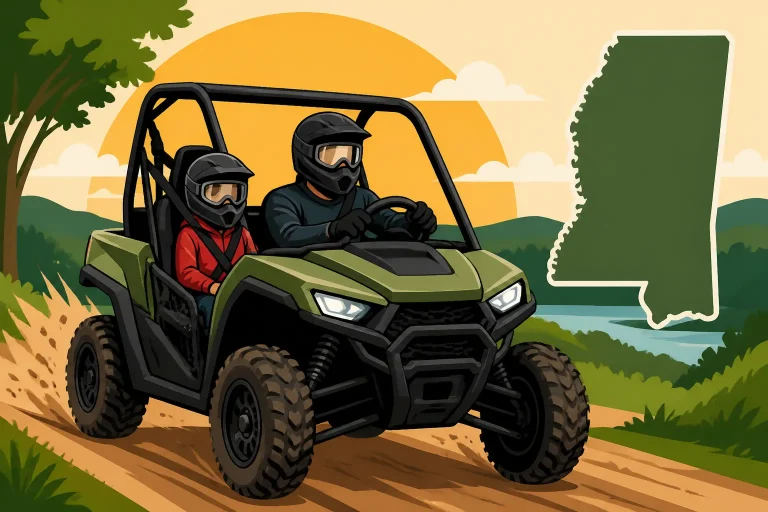
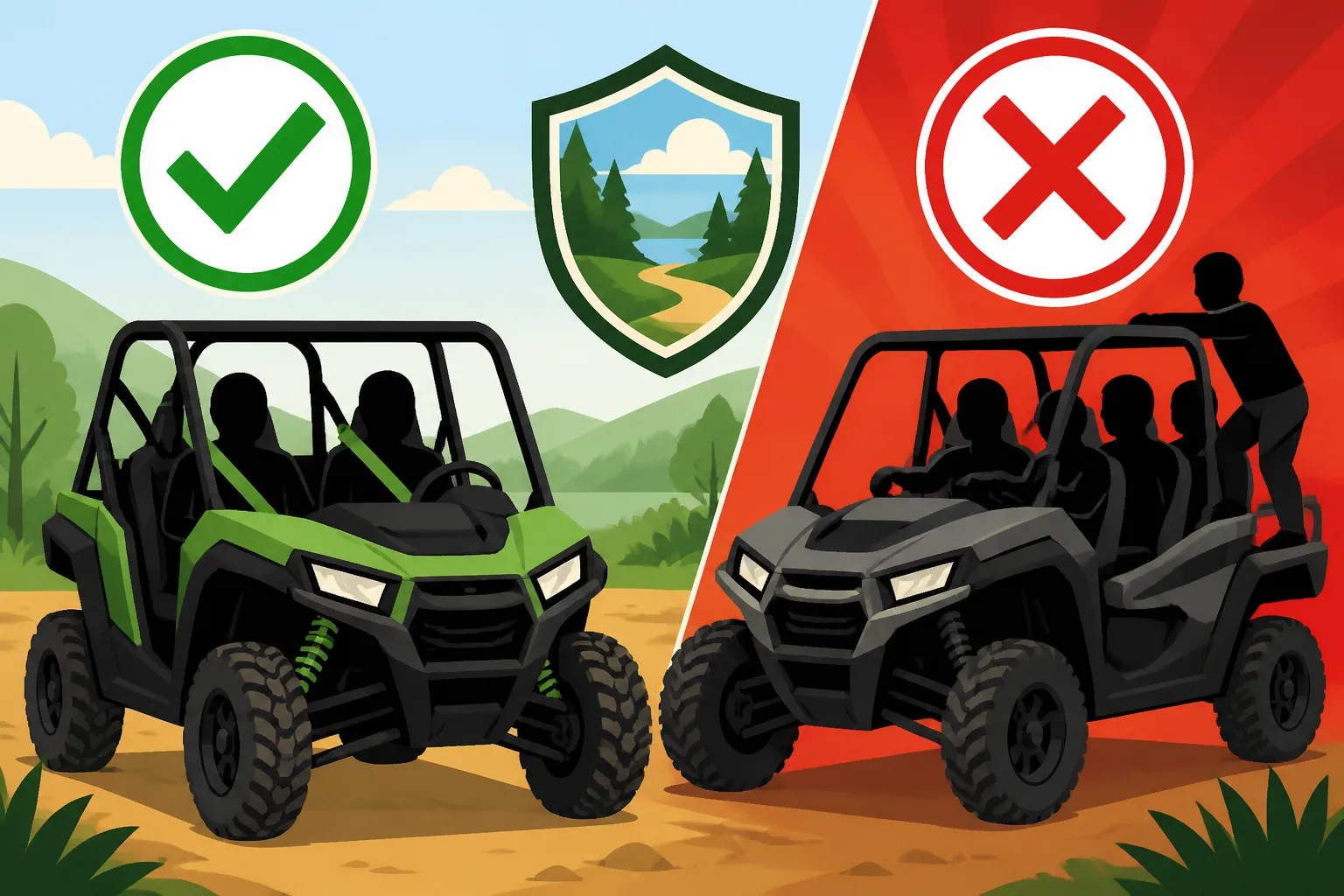
A passenger position should be recognizable as part of the machine’s intended layout. On an ATV designed for two people, that may include a separate rear seat and passenger handholds or footrests. On a side-by-side, it means an actual designated seat—not a cargo bed, lap space between occupants or an added seat that has not been approved by the park.
When in doubt, check the owner’s manual, manufacturer information or seating label, then ask the park. A seller’s statement that a machine “can take two” is not as useful as documentation showing that it was built for two riders. If the machine has been modified, do not assume the original passenger capacity still applies.
The factory-seat rule is only one part of park access. A machine with enough factory seats may still be prohibited at a particular park, trail or facility. Before planning a trip, check Which Mississippi State Parks Allow Machines and the broader Mississippi State Park ATV Rules. A riding permit, waiver or other entry requirement does not turn a cargo rack into an approved passenger seat.
How to tell whether your machine can carry a passenger
Start with the manufacturer’s intended seating capacity. Look for the owner’s manual, model specifications, vehicle labels or other manufacturer documentation. Confirm the exact model and configuration: two models that look similar may have different seating designs, and an aftermarket accessory may not change the machine’s approved capacity.
For an ATV, inspect the passenger area rather than judging by available space. A genuine two-person design typically provides a seat intended for a passenger and appropriate places for that person to hold on and place their feet. A rack may be useful for carrying gear, but it is not a substitute for a seat. If the ATV has only one designed seating position, plan for one rider.
For a UTV, count the designated seating positions and check the manufacturer’s capacity. A rear cargo bed is for cargo unless the vehicle is specifically configured and approved to carry passengers there. Do not count a seat belt alone as proof that an added position is acceptable; the seat, restraint and vehicle configuration all matter. If a previous owner added seats or altered the cabin, ask the park whether that setup will be accepted.
The park’s passenger rule also does not replace the machine’s own operating guidance. A passenger can change a machine’s balance, handling and braking. On an ATV, an extra rider can make it harder for the operator to shift weight, especially on uneven ground or turns. On a UTV, extra occupants or poorly secured passengers can create hazards during a sudden stop, a rollover or travel over rough terrain.
Use this practical check before loading:
- Identify the exact make, model and configuration.
- Confirm the manufacturer’s passenger capacity in the manual or reliable manufacturer material.
- Check that every person has a designated seat and that the machine is not overloaded.
- Ask the park about any aftermarket seating or unusual modifications.
- Confirm the park’s rules for passenger age, helmets, restraints and supervision.
A child’s ability to reach the footrests or sit securely is a separate safety concern from whether a seat is factory-installed. Do not assume that a child can ride simply because the machine has a passenger position. Review the park’s age and safety requirements, including Mississippi State Park Age Proof and Mississippi Safety Certificates for Young Riders. If the child cannot sit securely, keep their feet in the intended position and hold on as the manufacturer directs, the machine is not a suitable ride for them.
For broader guidance on passengers outside the state-park setting, see Mississippi Rules for Passengers on a Quad. Park requirements may be stricter than general rules, so use the park’s current instructions for the specific visit.
Check park requirements before you travel
Passenger seating is not a general admission ticket to ride. First confirm that the park or riding area allows the type of machine you plan to bring. Then check requirements for the route, operator, passengers and equipment. Rules can differ between facilities, and a machine permitted in one riding area may not be allowed in another.
When you contact the park, describe the machine plainly: the make and model, whether it is an ATV or UTV, its factory seating capacity, and any changes made to the seats or restraints. If the passenger position is not obvious, take clear photos of the seat area and have the manual available. That gives staff a concrete question to answer instead of relying on an uncertain description such as “two-seater.”
Ask about these points before setting out:
- Whether the facility allows your machine type and configuration
- Whether passengers are permitted on that route or in that area
- Whether children have additional age, supervision or safety-certificate requirements
- What helmet and protective-equipment rules apply
- Whether a waiver or other check-in step is required
- Whether the machine needs to meet any equipment or noise requirements
- What proof of seating capacity or ownership you should bring
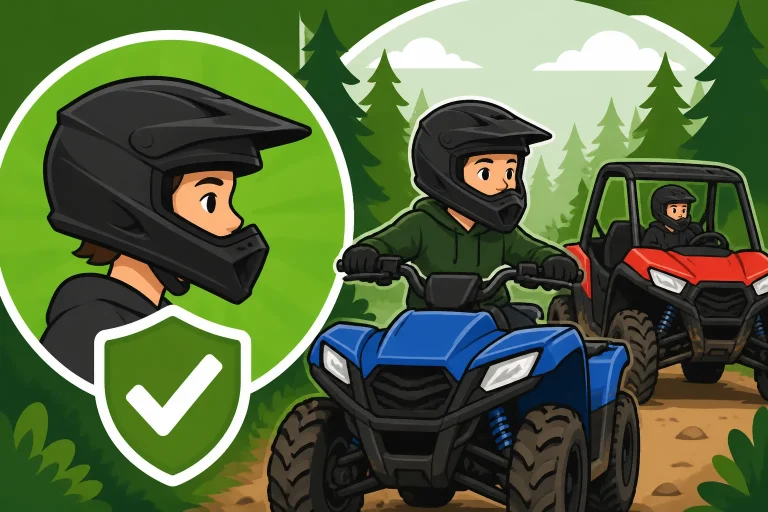
Park paperwork and passenger permission are separate issues. Completing a waiver does not guarantee that every passenger or machine configuration is allowed. Review Mississippi State Park Waiver Requirements and Mississippi State Park Waiver Steps so that check-in requirements do not catch you by surprise. Also confirm the park’s current helmet instructions; the state-park rule may apply to every rider, not only younger passengers. The related overview is State Parks Require a Helmet for Every Rider.
Do not rely on a rule from a private riding park, another state or a previous visit. A visitor’s machine may be treated differently under the facility’s own conditions, and a park may change access or close an area. Check directly with the park shortly before you leave, especially if the trip depends on a particular trail or modified machine. If you are visiting from outside Mississippi, confirm any visitor-specific requirements rather than assuming that paperwork accepted elsewhere applies.
If your machine does not have a factory passenger seat
If the machine is designed for one rider, the safest plan is to ride one person per machine. Do not solve the problem by sitting a passenger on a rack, standing them on a footboard, or fitting a homemade perch. Those arrangements can make the machine unstable and are not a substitute for a factory passenger position under the park rule.
If you have a UTV with fewer seats than your group needs, arrange another properly equipped machine or reduce the number of riders. Avoid exceeding the seating capacity to keep everyone together. An extra passenger can affect vehicle control, and someone riding in a cargo area may have no appropriate restraint or protection.
An aftermarket seat creates a question to settle before arrival, not at the gate. A replacement component that restores the original seat may be different from a modification that adds a passenger position. Do not assume the distinction will be obvious to park staff. Send the park the model details and photos, explain what was changed, and ask whether the setup meets its requirements. If staff cannot confirm that it qualifies, plan as though the added position will not be accepted.
If you arrive and discover that a passenger setup does not comply, do not try to persuade someone to ride on a rack or in the cargo bed. Ask staff whether there is a safe, permitted alternative. Depending on the facility’s rules and available arrangements, that may mean leaving a rider behind, changing the group’s plans or returning with a different machine. A wasted trip is frustrating; an avoidable injury is worse.
The simple rule is useful: every passenger needs a real, manufacturer-intended seat, and every machine must stay within its designed capacity. Confirm that the park allows the machine, ask about any modified seating, and check the other passenger and safety requirements before you load up. That small check helps make sure the ride begins with everyone in an appropriate place.
Disclaimer
This article is for general informational purposes only and does not constitute professional advice. Laws, prices and regulations vary by location and change over time. Consult a qualified professional for guidance on your specific situation.