Helmets Are Required Under 16 on Forest Land
A helmet rule can be easy to miss when you are focused on passes, trail widths, and getting a machine to the forest. In Mississippi National Forests, riders under 16 must wear a helmet on designated motorized trails. Here is how to understand that requirement, keep it separate from pass rules, and prepare before the ride.
Where the helmet rule applies
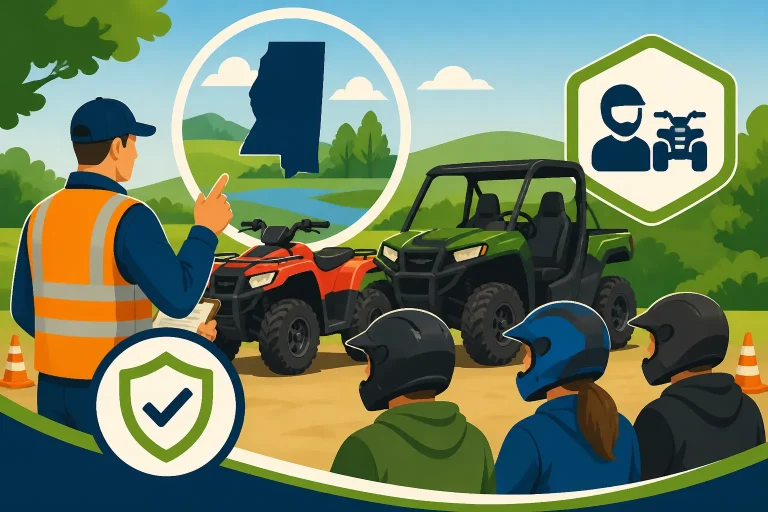
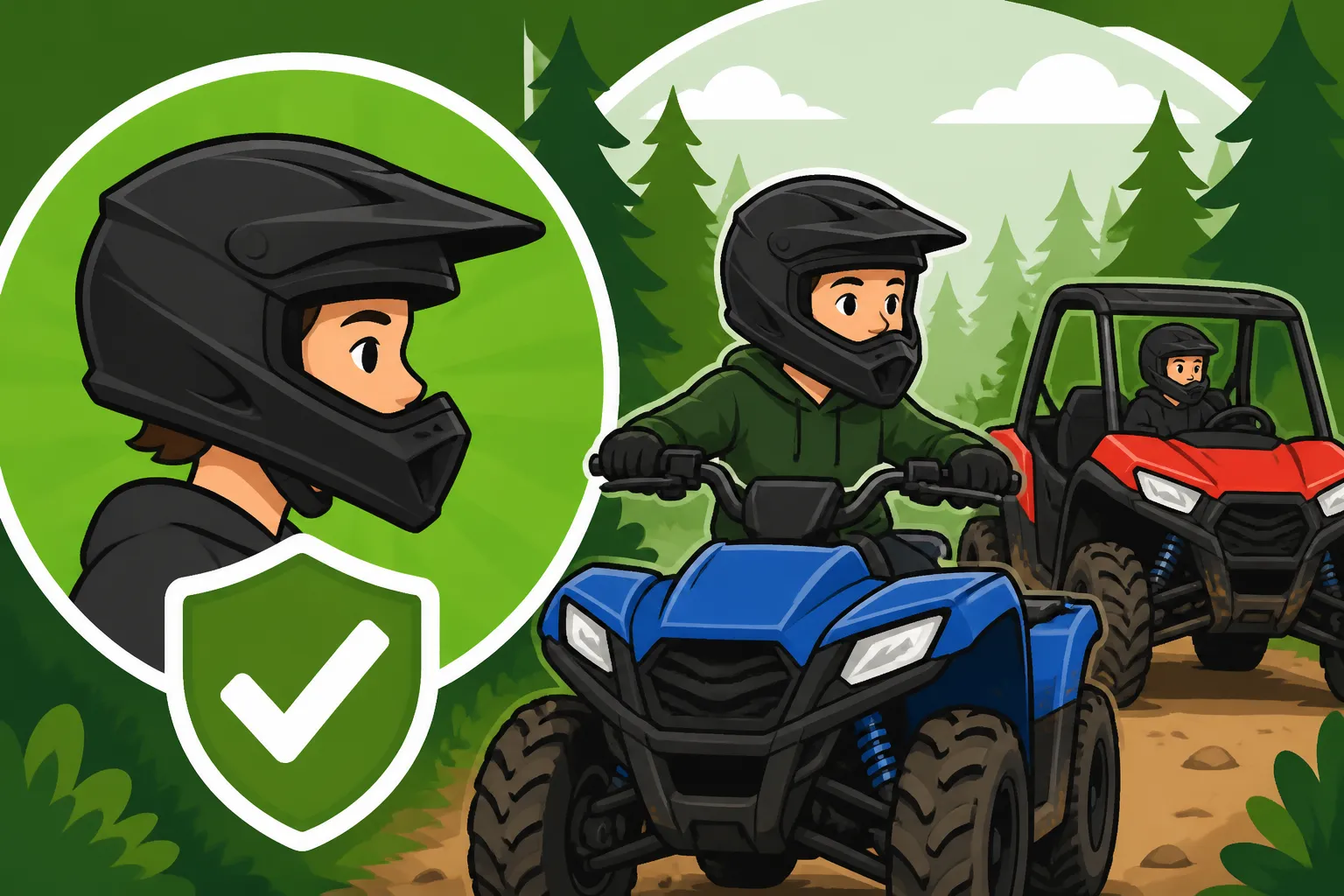
According to the USDA Forest Service, riders under 16 are legally required to wear a helmet on designated motorized trails in National Forests in Mississippi, including Rattlesnake Bay and Bethel OHV Trails. That is the key point for families planning a forest ride: the stated requirement is tied to the rider’s age and to riding a designated motorized trail.
This article focuses on that specific forest-trail rule. It does not establish helmet requirements for every kind of public land, private riding area, road, or other setting. Rules can differ by location, so check the requirements for the place where you will ride rather than assuming that a forest rule applies everywhere. For broader age-related riding questions, see Mississippi Forest Rules for Riders Under 16.
It also helps to keep a helmet obligation separate from permission to ride. A pass may cover access to certain trails, but it does not replace safety requirements. Likewise, having a helmet does not authorize riding on an undesignated route or a trail that is closed. Before loading up, confirm both that the trail is open to your machine and that each rider has the required equipment.
The word “under” matters when you are checking whether the rule applies to a young rider. If there is any uncertainty about how a particular rider’s age is treated or what documentation a ranger may ask for, contact the relevant Forest Service office before the trip. Do not rely on a retailer’s product description or a general riding checklist to answer a local rules question.
For a practical family plan, treat the helmet as required equipment for every rider covered by this rule, not as an optional item to decide about at the trailhead. That gives you time to check fit, replace a damaged or poorly fitting helmet, and make sure the rider is comfortable wearing it before the ride begins.
Helmets, passes, and trail access are separate checks
A common planning mistake is to treat a pass as if it settles every access and safety question. It does not. The pass concerns trail use under its terms; the helmet rule concerns the rider. A family may need to check the pass, the machine’s width, the trail’s current status, and the rider’s equipment independently.
The Forest Service lists the Mississippi Adventure Pass and the Mississippi Annual Forest-wide OHV Pass as special passes for National Forests in Mississippi. The annual OHV pass is for trails open to vehicles 50 inches wide or less, according to the Forest Service. That width condition is not a substitute for checking which trails are designated, open, and suitable for your particular machine. For more on what a pass covers, see Mississippi Forest Pass Coverage and Mississippi Trails With Width Limits.
| What to check | What the Forest Service information says | What to do before riding |
|---|---|---|
| Helmet | Riders under 16 must wear a helmet on designated motorized trails in National Forests in Mississippi. | Make sure each covered rider has a properly fitting helmet before leaving home. |
| Annual OHV pass | The Mississippi Annual Forest-wide OHV Pass allows use of trails open to vehicles 50 inches wide or less. | Confirm that the machine and intended trail fit the pass terms. |
| Pass cost | The Forest Service lists the annual pass at $60 as of November 2026. | Check with the Forest Service for current pass details before buying. |
| Trail conditions | The Forest Service closes motorized vehicle trails when conditions are wet to prevent trail damage and erosion into streams. | Check current conditions shortly before travel and be ready to change plans. |
| Trail location | Designated OHV riding areas are listed on several ranger districts. | Verify the specific trail, district, and access information for your destination. |
The Forest Service also offers a 50% discount on any National Forests in Mississippi Pass for holders of the Interagency Senior Pass, Interagency Access Pass, Golden Age Passport, or Golden Access Passport. If you hold one of these passes, confirm the current purchase procedure and what documentation is needed before you arrive. For general budgeting and pass questions, see Mississippi Forest Pass Cost.
The amount paid for a pass does not answer whether a trail is open today. The Forest Service closes motorized vehicle trails when conditions are wet to prevent trail damage and erosion into streams. A trail that appears on a map or was open during a previous visit may therefore be unavailable when you plan to ride. Check conditions close to departure, and avoid treating a closed trail as an invitation to find an alternate route through the woods.
For a wider overview of riding in the national forests, Mississippi National Forest Riding Explained can help you plan the access questions alongside the equipment checklist. Keep the two decisions distinct: confirm your access, then confirm that each rider has what the rules require.
Finding designated riding areas and checking conditions
The Forest Service lists designated OHV trail riding areas across several ranger districts. On the Chickasawhay Ranger District, the listed area is the Little Tiger ATV/Motorcycle Trail. On the De Soto Ranger District, the listed areas are the Bethel OHV Trails and Rattlesnake Bay ATV Trail. On the Tombigbee Ranger District, the listed area is the Chickasaw ATV/Motorcycle Trail.
Those names can help you narrow down a destination, but they are not a guarantee that a particular route is open or appropriate for every machine. Check the current Forest Service information for the district and trail you intend to visit. Pay attention to trail designations, vehicle limits, closures, and any local instructions before you unload.
Wet-weather closures deserve particular attention in Mississippi. According to the Forest Service, motorized vehicle trails close when conditions are wet to prevent trail damage and erosion into streams. That means a rainy forecast or recent rainfall can affect your plan even if conditions at home seem fine. Check trail status before you make a long drive, and check again if weather changes while you are traveling.
A useful pre-trip routine is to:
- Identify the designated trail area and the ranger district it is in.
- Confirm the trail is currently open and that your machine fits the trail and pass terms.
- Make sure every rider covered by the under-16 rule has a helmet that fits securely.
- Keep a backup plan in mind in case wet conditions lead to a closure.
- Recheck official conditions before unloading, rather than relying only on an older map or a previous visit.
For more help with the day-of check, see Checking Trail Conditions Before You Load the Trailer. It is especially useful to make the status check part of your departure routine, since trail access can change with conditions. If your destination is one of the listed areas, confirm its current status directly rather than assuming that the area is open simply because it appears in Forest Service information.
Choosing and preparing a helmet for a young rider
The rule is only useful if the helmet is on the rider and fits properly. A helmet that slides around, pinches, or blocks the rider’s view can be difficult to wear for the full outing. Give the young rider time to try it on before the trip, with the same head covering they expect to wear on the trail.
Check the helmet’s condition, fit, and fastening system. It should sit securely rather than rock freely or tip back when the rider moves. Have the rider fasten the chin strap and practice wearing the helmet before setting out. If the helmet is damaged, has an uncertain history, or no longer fits, do not assume it is suitable simply because it looks intact.
When buying a helmet, prioritize a product intended for the type of riding and make sure the sizing information matches the rider’s measurements. If shopping online, including through Amazon, compare the manufacturer’s fit guidance and return conditions before ordering; a helmet that does not fit should not be kept just because it arrived in time for the ride. For any uncertainty about which helmet types or standards the Forest Service accepts, ask the relevant ranger district rather than guessing from a product listing.
A comfortable fit also makes it easier for a young rider to keep the helmet on consistently. Check that it stays secure when the rider turns their head and that the straps remain fastened. Bring the helmet along even if the weather is warm; do not make the decision to wear it depend on the length of the planned ride or how familiar the rider is with the trail.
Finally, use a simple departure check for every rider in the group. Confirm the helmet is present, fits, and is fastened before riding onto a designated motorized trail. Then check that the trail is open and that the machine meets the access conditions. Keeping those checks separate helps avoid the mistaken assumption that a pass, a prior visit, or a quick ride automatically settles the safety and access requirements.
Sources
- Forest Service — National Forests in Mississippi | Passes | Forest Service (checked November 3, 2026)
- USDA Forest Service — National Forests in Mississippi | Bethel OHV Trails (checked November 3, 2026)
Disclaimer
This article is for general informational purposes only and does not constitute professional advice. Laws, prices and regulations vary by location and change over time. Consult a qualified professional for guidance on your specific situation.