Mississippi Hunting Club Riding Rules
A hunting-club membership or invitation does not automatically mean every machine, rider, or route is allowed. Mississippi riders need to separate the club’s land-use rules from state and public-land rules, then get clear permission before unloading. This article explains what to confirm with the club, how rules change on public land, and how to avoid common riding and hunting-season conflicts.
Start With the Club’s Permission and Written Rules
A Mississippi hunting club may own land, lease it, or have permission to use property controlled by someone else. Those arrangements can set different boundaries on who may ride, where machines may go, and when access is allowed. A membership card, guest invitation, or hunting permission is not necessarily permission to use an ATV or UTV.
Before riding, ask the club officer or land contact who can authorize machine use. Get the answer from someone with authority over the property, not only from another member who assumes the route is open. If the club operates under a lease, the lease may limit vehicle access even if club members have broad hunting access. See What a Hunting Lease Says About ATV Use for the kinds of restrictions worth checking.
Ask for the current rules in writing, or at least have the responsible person confirm them by message. That makes it easier to distinguish an approved route from a trail that was never meant for recreational riding. It also helps when club membership changes or a landowner updates access conditions.
Questions to ask before bringing a machine
Confirm the following details before you load the trailer:
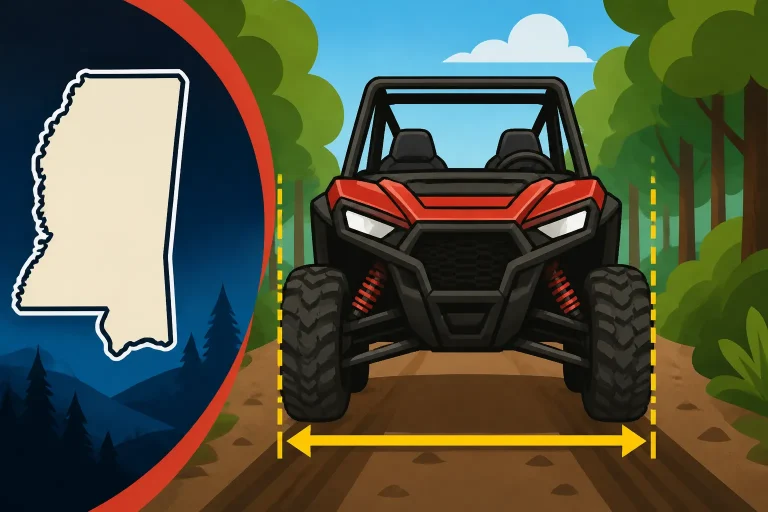
- Which machines are allowed? A club may allow a small ATV for reaching a stand but prohibit a wider side-by-side, or allow utility machines only for work.
- Who may ride? Ask whether permission covers members only, household members, guests, children, or hired workers.
- Which routes are open? Find out whether approved access means marked trails, established roads, food-plot routes, or only a specific path to a permitted destination.
- When may you ride? Hunting days, quiet periods, active logging, fire restrictions, wet conditions, or scheduled club events may change access.
- What work is authorized? Permission to retrieve a game animal or carry gear does not automatically allow recreational laps, trail clearing, towing, or hauling materials.
- Are there machine or equipment limits? Ask about width, noise, lights, tires, speed, passenger seating, and any required safety equipment.
- Is a gate code or key required? Ask how gates should be handled and whether they must remain locked after each passage.
- Who should be contacted if plans change? Get a name and a reliable way to reach the club contact or land manager.
These details matter because permission can be narrow. An invitation to hunt may cover walking access but not motorized access. Permission for one person’s machine may not extend to a guest’s machine, and a landowner may authorize a club to use roads while retaining control over other parts of the property.
If the club uses a lease, ask whether its rules allow guests to ride and whether a landowner’s approval is needed. A written statement can clarify whether you may operate a machine at all, not just whether you may enter the property. For more on getting permission, see Written Permission From a Southern Landowner.
Membership rules are not the same as state law
Club rules can be stricter than state law. A club may ban a type of machine, set a lower speed, limit riding to certain hours, or close a trail during hunting season. Those are access conditions to follow even if a machine could otherwise be operated somewhere else.
The reverse is also true: a club cannot make a prohibited public-road ride lawful simply by approving it. Private permission applies to the property the club controls; it does not automatically extend onto a county road, city street, public hunting area, or neighboring parcel. Mississippi’s road restrictions are a separate issue. Check Mississippi Rules for Riding a County Road before assuming a route between club properties is open to ATVs or UTVs.
Treat a club map as an access tool, not a legal boundary survey. If a route reaches a public road, levee, wildlife management area, or another owner’s land, stop and confirm the rules for that adjoining area.
Private Hunting Club Land Is Different From Public Hunting Land
A hunting club may use private land, but not every place that looks like hunting land is private. A wildlife management area, national forest, state park, public road, or levee can have its own access rules and managing authority. A club’s permission cannot replace a permit or satisfy restrictions imposed by a public-land manager.
This distinction is especially important when club members hunt on or travel near public land. Do not assume that a nearby road is open because the club has permission to use its own roads. Public-land rules may limit machine use to designated routes, require a pass, or prohibit riding in particular areas. Review Mississippi WMA Riding Rules and Mississippi WMA Designated Roads Only if a wildlife management area is part of the trip.
A visitor arriving from another state should also avoid assuming that a registration sticker, permit, or riding practice from home transfers to Mississippi. The requirements depend on where the machine will be operated. Private-club access, public-land access, and road use are different questions. For visiting riders, Mississippi Visitors From Alabama and Mississippi Visitors From Louisiana explain why it is worth checking the local rules rather than relying on another state’s system.
| Where you plan to ride | Whose permission or rules matter | What to confirm |
|---|---|---|
| Private club property | Landowner, leaseholder, or authorized club contact | Whether your machine, riders, route, and dates are approved |
| Wildlife management area | The managing authority and applicable public-land rules | Designated routes, closures, permits, and hunting-related restrictions |
| National forest or state park | The land manager | Whether OHV riding is allowed there and what pass or safety rules apply |
| County road or city street | State law and any applicable local rules | Whether the machine may legally use or cross the road |
| Neighboring private property | That property’s owner or authorized manager | Separate permission; club access does not carry over |
Do not treat a club’s customary route as proof of public access. A trail may have been used for years but still cross a boundary, follow a road that has since closed, or pass through land where the club has no current permission. Check signs and gates, and ask the contact responsible for the property when a boundary or route is unclear.
Permission also does not necessarily include permission to enter a wildlife management area behind a gate, ride a levee, or cross a public area to reach another part of a lease. If you need public land for access, confirm its rules separately. Mississippi Hunting Land Access by Machine and Mississippi Trespass Law for Riders are useful starting points when the route may extend beyond club property.
Set Rules for Riders, Guests, Machines, and Hunting Season
A club’s written rules work best when they cover people as well as machines. A member may understand which trail is open, while a guest may not know the boundaries or the club’s expectations around hunters, gates, noise, and wildlife. Give every rider the same instructions before the group starts.
For guests, identify who is responsible for the invitation and whether that person must ride with them. Ask the club whether a guest may bring their own machine or must ride as a passenger on an approved machine. Do not assume that a guest’s permission follows the member’s permission without limit.
Children and teenagers need special attention. Confirm the club’s age limits, supervision requirements, and machine-size rules. State or public-land requirements may apply in addition to club policy, so check [Mississippi Rules for Riders Under 16] before bringing a young rider. A parent’s approval does not override a club’s age restriction or the requirements of the land manager.
For passengers, use only a machine designed and equipped for the number of people riding. A club’s general permission to bring a UTV does not make every passenger arrangement safe or acceptable. Ask whether passengers are allowed, and follow the manufacturer’s seating and restraint instructions.
Hunting-season access deserves a separate conversation. A route used for maintenance in one month may be too disruptive during a hunt. Agree on whether riding is allowed during active hunting hours, around stands or blinds, near food plots, or while other members are in the field. Ask whether machine access changes during a particular season or on a club event day. See Mississippi Hunting Season and Trail Access for broader context about seasonal access.
Practical club rules can address:
- Speed: Set a conservative limit near camps, parking areas, hunters, and shared routes.
- Noise: Require riders to avoid unnecessary revving and to respect any machine or muffler limits.
- Visibility: Decide what lights or reflective gear are expected when riding early, late, or in poor visibility.
- Passengers: Make clear who may ride and which machines have approved passenger seating.
- Recovery and work: State who may operate a winch, clear a trail, move a barrier, or retrieve a machine.
- Gates: Specify whether gates must be closed and locked immediately after passing.
- Damage: Explain how to report ruts, broken signs, damaged fences, or a downed tree.
- Alcohol and impairment: Establish a clear expectation that riders must not operate while impaired.
- Emergency contacts: Identify whom to call if there is an injury, collision, fire, or property damage.
A machine can also create problems even when the rider stays on an approved route. Wet ground may rut easily; a wide UTV may damage a narrow trail; a loud exhaust may disrupt a hunt; and a shortcut around a muddy section can widen a track into vegetation or a neighboring parcel. If conditions are poor, ask whether the club wants the trail left unused rather than trying to make it passable.
A pass or permit for one place should not be treated as permission for another. A national-forest pass, for example, relates to access under the forest’s rules, not to a private hunting lease. Likewise, club permission does not replace any requirements attached to a public trail. Check the authority that manages each place you intend to ride.
A Simple Check Before You Unload
A brief check before every trip can prevent avoidable disputes. Rules may change with a new lease, a landowner’s request, trail damage, logging work, or a seasonal closure. Confirming access for the specific date is more reliable than assuming last month’s permission still applies.
- Confirm who controls the land. Ask whether the club owns it, leases it, or has permission to use it.
- Get approval for your machine and riders. Include guests, children, and passengers in the question.
- Confirm the exact route. Ask where the approved trail begins and ends, and whether it crosses a public road or another parcel.
- Check for temporary closures. Ask about hunting activity, wet ground, work crews, fire conditions, or a closed gate.
- Review public-land rules separately. If the route touches public land, contact or check the relevant land manager.
- Carry useful proof and contact details. Keep any permission message, club contact information, and machine ownership documents accessible. Mississippi Proof of Ownership on the Trail covers why proof can be useful.
- Agree on what to do if plans change. If a route is blocked, do not detour onto unknown land. Turn back and contact the person who authorized the ride.
If there is an accident, injury, or property damage, notify the appropriate club contact and follow the applicable emergency and reporting requirements. Do not assume a club waiver removes every responsibility or replaces insurance. A waiver may explain the club’s process for participation, but it does not grant permission to ride outside the approved area. For collision-related considerations, see Mississippi Accident Reporting for an ATV Crash.
Amazon may be one place to find practical items such as a first-aid kit, reflective gear, or a secure document pouch, but equipment does not substitute for permission or compliance with a club’s rules. Check that any gear fits the machine and is appropriate for the route and conditions.
When rules are unclear, the safest approach is to pause and ask. A clear answer from the person controlling the land is more useful than a guess based on another member’s habits. If access cannot be confirmed, keep the machine off that property until permission is settled.
Disclaimer
This article is for general informational purposes only and does not constitute professional advice. Laws, prices and regulations vary by location and change over time. Consult a qualified professional for guidance on your specific situation.