Sunscreen on an Open Southern Trail
A long ride through Mississippi can leave you sunburned even when the trail feels shaded or the sky is hazy. Sweat, dust, water crossings, and a helmet can also make sunscreen easy to forget or rub off. This guide explains how to choose, apply, and reapply sunscreen for ATV and UTV rides, and how to build sun protection into a practical trail-day routine.
Why sunscreen matters on a Mississippi trail ride
Sun exposure adds up during ordinary trail stops
A ride does not need to be on an open beach or a treeless field to expose you to sun. Riders may get direct exposure while loading machines, waiting at a trailhead, stopping to check a map, or standing beside a muddy crossing. Even a route with stretches beneath trees can include sunny clearings, roads, and parking areas.
Mississippi rides can also involve long periods outdoors in warm, humid conditions. Sweat and repeated wiping at your face can make sunscreen wear away, while dust may tempt you to rub your eyes or skin. A good plan accounts for the whole day outside, not just the time spent moving down a trail. If you’re preparing for a hot-weather outing, Mississippi Riding in Summer Heat offers useful context for planning around conditions.
Sun protection and heat safety are separate concerns
Sunscreen helps reduce ultraviolet exposure, but it does not keep you cool or prevent heat illness. Riders can become overheated while wearing protective gear, even if their skin is covered. Take breaks, drink fluids, and pay attention to how you and your group are feeling; sunscreen is only one part of a safer ride.
This distinction matters because feeling protected can create a false sense of security. A rider who applied sunscreen in the morning may still need shade, water, and a change of pace later in the day. For more on preparing for warm, demanding outings, see Heat Illness on a Southern Summer Ride and Hydration at a Southern Mud Park.
Choosing sunscreen and other sun protection
Look for broad-spectrum protection and a water-resistant label
For a day on an ATV or UTV, choose a broad-spectrum sunscreen that protects against UVA and UVB rays. Use the SPF level that suits your needs and follow the product label for directions. If you expect to sweat heavily or encounter water, a water-resistant formula can be useful. Water-resistant labels commonly specify a period, such as 40 or 80 minutes; they do not mean the sunscreen stays effective all day.
Comfort matters. A sunscreen that stings your eyes, feels unpleasant under a helmet, or leaves your hands too slippery may be difficult to use consistently. If you have sensitive skin, you may want to test a product on a small area before a long ride. Keep the container where you can reach it at breaks rather than buried beneath tools and spare gear.
| Sun protection option | Useful for | Trail-day consideration |
|---|---|---|
| Broad-spectrum sunscreen | Exposed skin on the face, neck, ears, arms, and legs | Follow the label and reapply as directed |
| Water-resistant sunscreen | Sweaty rides or water exposure | Water resistance is limited; check the label |
| Long sleeves and riding pants | Reducing exposed skin | Choose breathable gear that fits safely |
| Sunglasses or protective eyewear | Protecting eyes from bright light and debris | Make sure they work with your helmet |
| Lip balm with SPF | Exposed lips | Reapply according to the product directions |
| Shade breaks | Reducing time in direct sun | A shaded stop does not replace sunscreen |
Clothing can reduce how much skin you need to cover, but gear is not automatically sun-protective just because it has long sleeves. Fit, material, and coverage matter. Choose riding clothes that protect your skin without interfering with movement, ventilation, or protective equipment.
Cover the spots riders commonly miss
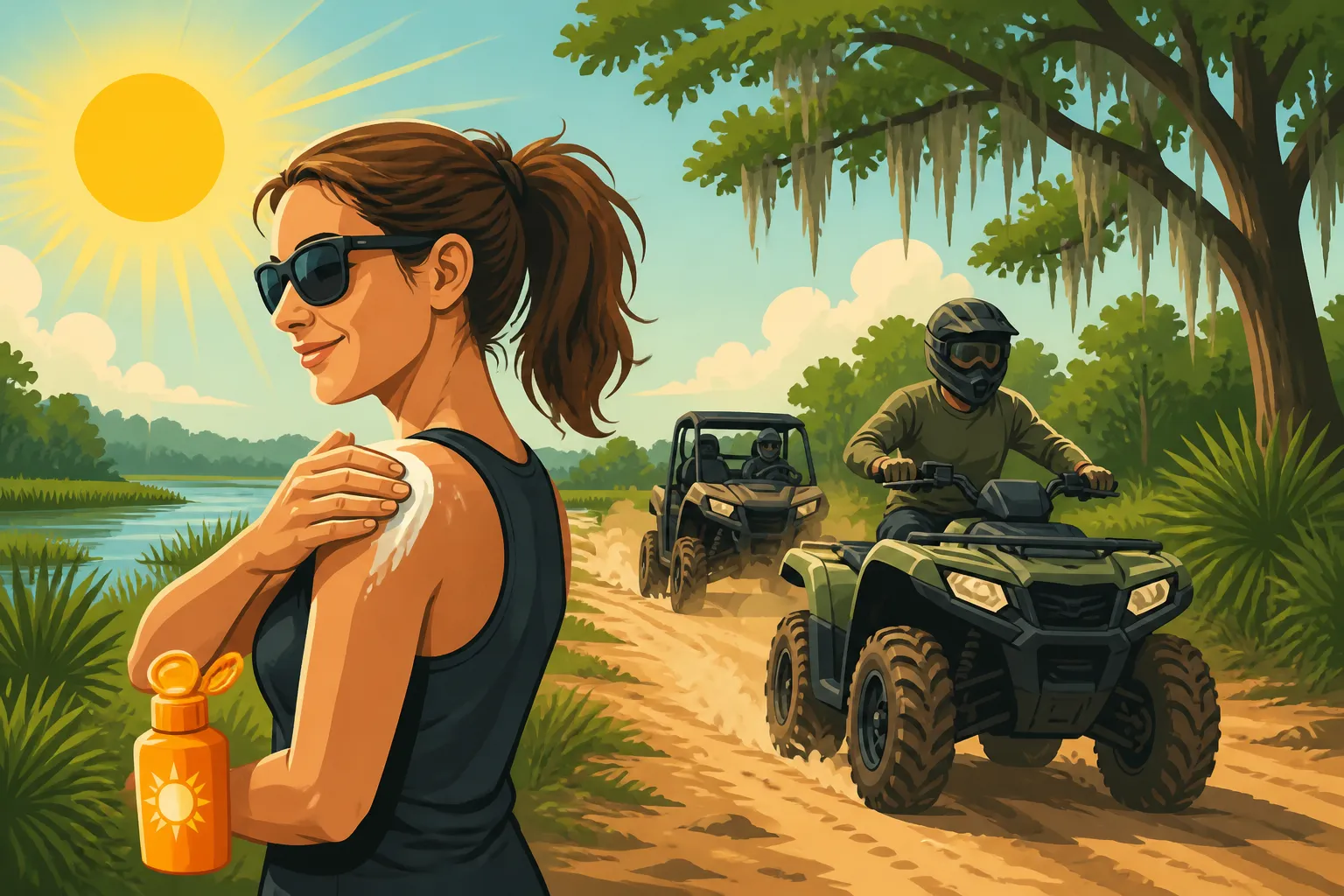
The face and arms are easy to remember, but sunscreen often gets missed around the ears, the back of the neck, the hairline, and the tops of the hands. These areas may be exposed when a helmet, collar, or gloves shift during a ride. If your clothing leaves a gap between a sleeve and glove, pay attention to the strip of skin that stays uncovered.
Think about what happens when you remove your helmet or eyewear, too. The bridge of the nose and the area around the eyes may need careful coverage, but avoid getting sunscreen in your eyes. Apply it before putting on gloves and clean your hands before touching goggles, visors, or controls. Slippery hands can make handling equipment awkward, and sunscreen on eyewear can leave a film that affects visibility.
Building sunscreen into your riding routine
Apply before you gear up
Use sunscreen according to its label and give yourself time to cover exposed skin before leaving home or the trailhead. Applying it before putting on gloves and a helmet makes it easier to reach the hairline, ears, neck, and other small areas. It also avoids the rushed, patchy application that can happen when the group is waiting beside a trailer.
Make it part of the same routine as checking your helmet, fastening your boots, and confirming that your water and basic supplies are packed. If you’re heading toward the De Soto National Forest or another riding area, plan your route and stops before you set out. A mapping tool such as onX Offroad can help with route planning, so you can think ahead about where the group might pause and keep sunscreen accessible. Trail access and conditions can vary, so use Mississippi Coast and De Soto National Forest Riding and Mississippi National Forest Riding Explained as starting points for your area-specific planning.
Reapply at sensible breaks
Sunscreen can wear off through sweat, water, wiping, or contact with clothing and gear. Follow the product directions for reapplication, including after heavy sweating or water exposure. A trail break is a useful reminder: check exposed skin, reapply as directed, and give the group a moment before heading back out.
Pack sunscreen in a secure, easy-to-reach spot, such as a small bag in the UTV or a protected compartment on your machine. Avoid leaving it loose where it can spill, become coated in dust, or get damaged by heat. On a longer day, set a phone reminder or make reapplication part of your regular break routine. Riders using onX Offroad to keep track of a route can also make planned stops a natural prompt to check sunscreen, water, and the group’s comfort.
A practical plan for the whole group
Prepare for children and different comfort needs
If children are riding along, check the sunscreen directions and choose a product appropriate for their age and needs. Apply it carefully to exposed skin, and help them reapply rather than assuming they will remember. Make sure sunscreen does not interfere with a helmet, protective eyewear, or other required gear.
Adults may also have different needs. One rider may prefer a lotion, another a stick for the face, and someone else may need clothing that covers more skin. Let each person bring what works for them, while keeping a shared backup available. If someone has a history of skin reactions or a medical concern, ask a qualified health professional about suitable options rather than relying on a group’s usual product.
Pair sun protection with trail preparation
Sunscreen is easier to remember when it sits alongside the rest of your ride-day essentials. Before leaving, check your gear, water, route, and the conditions for the area. After rain, trail surfaces and access can change, so consult Mississippi Trail Conditions After Rain and Checking Trail Conditions Before You Load the Trailer when weather has affected your plans.
A little preparation can prevent an uncomfortable ride home. Pack sunscreen where it won’t be buried, bring enough for the group, and choose breaks that allow everyone to drink, cool down, and reapply. If your day includes a longer loop, First Aid on a Long Southern Loop and Packing for Southern Humidity can help you think beyond the sunscreen bottle. For route planning, onX Offroad may help you organize the outing, but it cannot replace posted rules, local guidance, or sensible decisions about conditions.
A simple routine works well: apply before gearing up, cover overlooked areas, carry sunscreen where you can reach it, and reapply according to its label. Combine that routine with protective clothing, fluids, shade breaks, and attention to the group. That way, sun protection becomes part of trail preparation instead of an afterthought once somebody feels their skin getting hot.
Disclaimer
This article is for general informational purposes only and does not constitute professional advice. Laws, prices and regulations vary by location and change over time. Consult a qualified professional for guidance on your specific situation.