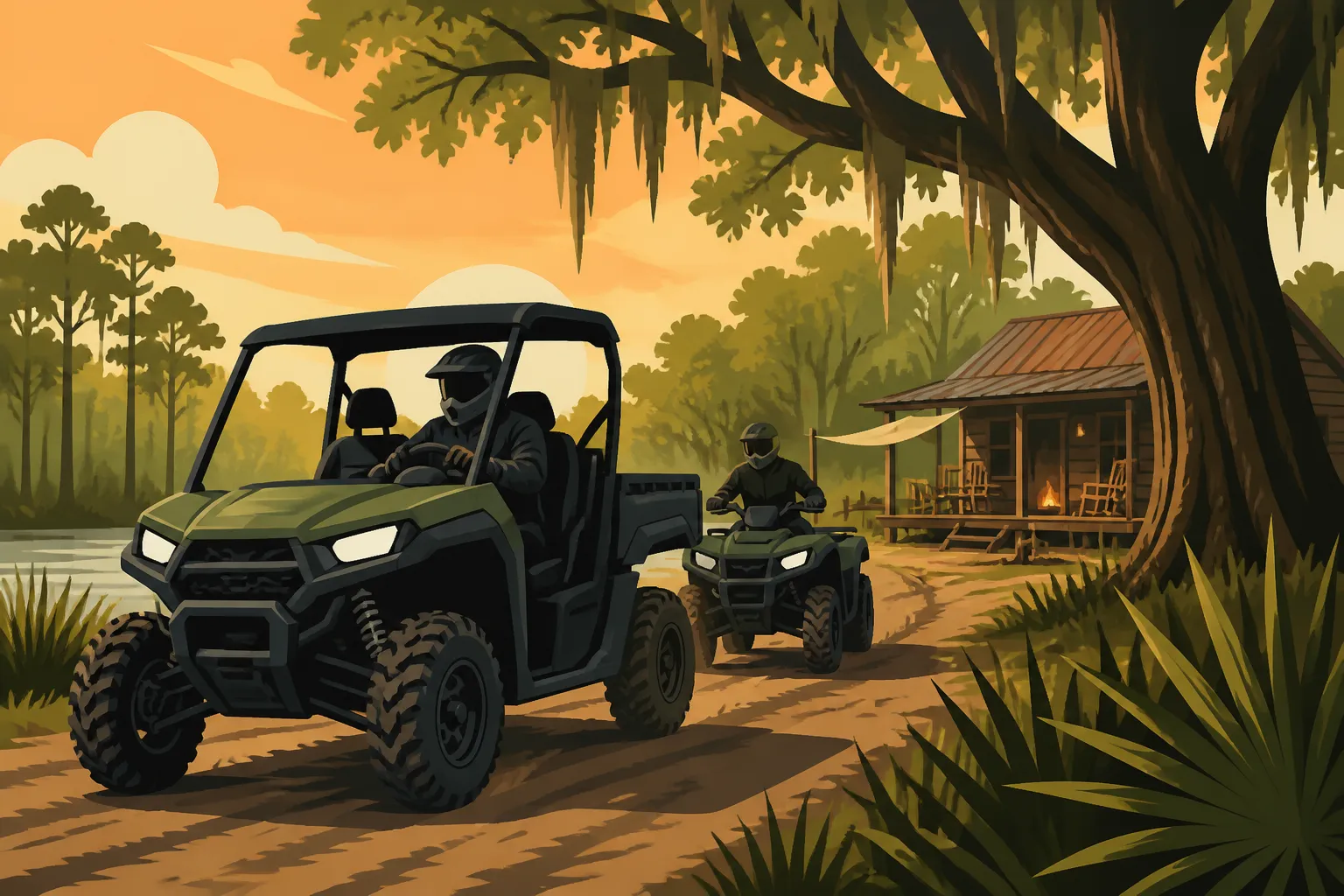
Riding Quietly Past Southern Camps
A quiet pass can make the difference between a neighborly trail ride and a complaint that follows your group all afternoon. In Mississippi, engine noise carries across pine woods, open fields, and still campground mornings, sometimes farther than riders expect. This guide explains how to approach camps respectfully, keep noise down, and check the rules before you ride.
Why Quiet Riding Matters Near Camps
Sound travels farther than you think
A machine that seems reasonably quiet from the seat can sound much louder to someone sitting beside a tent or trying to put a child down for a nap. In a quiet forest, engine noise can carry across open ground and water, and it may linger when several riders pass one after another. A campsite that looks distant from the trail may still be close enough for its occupants to hear every rev.
Mississippi riding areas can include a mix of wooded paths, open stretches, campgrounds, and roads shared with other users. In places such as De Soto National Forest, the shape of the terrain and the density of the trees can change how sound carries. Don’t assume a bend or a line of pines will block your machine’s noise.
Quiet riding is also about the experience you leave behind. Campers may be families, hunters, or people who chose a wooded site specifically for a little peace. A calm, controlled pass shows consideration even when you are on a legal trail and not directly inside a campground.
A legal trail is not a license to disturb people
A trail being open to riding does not mean every nearby area is open, nor does it mean that campsite rules stop applying. Public land, private parks, campgrounds, and roads can all have different rules. A posted sign, gate, or marked boundary should take priority over assumptions based on what other riders are doing.
Before heading out, review Mississippi National Forest Riding Explained and the rules for the specific place you plan to visit. For a private park, check its posted requirements and quiet-hour policies, including Mississippi Private Park Quiet Hours. Rules can differ from one property to another, and a park may set expectations that are stricter than a rider anticipates.
It also helps to understand the broader Mississippi Trail Etiquette Locals Expect. Courtesy is especially important where riders, campers, hikers, hunters, and local residents share the landscape. Keeping your distance from occupied camps and respecting designated routes can prevent a small nuisance from turning into a conflict or a request to leave.
How to Pass a Camp Quietly and Safely
Slow down before you reach the campsite
Don’t wait until you are alongside a tent to decide to reduce noise. Ease off the throttle as you approach, leave extra space where the trail allows, and avoid sudden acceleration, hard braking, or repeated gear changes. A steady, low engine speed is usually less startling than a burst of revving, even if the pass itself takes a little longer.
If the trail narrows near a camp, approach slowly enough to see whether anyone is walking, tending a fire, or moving gear. Give pedestrians room and be ready to stop. If another rider in your group has already passed, don’t crowd the campsite behind them; leave a comfortable gap so the sound does not arrive as one continuous wall of engines.
Avoid using the horn, shouting, or revving to announce your presence unless there is an immediate safety need. If you need to communicate with your group, use a calm voice at a reasonable distance. When it’s safe and appropriate, turning off the engine while stopped can spare nearby campers a long idle.
Make group riding less disruptive
A large group can be noisier than a single machine even when every rider is trying to be considerate. Keep the line orderly and avoid bunching up beside a campground or stopping to talk right outside someone’s site. If your group needs to regroup, choose a designated staging area or a wider spot well away from occupied camps and trail traffic.
Agree on quiet-pass expectations before unloading. For example, ask everyone to ease off the throttle near camps, keep conversation low, and avoid unnecessary engine revving at stops. This short conversation is easier than trying to correct a rider while the rest of the group is already passing a row of tents.
| Situation | More considerate approach | What to avoid |
|---|---|---|
| Passing an occupied camp | Slow down early and ride steadily | Accelerating hard beside the site |
| Waiting for your group | Stop well away from tents and keep engines off when practical | Idling in a cluster near campers |
| Meeting pedestrians | Reduce speed and give them room | Revving or squeezing past closely |
| Riding near quiet hours | Follow the property’s posted rules and keep noise to a minimum | Assuming the trail is exempt from campground rules |
| Unsure whether a route passes camps | Check the route and ask the land manager | Exploring behind signs, gates, or boundaries |
A map can help with planning, but it should not replace local directions or posted signs. onX Offroad may help you review a route and orient yourself before leaving the staging area. Use it as one planning aid, then confirm access and restrictions with the land manager or park. Don’t ride toward a campsite just because a digital map makes the route look open.
Prepare Your Machine and Route
Check the rules and the route before unloading
Noise expectations can depend on where you ride. Some public areas have specific equipment or sound requirements, while private parks may have their own rules, operating hours, or conduct policies. Review Mississippi Sound Limits on Public Land and confirm the requirements that apply to your destination rather than relying on a general rule you heard elsewhere.
Route planning can also reduce unwanted encounters. Check whether the route passes a campground, a popular stopping place, or a narrow shared road. If you are unsure where riding is allowed, consult the official map or the land manager. A tool such as onX Offroad can be useful for preparing a route, but map information should be checked against current signs and official access guidance.
Conditions can change after rain, maintenance work, or seasonal closures. Before making a long drive, check Mississippi Trail Conditions After Rain and look for updates from the riding area or managing agency. A closed or muddy route may push riders onto unfamiliar roads or tempt them to detour, which can bring them closer to camps or onto land where they do not have permission to ride.
Keep equipment in good condition
A damaged muffler, loose exhaust component, or poorly maintained machine can make an already noticeable ride more disruptive. Before a trip, listen for unusual rattling or a new, harsher exhaust sound. If something seems wrong, get it checked rather than assuming it will be fine for one more weekend.
Routine maintenance can also help prevent the kind of noisy, stressful breakdown that leaves a group stranded near a campground. Check that fasteners are secure, the exhaust is intact, and the machine is operating as intended. Avoid modifications that make the machine louder, and don’t remove or alter sound-control equipment to change the way it runs.
A quiet approach includes more than exhaust noise. Avoid spinning tires, repeated attempts to climb an obstacle, and unnecessary engine revving near occupied sites. If a machine gets stuck close to a camp, pause and choose a careful recovery plan rather than repeatedly applying throttle. When possible, move the recovery effort away from campers without leaving the authorized trail.
Handle Campground Encounters With Courtesy
If someone asks you to slow down or move on
Stay calm and listen. A camper’s request may reflect a posted quiet period, a property rule, or a concern you did not notice while focused on the trail. Don’t argue from the seat or respond by revving the engine. If you need clarification about the route, speak respectfully and keep your machine stopped.
When a concern involves access or rules, contact the campground host, park staff, or land manager rather than trying to settle a dispute with another visitor. If you are riding in a group, ask one person to handle the conversation while the rest of the riders wait quietly and safely. A calm response can prevent a brief misunderstanding from escalating.
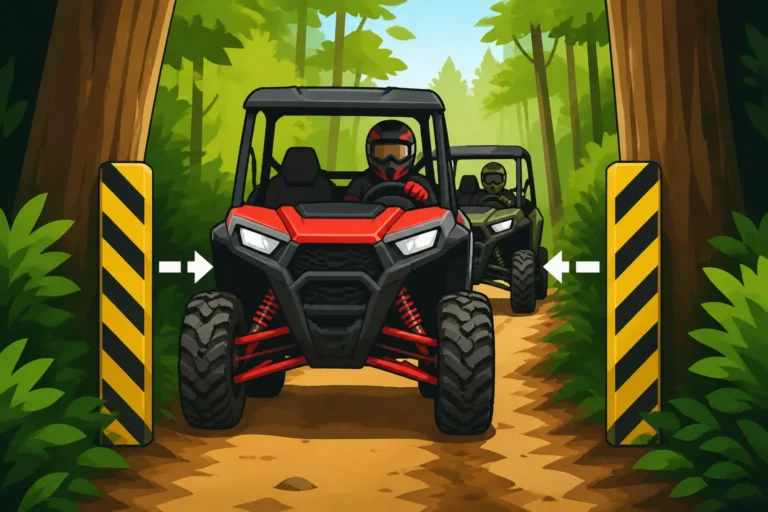
If the path is too close to occupied camps for a comfortable pass, follow the marked route and any directions from staff. Don’t take an unmarked detour around a campsite, a barrier, or a closed gate. Where you may encounter narrow shared roads, review Yielding on a Narrow National Forest Road so your group is ready to give others room without creating a new problem.
Build a quiet-pass routine for every ride
A simple routine is easier to remember than a long list of warnings. Before the ride, check access and rules. During the ride, scan ahead for tents, vehicles, pedestrians, signs, and gates. Near a camp, reduce speed early, avoid sharp throttle changes, and give people space. After the pass, wait until you are clear of the occupied area before accelerating normally.
For a group outing, choose a lead rider who can signal the others to slow down before a campground comes into view. Keep the group spaced out rather than packed tightly together, and pick a safe location away from camps for breaks. When planning routes, onX Offroad can help you prepare, but posted information and the land manager’s directions should guide the final decision.
A courteous ride is not about creeping everywhere or assuming you are unwelcome. It is about recognizing that a trail passes through places where other people are resting, working, or enjoying the outdoors. A little planning, controlled throttle, and respect for boundaries can make the experience better for riders and campers alike.
Disclaimer
This article is for general informational purposes only and does not constitute professional advice. Laws, prices and regulations vary by location and change over time. Consult a qualified professional for guidance on your specific situation.