Mississippi Rules for Riding a Power Line Cut
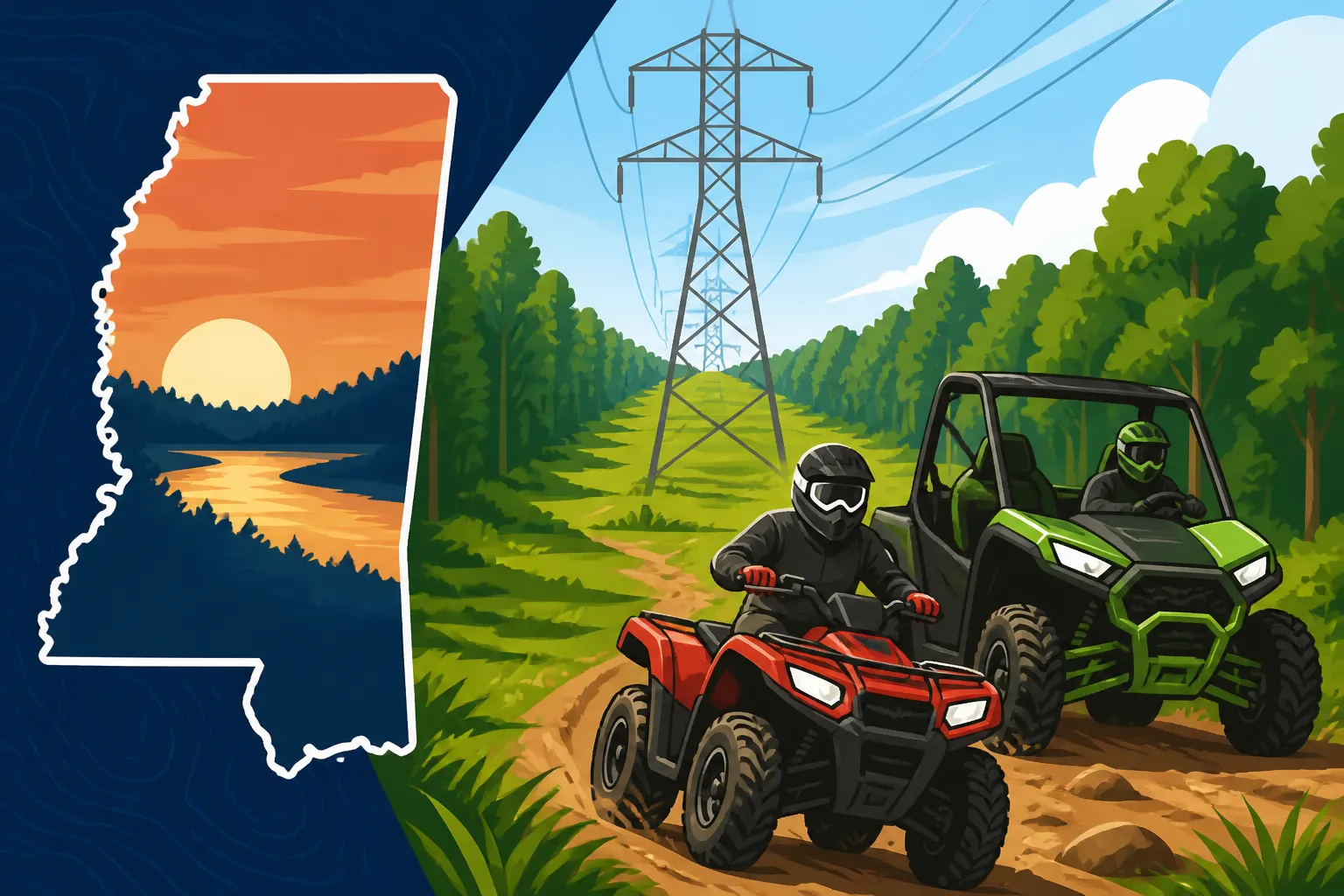
It’s a familiar sight across Mississippi: those wide, cleared swaths cutting through the landscape, seemingly calling out to every ATV and UTV rider. The allure of a long, open trail, free from trees and tight turns, is powerful. But before you swing a leg over and head out, understanding the rules and realities of riding on these power line cuts in our state is absolutely crucial, because what looks like an open invitation can quickly turn into a legal headache or a dangerous situation. This guide will help you understand the complexities of riding on power line cuts, why it's usually not a good idea, and where you can legally and safely enjoy your off-road machine in the Magnolia State.
Understanding Property Rights Along Power Line Cuts in Mississippi
The biggest misconception about power line cuts is that they are public land or open for anyone to ride. This couldn't be further from the truth. These corridors are a patchwork of property rights, and without a clear understanding, you could inadvertently find yourself trespassing.
Who Owns the Land? Easements Explained
Think about a power line cut as a special kind of road for electricity. While the utility company has the right to run their lines and maintain the area, they rarely own the land outright. Instead, they typically have what's called an "easement." An easement grants a utility company the right to use a specific portion of someone else's property for a designated purpose – in this case, transmitting electricity and maintaining the power lines. The actual land underneath still belongs to the private landowner.
What does this mean for you as a rider? It means that even though the power company might clear trees and keep the path open, you're still on private property. The utility company's easement doesn't automatically grant public access for recreation, nor does it give you, as an individual, permission to ride there. They have rights to maintain the lines; you do not have rights to ride your ATV or UTV there without specific, express permission from the landowner. This distinction is critical and often misunderstood. Just because the power company mows it doesn't mean it's a public trail.
The Difference Between Public and Private Property
In Mississippi, the distinction between public and private land is paramount for off-road enthusiasts. Public lands, like designated national forest trails, are open for recreational use, often with specific rules and permits. [Bethel OHV Trails in Mississippi] is a prime example of a place where riding is encouraged and regulated. Private property, on the other hand, is owned by individuals, families, or corporations. Unless explicitly stated otherwise, private property is off-limits to the public.
Power line cuts almost invariably fall into the private property category, even with a utility easement. This means that if you're riding on a power line cut, you are likely riding on land that belongs to a farmer, a timber company, or a private citizen. Without their direct, explicit permission, your presence is considered trespassing. Many landowners are increasingly frustrated by unauthorized riding, and they have every right to protect their property. They might have crops, livestock, or hunting leases on their land, and unexpected riders can be a huge disruption or even a danger. It’s not uncommon for landowners to install gates or barriers, and they might even call local law enforcement if they find people riding without permission.
Navigating Legalities: Is Riding a Power Line Cut Ever Permitted?
So, does this mean you can never ride on a power line cut? Not necessarily, but the circumstances under which it's legal are very narrow and depend entirely on securing permission.
The State's Stance on Off-Road Riding Areas
Mississippi state law is quite clear when it comes to where ATVs and UTVs can operate. Generally, [Mississippi Bans ATVs on Public Roads], and there isn't a state-level designation that makes power line cuts open, legal riding areas. The state focuses more on regulating safety and usage on designated trails or private property with permission. The onus is always on the rider to ensure they have legal access to the land they're riding on.
While there might be exceptions for utility workers on specific company business, or landowners actively using the easement for their own purposes, these do not extend to the general public looking for a place to ride. The state doesn't provide a blanket permission for power line cuts, and local municipalities rarely have ordinances that address them specifically for recreational ATV use. Instead, these areas fall under general property laws.
The Role of Landowner Permission
The only way to legally ride an ATV or UTV on a power line cut in Mississippi is with direct, explicit permission from the actual landowner. This isn't just a friendly nod; ideally, you want [Written Permission From a Southern Landowner]. This permission should be clear, specify the areas you are allowed to ride, and ideally be in writing to avoid any misunderstandings.
Getting this permission can be challenging. Many landowners are hesitant to grant access due to liability concerns, potential damage to their property, or conflicts with other land uses like hunting or farming. For large tracts of land owned by timber companies, gaining permission can be even more complex, often requiring formal agreements or membership in hunting clubs that lease the land. [Mississippi Landowner Permission Forms] can sometimes facilitate this process, but they need to be signed and understood by both parties. Never assume that just because a gate is open, or there's no "No Trespassing" sign, that you have permission. Always seek it out proactively. A respectful approach, explaining your intentions and offering to be responsible, might sometimes yield positive results, but be prepared for a polite refusal.
| Aspect | Riding on a Power Line Cut (Without Permission) | Riding on a Designated OHV Trail or Private Land (With Permission) |
|---|---|---|
| Legality | Generally illegal (trespassing) | Legal and permitted |
| Land Ownership | Private property, utility easement | Public land (e.g., National Forest) or private land with consent |
| Safety Concerns | Utility hazards, unmarked obstacles, landowner confrontation | Marked trails, managed environment, reduced confrontation risk |
| Consequences | Fines, machine impoundment, criminal charges, legal fees | Compliance with park/landowner rules, positive riding experience |
| Liability | High for rider (damage, injury) | Managed liability (waivers, insurance recommended) |
| Environmental Impact | Unregulated, potential erosion | Often managed to minimize impact |
| Social Impact | Negative (conflicts with landowners, hunters) | Positive (community, shared enjoyment) |
Risks and Responsibilities When Considering a Power Line Cut Ride
Beyond the legal implications, riding on power line cuts presents a host of practical risks that every rider should be aware of.
Safety Hazards Beyond the Law
Power line cuts are not designed for recreational riding, and as such, they are often rife with hazards that you wouldn't find on a purpose-built trail. These areas are maintained for utility access, not for high-speed ATV or UTV travel. You might encounter:
- Uneven Terrain: Maintenance activities can leave deep ruts, mounds of dirt, and hidden holes. Erosion can be severe, especially after heavy rains, creating unexpected washouts. Even with heavy-duty protection from a company like SuperATV, hidden obstacles can cause significant damage or lead to rollovers.
- Debris: Clearing operations often leave behind stumps, fallen branches, and even discarded equipment that can be a serious danger to riders. Sharp metal, broken glass, or even old tires can be hidden beneath overgrown brush.
- Utility Infrastructure: There might be guy wires, ground wires, or access points for utility boxes that are hard to spot, especially if the area is overgrown. Striking these can be catastrophic for both you and the utility infrastructure.
- Lack of Markings: Unlike designated trails, power line cuts won't have trail markers, difficulty ratings, or warnings about specific hazards. You're essentially riding blind.
- Environmental Factors: The wide-open nature of these cuts can lead to excessive sun exposure in summer, or extremely muddy conditions after rain due to poor drainage. [Mississippi Riding in Summer Heat] requires ample hydration, and mud can be deceivingly deep.
These are not just minor inconveniences; they are genuine dangers that can lead to serious injury or costly damage to your machine. Always prioritize safety, and if you're not sure about the terrain, it's always best to err on the side of caution.
Consequences of Trespassing
The legal repercussions of riding on private property without permission can be significant in Mississippi. If a landowner catches you or if law enforcement is called, you could face charges of trespassing. [Mississippi Trespass Law for Riders] outlines the legal framework, and the penalties can range from fines to more severe consequences.
Depending on the specific circumstances and the landowner's wishes, you could face:
- Fines: Trespassing fines in Mississippi are often not exorbitant, but they add up quickly, especially when combined with court costs.
- Machine Impoundment: Your ATV or UTV could be impounded, leading to towing fees, storage fees, and the hassle of retrieving your machine. This can quickly become a very expensive mistake.
- Criminal Charges: While often a misdemeanor, repeated offenses or damage to property could escalate to more serious charges.
- Damages: A landowner could sue you for any damage you cause to their property, whether it's crops, fences, or erosion.
- Loss of Future Access: Not only will you likely lose any chance of gaining permission from that specific landowner in the future, but a negative incident could also make other landowners in the area even more reluctant to grant access to riders. This can spoil opportunities for the entire riding community. [Mississippi Penalties for Illegal Road Riding] might give you an idea of the types of fines you could be looking at, though trespassing on private land can have its own specific penalties.
It’s crucial to remember that landowners have the right to protect their property. Being respectful of private land and its owners is paramount for maintaining a positive image of the ATV/UTV community in Mississippi.
Finding Legitimate Riding Alternatives in Mississippi
Thankfully, Mississippi has a growing number of legitimate and enjoyable places to ride your ATV or UTV, eliminating the need to risk trespassing or injury on power line cuts.
Designated OHV Parks and Trails
The best and most reliable option for legal off-road riding in Mississippi is to seek out designated OHV parks and trails. These locations are specifically designed for ATVs and UTVs, offering managed terrain, clear rules, and often amenities like camping, wash stations, and restrooms.
- National Forest Trails: The Holly Springs National Forest is home to [Bethel OHV Trails in Mississippi], a well-known public riding area. These trails are maintained, marked, and offer a variety of terrain for different skill levels. You'll often need a National Forest OHV Pass, but it's a small price to pay for legal, safe riding.
- Private Mud Parks: Mississippi also boasts several fantastic private mud parks. Places like [Red Creek Off-Road in Mississippi] and [Mississippi Private Mud Parks] offer extensive riding areas, often with mud pits, trails, and even cabins or RV hookups. These parks are usually open on weekends and charge a day-use fee, which goes towards maintaining the property and facilities. They're a great option for those who enjoy challenging terrain and a social atmosphere. Many of these parks are designed to handle the most rugged machines, and having components like heavy-duty axles or lift kits from SuperATV can truly enhance your experience on these dedicated trails.
- Other Designated Areas: Always check with local and state resources for other potential riding areas. Sometimes towns or counties might have specific ordinances or small, managed parks.
These designated areas provide a safe, legal, and often more enjoyable riding experience, where you can ride with peace of mind.
Exploring Private Land Options
While power line cuts are generally a no-go, there are other ways to access private land legally for riding.
- Hunting Clubs and Leases: Many hunting clubs in Mississippi lease large tracts of private timberland or farm land. Membership often grants access to designated roads and trails for ATVs and UTVs used for hunting, scouting, and game retrieval. This is a common way for riders to gain extensive access to private land. However, these arrangements come with their own rules, especially regarding hunting seasons and specific land use. [Mississippi Hunting Club Riding Rules] can be very strict and must be followed carefully.
- Personal Property: If you own land, or have friends or family who do, this is another straightforward way to ride legally. Always ensure you have explicit permission, especially if you're not the landowner. Even on private land, practicing [Mississippi Trail Etiquette Locals Expect] and ensuring you don't disturb neighbors is key.
- Checking Posted Land: Always respect signs that indicate [What Posted Land Means for Mississippi Riders]. This usually signifies private property where trespassing is prohibited. Never ignore these signs, as they are a clear indication that you are not welcome without explicit permission.
By seeking out these legal and responsible options, you can enjoy the thrill of off-road riding in Mississippi without the worry of fines, confrontation, or injury on unauthorized power line cuts. It’s about being a responsible rider and respecting the land, whether it's public or private.
Disclaimer
This article is for general informational purposes only and does not constitute professional advice. Laws, prices and regulations vary by location and change over time. Consult a qualified professional for guidance on your specific situation.