Mississippi Riding With a Group of Ten
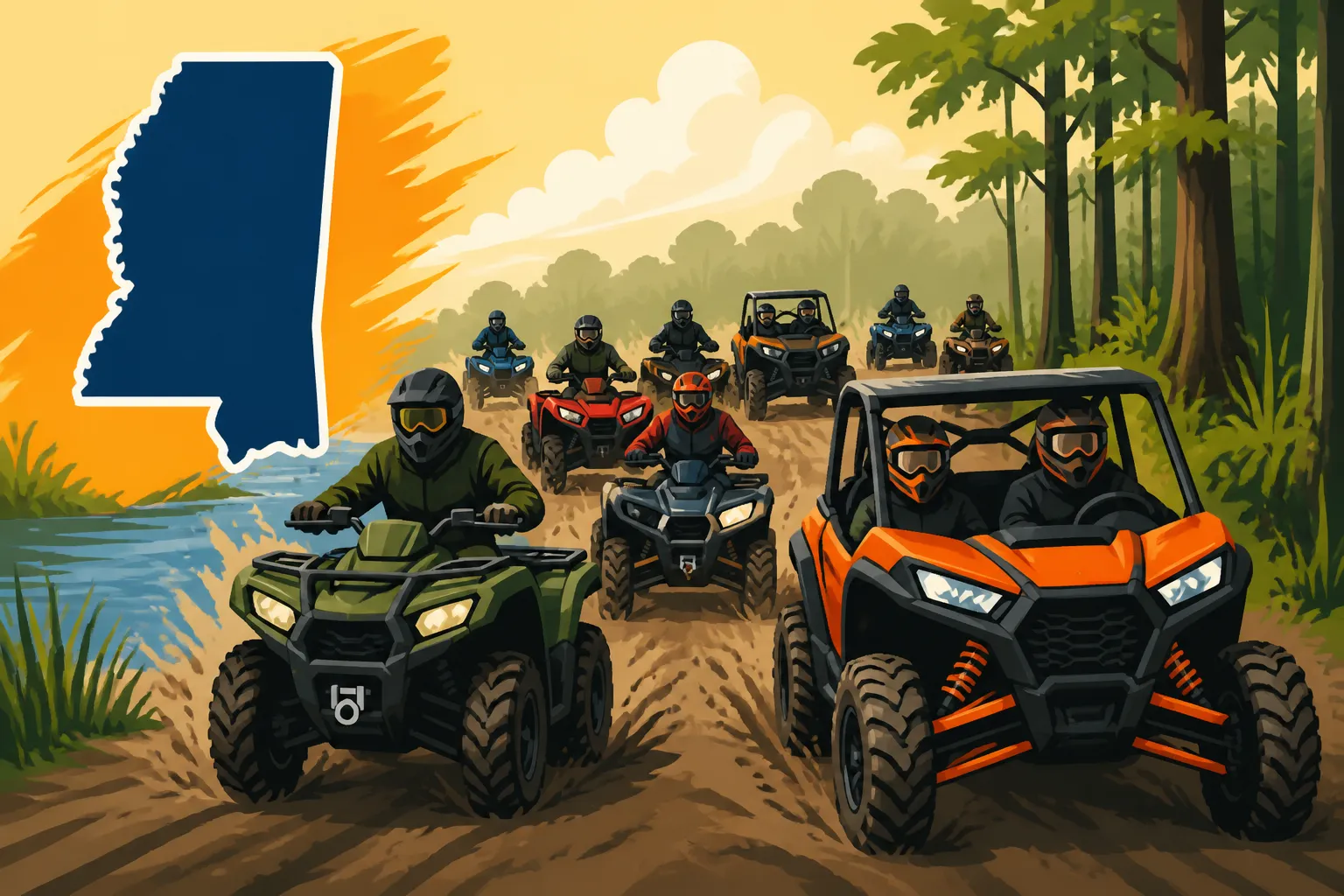
A ten-rider outing can be a great way to explore Mississippi’s trails, but a big group also means more trailers, more waiting, and more chances for someone to miss a turn. The key is choosing a legal riding area, confirming its rules before departure, and agreeing on a simple plan for keeping everyone together and safe.
Choose a Mississippi riding area that can handle your group
Match the place to the machines and riders
Before picking a destination, count both the riders and the machines. Ten people might mean ten ATVs, a handful of side-by-sides carrying passengers, or a mix of machine types. That difference affects trailer space, parking, trail width, the pace of the ride, and whether everyone can use the same route.
Mississippi riding areas are not interchangeable. A trail system may have width restrictions that rule out some side-by-sides, while a private mud park may have its own access rules, fees, age requirements, or operating schedule. For instance, Bethel OHV Trail is associated with narrower machines, so measure your widest machine—including accessories that affect its width—and check current requirements before loading up. [Mississippi Trails That Allow Side-by-Sides] and [Bethel's Width Limit in Mississippi] are useful starting points when you are comparing equipment with trail access.
Think about the least experienced rider in the group, too. A challenging mud route may be exciting for a few people and stressful for someone on a newer machine or riding off-road for the first time. Choose a destination with options that let the group ride at a comfortable pace, regroup often, and turn back without making the newer rider feel responsible for ending the day.
Check access rules before you set a date
Do not assume that a large group can simply show up and ride wherever there is a forest road or an open-looking trail. Public land, designated OHV trails, wildlife management areas, state parks, and privately operated parks can all have different rules. Some places require a pass, waiver, safety documentation, or use of designated routes. Others may not permit ATVs on the roads you see on a map.
For a public-land ride, confirm that the specific trail is open to your type of machine and that the route is intended for OHV use. A forest road being open to traffic does not automatically mean it is an authorized ATV trail. Check [Mississippi National Forest Riding Explained] and [Which Trails the $60 Forest Pass Opens] when planning a national forest trip, and contact the relevant office if the information you find does not clearly cover your machine or route.
If you are considering a private park, ask about group arrival procedures, parking, waivers, passenger rules, and whether advance arrangements are needed. Weather can affect access, especially at muddy parks and trails that close after heavy rain. Before anyone drives across the state, check [Mississippi Trail Closures After a Storm] and [Mississippi Private Park Waivers and Rules] so the group is not left sorting out requirements at the gate.
| Planning question | Why it matters for ten riders | What to confirm |
|---|---|---|
| Are all machine types allowed? | One side-by-side or oversized ATV may not fit the route | Width limits, machine categories, and trail designation |
| Is the riding area open? | Rain, maintenance, hunting activity, or seasonal rules may affect access | Current conditions and closures |
| Does the group need passes or waivers? | Ten riders can mean ten separate check-ins and forms | Who needs a pass, waiver, or proof of eligibility |
| Is there enough parking? | Trailers take more room than the machines themselves | Staging area, trailer parking, and arrival process |
| Can everyone ride the same trail? | Skill, age, and machine differences can split the group | Route difficulty, passenger rules, and alternatives |
| What is the backup plan? | A closed trail or breakdown can change the day quickly | Nearby legal option, meeting point, and return time |
Plan the route and the group’s communication
Give the ride a simple structure
A group of ten is easier to manage when the route is planned in sections rather than treated as one long, continuous ride. Pick a starting point, a first regrouping spot, a planned break, and a turnaround point. Make sure those landmarks are understandable to everyone, not just the person who planned the trip.
Before leaving, agree on who rides at the front and who stays at the back. The lead rider should know the intended route and avoid pushing the pace beyond what the group can maintain. The rear rider should know the plan and be willing to stop if someone falls behind. Everyone else should stay between those two riders rather than racing ahead or leaving a large gap.
A route-planning app can help the organizer prepare and share a general plan. For example, onX Offroad may be useful for reviewing mapped routes and saving navigation details before service becomes unreliable. Treat any digital map as a planning aid, not permission to ride: confirm that the route is currently open and legal with the land manager or park.
Plan for weak cell service and missed turns
Cell coverage can be inconsistent in wooded or remote riding areas. Before setting out, save the information the group would need if phones lose service: the trailhead location, the intended route, the nearest road access, and the place to meet if riders become separated. A paper map or written directions can provide a useful backup when a phone battery dies or the screen is hard to use in bright sunlight.
Tell everyone what to do if they lose sight of the group. A simple rule works better than a complicated system: stop somewhere safe, do not keep guessing at forks, and use the agreed-upon meeting point or contact method. If the group carries radios, test them before the ride and agree on a channel and basic call procedure. Do not assume every rider’s phone, radio, or navigation app will work the same way.
onX Offroad can help an organizer review a planned route and share useful location details before departure, but riders should still understand the basics of the route themselves. Ask each person to know the trailhead name, the planned turnaround point, and the group’s emergency contact. That way, the trip does not depend on one person’s phone staying charged and connected.
Keep ten riders moving safely together
Set expectations before the engines start
A short parking-area briefing can prevent a frustrating day on the trail. Cover the route, the expected pace, planned stops, passenger arrangements, and what to do if a machine has a problem. Make sure every rider knows whether the group will stop at every junction or only at designated regrouping points. In a group this size, small misunderstandings can quickly leave someone wondering where everyone went.
Keep the riding order predictable. Riders who are less confident may feel more comfortable near the front, where they can follow a steady pace without pressure from faster machines behind them. More experienced riders can help watch the gaps and point out hazards, but they should not turn the outing into a race. If the group has a wide range of skills, split into smaller units only if the riding area and communication plan make that safe and manageable.
Remind everyone to leave space between machines, especially in dust, mud, or on narrow trails. A rider who follows too closely has less time to react to a sudden stop, a rut, or a branch across the route. On shared trails, slow down around other visitors, yield where appropriate, and avoid blocking the trail while the group waits. [Mississippi Trail Etiquette Locals Expect] can help frame those conversations before the ride.
Prepare for breakdowns and changing conditions
With ten riders, there is a better chance that someone will need a break, have a mechanical issue, or discover that the trail is more difficult than expected. Pack basic items for the day, including water, a first-aid kit, a way to contact help, and tools or supplies appropriate to the machines. Confirm that each machine has enough fuel for the planned route, with a sensible margin for detours or slow travel.
Agree on how the group will respond to a breakdown. The front of the group should stop at the next safe regrouping point rather than disappearing around several bends. One or two riders can assist while the rest wait in a safe location, provided the trail remains clear and the group can stay together. Avoid crowding around a disabled machine on a narrow trail, where other riders may not see the obstruction in time.
Weather and trail conditions can change the plan. Heavy rain may make some routes slippery or lead to closures, while hot, humid conditions make frequent water breaks important. Check [Mississippi Trail Conditions After Rain] before leaving, and keep the group willing to turn around if conditions are unsafe or access rules have changed. A shorter ride that ends without a rescue, injury, or stuck machine is a better outing than forcing a route because it was on the original plan.
Make the outing easier from the first meetup to the drive home
Organize the convoy and parking
A group ride begins before the first trail. Confirm who is bringing each trailer, how many machines each vehicle can carry, and where everyone will meet. Share the destination and a backup meeting location in writing. If people are driving from different parts of Mississippi, staggered arrival times can reduce congestion at a small staging area, but only if late arrivals know where to find the group.
At the trailhead, park so that trailers and tow vehicles do not block access for other visitors or emergency vehicles. Keep the unloading area orderly, and have riders finish checks before the group starts moving. A quick walk-around can catch loose straps, low tires, leaking fluids, or gear that could fall off on the trail. Put a clear time on the departure plan so one delayed vehicle does not leave the rest of the group guessing.
Do not let the ride spill onto a public road just because the trailhead is close to another road or route. Mississippi’s road rules for off-road machines are a separate issue from trail access, and a title, pass, or private-land invitation does not automatically make a public road legal to ride. For route questions that involve roads, review [Mississippi Rules for Riding a County Road] and verify the rules that apply to the specific place.
Close the day with a head count and a cleanup
Before leaving the riding area, count riders and machines. Check that no one is still on the trail, at a restroom, or looking for a lost item. If the group split into smaller units, make sure each unit has returned. This sounds obvious, but a tired group packing several trailers can overlook a missing person or piece of equipment.
Give machines a quick inspection before loading. Look for damage, packed mud around hot or moving parts, loose cargo, and anything that could shift during the drive home. Keep muddy gear contained so it does not create a mess in someone else’s truck or trailer. If the park has a wash area, follow its instructions and do not wash mud into a place where it can cause damage or create a hazard.
Finally, share useful observations with the group: which route was open, where conditions were rough, what gear proved helpful, and what should be changed next time. If you used onX Offroad or another route-planning tool, update your notes with the actual conditions and any confusing junctions—but still confirm access before relying on those notes for a future ride. That small habit makes the next ten-person outing smoother for everyone.
Disclaimer
This article is for general informational purposes only and does not constitute professional advice. Laws, prices and regulations vary by location and change over time. Consult a qualified professional for guidance on your specific situation.