Arriving Before a Southern Gate Opens
Arriving before a Southern Gate Opens
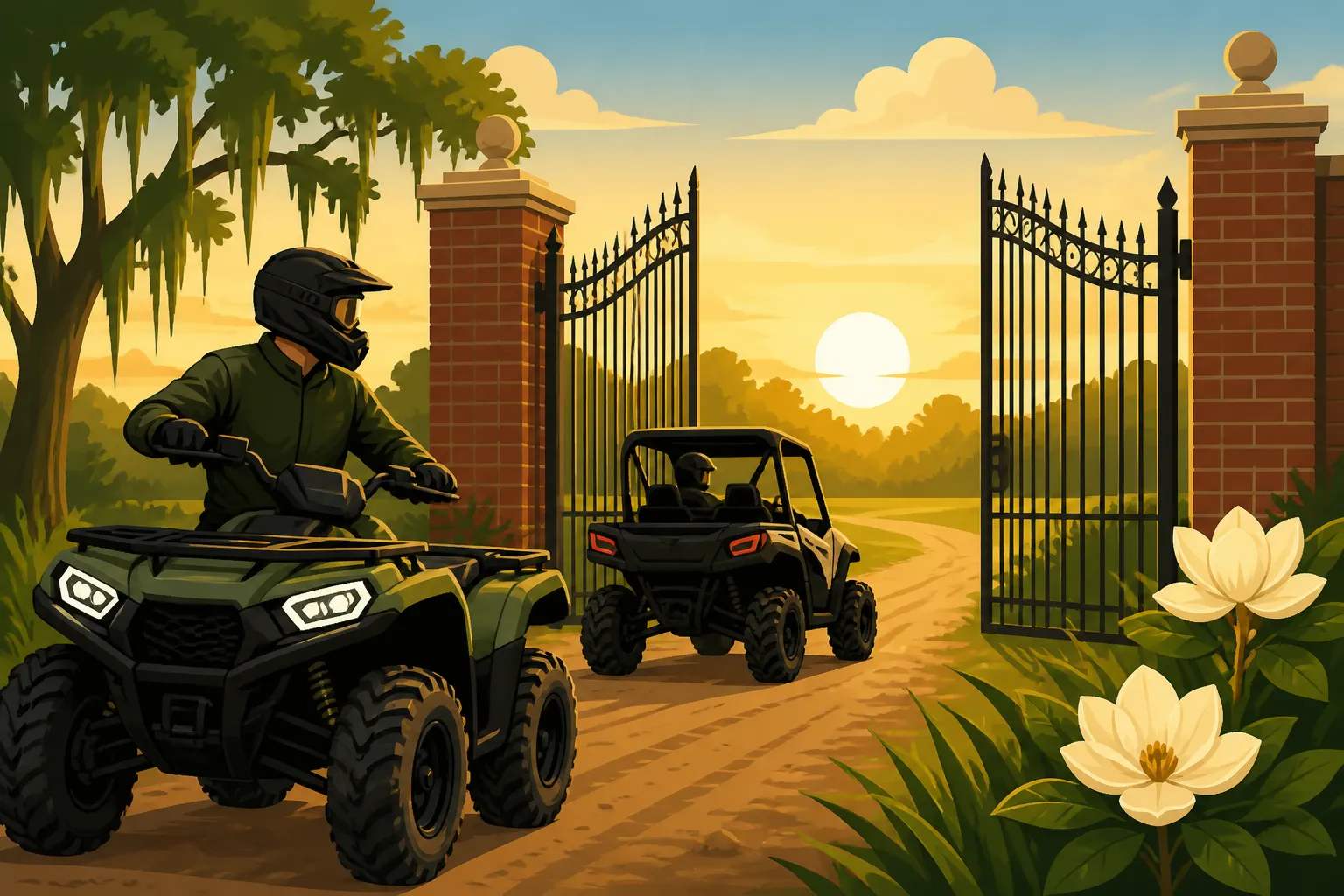
Getting to a Mississippi riding area early can save daylight, but arriving before the gate opens can also leave you waiting with a trailer, a machine, and nowhere safe to go. The best plan is to confirm the opening and check-in rules before you leave, identify a legal place to wait, and keep the ATV or UTV unloaded until staff says you may enter.
Confirm the opening time and entry procedure
A posted opening time does not always tell you when riders can begin unloading or using trails. At a private park, the gate may open at one time while check-in, waiver completion, machine inspections, or trail access happen separately. Hours can also differ by day, event, weather, or season. Treat the park’s current instructions as more reliable than an old listing or a friend’s recollection.
Before setting out, check the park’s official information and contact staff if any part of the arrival plan is unclear. Ask what time vehicles may enter, where early arrivals should wait, and whether everyone in your group needs to check in together. If the park uses reservations, day-use tickets, waivers, or required equipment checks, find out what you need ready at the gate. The practical details can vary; Mississippi Private Park Waivers and Rules is a useful starting point for understanding why entry requirements deserve a check before the drive.
| Before you leave | What to confirm | Why it matters |
|---|---|---|
| Opening and check-in | Gate time, check-in time, and whether early entry is allowed | The gate opening may not be the same as trail access |
| Waiting location | Whether there is an approved staging area or entrance queue | A nearby road shoulder or driveway may not be safe or permitted |
| Entry documents | Reservation, ticket, waiver, identification, or proof of required coverage | Missing paperwork can slow entry or prevent it |
| Machine rules | Width, age, passenger, helmet, and sound requirements | A machine or rider may not meet that park’s rules |
| Conditions | Closures, standing water, or changes to operating hours | Recent rain or an event can change the plan |
| Group arrival | Whether the whole group must arrive together | Late arrivals may have to repeat check-in or wait separately |
When you contact the park, ask concrete questions rather than assuming “the gate opens at nine” answers everything. For example: “Can we pull into the entrance before the gate opens?” “Is there a designated place for trailers to wait?” “Can one driver check in while passengers stay in the vehicle?” “Do riders need to show a safety certificate or sign a waiver in person?” The answer may save you an unnecessary stop or a difficult turnaround.
If you cannot reach staff, make a conservative plan: arrive close to the stated opening time, stay outside any closed entrance, and do not unload or ride until the park has admitted you. A sign, reservation message, or staff instruction may set a different procedure. Follow the specific direction you receive.
Plan where to wait, park, and unload
An early arrival is easiest when you know where the trailer can safely sit. Do not assume the road outside a park is an acceptable waiting area. A narrow shoulder can obstruct traffic, a private entrance may need to stay clear, and a line of trailers can create a hazard for other visitors or nearby residents. A gate being closed does not make the land around it public parking.
Ask whether the park has a designated overflow lot, a staging lane, or a place where arriving vehicles may queue. If the answer is no, identify a lawful, safe alternative before you drive there. That might mean stopping at a suitable public rest area or another permitted parking location and continuing closer to opening time. Do not leave a trailer unattended in a place where it could block access or be towed.
The route to the entrance matters, too. Navigation apps can send a truck and trailer down a tight road or toward an entrance that is not intended for visitors. Check the final approach in advance and look for park directions about trailer parking. Mississippi Trailheads With Trailer Parking covers why parking and staging are worth checking before a riding day, even when your destination is a private park rather than a forest trailhead.
Once you are at an authorized staging spot, keep the setup orderly:
- Leave the entrance, gate, and any emergency access route clear.
- Stay with your vehicle if staff has not told you where to park or wait.
- Keep children and pets away from moving vehicles and trailer ramps.
- Leave machines secured on the trailer until entry is approved.
- Avoid starting engines, revving, or testing equipment near homes or other visitors.
- Keep trash, tie-downs, and loose gear contained so they do not blow or roll into the road.
Unloading early may seem like a way to save time, but it can create problems. The park might require riders to check in first, inspect the machine, or unload in a particular area. An ATV or UTV also should not be driven along a public road just because the trail entrance is nearby. Keep the machine on the trailer until you are in a place where riding is permitted and staff has cleared you to proceed.
If the entrance area is already busy, do not form a second line or pull onto private property without permission. Call the park if possible, then follow the instructions posted at the entrance. If no safe, lawful place to wait is available, it is better to leave and return at the proper time than to block a road or guess that a closed area is open to visitors.
Use the waiting time without creating a problem
A short wait can be useful preparation time, provided the park allows you to remain where you are. Check that the group has its documents, tickets, and safety equipment ready. Make sure everyone knows who will handle check-in and where the group will meet after entry. If several vehicles are arriving separately, set a meeting point that does not block staff or other visitors.
Review the park’s rules with riders before reaching the counter. Parks may set their own requirements for helmets, passengers, age limits, noise, alcohol, pets, and camping. State rules and a park’s entry conditions are not necessarily the same thing, so do not assume that meeting one means you meet the other. Confirm current requirements with the park, especially if children are riding or if the machine has a passenger seat. See Mississippi Private Park Age Minimums and [Mississippi Private Park Helmet Rules] for related issues to check before you arrive.
A practical waiting checklist can help:
- Keep identification, reservation details, and any required certificates easy to reach.
- Have each rider know which waiver or check-in step applies to them.
- Confirm that helmets and other required protective gear are accessible, not buried under cargo.
- Check that straps, ramps, and loose equipment are secured until unloading is allowed.
- Make sure phones are charged enough for check-in and coordination.
- Keep the group together without crowding the entrance.
- Read signs rather than relying on what another visitor says the rules are.
You can also check for updated closures or weather instructions before driving onto the property. A park may change access after heavy rain, during maintenance, or for a scheduled event. Checking Trail Conditions Before You Load the Trailer can help you build that check into your departure routine, while Asking a Park Manager About Trail Conditions is relevant when the posted information is unclear.
If a staff member asks you to move, be ready to do so promptly. Avoid arguing that you arrived early or that other vehicles are waiting in the same place. Staff may need the lane clear for emergency access, deliveries, or the normal opening procedure. Give other guests room to maneuver, especially vehicles towing long trailers.
Avoid the common early-arrival mistakes
Arriving early is not a reason to enter a closed gate, test a trail, or unload on the roadside. It is also not a guarantee that staff will let your group in before the posted time. A locked gate, closed sign, barrier, or direct instruction to wait should be treated as a clear boundary. Do not tailgate another vehicle through an opening or follow a local rider onto property unless the park has authorized your entry.
Another common mistake is planning the trip around a single time without leaving room for delays. A slow check-in, trailer parking congestion, a missing waiver, or a last-minute closure can affect the first ride. Build in enough time for the drive and check-in, but use the park’s instructions to decide how early to arrive. For a group, ask whether everyone needs to be present before staff can complete entry.
Avoid these assumptions:
- “The gate is open, so the trails are open.” Check-in or trail access may begin later.
- “There’s room on the shoulder, so it’s okay to wait there.” The shoulder may be unsafe or restricted.
- “We can unload while we wait.” The park may require machines to stay on trailers until check-in.
- “A friend knows the routine.” Hours and procedures can change, and the friend may be remembering a different day.
- “We can ride a short distance to the entrance.” Public-road riding rules still apply; transport the machine on the trailer unless the route is clearly legal and authorized.
- “A ticket or reservation guarantees early entry.” It may confirm admission without changing the opening time.
If your plan includes camping, do not assume an early arrival allows you to occupy a site or use facilities before the park’s check-in procedure. Confirm site access, quiet hours, and any arrival instructions separately. Mississippi Private Park Camping Rules and Mississippi Private Park Quiet Hours are useful subjects to review when a ride includes an overnight stay.
A smooth arrival comes down to three decisions made before the truck leaves home: when the park actually admits visitors, where an early vehicle may wait, and what needs to be ready at check-in. Confirm those details, keep the entrance clear, and leave the machine secured until staff authorizes entry. That approach may mean waiting a little longer, but it is safer and less likely to turn the start of a riding day into a dispute over access.
Disclaimer
This article is for general informational purposes only and does not constitute professional advice. Laws, prices and regulations vary by location and change over time. Consult a qualified professional for guidance on your specific situation.