Hydration at a Southern Mud Park
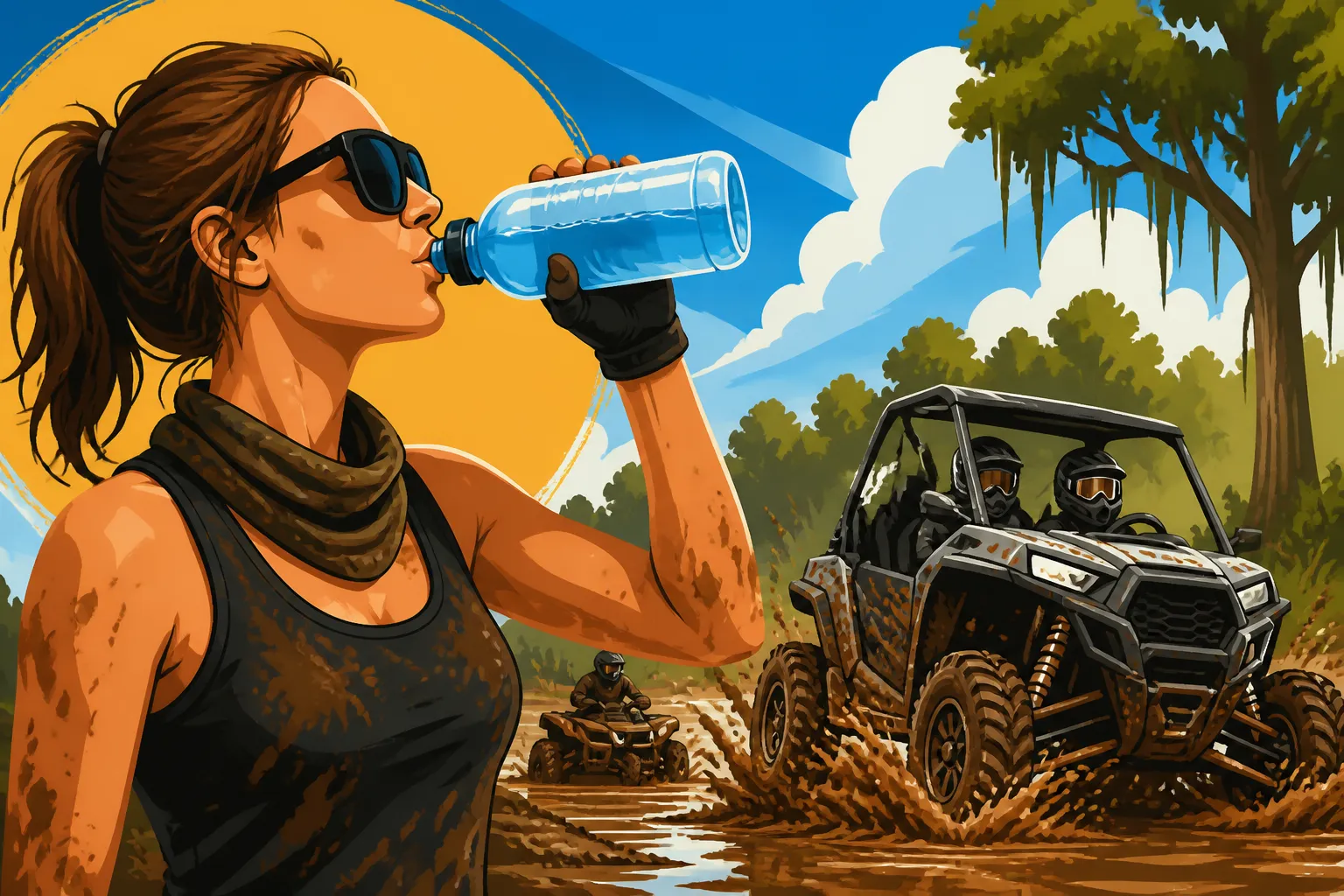
A hot day at a Mississippi mud park can leave you sweating under a helmet, working the throttle, and feeling fine right up until you suddenly feel wrung out. Hydration takes planning because mud riding can be strenuous, water may be back at camp, and heat can dull your sense of thirst. This guide explains how to prepare, drink, and respond to heat-related warning signs.
Why hydration matters at a Mississippi mud park
Mud riding can be more physical than it looks
A rider may spend much of the day seated, but that does not mean the ride is easy on the body. Steering through ruts, shifting your weight, bracing over bumps, recovering a stuck machine, and loading or unloading gear all take effort. Riding in boots, gloves, a helmet, and protective layers adds warmth, while Mississippi’s humid weather can make sweat feel less effective at cooling you.
The work often arrives in bursts. You might ride comfortably for a while, then spend several minutes wrestling a machine out of a muddy section or helping a friend. Those short, hard efforts can make it easy to lose track of how much you are sweating and how long it has been since you drank.
The setting matters, too. At a busy park, water may be in a truck or campsite rather than close to the trail. You may not want to stop when your group is moving, or you may assume you will drink when you get back. That delay can become a pattern over several hours. For broader preparation, Packing for Southern Humidity and Mississippi Riding in Summer Heat are useful topics to consider before heading out.
Thirst is a cue, not a complete plan
Thirst is a helpful signal, but it is easy to ignore when you are concentrating on the trail, talking with friends, or trying to get through one more muddy stretch. A simple routine—drinking before the ride, taking regular breaks, and checking in with yourself and your riding group—can make hydration less dependent on remembering at the last minute.
There is no single amount that suits every rider or every outing. Body size, exertion, weather, clothing, and how long you are out all affect fluid needs. Rather than treating a fixed quantity as a target for everyone, bring enough water for the planned ride and make it easy to reach. If you have a health condition or have been advised to limit fluids or sodium, follow guidance from your healthcare professional instead of using general riding advice.
Water access is part of the route plan
Before you unload, figure out where drinking water will be during the day. A cooler at the truck is useful only if the group returns to the truck regularly. If the route takes you farther away, carry water on the machine or with your riding gear, using a container secured so it cannot interfere with controls or become a hazard in a fall.
For unfamiliar parks, confirm what facilities are available rather than assuming there will be a refill point near the riding area. Mississippi Private Mud Parks can help you think through the different kinds of riding venues, while Mississippi Riding Areas With Wash Stations is relevant when you are planning stops around cleanup facilities. A wash station is not necessarily a source of drinking water, so check that separately.
How to plan water and breaks before you ride
Match your water plan to the length and difficulty of the ride
A short loop near camp calls for a different plan from several hours on a larger property. Think about how long the group expects to be away, whether the route has a clear return point, how demanding the terrain is, and how much extra time might be needed if a machine gets stuck. Allow for delays rather than planning only for the ideal ride.
A practical checklist can help:
- Estimate how long you will be away from your vehicle or campsite.
- Decide where the group can stop and drink.
- Carry water with each rider, not only in a shared truck cooler.
- Bring additional water for delays, mechanical problems, or a longer-than-planned ride.
- Make sure everyone knows where the backup supply is.
- Reassess the plan if the heat, exertion, or route conditions are worse than expected.
If you use a mapping app such as onX Offroad to prepare for an unfamiliar outing, use it as one part of your planning, not as a substitute for confirming current park access, facilities, or water availability. You can also note a regrouping point so riders who separate know where to meet. Mississippi Trail Conditions After Rain is another useful planning topic, since wet conditions can affect how long a route takes and how much effort it requires.
Make water easy to reach and secure
The best hydration plan is the one you can actually follow while riding. Choose a container or pack that is comfortable, accessible during a safe stop, and secured so it cannot slide, snag, or interfere with riding. Avoid placing loose bottles where they could fall into a muddy area or end up underfoot around the vehicle.
Keep some drinking water separate from water intended for washing hands, rinsing gear, or cleaning a machine. If your group carries a shared supply, assign someone to check it at breaks so the last rider back is not left with an empty jug. A phone map, including onX Offroad if you already use it, may help you keep track of where you planned to regroup, but the water itself should travel with the riders who need it.
| Riding situation | Hydration planning consideration |
|---|---|
| Short ride close to camp | Carry water with you and identify a quick return point |
| Long loop away from vehicles | Bring a personal supply for each rider and a backup plan |
| Hot, humid conditions | Schedule more frequent checks and be ready to shorten the ride |
| Group ride with children or newer riders | Stop together and confirm everyone has access to water |
| Mud recovery or unexpected delay | Keep reserve water available beyond the ideal ride duration |
Build breaks into the group’s routine
Breaks work best when they happen before somebody is struggling. Agree on a simple rhythm before starting: pause at a safe regrouping area, drink, and check whether anyone feels unusually tired, dizzy, nauseated, or confused. The exact timing can vary with conditions, but the important part is making stops normal rather than treating them as a sign that someone cannot keep up.
A group leader can help by checking on quieter riders, who may not want to slow everyone down. At a family ride, an adult should keep an eye on children and teens rather than assuming they will speak up when they feel overheated. The same applies to a new rider who may be focused on keeping control of the machine and not noticing their own discomfort.
For a larger outing, designate a regrouping point and make sure everyone knows the plan if the group becomes separated. onX Offroad may be useful for route preparation and shared navigation, but riders should still agree on a simple, understood backup plan before leaving the staging area. Mississippi Group Ride Planning covers other practical details that can make a day out more organized.
What to drink and what to pack
Keep plain water as the foundation
For many ordinary riding breaks, water is a sensible first choice. Bring enough for the expected outing, and make it available before you feel depleted. Drink during breaks rather than trying to catch up all at once after a long, strenuous stretch.
For a prolonged, sweaty day, some riders may choose a drink that replaces electrolytes as well as fluid. That does not mean every rider needs a sports drink, and no drink should be treated as a fix for serious heat illness. Be cautious with energy drinks or highly caffeinated beverages, especially if they make you feel jittery or interfere with sleep. Alcohol is not a suitable way to rehydrate and can make it harder to judge how you are feeling.
Pack water in a way that protects it from leaks and contamination. Keep caps clean, avoid leaving drinking containers open around mud and fuel, and do not share a mouthpiece if someone is ill. If you use a hydration bladder, clean and dry it after the ride according to its care instructions so it is ready for the next outing.
Plan for the people in your group
A group supply is helpful, but each rider should have a reliable way to drink when the group is away from its vehicles. Children, older adults, and people who are not accustomed to heat or strenuous riding may need closer attention. Ask how everyone is doing during breaks instead of relying on a quick “You good?” while engines are running.
Think about what happens if someone cannot continue. Identify a person who can stay with them, another who can get help, and a safe way to return to the staging area. A map app such as onX Offroad can support navigation planning, but carry a backup approach for a dead phone battery or poor reception. Do not split the group casually when someone is unwell.
Your packing list should include water for drinking, a backup supply, and a container that stays secure on the ride. If the outing includes a long walk to recover a machine or a wait for assistance, that reserve can matter. First Aid on a Long Southern Loop is a helpful companion topic when you are planning for problems beyond ordinary thirst.
Recognizing heat problems and knowing when to stop
Pay attention to early warning signs
Heat-related illness can begin with symptoms that are easy to dismiss as ordinary fatigue. Headache, unusual weakness, dizziness, nausea, heavy sweating, cramps, or feeling faint are reasons to stop riding, move to a cooler place, and take the person seriously. Do not encourage someone to push through because the group is nearly back or because they do not want to hold up the ride.
Stop the machine in a safe place, get the rider out of direct sun if possible, loosen unnecessary gear, and offer water if they are alert and able to drink. Cooling measures and help from other riders may be needed. Do not leave an unwell person alone while someone else goes for assistance.
Confusion, fainting, seizures, or a very hot body are emergency warning signs. Call emergency services immediately and follow the dispatcher’s instructions. Heat stroke is a medical emergency; do not wait to see whether the person feels better after resting. Heat Illness on a Southern Summer Ride provides more context for recognizing the risks of heat during outdoor riding.
Change the plan when conditions or symptoms call for it
Hydration is only one piece of heat safety. Rest in shade when available, take off gear during breaks when it is safe to do so, and avoid turning a recreational ride into a test of endurance. If the day becomes hotter than expected or several riders are showing signs of fatigue, shorten the route or call the ride.
Mud and rain can also create a false sense of comfort. A wet shirt or splash of water may feel cooling, but it does not tell you whether you have had enough to drink or whether someone is developing heat illness. Reassess the group based on how people are actually feeling, not just how the trail looks.
Before leaving, make sure your group knows the park’s location and how to describe your situation if you need help. Check the route and access plan in advance; an app such as onX Offroad can be one tool for orientation, but do not rely on a phone alone for emergency communication. A thoughtful water plan, regular check-ins, and the willingness to stop can make a hot, muddy day safer for everyone.
Disclaimer
This article is for general informational purposes only and does not constitute professional advice. Laws, prices and regulations vary by location and change over time. Consult a qualified professional for guidance on your specific situation.