Mississippi Mud and What It Does to a Machine
Mississippi mud can turn a fun ride into a hot-running engine, slipping belt, or muddy machine that takes hours to clean. The trouble is not just how deep the mud looks: water, clay, sand, and plant debris can affect different parts in different ways. This guide explains what to watch for before, during, and after a ride so you can reduce avoidable wear.
Why Mississippi mud is hard on an ATV or UTV
Clay, sand, and standing water create different problems
Mud varies across Mississippi, and a machine that handles one trail well may struggle on another. Sticky clay can cling to tires, underbody panels, and suspension parts, adding weight and limiting movement. Sandy ground, including areas around the De Soto National Forest, can work its way into joints and moving parts. Standing water brings another concern: it can reach electrical connections, the air intake, or other components if a crossing is deeper than expected.
The combination matters, too. A route may start with firm ground and turn into slick clay after rain, then lead into a sandy or rutted section. Mud packed around a tire can reduce traction, while debris lodged near a radiator can restrict airflow. A deep-looking puddle may be harmless in one spot and conceal a rut, stump, or washed-out edge in another.
Before loading up, check local conditions rather than assuming yesterday’s route is still passable. Rain can change a trail quickly, and some riding areas close or restrict access when the ground is saturated. For public routes, start with [Mississippi Trail Conditions After Rain] and [Mississippi Trail Riding After Heavy Rain]. A mapping app such as onX Offroad can help you orient yourself and keep track of your route, but always confirm current access and closures with the land manager or riding area.
The most vulnerable parts are not always the obvious ones
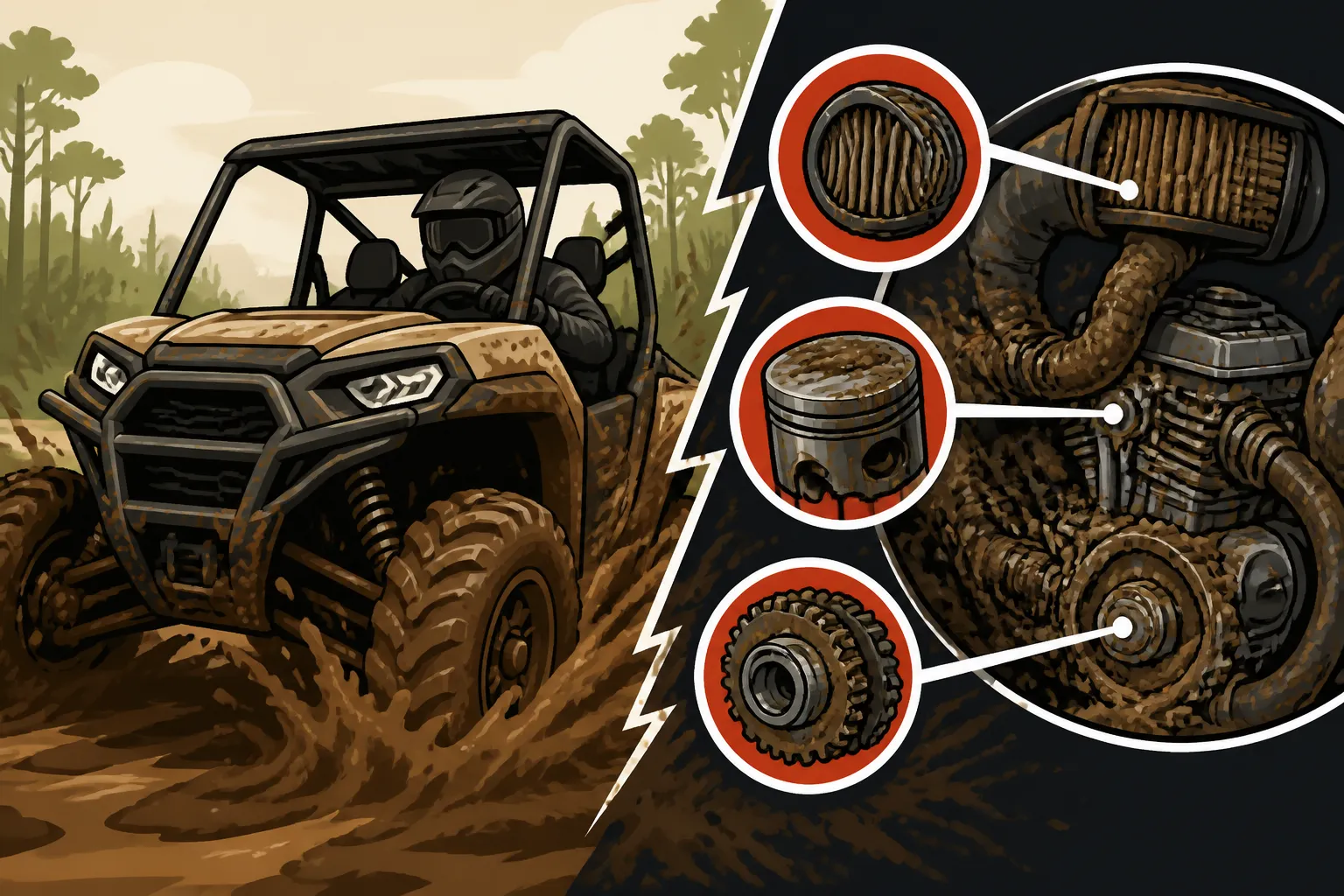
Tires and bodywork show the mud first, but the trouble can travel farther. Water or grit that reaches bearings, seals, brake components, or electrical connectors may cause problems that are not obvious at the trailhead. Mud can also collect around the engine and drivetrain, where a thick coating can hold heat or make it harder to spot a leak or damaged part.
On a UTV, the enclosed bodywork can hide packed debris. A quick walk-around may not reveal mud lodged underneath the floor, around suspension components, or near the cooling system. On an ATV, the exposed frame makes inspection easier in some places, but the machine’s underside can still collect mud and vegetation. The exact vulnerable points depend on the model, so use the owner’s manual for locations and cleaning instructions.
Think of mud as both a traction issue and a maintenance issue. A short, shallow section may leave little more than a mess. Repeated deep crossings, prolonged mud riding, or water high enough to reach the intake or electrical components can raise the risk of more serious damage. If you are unsure about water depth, do not assume the machine can safely cross it.
| Trail condition | What it can affect | What to do |
|---|---|---|
| Sticky, heavy clay | Tires, suspension movement, underbody clearance | Avoid forcing a machine that is losing traction; inspect for packed mud afterward |
| Loose sand | Traction, joints, seals, and exposed components | Ride smoothly and clean grit from vulnerable areas after the ride |
| Deep ruts or concealed holes | Tires, wheels, suspension, and stability | Get out and assess the route if you cannot judge its depth |
| Standing water | Intake, electrical parts, and other components | Do not cross water of unknown depth |
| Pine straw and vegetation mixed with mud | Radiator airflow and moving parts | Check for debris around the radiator and underbody |
What mud can do to key ATV and UTV systems
Cooling systems can struggle when debris blocks airflow
Mud and plant debris can collect on or around a radiator and reduce airflow. If the cooling system cannot shed heat effectively, the engine may run hotter than it should. Pine straw is particularly easy to overlook because it can pack into a screen or radiator area along with wet mud. A machine may seem fine on the trail and show signs of trouble only after sustained riding or a slow, demanding section.
Pay attention to warning lights, temperature displays, unusual smells, or changes in how the machine runs. If you notice a warning, stop somewhere safe and consult the owner’s manual rather than continuing to push through the trail. Do not open a hot cooling system. Let the machine cool before inspecting it, and follow the manufacturer’s cleaning guidance so you do not damage fins, wiring, or nearby parts.
A radiator screen can help catch some debris before it reaches the radiator, but it still needs inspection and cleaning. For more on that specific concern, see [Radiator Screens for Pine Straw]. A screen that is clogged with wet plant matter can restrict airflow too, so fitting one is not a substitute for checking it during or after a muddy ride.
Water and grit can affect the drivetrain, brakes, and electrical parts
A belt-driven UTV may lose performance if water or mud gets into the clutch housing or belt area. Some machines have drains or service procedures for particular conditions, but designs differ. Do not guess at a procedure based on another model. Check the manual, and have a qualified technician inspect the machine if it slips, makes unusual sounds, or behaves differently after a deep crossing.
Grit can also accelerate wear in moving parts if it gets past seals or remains packed around components. Brakes deserve attention after muddy riding because mud can collect around them, and wet or gritty conditions may change how they feel. If the brakes feel weak, noisy, or inconsistent after cleaning and drying, do not treat that as a minor inconvenience. Have them checked before the next ride.
Water exposure is not limited to the engine. Electrical connectors, switches, sensors, and wiring can be vulnerable, especially if a machine has been submerged beyond its intended capability. Avoid spraying high-pressure water directly into connectors, seals, bearings, or electrical components during cleanup. A careful rinse and an inspection are usually safer than blasting every surface at close range.
How to ride through mud without making the problem worse
Choose a line carefully and avoid forcing a stuck machine
The safest line is not always the deepest or most dramatic one. Look for a route with firm edges, a visible exit, and enough room to turn around. Before entering water or a deep muddy section, check what you can from a safe position. A long stick can help assess depth and firmness, but it cannot reveal every hidden hazard. If you cannot see a safe path through, turn back.
Keep your inputs smooth. Sudden throttle can spin the tires and dig the machine into a rut, while abrupt steering can make a slippery machine harder to control. If traction is fading, ease off rather than spinning the wheels harder. On a group ride, leave enough space that you are not forced to stop in the deepest section because the rider ahead is bogged down.
If a machine is stuck, pause before trying to power out. Spinning tires can bury it farther and strain the drivetrain. Use a winch only as directed by its manufacturer, and choose a suitable anchor point. Keep people clear of a tensioned winch line, and never attach it to a point that is not designed to bear the load. [Winches for a Buried Southern Machine] covers the basics of planning for that situation.
Mud can also disguise how much clearance a machine has. A tire may be able to climb a soft bank while the frame or underbody catches on a hidden ridge. If you ride with navigation on your phone or another device, keep it secure and usable without taking your attention away from the trail. onX Offroad can be useful for keeping a route in view, but a map does not show every current rut, washout, or obstacle. A paper map is a sensible backup in areas where service is unreliable.
Match tires and equipment to the ground you expect
Tire choice affects how a machine behaves in mud, but there is no single tire that makes every Mississippi trail easy. A tread pattern that works well in sticky ground may feel different on sand or hard-packed trail. Tire pressure also affects handling and traction, so follow the machine and tire manufacturers’ guidance rather than copying a pressure from someone with a different setup. For a closer look at terrain-specific choices, see [Tires for Southern Sand].
For riders who regularly cross water, equipment such as a snorkel may be part of a broader setup, but it does not make every water crossing safe. It cannot tell you whether the bottom is firm, whether the current is strong, or whether water will reach another vulnerable component. Read [Snorkels for a Southern Water Crossing] before treating added equipment as permission to take on deeper water.
Consider the ride as a whole: the machine’s limits, the weather, the trail’s condition, and the experience of everyone in your group. A route that is manageable for a seasoned rider on a properly equipped machine may be a poor choice for a new rider or a smaller youth machine. If the trails are saturated or the route is deteriorating, choose a different day. Waiting can be frustrating when the group has already loaded the trailer, but it is often better than turning a ride into a recovery and repair job.
Cleaning and checking your machine after a muddy ride
Rinse carefully and remove packed debris
Let the machine cool before washing it. Remove loose clumps of mud and vegetation, paying attention to the underside, wheel wells, suspension, and areas around the radiator. Use water pressure carefully. A high-pressure stream directed at seals, bearings, connectors, or radiator fins can cause damage or force water where it should not go. Follow the manual’s cleaning guidance for your specific model.
After rinsing, look for mud packed into places that are easy to miss: around the frame, behind guards, beneath floorboards, and near moving parts. Check that the tires are clear enough to inspect for cuts or embedded objects. If you ride in sandy conditions, take extra care to remove grit from exposed components. [Washing Sand Out of a Southern Machine] offers more detail on that cleanup challenge.
Give the machine time to dry, then inspect it in good light. Look for fresh leaks, damaged wiring or connectors, loose parts, and anything that seems out of place. Mud can conceal a problem during the ride, so a post-ride check is not just about making the machine look clean. It is a chance to catch damage before it becomes a more expensive or less safe issue.
Use a repeatable post-ride inspection
A short routine makes it less likely that a tired rider will forget an important check. Start with the tires and wheels, then check the brakes, visible wiring, cooling area, underbody, and any points your owner’s manual identifies for inspection after water or mud exposure. If your machine has a belt, clutch housing, or other components that require special attention after a wet ride, use the manufacturer’s procedure instead of improvising.
Keep a note of anything unusual: a warning light, a new vibration, slipping, hard starting, or a change in brake feel. Those details help a dealer or mechanic understand what happened. If the machine was submerged, ran unusually hot, or began acting differently after a crossing, arrange an inspection before taking it out again. Do not rely on a quick rinse to fix a problem that may involve water inside a housing or electrical component.
For repeat rides, take a few minutes to plan around conditions and access. Check trail updates before departure, carry recovery gear appropriate to the machine and group, and have a backup route. onX Offroad may help you keep your planned route organized, while a paper map or offline backup can be useful when phone coverage is poor. Before heading out, also review [Mississippi Trail Etiquette Locals Expect] so your group is prepared to share trails responsibly and avoid making muddy conditions worse for other riders.
Disclaimer
This article is for general informational purposes only and does not constitute professional advice. Laws, prices and regulations vary by location and change over time. Consult a qualified professional for guidance on your specific situation.