Best Mississippi ATV Trails for Beginners
A first Mississippi ATV ride can go sideways before you reach the trail: a route may be too rough for a new rider, closed after rain, or limited to machines under a certain width. This guide compares beginner-friendly places to start, explains what to check before loading your trailer, and helps you choose a ride that fits your machine and comfort level.
Beginner-friendly places to ride in Mississippi
“Beginner-friendly” does not always mean flat, easy, or suitable for every ATV and UTV. A park may have a gentle loop alongside deeper mud, steep slopes, or narrow wooded trails. Before you go, check the specific trail system’s current rules and ask which routes are appropriate for a first-time rider.
Bethel OHV Trails
Bethel OHV Trails in the Holly Springs National Forest are a well-known public riding option in north Mississippi. The trail system is often described in terms of its roughly 43 miles of riding and a 50-inch width limit. That limit matters: many side-by-sides are wider than the maximum, so measure your machine rather than guessing from its model name. For more on the system, see [Bethel OHV Trails in Mississippi] and [Bethel's Width Limit in Mississippi].
For a beginner, the main advantage of a designated trail system is that you can focus on learning how your machine responds instead of improvising a route through unfamiliar woods. Start conservatively, ride within your ability, and turn around if a section feels beyond your comfort level. A narrow trail can be challenging even when it looks smooth on a map, especially if it has roots, ruts, or tight turns.
Weather can change the experience quickly. Mississippi trails may become slick or muddy after rain, and closures can happen when conditions are poor. Check before you leave home, then check again before unloading. Bethel’s conditions can change on short notice, so [Bethel's Wet Weather Closures in Mississippi] is useful background for planning around rain.
De Soto National Forest riding areas
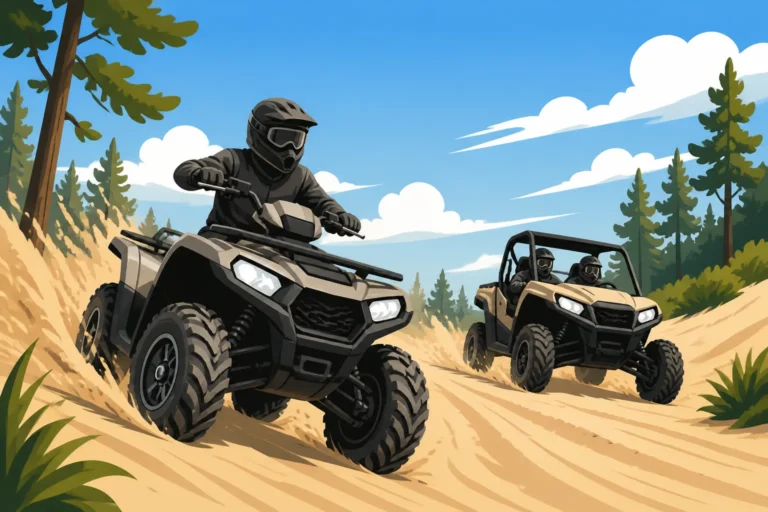
De Soto National Forest offers a very different setting from a compact private park: pine woods, sandy ground, and long stretches of forest landscape. However, being inside a national forest does not mean every road or path is open to ATVs. Riders need to distinguish designated routes from roads or trails where off-highway riding is not allowed. Start with [Mississippi National Forest Riding Explained] and [How to Read a Forest Service Trail Map].
For a newer rider, forest riding can be enjoyable if you are comfortable navigating, keeping track of your group, and following route signs. It may be less forgiving than a marked beginner loop at a private park. A wrong turn can add distance, while limited cell service can make it harder to check directions or contact someone. Use a map before you go, and carry an offline or paper backup.
If your plan includes riding in De Soto, confirm which routes are open to your type of machine and what pass or other requirements apply. Do not assume that an old trail report, a social media post, or a line on a mapping app means the route is open today. For help planning ahead, read [Mississippi Coast and De Soto National Forest Riding] and [The De Soto Ranger District Trail Conditions Line].
Private parks and riding areas
Private parks can be a practical first stop because they may offer a range of terrain in one place. That lets a beginner start with an easy section, take a break, and decide whether to try something more demanding. Mississippi has private riding options, including Red Creek Off-Road. Before making the drive, confirm the park’s current hours, access rules, available trails, age requirements, and whether your machine is allowed. [Mississippi Private Mud Parks] offers more context.
A park’s label does not tell you how difficult every route will be. A beginner may be comfortable on packed paths but not in deep mud, and a stock ATV may not be equipped for water crossings. Call or check the park’s own current information to ask where a first-time rider should begin and whether trail conditions have changed after rain.
Private properties may also have their own check-in steps, waivers, riding rules, and camping arrangements. Reading those rules before arrival can save you from a frustrating surprise at the gate. If you are considering Red Creek, [Red Creek Off-Road in Mississippi] is a helpful starting point for learning more about that destination.
| Riding area type | What may suit a beginner | What to verify before you go |
|---|---|---|
| Bethel OHV Trails | Marked riding in a public trail system | Current conditions, route difficulty, machine width, and access rules |
| De Soto National Forest | Forest scenery and designated riding routes | Which roads are open, map details, pass requirements, and cell coverage |
| Private riding park | A chance to choose among different kinds of terrain | Hours, fees, waivers, age rules, machine restrictions, and trail conditions |
How to choose a trail that matches your experience
Match the route to your machine
A trail can be beginner-friendly for one machine and unsuitable for another. A narrow ATV may fit a route that excludes a wider UTV, while a heavy side-by-side may feel less manageable on tight turns or soft ground. Check width limits, passenger rules, and any restrictions on tires or equipment before you travel. Measure the widest point of your machine, including accessories that extend beyond the body.
Think about the machine’s condition, too. A first ride is not the best time to discover that the brakes feel weak, the tires are worn, or the battery is struggling. Check basic controls and fluids before loading. If you are new to trail riding, a mechanically sound machine with predictable handling is more helpful than a powerful machine you have not learned to control.
Look beyond the word beginner
Trail labels can mean different things at different parks. “Easy” might describe a wide, mostly level path, but it may still include mud holes, loose sand, or sudden ruts. Ask what the trail surface is like, whether there are steep sections, and how difficult it is to turn around or exit if you need a break.
A useful way to plan is to choose a short, manageable first ride rather than aiming to cover the most miles. Begin on easier terrain, stop periodically, and check how you and your machine are doing. If you are riding with a group, agree that nobody will pressure a new rider to follow a route that feels unsafe. For a broader planning reference, see [Mississippi Trail Difficulty Ratings].
Prepare for your first Mississippi ATV ride
Check access, conditions, and rules
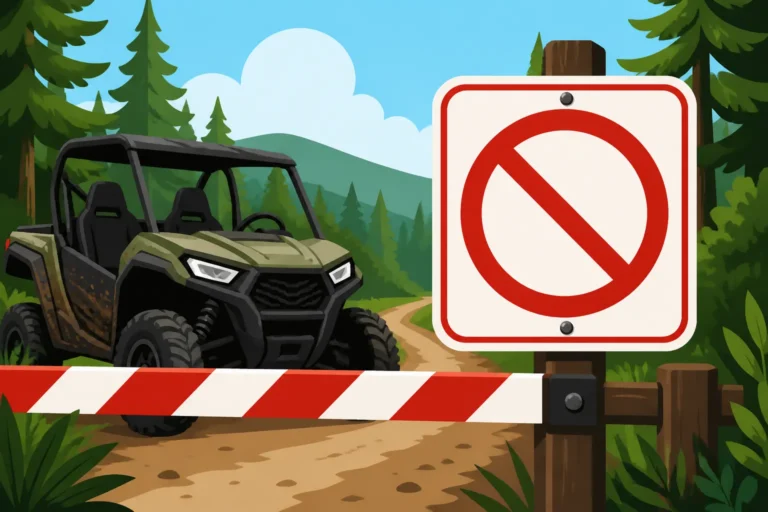
Before you leave, confirm that the area is open to your machine and that the trails you plan to use are open that day. Rain can turn a sandy or packed route into a difficult ride, while maintenance or seasonal rules can affect access. A route that appears on an app is not a guarantee that riding is permitted there.
A mapping tool such as onX Offroad can help you review routes and organize a ride, but use it as a planning aid rather than the final word on access. Compare the map with official signs and current information from the land manager or park. Download maps before entering areas where cell service may be unreliable. This is especially helpful if your group separates, takes a wrong turn, or needs to find the trailhead again.
The access rules matter as much as the route itself. National forests, wildlife management areas, and private parks do not necessarily share the same requirements. Make sure you understand the applicable pass, safety, and machine rules for the place you are visiting. [Mississippi Forest Pass Coverage] can help clarify what a forest pass does and does not cover.
Pack for comfort and a safe return
Even a short ride can feel long when you are hot, thirsty, or covered in dust. Bring water, a basic first-aid kit, a charged phone, and any medication you may need. Wear a properly fitting helmet and protective clothing suited to the terrain. Gloves and sturdy footwear can make a noticeable difference when steering, standing on the footrests, or walking around a muddy machine.
Pack for the possibility that the ride takes longer than expected. Tell someone where you are going and when you expect to return. If your group is riding in an area with patchy service, decide what to do if riders become separated. Keep a paper map or downloaded route available instead of relying only on a live phone connection.
For a first outing, avoid carrying unnecessary gear that can shift or interfere with controls. Secure any cargo, keep it clear of hot or moving parts, and do not overload racks. A simple, well-planned ride is easier to manage than a complicated day with too much equipment and an ambitious route.
A simple plan for a first ride
Use this checklist to keep the day manageable:
- Choose the riding area. Pick a designated trail system or park, not an unverified road or informal route.
- Confirm machine fit. Check width limits, permitted machine types, passenger rules, and any equipment requirements.
- Check conditions and access. Look for current closures, weather-related updates, and applicable passes or waivers.
- Plan a modest route. Select a short loop or section with room to stop and turn back.
- Inspect the ATV or UTV. Check tires, brakes, lights, controls, fuel, and basic safety equipment.
- Pack essentials. Bring water, protective gear, a first-aid kit, a charged phone, and an offline map.
- Set group expectations. Agree to ride at the least experienced rider’s pace and regroup at planned points.
- Stop if conditions exceed your comfort level. Turning around is good judgment, not a failed ride.
If you are comparing destinations, onX Offroad can be useful for looking over a route before you leave, especially when you want to avoid arriving without a plan. Still, confirm access and closures directly with the relevant land manager or park. Good planning reduces avoidable surprises; it does not replace posted rules or local instructions.
For a new rider, the best Mississippi ATV trail is not necessarily the longest or muddiest one. It is the place where your machine is permitted, the conditions suit your experience, and you can ride at a pace that feels controlled. Start small, learn how the terrain changes under your tires, and save the more demanding routes for another day.
Disclaimer
This article is for general informational purposes only and does not constitute professional advice. Laws, prices and regulations vary by location and change over time. Consult a qualified professional for guidance on your specific situation.