Mississippi Snake Season on the Trail
A warm Mississippi ride can turn uncomfortable when a snake appears across a narrow trail, beside a puddle, or under the leaves at a campsite. Knowing when snakes are most active, where riders are likely to encounter them, and how to react without getting too close helps you protect yourself, your passengers, and the animal.
When snakes are active in Mississippi
Think in terms of warm weather, not a single season
Snakes in Mississippi are most likely to be moving around during warmer months, when they can find food and suitable places to regulate their body temperature. That often means more chances of seeing one from spring into fall. Activity can vary with local weather: a cool spell may reduce movement, while a stretch of warm days can bring snakes out even outside the height of summer.
There is no reliable date when the risk suddenly begins or ends across the whole state. Conditions in the Delta may differ from those in the pine forests of south Mississippi or the hills in the north. Rain, temperature, shade, and the availability of prey all affect where and when a snake may be active.
For an ATV or UTV rider, the practical takeaway is simple: stay alert any time the ground is warm and your route passes through habitat where snakes could be sheltered. A snake may be visible on an open trail, but it can also be difficult to spot among leaves, grass, pine straw, or muddy debris.
Know the kinds of encounters riders may have
Mississippi is home to several venomous snake species, including copperheads, cottonmouths, rattlesnakes, and the eastern coral snake. Riders do not need to identify every snake they see to respond safely. At trail speed, colors and patterns can be hard to distinguish, and trying to get a closer look creates more risk than it resolves.
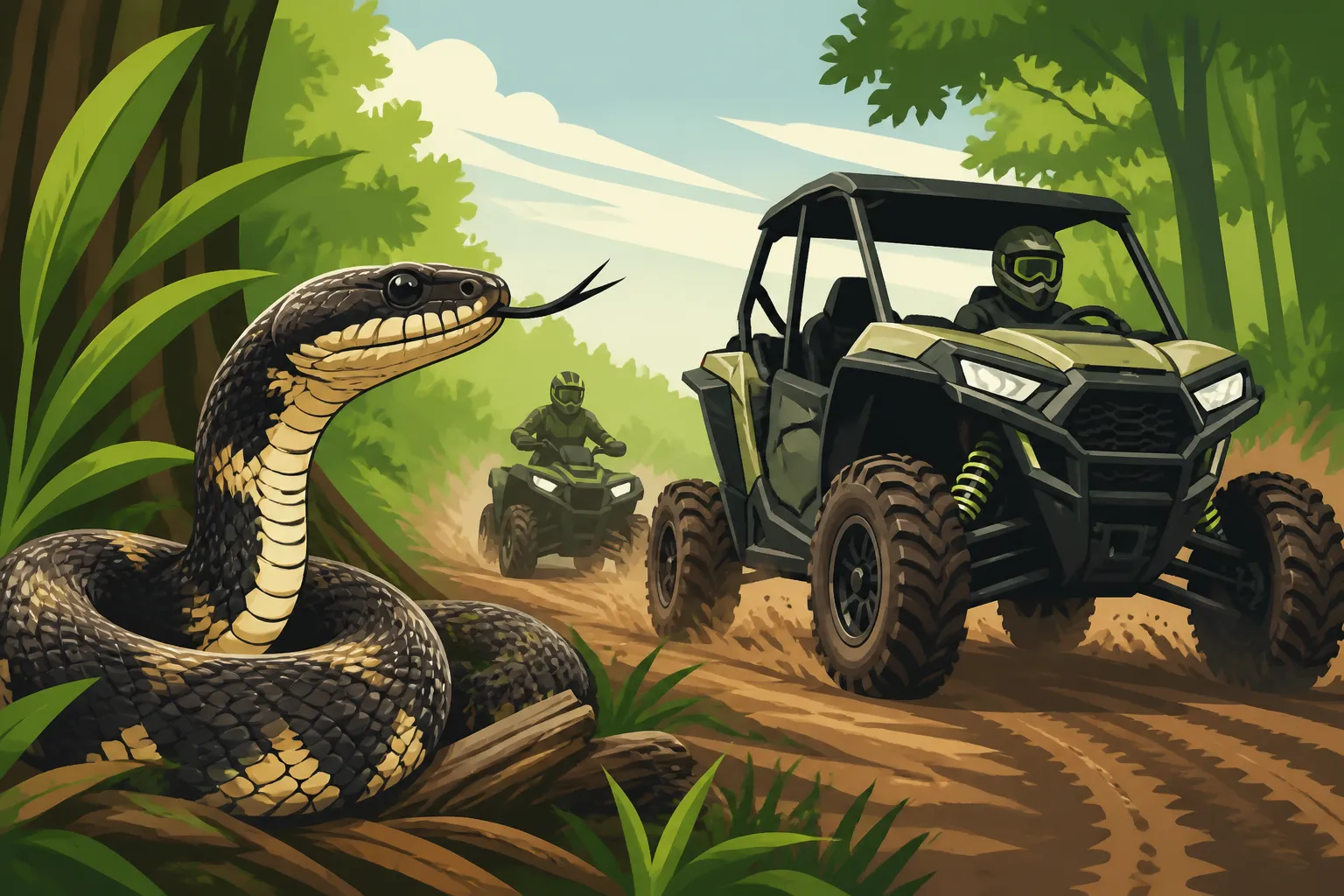
A snake may be crossing a road, resting in a sunny patch, or staying still because it is trying to avoid being noticed. Near water, a cottonmouth may be present, but not every snake beside a pond, creek, or swamp is one. Treat an unidentified snake as one you should not approach, touch, or attempt to move.
| Trail situation | Safer response |
|---|---|
| Snake crossing the trail | Stop at a safe distance and wait for it to move away |
| Snake beside a puddle or creek | Give it room and do not approach the bank to identify it |
| Snake under leaves or brush | Keep hands and feet out of the cover; choose another path if needed |
| Snake near a parked machine | Give it space and wait for it to leave before approaching |
| Snakebite | Get emergency medical help promptly and keep the person still |
Pay extra attention after rain and around cover
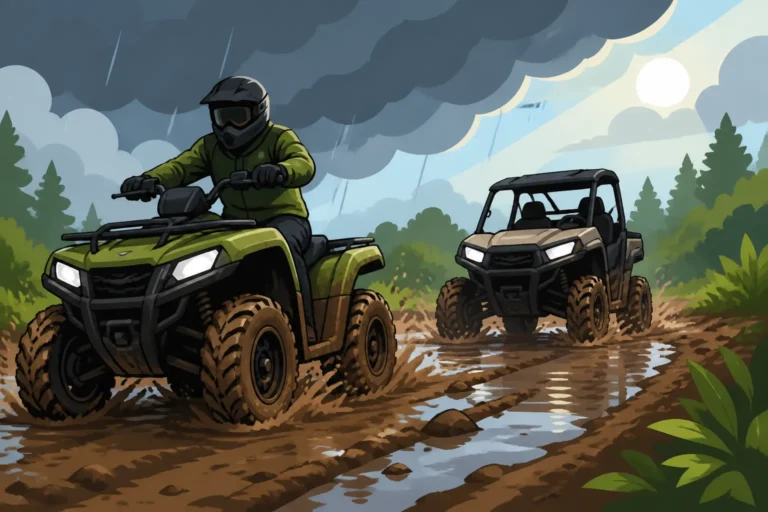
A wet trail can make snakes harder to see, especially when leaves, mud, and branches blend together. After heavy rain, a route may also have washouts, standing water, and debris that force riders to slow down or take a different line. That is a good reason to check trail conditions before loading up, not just to avoid a difficult ride but to be ready for changing terrain. [Mississippi Trail Conditions After Rain]
Snakes may use cover such as fallen logs, brush piles, rock edges, tall grass, and the margins of water. These are also places where riders may step when they stop to take a break, check a tire, or recover a stuck machine. Keep your hands away from hidden spaces, and look carefully before stepping off the trail or reaching beneath a fender.
How to ride and stop safely around snakes
Slow down where sightlines are poor
A trail can change from open sand to shaded pine cover in a few yards. Reduce speed when you approach blind bends, tall grass, leaf-covered sections, wet crossings, or piles of debris. Slowing down gives you more time to see what is ahead and stop without swerving into another hazard.
If you see a snake, stop smoothly and leave space between it and your machine. Do not try to drive over it, push it with a tire, or use a stick to make it move. Wait quietly for it to leave if the route is safe to pause on. If it remains in place, turn around only when you can do so without creating another hazard, or wait for the trail to clear.
For groups, the lead rider should signal a stop clearly, and riders behind should avoid bunching up. A sudden stop on a narrow trail can cause a collision, especially if the following rider cannot see the obstacle. Give the group time to stop, then tell everyone where the snake is without encouraging them to crowd around it.
Plan routes and check access before the ride
Before heading out, confirm that the riding area is open and that your planned route is permitted for your machine. A map app such as onX Offroad can help with route planning and orientation, but it should not replace posted signs, current land-manager information, or on-site instructions. Trail access can change, and a line shown on a map does not automatically mean the route is open to ATVs or UTVs.
For public riding areas, check conditions and restrictions before you leave home. For example, [Mississippi National Forest Riding Explained] offers context for riding in national forests, while [Bethel OHV Trails in Mississippi] is a relevant place to review when planning a ride around Bethel. Even when a trail is open, seasonal closures, wet-weather restrictions, or a posted detour may change where you can go.
Use onX Offroad or another navigation tool to help you stay oriented, then compare your route with the riding area’s official information. Download or save useful details before entering a dead zone, and let someone at home know where you expect to ride and when you plan to return.
Dress for brush, heat, and unexpected stops
Wear sturdy over-the-ankle boots, long pants, and gloves when riding through brush or stepping off the machine. These clothes do not make a snake encounter harmless, but they can reduce exposed skin and protect against thorns, insects, and rough vegetation. Do not rely on clothing as a reason to approach a snake.
Carry water, a basic first-aid kit, and a charged phone or other communication option suitable for the area. In humid Mississippi weather, riders can become overheated while stopped on a trail, so plan breaks and keep drinking water. A snake encounter may delay your ride, and it is easier to make careful decisions when everyone is not already exhausted or dehydrated. [Packing for Southern Humidity]
What to do if you encounter or are bitten by a snake
Keep your distance and do not handle it
If a snake is on the trail, give it room to move away. Do not try to kill it, catch it, or carry it off the trail. Handling a snake is a common way to turn a brief sighting into a bite, and a snake that appears dead or injured can still be dangerous.
Keep children and pets away, and tell other riders to stop before they reach the animal. If you can safely wait without blocking a dangerous stretch of trail, let the snake leave on its own. If you choose to take a photo, do it only from a safe distance without approaching, cornering, or disturbing it. A photo is not worth getting closer.
Riders sometimes feel pressure to keep moving when a group is behind them or daylight is fading. Still, do not rush a close pass. A few minutes spent waiting or finding another route is preferable to trying to force the animal away with a tire, boot, or tool.
Treat a suspected bite as an emergency
If someone may have been bitten by a venomous snake, call emergency services and arrange prompt medical care. Keep the person as calm and still as possible, and limit walking or movement. Remove rings, watches, or tight clothing near the affected area before swelling develops, as long as doing so does not delay getting help.
Do not cut the bite, try to suck out venom, apply ice, or use a tourniquet. Do not attempt to catch or kill the snake for identification. If it can be photographed from a safe distance without delaying care, that may help, but treatment should not depend on identifying the animal. Follow instructions from emergency dispatchers and medical professionals.
Before a group ride, decide how you would contact help from the area you plan to visit. Share the route, identify a meeting point, and consider who will stay with the injured rider while another person seeks assistance if phone service is unavailable. These plans are useful for many trail emergencies, not only snakebites. [First Aid on a Long Southern Loop]
Make snake awareness part of your trail routine
Use a quick check at stops and campsites
Most riders do not need to spend the entire trip watching the ground. A few consistent habits can make stops safer without taking the enjoyment out of the ride. Before stepping away from the machine, scan the ground around your boots. Look before sitting on a log, reaching into brush, or placing a hand near a pile of leaves.
At camp, keep gear organized rather than leaving gloves, bags, or clothing in tall grass overnight. Shake out boots and clothing before putting them on, especially if they have been left outside or stored near vegetation. Use a light to check the ground after dark, and avoid reaching into a space you cannot see clearly.
If you are camping near a riding area, follow the property’s rules and keep the campsite tidy. Food scraps are more likely to attract rodents than snakes directly, but rodents can be prey for snakes, so avoid leaving food and trash scattered around the site. [Mississippi OHV Camping With Trail Access]
Match your precautions to the ride
A wide, well-maintained trail with open sightlines calls for different attention than a narrow route bordered by tall grass and standing water. You do not need to cancel every warm-weather ride because snakes may be present. Instead, adjust your pace and stopping habits to the terrain, and be especially careful when visibility is limited.
If you are riding during a season when wildlife activity is higher, remind the group about the basics before starting: stay on the permitted trail, keep hands out of brush and crevices, and do not crowd wildlife. Good trail etiquette also means giving other riders room when someone has stopped to deal with an obstacle. [Mississippi Trail Etiquette Locals Expect]
onX Offroad can be one part of planning a route, particularly when you want to stay oriented in a large riding area. Still, no navigation app can tell you that a snake is around the next bend or guarantee a route is currently open. Pair route planning with official trail updates, posted signs, and careful riding.
The safest response to a snake is usually uncomplicated: stop at a distance, let it move away, and do not handle it. Slow riding, sensible clothing, a plan for communication, and a calm group make a wildlife encounter much easier to manage. For broader seasonal planning, [Mississippi Riding Season Month by Month] can help you think through conditions beyond snake activity.
Disclaimer
This article is for general informational purposes only and does not constitute professional advice. Laws, prices and regulations vary by location and change over time. Consult a qualified professional for guidance on your specific situation.