Mississippi Trail Difficulty Ratings
Mississippi ATV and UTV trails can change dramatically with rain, standing water, loose sand, roots, and ruts. A route described as easy may feel very different after a storm or in a wide side-by-side. This guide explains how to interpret trail difficulty ratings, judge whether a route suits your machine and experience, and prepare before you unload at the trailhead.
How Mississippi ATV trail difficulty ratings work
Ratings are useful clues, not guarantees
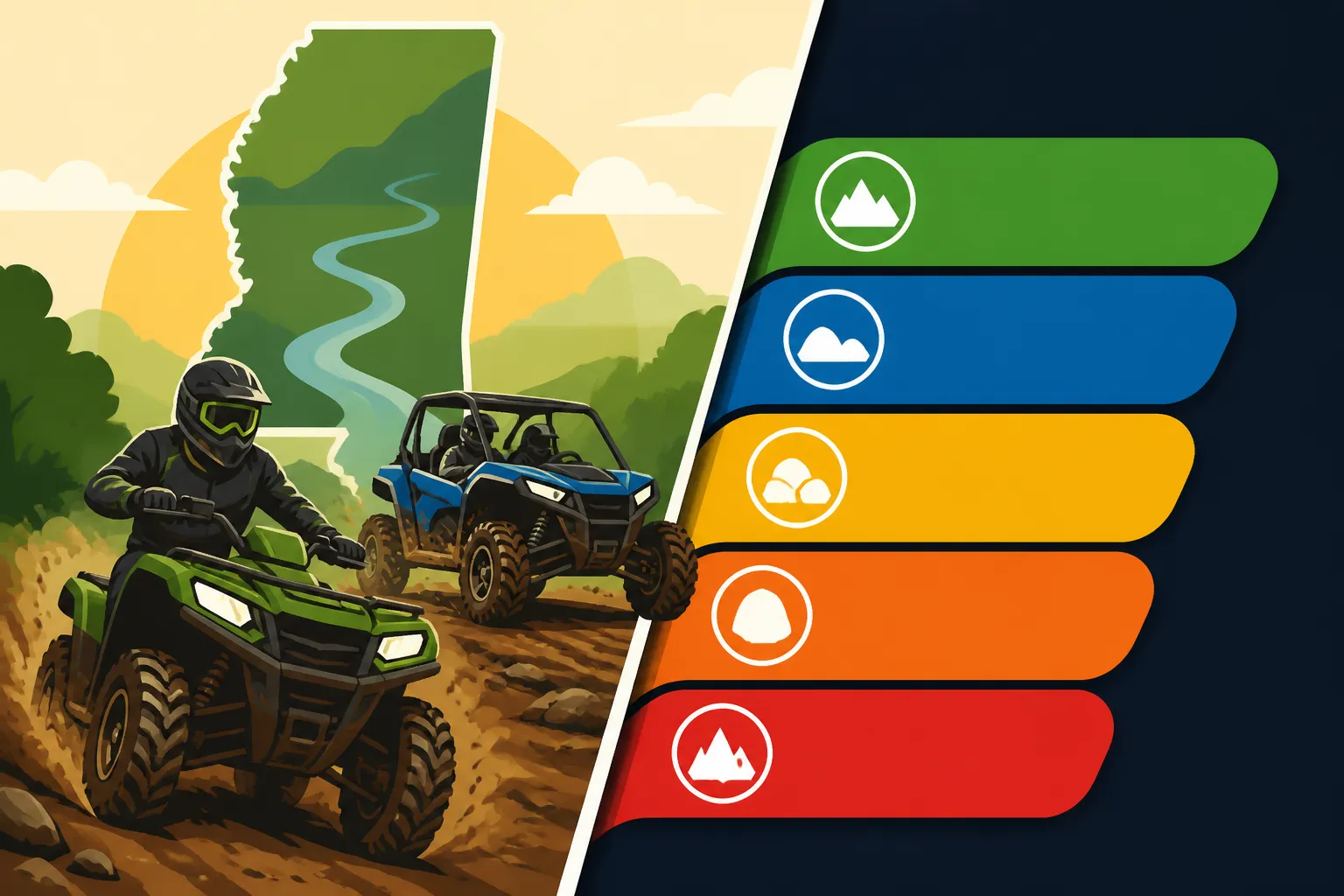
Trail difficulty labels help riders estimate what they may encounter, but there is no single statewide rating system that every Mississippi riding area uses. One park’s “moderate” route might be another park’s easy loop. Some places use colors or symbols, while others describe terrain in words or rely on posted signs. When a trail system does not publish ratings, you may need to combine its map, rules, recent conditions, and your own judgment.
Even a well-labeled route can change throughout the day. A dry, smooth path can become slippery after a passing shower. A sandy stretch may be manageable at a steady pace but tiring for a new rider if it runs on for miles. The rating is best treated as an initial estimate—not a promise that every section will match it.
Before you ride, look for how the park defines its labels. Check whether difficulty refers to the trail’s steepness, surface, obstacles, or overall skill required. Also confirm that the route is open to your vehicle. A difficulty rating does not tell you whether a trail allows a wide UTV, and trail width rules can matter just as much as terrain. For a useful starting point, see Mississippi Trails With Width Limits and [How to Read a Forest Service Trail Map].
What easy, moderate, and difficult may mean on the ground
An easy trail generally has a more predictable surface and fewer demanding obstacles. It may still include loose gravel, shallow ruts, roots, or narrow turns. “Easy” does not mean risk-free, especially for a child or first-time rider. A beginner who has never handled an ATV on a slope may find a short, rocky hill more challenging than an experienced rider would.
Moderate routes often ask for more careful throttle and steering. Expect the possibility of deeper ruts, tighter turns, uneven ground, sand, small ledges, or water that needs to be assessed before crossing. Riders may need to shift their weight, choose a line around an obstacle, and leave extra space between machines. A moderate trail can be a reasonable next step for someone with basic control skills, provided the route is dry enough and the rider is comfortable turning back.
Difficult routes may involve deeper mud, steeper slopes, larger obstacles, narrow passages, or terrain where recovery is harder. In Mississippi, wet ground can make a familiar obstacle significantly more demanding. Mud can hide holes and submerged debris, while slick clay or roots can reduce traction. Don’t treat a difficult rating as a dare. If you cannot confidently identify a safe line, or if the route looks beyond your experience, choose another trail.
| Rating label | Terrain you might encounter | A sensible approach |
|---|---|---|
| Easy | More predictable ground, gentle turns, limited obstacles | Ride at a controlled pace and keep checking for changing conditions |
| Moderate | Uneven surfaces, ruts, loose sand, tighter turns, or small obstacles | Use steady throttle, maintain space, and be ready to turn back |
| Difficult | Deeper mud, steeper ground, larger obstacles, or limited recovery options | Ride only with suitable experience, equipment, and a recovery plan |
| Unrated | No consistent difficulty label or published rating | Ask the operator, study the map, and inspect conditions before committing |
These descriptions are general, not official definitions for every Mississippi trail. Follow the riding area’s posted rules and ask staff when the rating system is unclear.
Match the route to your machine and experience
Choose for the least experienced person in your group
A group ride can get frustrating when the most confident rider chooses a route that leaves a beginner anxious or far behind. Before heading out, ask each rider what they have actually handled—not just what they hope to try. Someone comfortable on a flat gravel lane may not yet be ready for a rutted hill, even if they have spent plenty of time driving a car or riding as a passenger.
Start with a route that gives everyone room to practice braking, turning, and maintaining a safe following distance. Agree on a regrouping point and a simple signal for stopping. If one rider is struggling, don’t pressure them to keep going because the rest of the group wants to reach a particular loop. Turning around early is often a better choice than making a nervous rider attempt an obstacle they do not understand.
Families should be especially cautious about interpreting a trail label as a child-suitability rating. A route marked easy may still be too long, rough, or tiring for a young rider. Consider the child’s experience, the machine’s size, supervision, and the ability to leave the route quickly. Best Mississippi ATV Trails for Beginners can help you think through which riding areas may be a more comfortable starting point.
Check width, ground clearance, and recovery needs
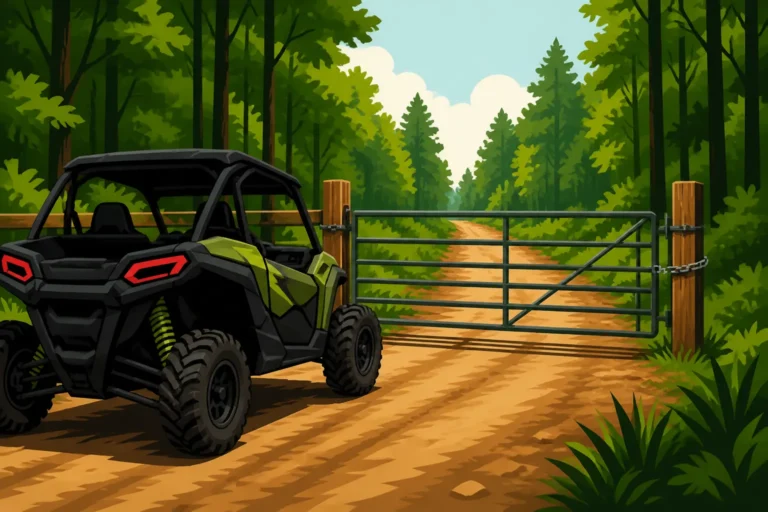
A trail’s difficulty rating does not establish that your ATV or UTV fits. Narrow forest paths, gates, tight turns, and marked width limits may rule out a machine even when the surface looks easy. A larger side-by-side may also have less room to maneuver around a tree or rut than a smaller ATV. Check the riding area’s vehicle restrictions before towing there, and measure your machine as the operator instructs.
Ground clearance and tires matter too. A shallow rut that is easy to straddle on one machine might catch the underside of another. Tires suited to hard-packed ground may struggle in deep mud, while aggressive tires can change how a vehicle responds on softer surfaces. Think about what your machine can reasonably handle when loaded with passengers and gear, not just what it managed on a short test ride.
For longer or more remote rides, consider what happens if you get stuck, have a mechanical problem, or need to leave early. Carry basic recovery and repair supplies appropriate to your vehicle, and avoid taking a route where your group has no practical way to assist a disabled machine. If you use onX Offroad to review routes or keep map information available, treat it as a planning aid—not confirmation that a trail is open, passable, or permitted for your machine. Mississippi OHV Camping With Trail Access is also useful when planning a trip where distance from your vehicle or campsite affects how much support you can carry.
Read local conditions before you ride
Rain can change the rating you experience
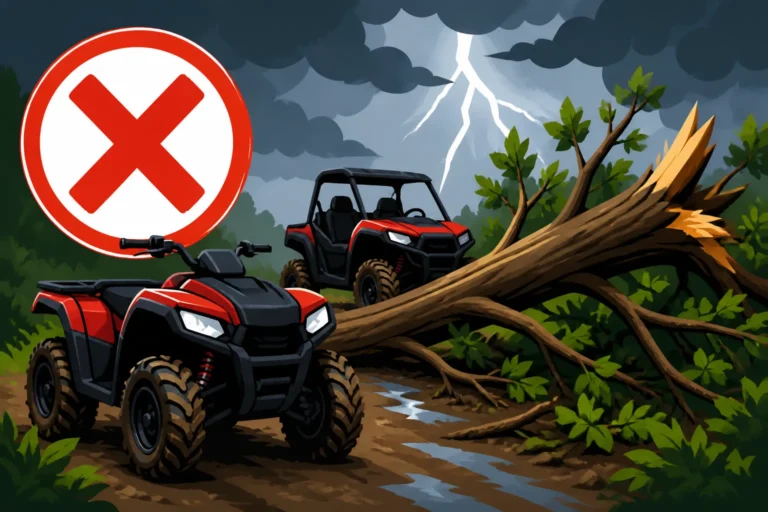
Mississippi weather can turn a manageable trail into a much tougher ride. Rain may soften trail edges, deepen existing ruts, conceal holes, and make roots or packed clay slick. Water can also hide the bottom of a crossing, so a puddle that looks harmless from the seat may be deeper than expected. If you cannot see the surface or judge the depth safely, don’t enter just because another rider went through.
A recent storm can affect different sections in different ways. Higher ground may drain while low spots stay wet, and shaded areas can remain slippery longer. That means a route can alternate between easy travel and unexpectedly demanding patches. Reduce speed when visibility or traction changes, leave more room between machines, and avoid following another vehicle so closely that you cannot react to its line.
Check the riding area’s own updates before setting out. Trail closures and wet-weather restrictions are not just inconveniences; they may protect both riders and the trail surface. For practical guidance, see Mississippi Trail Conditions After Rain and Mississippi Trail Closures After a Storm. If the operator advises against riding, choose another day rather than trying to judge a closed trail from the parking area.
Compare riding areas by terrain and rules
Different Mississippi riding areas can offer very different experiences. A public OHV trail, a national forest route, and a private mud park should not be assumed to have the same surfaces, rating labels, access rules, or facilities. Read the specific operator’s information before you go. Bethel OHV Trails in Mississippi, Mississippi National Forest Riding Explained, and Red Creek Off-Road in Mississippi provide starting points for comparing these types of destinations.
For any location, look for a current map, vehicle-width restrictions, operating rules, closures, and whether the route is intended for your type of machine. A trail map may show where a route goes without explaining how challenging it feels, so combine it with posted descriptions and local advice. If using onX Offroad to explore mapped routes, check the park or land manager’s own guidance separately; a map line alone does not establish access permission or current trail status.
Call or ask staff when key details are missing. Useful questions include whether the route has steep or muddy sections, whether a wide UTV can pass, how recent rain has affected the area, and where a rider can turn around. A specific answer about today’s conditions is more valuable than a broad label that may have been assigned in different weather.
A practical difficulty check before you commit
Use a simple pre-ride decision process
Before entering a route, pause long enough to consider the trail, the rider, and the vehicle together. A label such as “moderate” cannot account for all three. The following sequence helps turn a vague rating into a safer decision:
- Confirm access. Make sure the route is open and your machine is allowed. Check width limits, posted restrictions, and any required permits.
- Check conditions. Look for recent rain, closure notices, and advice from the park or land manager. Ask staff if the surface is unclear.
- Compare the route with your skills. Be honest about experience with mud, slopes, water, ruts, and obstacles.
- Assess the machine. Consider its width, tires, ground clearance, passenger load, and whether you can recover it if it gets stuck.
- Choose a turnaround point. If the trail becomes more difficult than expected, turn back while you still have room and daylight.
- Tell someone your plan. For a long or remote ride, share where you intend to go and when you expect to return.
That process is especially helpful when a group includes different machines or experience levels. A route that suits a skilled ATV rider may not work for a new UTV driver carrying passengers. Keep the group together, avoid pressuring anyone to continue, and leave a clear gap between vehicles so each rider can respond to changing terrain.
Know when to stop or reroute
A difficult section is a reason to reassess, not a test of courage. Stop before entering an obstacle if you cannot see a safe line, if water depth is uncertain, or if the approach is too steep or slippery for your experience. It is also sensible to stop when someone is tired, a machine is overheating, or conditions are worsening. Fatigue makes it easier to misjudge speed, distance, and traction.
If you decide to turn around, do so where there is enough space and visibility. Avoid blocking the trail or making a sudden maneuver on a slope. Let the group know what you are doing, and make sure no one continues ahead alone. When a route is beyond your comfort level, choosing a different loop is a sound riding decision—not a failure.
Keep in mind that difficulty labels are only one part of a responsible ride. Stay on permitted routes, follow posted instructions, and respect closures. For broader trail conduct, see Mississippi Trail Etiquette Locals Expect. With a little preparation, a rating becomes a useful starting point for a ride that fits your group rather than a guess made at the trail entrance.
Disclaimer
This article is for general informational purposes only and does not constitute professional advice. Laws, prices and regulations vary by location and change over time. Consult a qualified professional for guidance on your specific situation.