Brands Written Into an Ordinance
It's incredibly frustrating when you're trying to figure out where you can legally ride your ATV or UTV in Mississippi, only to discover that some towns have local ordinances that specifically name certain brands while excluding others. This guide will dive deep into why this happens, what it means for you as a rider, and how you can navigate these often-confusing and sometimes seemingly arbitrary rules to ensure your machine is compliant.
Understanding Local Ordinances and Brand Specificity
When we talk about off-road vehicles (ORVs) like ATVs and UTVs in Mississippi, the statewide law is pretty clear: they're generally banned from public roads and highways. However, towns and counties have the authority to create their own local ordinances, often to allow golf carts or sometimes even certain types of ORVs on specific streets. This is where things can get really tricky, because instead of just defining vehicle characteristics like width, weight, or safety features, some local governments take the unusual step of naming specific brands or models that are permitted, or conversely, explicitly banned.
Why Towns Name Specific Brands in Ordinances
You might wonder why a local government would go to the trouble of listing specific brands instead of just setting universal criteria. There are a few reasons this might occur, though none of them typically make it less confusing for the average rider. Sometimes, it's a reflection of popular sentiment or a perceived "safeness" of certain brands within the community. For example, a town council might see a lot of particular brand X golf carts being used responsibly and decide to codify that brand's presence, while neglecting others or even explicitly excluding them if they have a different reputation.
Another reason can be a lack of technical understanding among the ordinance writers. Instead of drafting language that accurately describes vehicle classes, dimensions, or safety features, it might seem simpler to just list what they see or what they are told is acceptable. This isn't ideal for riders, of course, because an ordinance might, for example, permit a Polaris Ranger but exclude a Can-Am Defender, even if both machines are functionally identical in terms of dimensions, speed capabilities, and safety equipment. This can create a significant barrier for residents who own perfectly safe and compliant machines from brands not explicitly named.
How Ordinances Are Created and Why They Can Be Inconsistent
Local ordinances are typically crafted by municipal legal teams or town councils, often in response to public requests, concerns, or perceived issues within the community. The process usually involves initial drafting, public hearings where citizens can voice their opinions, and then a vote by the governing body. The inconsistencies arise because each town is essentially a sovereign entity when it comes to these local rules. What one town decides is permissible, another might strictly prohibit. For instance, [Hattiesburg's Cart Ordinance in Mississippi] might focus on golf carts, while another town, perhaps like [Ocean Springs' Cart Rules in Mississippi], could have a more expansive or restrictive list that delves into specific ATV or UTV brands.
This decentralized approach means there's no overarching state guidance that ensures uniformity in how towns handle ORV access, especially concerning brand specificity. You might find a town that allows street-legal golf carts, but then completely bans a side-by-side even if it meets all the same criteria for lights, mirrors, and speed. The legislative process at the local level isn't always driven by a comprehensive understanding of the off-road vehicle market, and sometimes, the loudest voices or the most visible examples of machines in use end up shaping the legal text. This creates a patchwork of regulations that can feel unfair and arbitrary, making it a real challenge for riders to know where their particular machine from, say, SuperATV or Polaris, is actually welcome on city streets.
The Impact of Brand-Specific Restrictions on Riders
Navigating Mississippi's landscape of local ATV and UTV ordinances can be a real headache, especially when some towns decide to play favorites with brands. For riders, these brand-specific restrictions aren't just an inconvenience; they can directly impact what machine you buy, how you use it, and even where you choose to live or recreate. It's a situation that often leaves enthusiasts scratching their heads, wondering why their perfectly capable machine is suddenly deemed less acceptable than another, simply due to its manufacturer.
Limitations on Machine Choice and Aftermarket Modifications
One of the most immediate and frustrating impacts of brand-specific ordinances is how they limit your choices as a consumer. Imagine you've been eyeing a new UTV from a reputable manufacturer known for its reliability and performance. You do your research, maybe even consider adding some SuperATV accessories to enhance its utility or safety, only to find that your local town ordinance doesn't mention that brand, or worse, explicitly excludes it. Suddenly, your dream machine might be off-limits for even basic use like crossing a street to get to a neighbor's house, while a functionally identical machine from a different brand is perfectly fine.
This problem extends to aftermarket modifications as well. Riders often customize their machines for specific uses, whether it's for hunting, farm work, or trail riding. If a town ordinance is so narrowly focused on original manufacturer branding, it creates ambiguity about whether a modified machine, even one that meets all safety standards, still fits the "approved" list. This stifles innovation and personalization, forcing riders to conform to a potentially outdated or uninformed list of acceptable vehicles, rather than allowing for common-sense adherence to broader safety and operational standards.
The Burden on Owners and Enforcement Challenges
For ATV and UTV owners, brand-specific ordinances place an undue burden on them to constantly research and understand hyper-local rules. It’s not enough to know the general state law or even county-level regulations; you have to investigate every single town you plan to ride in or through. This becomes particularly complex for those who live near town borders or who travel to different areas for recreation. You might be perfectly legal one mile, and then unknowingly commit an infraction the next, simply because the adjacent town has a different list of approved brands.
| Ordinance Type | Description | Impact on Riders |
|---|---|---|
| Generic/Criteria-Based | Defines vehicles by characteristics (e.g., width, weight, speed, safety features). | Clear guidelines, encourages compliance through modification, less arbitrary. |
| Brand-Specific | Explicitly names brands or models (e.g., "Polaris Ranger" or "no Can-Am"). | Restrictive choices, can feel arbitrary, creates confusion, higher burden to check specific town rules, potential for unfair exclusion. |
Enforcement can also be a challenge for local law enforcement. It requires deputies and police officers to be intimately familiar with not only the specific brands named in ordinances but also potentially the differences between various models and years. This is a lot to ask, especially when dealing with a wide array of off-road vehicles on the market today. It can lead to inconsistent enforcement or situations where a rider is ticketed not for unsafe operation, but simply for owning a machine from a brand not explicitly sanctioned by a particular town's rules, even if that machine, perhaps equipped with robust SuperATV parts, is as safe as any other.
Navigating Ordinances: What Riders Can Do
The maze of brand-specific ATV and UTV ordinances in Mississippi can be disheartening, but it doesn't mean you're powerless. As a rider, there are proactive steps you can take to stay informed, ensure compliance, and even advocate for more sensible and equitable regulations in your community. It requires a bit of detective work and sometimes a willingness to engage with local government, but it's an important part of securing your right to ride.
Researching Local Laws Before You Ride
Before you ever load up your machine and head out, especially if you're venturing into a new town, doing your homework on local ordinances is absolutely critical. Do not assume that what's allowed in one town is permitted in another, even if they're right next door. Start by checking the official municipal website for the town or city in question. Look for sections on "Ordinances," "Traffic Laws," "Recreational Vehicles," or "Off-Road Vehicles." Sometimes these details might be buried in the code, or you might find them under specific headings like [Mississippi Golf Cart and LSV Ordinances].
If you can't find clear information online, don't hesitate to call the city clerk's office or the local police department. They are typically the best resources for definitive answers. When you call, be specific about your machine's make and model, and ask direct questions about any brand-specific rules or requirements regarding width, weight, lighting, and any other pertinent details. It's often helpful to write down the name of the person you spoke with and the date, just in case you need to reference the conversation later. Remember, a lack of clear information can often lead to misunderstandings, so clarity is key.
Advocating for Change in Your Community
If you find that your town has restrictive, brand-specific ordinances that feel unfair or outdated, consider becoming an advocate for change. Local governments are often responsive to their constituents, and a well-reasoned argument can go a long way. Start by understanding the current ordinance thoroughly. What brands are named? What criteria, if any, are used? Is there a logical reason for the exclusions, or does it seem arbitrary? Perhaps the town is simply unaware of the broader market of safe and compliant machines, including those that might feature components from trusted aftermarket providers like SuperATV.
You could consider organizing with other local riders who share your concerns. A unified voice carries more weight than individual complaints. Approach your city council or board of aldermen with a proposal for a more inclusive ordinance that focuses on performance, safety features, and dimensions (like [Mississippi ATV Width Limit of 50 Inches] or [Mississippi ROV Width Limit of 65 Inches]) rather than specific brand names. Provide examples of how other towns or states have successfully implemented such criteria-based rules. Attending public meetings, submitting written comments, and engaging in respectful dialogue can slowly but surely chip away at these restrictive rules. Remember, change often takes time and persistence, but it's often worth the effort to open up safe and responsible riding opportunities in your community.
What Happens When a Deputy Stops You Riding
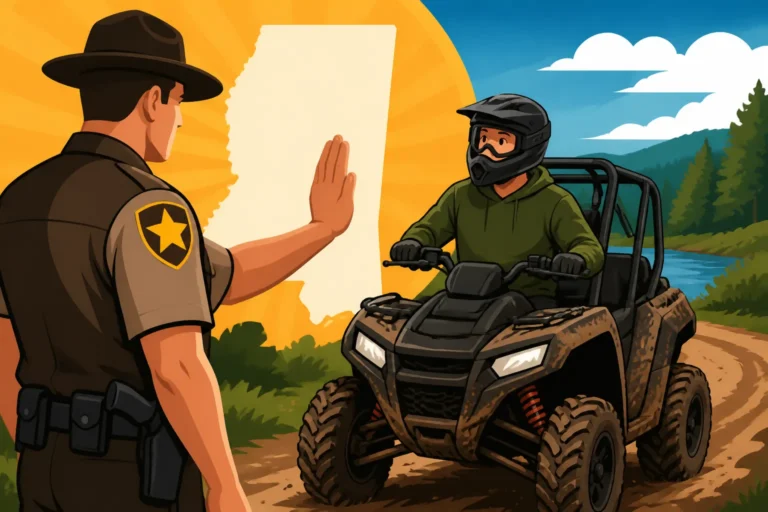
Despite your best efforts to comply, there might come a time when you're stopped by a deputy or police officer while riding your ATV or UTV on a public road in Mississippi, especially if you're in a town with brand-specific ordinances or if your machine exceeds general width or weight limits. It's crucial to remain calm, respectful, and cooperative. Have your proof of ownership, like a bill of sale or title if applicable (remember, [Mississippi ATV Titling Starts July 2025]), and any safety certificates or driver's license ready.
The officer will likely want to know why you're riding on the road and if your machine meets local requirements. This is where your prior research into local ordinances becomes invaluable. You might be able to explain how your vehicle does comply with specific local rules, even if it's from a brand not explicitly named, by pointing to its characteristics. If a ticket is issued, accept it calmly. You can always dispute a citation in court later if you believe you were unjustly targeted by a brand-specific rule. Understanding your rights and the local laws is your best defense in these situations.
Disclaimer
This article is for general informational purposes only and does not constitute professional advice. Laws, prices and regulations vary by location and change over time. Consult a qualified professional for guidance on your specific situation.