Ocean Springs Names the ATV Brands It Bars
The world of ATV and UTV riding in Mississippi can often feel like navigating a maze, especially when you venture beyond the designated trails and wonder about riding on public roads. Many riders assume a general rule applies across the entire state, only to face confusion, frustration, or even fines when they encounter highly specific local ordinances. This guide aims to clear up some of that haze, focusing particularly on how certain towns, like Ocean Springs, take a unique and granular approach to regulating off-road vehicles on their streets, even going so far as to specify types or characteristics that effectively bar certain machines.
The General Landscape of Mississippi ATV Road Laws
It’s easy to feel like you’re constantly guessing when it comes to riding your ATV or UTV on public roads in Mississippi. The reality is, the state’s approach to these machines on pavement is, shall we say, a bit minimalistic. This often leaves local municipalities to pick up the slack, leading to a patchwork of rules that can vary wildly from one town to the next.
Why State Law is So Limited
First off, let's talk about the big picture. Mississippi’s state law concerning ATVs and UTVs on public roads is surprisingly brief and, to put it plainly, largely prohibitive. We're talking about a legal framework that barely scratches the surface, often leaving riders scratching their heads. The core of it boils down to a pretty straightforward "no" when it comes to operating these machines on state and county roads. There isn't a comprehensive chapter outlining exceptions for rural travel, crossing highways, or specific agricultural uses that many other states might have. This can be incredibly frustrating for those who rely on their machines for quick trips to the mailbox, moving between fields, or simply getting from their property to a nearby trail access point.
Because the state statutes are so concise, they don't delve into the nuances of different machine types, engine sizes, or specific safety features that might, in other places, qualify a machine for limited road use. It’s a blanket ban, and that lack of detail means that if you’re hoping for a statewide exemption or a specific pathway to make your UTV street-legal for any significant travel, you’re likely to be disappointed. This absence of state-level clarity often pushes the burden of regulation down to the local level, creating the very inconsistencies that riders find so vexing. [Mississippi Bans ATVs on Public Roads] and [Mississippi's ATV Law Is Only Two Sections Long] really highlight this brevity.
The Local Ordinance Loophole
Now, here's where things get interesting, and often, more complicated. While the state law sets a general prohibition, it also, by its very nature of being so thin, creates a sort of "loophole" or, more accurately, a void that local municipalities are empowered to fill. This means cities and towns across Mississippi can, and often do, enact their own ordinances regarding the use of ATVs, UTVs, and even golf carts on their public streets. This is why you might hear that you can ride a golf cart in one town, but not a UTV, or that a quad is completely off-limits everywhere. [Mississippi Local Ordinances Are the Only Path] is the key here – local rules are often the only path to any kind of street access.
The result of this localized control is a complex and often contradictory set of rules that can change as soon as you cross a city limit sign. One town might have a strict prohibition, while a neighboring community might allow limited use on certain streets, perhaps with speed restrictions or specific hours of operation. This patchwork of regulations is incredibly challenging for riders, especially those who travel or live near municipal boundaries. Imagine trying to plan a ride that takes you through two or three different towns, each with its own rulebook! It becomes critical for riders to do their homework before heading out. Checking city clerk websites, local police department FAQs, or even directly calling city hall is often the only way to get a clear picture of what’s allowed. [Mississippi Ordinance Lookups Before You Ride] cannot be stressed enough – ignorance of a local law is no defense.
Decoding Ocean Springs' Specific ATV Ordinance
When we talk about the complexities of local ATV laws, Ocean Springs stands out as a prime example of a municipality that has taken a very particular and detailed approach. It’s not just a blanket ban or a simple set of guidelines; their ordinance delves into specifics that can catch even seasoned riders by surprise.
What Makes Ocean Springs Unique
Ocean Springs isn't alone in having its own set of rules for off-road vehicles, but its approach is notably distinct. Many towns might categorize "ATVs" broadly and prohibit them, or conversely, create exceptions for "golf carts" or "low-speed vehicles" (LSVs) that meet certain criteria. [Hattiesburg's Cart Ordinance in Mississippi], for instance, is a good example of a town that has created specific allowances for golf carts. However, Ocean Springs goes a step further, not just defining what is allowed, but also what isn’t, with a level of detail that speaks volumes about their concerns regarding these machines on their streets.
The reasoning behind such a detailed ordinance often stems from a combination of factors. Public safety is always a primary concern – the differences in speed, braking, and visibility between a traditional car and an off-road vehicle are significant. Traffic flow, noise complaints, and the desire to maintain a certain aesthetic or quality of life in residential and commercial areas can also play a role. When a city, especially one with a vibrant tourist economy like Ocean Springs, experiences issues with excessive noise, reckless driving, or machines that simply don't fit the established road infrastructure, they are often compelled to enact stricter regulations. Their approach reflects a deliberate effort to manage these issues by defining exactly what is, or isn't, appropriate for their roads.
The Specific Brands That Are Barred
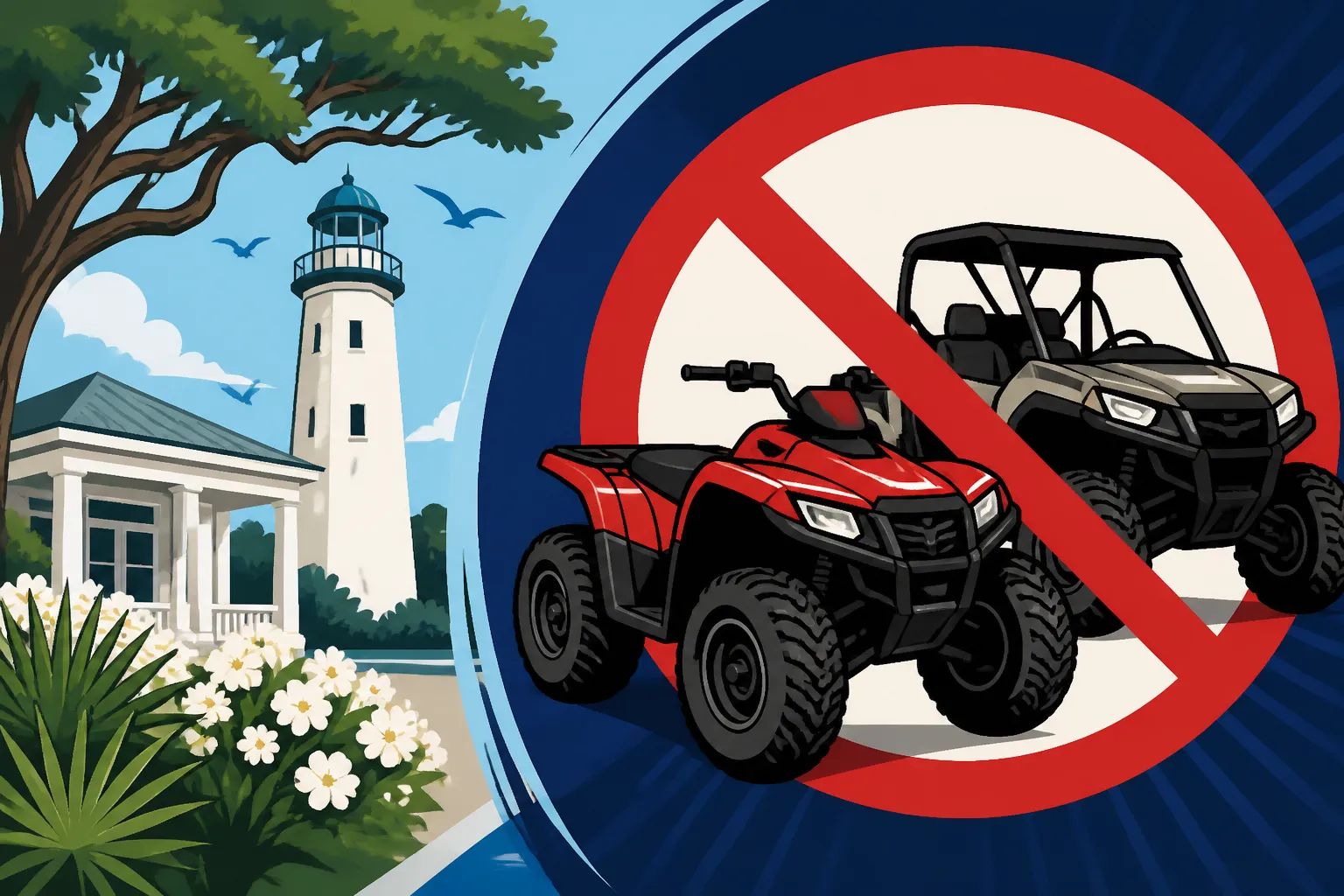
Now, this is where Ocean Springs truly sets itself apart and earns the title of this discussion. While it's uncommon for an ordinance to explicitly list brand names, the spirit of such a rule in Ocean Springs' case lies in its precise definitions and restrictions that, in effect, target certain types of machines that may be commonly associated with specific manufacturers. It's less about a literal list of "Honda is out, Yamaha is in," and more about setting parameters – like width, weight, tire type, or suspension characteristics – that might be predominantly found on machines from particular brands or models, or machines that have been heavily modified.
For example, an ordinance might specify that any vehicle exceeding a certain width, or equipped with aggressive mud tires not rated for street use, is prohibited. Many off-road enthusiasts turn to aftermarket parts from companies like SuperATV to enhance their machines with wider A-arms, lift kits, or specialized tires for extreme off-road conditions. While these modifications are fantastic for the trails, they can inadvertently push a machine beyond the legal definitions set forth in a local ordinance. Therefore, while the ordinance might not say "no to your modified Can-Am," it could say "no to any vehicle over 65 inches wide," which would certainly exclude many of the wider, more aggressive side-by-sides, especially those customized with performance parts. The impact is the same: if your machine, due to its factory specifications or aftermarket enhancements, falls outside these defined limits, it's effectively barred from the streets. This approach, by focusing on detailed specifications, indirectly makes it harder for certain brands or highly modified machines to comply, which is the underlying implication of a city "naming" the brands it bars.
The Impact on Riders and Machine Choice
An ordinance as specific as the one in Ocean Springs, which might explicitly or implicitly bar certain brands or types of machines, has significant repercussions for anyone who owns or is considering purchasing an ATV or UTV in the area. It’s not just about a temporary inconvenience; it can truly shape a rider’s entire experience and their choices as a consumer.
Why Brand-Specific Rules Matter
When a town sets out an ordinance that, through detailed specifications, effectively bans machines from certain manufacturers or even highly customized setups, it creates a very distinct ripple effect. For residents of Ocean Springs, or anyone who frequently visits or plans to ride there, this immediately narrows their options. If you’re in the market for a new side-by-side, knowing that certain models – perhaps those known for their wider stances, larger engines, or aggressive tire packages – won’t be street-legal in your community can certainly influence your purchasing decision. You might have to opt for a smaller, narrower machine, or even a specialized low-speed vehicle (LSV) that strictly adheres to the city’s definitions, even if your heart was set on a more robust adventure machine.
Furthermore, this level of specificity can lead to immense confusion and potential legal trouble for unaware riders. Imagine visiting Ocean Springs from out of town, having no idea about these hyper-local rules. You might be accustomed to riding your modified UTV on limited roads back home or in other parts of Mississippi, only to find yourself facing a citation or even having your machine impounded. The cost of a fine, court fees, and the hassle of retrieving an impounded vehicle can quickly turn a fun weekend ride into a very expensive headache. Moreover, aftermarket companies like SuperATV, which provide countless options for customizing and enhancing machines, suddenly find that some of their popular products, while perfectly legal and beneficial for off-road use, might contribute to a rider’s inability to legally operate their vehicle on specific municipal streets. It adds another layer of consideration for both the consumer and the parts manufacturer.
Navigating Local Restrictions
Given the intricate web of local regulations, taking proactive steps to understand and comply with them is absolutely essential. The days of simply assuming you can ride anywhere outside a designated trail are long gone, especially in towns like Ocean Springs. The first, and arguably most important, piece of advice is to research, research, research. Before you even load your machine onto the trailer for a trip, or certainly before you ever consider riding it on a public street, you need to know the local rules. [Checking Before a Long Southern Drive] is crucial here. Start by visiting the official website of the municipality you plan to visit or ride in. Most cities will have their ordinances publicly available online. Look specifically for sections related to "Off-Road Vehicles," "ATVs," "UTVs," "Side-by-Sides," or even "Golf Carts."
It’s also vital to understand that a city's approach to one type of vehicle doesn't automatically extend to another. Just because a town, like many across Mississippi, might have an ordinance allowing golf carts on certain streets doesn't mean your ATV or UTV is covered. Golf carts are typically designed for lower speeds and specific uses, and many ordinances reflect this, often treating them as distinct from more powerful, heavier, and less road-optimized off-road vehicles. [Why a Cart Ordinance Does Not Cover a UTV] highlights this common misunderstanding. If you're still unsure after reviewing the online information, don't hesitate to reach out to local authorities. A quick, polite phone call to the city clerk's office, the local police department’s non-emergency line, or even asking your county supervisor where you can ride can save you a lot of trouble. They are the ultimate arbiters of their local laws and can provide the most accurate, up-to-date information. [Asking Your County Supervisor Where You Can Ride] is always a good starting point for rural areas, but for specific city streets, the municipal office is your best bet.
Understanding the "What If" Scenarios
It's easy to think "it won't happen to me," but ignoring local ordinances, especially those as detailed as Ocean Springs', can lead to some very unwelcome consequences. Understanding what you stand to lose, and how to mitigate those risks, is just as important as knowing the rules themselves.
Consequences of Illegal Road Riding
Let's be clear: riding an ATV or UTV on a public road where it's prohibited is not a minor infraction. While the specific penalties can vary, you’re generally looking at fines, and potentially, far worse. [Mississippi Fines for Road Riding] are typically issued as traffic citations, and while they might seem less severe than other offenses, they can quickly add up. Beyond the initial fine, you'll often incur court costs, and if you choose to contest it, attorney fees. This can turn a seemingly small violation into a significant financial burden.
But it's not just about the money. Law enforcement officers have the authority to do more than just write a ticket. If your machine is found operating illegally, especially if it’s deemed unsafe or creating a public disturbance, it can be impounded. [When an ATV Gets Impounded After a Stop], your machine is towed away, and you'll then face daily storage fees, impoundment release fees, and the general headache of trying to get it back. This process can be lengthy and expensive, costing you hundreds or even thousands of dollars on top of any fines. Moreover, an illegal road ride could potentially lead to criminal charges if other laws are broken, such as reckless driving or operating under the influence. And if an accident occurs while you're operating illegally, your insurance company might deny coverage, leaving you personally responsible for damages and injuries. Navigating the justice court system to dispute a southern citation can also be a confusing and time-consuming process. [Paying a Justice Court Fine] often feels like a minor inconvenience until you realize the full scope of potential repercussions.
Protecting Yourself: Beyond the Law
Given these potential pitfalls, taking steps to protect yourself and your investment goes beyond simply knowing the law – it's about anticipating the "what ifs." First and foremost, consider robust insurance coverage, even if it's not legally mandated for your off-road machine in Mississippi. While many states don't require insurance for ATVs or UTVs used solely on private land or designated trails, this changes dramatically if you're even considering operating on or crossing public roads. A good policy can protect you from liability if you're involved in an accident, and comprehensive coverage can help if your machine is damaged or stolen, whether it's in your shed or at a trail. [Why Mississippi Riders Still Buy ATV Insurance] even when it's optional, is a testament to its value. You want to be sure you have proper coverage for any scenario where your machine might interact with public property.
Beyond insurance, responsible riding practices are paramount. Always wear appropriate safety gear, including a helmet, even if you’re over the age requiring it by law. While [Mississippi Helmet Law for Riders Under 16] specifically targets younger riders, wearing one is a smart choice for everyone. Be mindful of your surroundings, drive defensively, and avoid unnecessary risks. Always carry your proof of ownership, like your title or bill of sale, and any insurance documents when you ride. If you are stopped by law enforcement, having your paperwork readily available can make the encounter smoother and quicker. [Carrying Papers on a Southern Back Road] is a simple but effective way to be prepared. By being prepared, knowledgeable, and responsible, you significantly reduce the chances of an unfortunate incident turning into a full-blown legal and financial nightmare.
Looking Ahead: Future of ATV Road Access in Mississippi
The current state of ATV road access in Mississippi, characterized by broad state prohibitions and fragmented local ordinances, leaves many riders yearning for a more cohesive and reasonable framework. The conversation around street legality is ongoing, with various efforts and discussions shaping its potential future.
Past Legislative Attempts and Their Failures
It's not for lack of trying that Mississippi's state laws on ATV road access remain so limited. Over the years, there have been several attempts by legislators to introduce bills that would provide more clarity or even expand road access for off-road vehicles. These proposals often aim to create specific exceptions for things like crossing public roads, limited travel on secondary roads, or agricultural use. However, time and again, these bills have faced significant hurdles and ultimately failed to pass. [Mississippi's Failed 2025 Road Access Bill] is a recent example that underscores this challenge, illustrating how even proposals that garner some support can still fall short.
The debates surrounding these bills are complex. Proponents typically highlight the utility of these machines for rural residents, farmers, and hunters, as well as the economic benefits of allowing limited road use for tourism or local businesses. They often point to other states that have successfully implemented such laws without a significant increase in accidents. On the other hand, opponents raise valid concerns about public safety, the lack of traditional safety features on ATVs for road use, potential conflicts with other vehicles, and environmental impacts. The nuances of [Mississippi Senate Bill 2258 and What It Would Have Done] reveal the specific provisions that were considered and the broad implications for riders had it passed. Bridging this gap between utility and safety concerns has proven to be a persistent challenge in the Mississippi legislature.
Advocacy and Community Action
Given the historical difficulties in passing comprehensive state-level legislation, a significant path forward for riders seeking more reasonable road access lies in continued advocacy and community engagement. This often means working at the local level, where ordinances are made and where the concerns of local residents hold immediate sway. If you believe there's a need for change in your community regarding ATV access, don't just complain from the sidelines. Get involved. Attending local city council meetings, contacting your aldermen, or even presenting well-researched proposals can make a difference. [Bringing an ATV Question to Your Board of Aldermen] is a direct way to make your voice heard and initiate conversations about responsible, limited road use.
Organized groups and clubs also play a crucial role. When riders come together, their collective voice carries more weight than individual complaints. These groups can educate policymakers, present data on safe riding practices, and propose solutions that balance the needs of riders with public safety. Furthermore, manufacturers of aftermarket parts, such as SuperATV, often have an interest in promoting responsible riding and supporting legislation that allows for legal and safe use of their products, which could indirectly contribute to these advocacy efforts by showcasing how machines can be made safer or more compliant through accessories. By actively participating in discussions, sharing factual information, and demonstrating a commitment to safety and community well-being, riders can slowly but surely work towards shaping a future where ATV and UTV road access is clearer, more consistent, and more accommodating across Mississippi.
| Aspect | Mississippi State Law (General) | Example: Ocean Springs Local Ordinance (Illustrative) |
|---|---|---|
| ATV/UTV on Public Roads | Generally Prohibited | Prohibited, with highly specific definitions |
| Source of Regulation | Limited State Statutes | Detailed Municipal Ordinance |
| Exceptions | Very Few (e.g., crossing, emergencies) | May define specific exceptions, but often restrictive |
| Focus of Rules | Broad "Off-Road Vehicle" category | Highly specific machine characteristics (width, tires, etc.) |
| Brand Impact | None explicitly | Specifications may effectively bar certain brands or modified machines |
| Permit/Registration | No state-level road registration for ATVs | No local registration for ATVs (but check for LSVs/golf carts) |
| Driver Requirements | Standard driver's license if on private roads or crossing; safety course for under 16 | May specify age/license for any allowed use |
Disclaimer
This article is for general informational purposes only and does not constitute professional advice. Laws, prices and regulations vary by location and change over time. Consult a qualified professional for guidance on your specific situation.