Mississippi Private Park Alcohol Rules
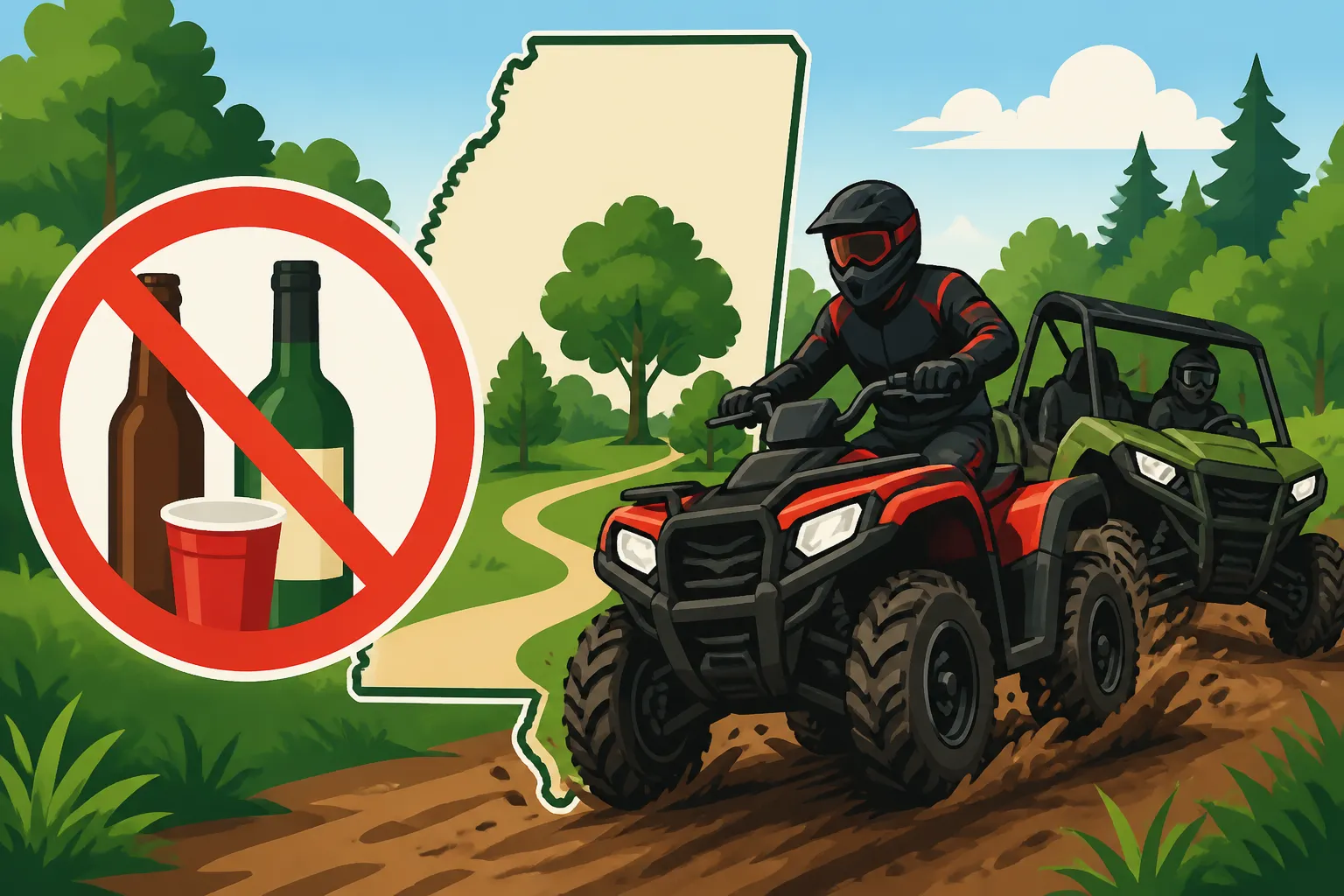
Alcohol rules at Mississippi ATV and UTV parks are usually set by the individual property, so a rule from one park may not apply at another. Before packing a cooler, find out where alcohol is allowed and whether it affects riding, camping, or event access. The safest plan is simple: keep drinking separate from operating a machine.
Why private park alcohol rules vary
A private riding park can set conditions for using its trails, campsites, facilities, and event areas. One property may prohibit alcohol altogether; another may allow it only in designated areas or at a campsite. Some parks may have separate rules for organized rides, family events, or other activities. Do not assume that a rule you followed at one park applies at the next.
Alcohol policies can cover more than whether you may bring a drink through the gate. A park may specify where alcohol can be consumed, who may possess it, whether glass containers are allowed, and what happens if a guest breaks a rule. It may also treat riding while impaired as a serious safety violation, even if alcohol is permitted in a campground or another non-riding area.
| Park policy question | What to confirm before you go |
|---|---|
| Is alcohol allowed on the property? | Whether the rule is a complete ban or permits alcohol in certain areas |
| Where can it be consumed? | Whether trails, staging areas, campsites, cabins, or event spaces have different rules |
| Are there container restrictions? | Whether glass, cans, or personal coolers are allowed |
| Does the rule change during events? | Whether event organizers have additional conditions |
| What happens if someone violates the policy? | Whether staff may stop a ride, deny access, or ask a guest to leave |
| Can anyone ride after drinking? | Treat this as a safety question with a clear answer: do not operate after drinking |
A policy can also be included in a waiver, posted at the entrance, printed in a reservation email, or explained by staff. Read the documents you receive rather than relying on a quick conversation at the gate. For more on the other conditions a park may set, see Mississippi Private Park Waivers and Rules.
“Private park” does not mean that every other rule disappears. State law and local requirements may apply independently of a park’s own policy. Likewise, permission to drink in a designated area is not permission to ride an ATV or UTV after drinking. If you are unsure how a particular law applies to a machine or location, do not guess; ask the park for its policy and seek qualified legal guidance for a legal interpretation.
The distinction between drinking and riding is important even at a park that allows alcohol. A guest might be allowed to have a drink at a campsite, for example, while the park still expects every machine operator to remain sober. Confirm whether the park has a no-alcohol rule for riders or for anyone who plans to return to the trail. As a practical safety standard, anyone who has been drinking should not operate a machine.
How to check the policy before your visit
Look for the park’s current rules before loading the trailer. A website or reservation message can be a useful starting point, but a policy may be updated or vary for a particular event. If the wording is unclear, contact the park directly and ask for a specific answer. Avoid relying on another rider’s description of what was allowed on a previous visit.
Use questions that identify the details that matter to your plans:
- Is alcohol allowed anywhere on the property? Ask whether the answer differs for day visitors, overnight guests, or event participants.
- Where is it allowed? Name the areas you expect to use, such as a campsite, cabin, pavilion, or staging area.
- Is alcohol prohibited in riding areas? Ask about trails, mud pits, parking areas, and any space where machines are being operated.
- Are there container or cooler restrictions? Confirm whether you can bring your own drinks and what kinds of containers are permitted.
- Does the policy change during organized events? Event rules may be more restrictive than the usual park policy.
- What is the rule for operators who have been drinking? Ask whether the park has a specific sobriety policy and how staff enforce it.
- What happens after a violation? Find out whether a guest may lose riding access or be asked to leave.
- Where is the written policy? Ask whether staff can point you to posted rules, a waiver, or an event notice.
Take note of the answer and share it with everyone in your group. A driver who arranged the trip may have read the rules, while passengers or friends arriving separately may not know them. A quick group message before departure can prevent confusion at the entrance or campsite.
If the park has overnight accommodations, ask separately about alcohol and quiet hours. Rules for a campsite or cabin may not be the same as rules for trails or common areas. [Mississippi Private Park Camping Rules] and Mississippi Private Park Quiet Hours cover related issues that can affect an overnight stay.
For an organized ride, ask both the property and the event organizer if the event has its own conditions. A park may control access to the land while the organizer sets requirements for event participation. If their instructions differ, get clarification before you arrive instead of assuming the less restrictive rule applies.
Keep alcohol separate from operating a machine
An ATV or UTV requires attention, judgment, and coordination. Trails can include mud, ruts, water, uneven ground, other riders, and changing visibility. Alcohol can make it harder to judge distance, react quickly, and make sound decisions. A passenger’s confidence that a driver “seems fine” is not a reliable way to assess whether the driver should operate.
Make the riding plan before anyone starts drinking. Decide who is driving, when the group will ride, and how people will get back to their campsite or lodging without using a machine after drinking. If a person has consumed alcohol, arrange a sober ride or have them stay where they are. Do not rely on coffee, food, a shower, or a short wait as proof that someone is safe to ride.
If your group is splitting into riders and non-riders, make the arrangement explicit. A person who was not planning to ride may be asked to move a machine, fetch equipment, or drive back to a site. Set a sober driver for those tasks in advance, and keep keys with that person if needed. The same approach applies to a side-by-side: having more seats or a familiar route does not make operation after drinking safe.
Be especially cautious when a group ride includes children or inexperienced riders. Keep the riding area separate from alcohol consumption, and make sure a responsible adult is available to supervise. Park rules may cover helmets, age limits, and passengers as well as alcohol; check those requirements before setting out. See [Mississippi Private Park Helmet Rules] for another policy area that can affect who is prepared to ride.
Do not assume that a private property setting makes impaired operation legally safe. The law can depend on the circumstances, the location, and the type of vehicle, and a park’s permission to drink does not settle those questions. Keep the practical rule straightforward: no drinking before operating, and no riding if there is doubt about a person’s ability to do so safely.
A park may have its own response to unsafe behavior, separate from any legal consequences. Staff may intervene, suspend access, or require someone to leave under the property’s rules. Read the park’s written conditions and do not treat a waiver or a lack of routine checks as permission to take a risk. For more on how a property may respond to rule violations, see When a Mud Park Can Send You Home.
What to do if the rule is unclear or someone breaks it
If staff give an answer that seems inconsistent with the posted policy, pause before bringing alcohol into the area or starting a ride. Ask a manager to clarify which rule applies and whether it is different for your reservation or event. If you cannot get a clear answer, the lower-risk choice is to leave alcohol behind and follow the more restrictive instruction.
If someone in your group drinks and then wants to ride, do not argue about whether they “feel fine.” Keep the machine parked, offer a sober way back to the campsite or lodging, and ask park staff for help if the person will not cooperate. Avoid turning the issue into a confrontation around operating equipment. Move other riders away from the machine and prioritize everyone’s safety.
If staff say that a guest has violated the policy, listen to the instruction and ask calmly what needs to happen next. Do not continue riding or consuming alcohol while trying to negotiate. If the guest is asked to leave, make a safe transportation plan with a sober driver rather than letting that person operate a machine or drive away after drinking.
These steps can help prevent a small misunderstanding from becoming a safety problem:
- Keep the written policy available on a phone or in the group’s trip messages.
- Tell the whole group which areas, if any, permit alcohol.
- Keep alcohol away from anyone who may need to operate a machine.
- Assign a sober person to handle transportation and equipment moves.
- Follow staff directions and posted signs, even if another visitor says the rule is rarely enforced.
- If someone is too impaired to travel safely, seek appropriate help rather than leaving them alone or asking them to drive.
A clear plan is more useful than trying to settle the rules after arriving. Confirm the park’s policy, separate alcohol from riding, and choose a sober ride plan before the group starts drinking. That approach works whether the park bans alcohol entirely or permits it in limited areas.
Disclaimer
This article is for general informational purposes only and does not constitute professional advice. Laws, prices and regulations vary by location and change over time. Consult a qualified professional for guidance on your specific situation.