Mississippi WMA Access for a Quad
A quad can be useful for reaching a hunting spot or retrieving game on a Mississippi Wildlife Management Area, but WMA access is not the same as open trail riding. Roads may be limited, gates can close routes, and rules can vary by area and season. The safest plan is to confirm where your machine may go before unloading it.
What WMA access means for a quad
A Wildlife Management Area is managed for public wildlife and recreation uses, not as an unrestricted ATV park. Having permission to enter a WMA does not automatically mean you can ride anywhere on it. Mississippi WMA rules generally limit quad use to designated roads, with area-specific restrictions that may further narrow where or when you can ride.
The distinction matters. A road visible on a map or worn into the ground is not necessarily an authorized route. A closed road, gated track, trail, firebreak, or path across a field should not be treated as open just because a quad can travel over it. Follow posted signs and the current rules for that specific area. For a broader overview, see Mississippi WMA Rules for Riders and Mississippi WMA Designated Roads Only.
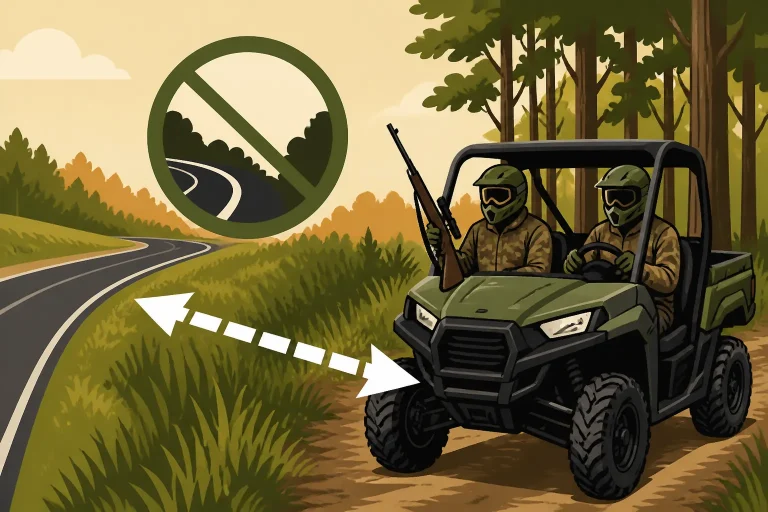
WMA rules can differ from ordinary road laws. A road that is open to authorized vehicles inside an area is not permission to ride a quad on a public highway to get there. Mississippi’s road restrictions are a separate issue; Mississippi ATV Road Rules Under 63-31-3 explains that distinction.
It also helps to separate three questions that riders sometimes combine:
- Can you enter the WMA? This depends on the area’s access rules and any current permit or license requirements.
- Can you use a quad there? This depends on the machine rules, designated routes, closures, and any limits on who may operate it.
- Can you use it for your planned activity? Hunting, scouting, camping, and retrieving game may each have different conditions.
A positive answer to one question does not settle the others. For example, an area might allow entry but restrict motorized travel to designated roads. Or a road might be open to quads generally while a seasonal closure or activity-specific rule affects your planned trip.
| Before riding | What to confirm | Why it matters |
|---|---|---|
| Area access | The WMA’s current entry and permit requirements | Access rules can depend on the area and activity |
| Route | Which roads are specifically designated for quad use | A visible road is not automatically an authorized route |
| Timing | Seasonal, daily, or temporary closures | Routes may be restricted during certain periods |
| Purpose | Rules for scouting, hunting, camping, or retrieving game | Different activities may have separate conditions |
| Equipment and conduct | Any age, safety, passenger, or machine restrictions | WMA rules may add requirements beyond general law |
Check the specific WMA before unloading
Do not rely on a rule remembered from another WMA, a previous season, or a friend’s description. Management conditions can vary by area, and road status can change. Before you load the quad, identify the exact WMA and check its current regulations, map, and posted notices through the responsible agency. If a detail is unclear, contact the area office or the agency responsible for that property.
Use a practical pre-trip process:
- Identify the exact area and entrance. Similar place names or nearby public lands can lead to confusion. Confirm that your destination is the WMA you intend to visit.
- Check current access rules. Look for entry requirements, permitted activities, and any rules that apply to motorized vehicles.
- Find the designated roads. Use the current area map or official route information, not just a general road map or GPS line.
- Check closures and seasonal limits. A route shown as designated may still be closed temporarily or restricted during a particular season.
- Confirm your activity’s rules. Hunting, scouting, camping, and game retrieval are not interchangeable purposes.
- Keep a record of what you checked. Save the official map or take a screenshot of the current notice, and carry a paper copy if cell service may be unreliable.
If the map and signs appear to conflict, do not assume the route is open. Treat a gate, closure sign, berm, or other barrier as a reason to stop and check with the area manager. A path that looks passable may be closed for wildlife management, habitat protection, road damage, hunting activity, or another operational reason.
For planning, a printed map can be more useful than a phone alone if reception is weak. A waterproof map sleeve, including options sold through Amazon, can help protect a paper copy from rain and mud. It does not replace official information, but it can make the route you have already confirmed easier to consult in the field.
A WMA’s rules may also distinguish between a designated road and an off-road route. Do not use a road allowance, creek edge, food plot, timber stand, or field as a shortcut unless the current rules clearly authorize it. Staying on the allowed route helps protect the land and makes it easier for staff and other visitors to understand where motorized use is permitted.
Riding for hunting, scouting, and game retrieval
Many quad trips to a WMA are connected to hunting. That does not mean the machine can be used without limits. Confirm whether your intended use is permitted, whether your route is open during the relevant season, and whether the area has rules for parking or staging a machine. The [Mississippi Hunting License and Land Access] overview can help separate hunting authorization from access to a particular property.
Scouting and hunting are also different from retrieving harvested game. Do not assume a rule that permits one activity also permits another. Some areas may have specific conditions for game retrieval, such as where a machine may travel or when it may be used. Check the current area rules before relying on your quad to bring game out. Mississippi WMA Game Retrieval Rules covers that issue in more detail.
Even if retrieval is permitted, stay within the stated conditions. Avoid cutting across closed ground to shorten the trip, and do not move a barrier or enter a route marked closed. If you cannot tell whether a route is authorized, pause and ask the area manager rather than deciding from tire tracks or another rider’s behavior.
When hunting is part of the outing, firearm rules need their own check. Rules about carrying or handling a weapon can depend on the area, season, and activity. Keep the machine and firearm requirements separate in your planning: an open route does not establish that a particular way of carrying or using a firearm is allowed. Review Mississippi WMA Weapon Restrictions and Mississippi WMA Firearm Setbacks for related rules.
Do not use a quad to bypass a restriction on reaching a hunting location. A closed road or an off-limits area remains closed even if the machine makes it easy to cross. The same applies to levees and other restricted public land; Mississippi Levee Riding Is Prohibited explains why a WMA visit does not create permission to ride on a levee.
Before the trip, make sure every rider understands:
- Which designated road or roads the group is using.
- Where the group may park without blocking access.
- Whether the route has a closure or activity-specific condition.
- What to do if a gate or sign indicates that the route is closed.
- How the group will stay together without riding beyond the authorized area.
These points are especially important when one person has checked the rules but other riders are following along. A passenger or group member should not be left to guess whether a side route is allowed.
Common mistakes and a safer plan
One of the most common mistakes is treating “public land” as a synonym for “open to quads.” Public access is subject to rules. A WMA may welcome visitors for certain activities while limiting vehicles to designated roads or restricting access during particular times. Do not interpret an open gate, lack of a sign, or existing tire tracks as blanket permission.
Another mistake is assuming that a quad may travel anywhere a full-size vehicle can go. WMA vehicle rules may be narrower than general vehicle access, and an area map may show roads without explaining which are approved for motorized use. Verify the route designation rather than relying on the map’s appearance.
Riders can also overlook short-term changes. Heavy rain, road damage, wildlife work, hunting activity, or maintenance may lead to a closure. Check again close to your trip, especially if you are traveling a long distance or planning to ride during a busy season. Pay attention to signs at the entrance and along the route, even if you checked the map earlier.
A safer plan looks like this:
- Confirm the WMA’s current rules with the responsible agency.
- Use the current map to select only designated roads open to quad use.
- Check for closures immediately before departure and again at the entrance.
- Stay on the authorized route and turn around at any closure or barrier.
- Follow any separate rules for hunting, firearms, passengers, or game retrieval.
- Carry the contact details for the area office in case the map or signs are unclear.
If you are visiting a WMA for the first time, keep the first ride conservative. Choose a route you have verified, avoid shortcuts, and leave enough time to turn back if a road is closed. The goal is not to see how much ground the quad can cover; it is to reach the permitted area without damaging habitat or creating a problem for other visitors.
When the rules are unclear, ask before riding. A quick call to the responsible office can help resolve questions about a particular road, seasonal closure, or planned activity. Keep in mind that a general answer about the WMA may not resolve a specific question about a route or date. Give the staff the area name, entrance, intended activity, and machine use you have in mind.
Disclaimer
This article is for general informational purposes only and does not constitute professional advice. Laws, prices and regulations vary by location and change over time. Consult a qualified professional for guidance on your specific situation.