Mississippi Rules for a Golf Cart on a Street
It's a common scenario across Mississippi: you see a neighbor zipping down a quiet street in their golf cart, maybe heading to the community pool or a friend's house, and you can't help but wonder, "Can I do that with my own golf cart? What about my side-by-side?" The rules can feel like a tangled mess, especially when you compare them to the strict state-level bans on ATVs and UTVs on public roads. This guide aims to untangle that confusion, offering a clear, empathetic look at the specific rules governing golf carts on Mississippi streets, helping you understand where and how you might legally ride.
The Basics: Why Golf Carts Are Different From ATVs
When it comes to hitting the pavement in Mississippi, the very first thing you need to wrap your head around is that not all off-road-style machines are treated equally under the law. It’s a distinction that often frustrates riders, especially those who see a clear line between a golf cart and, say, a high-performance sport quad. However, the legal framework sees a big difference, and understanding this is the key to knowing where you stand.
State-Level Distinctions: Not All Off-Road Machines Are Created Equal
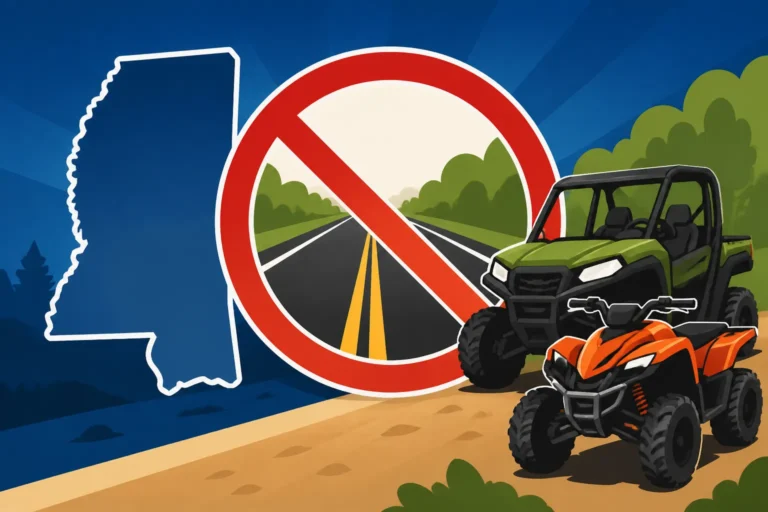
The State of Mississippi has a relatively short and clear chapter of law dedicated to off-road vehicles (ORVs), which primarily focuses on ATVs and UTVs, often referring to them collectively as "all-terrain vehicles" or "recreational off-road vehicles" (ROVs). These laws, found in Mississippi Code Section 63-31-1 and 63-31-3, are quite explicit: ATVs and ROVs are generally prohibited from public roads, streets, and highways. There are very few exceptions, and almost none that would apply to casual street riding. This blanket ban is a source of constant discussion among riders who simply want to get from their house to a trail or another property.
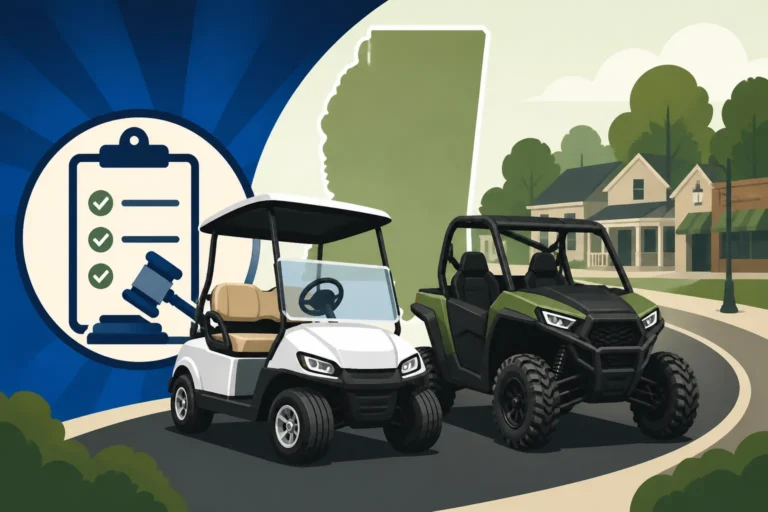
Golf carts, on the other hand, exist in a bit of a legal gray area at the state level. They aren't specifically called out and banned in the same way ATVs are. Because the state legislature hasn't taken a firm, statewide stance on golf cart operation on public streets, the authority to regulate them often falls to local municipalities – your city or county government. This distinction is crucial, as it means the rules you encounter can be vastly different from one town to the next, even if they're just a few miles apart. For a deeper dive into how the state defines these machines, you might find [Mississippi ATV and ROV Legal Definitions] helpful.
The Local Control Dilemma: Why Rules Vary So Much
This delegation of authority to local governments is both a blessing and a curse. On the one hand, it allows communities to tailor rules to their specific needs, traffic patterns, and local culture. A small, quiet coastal town with low speed limits and tourist traffic might welcome golf carts on its streets, seeing them as part of its charm or a practical way for residents and visitors to get around. On the other hand, a larger, busier city with more complex traffic systems might view golf carts as a safety hazard on its thoroughfares and opt for a much stricter ban or tightly controlled designated routes.
The frustrating part for residents is that there's no single, statewide answer. You can’t just assume that because golf carts are allowed on streets in Ocean Springs, they're automatically permissible in Hattiesburg or Tupelo. This patchwork of regulations means that "checking local ordinances" isn't just a suggestion; it's an absolute necessity. It requires proactive research on your part to avoid an unexpected interaction with local law enforcement or, worse, an accident due to differing expectations of road use.
What Makes a Golf Cart Street-Legal (Locally)?
If your local municipality does allow golf carts on its streets, it's almost guaranteed that they'll come with a specific set of requirements to ensure a baseline level of safety for both the golf cart operator and other road users. These aren't just arbitrary rules; they're usually put in place to mimic, in a rudimentary way, the safety features found on conventional automobiles.
Common Equipment Requirements You Might Encounter
While Mississippi state law doesn't mandate equipment for golf carts operating on local streets, local ordinances almost always do. These requirements are typically designed to make your golf cart more visible and predictable to other drivers. You'll commonly find mandates for features such as:
- Headlights and Taillights: Essential for visibility, especially during dusk, dawn, or bad weather. Some ordinances might specify minimum brightness or require them to be on at all times.
- Turn Signals: Crucial for communicating your intentions to other drivers, just like in a car.
- Brake Lights: To indicate when you're slowing down or stopping.
- Rearview Mirrors: Often one central mirror or two side mirrors, giving you a view of traffic behind you.
- Horn: For alerting pedestrians or other drivers to your presence.
- Seatbelts: While many older golf carts might not have these, newer models or those modified for street use might be required to have them, especially if they're used on roads with even moderate traffic.
- Windshield: Some ordinances may require a windshield for protection from debris.
- Tires: Regular golf cart tires might be acceptable, but some stricter ordinances could lean towards more robust, DOT-approved tires, particularly if they allow higher speeds or more varied road conditions.
It's important to remember that simply having these items doesn't automatically grant you street legality. They must be functional and often meet certain specifications outlined in the ordinance. For those looking to upgrade their cart to meet these local standards, aftermarket accessories can be a game-changer. Companies like SuperATV offer a wide range of lights, mirrors, and safety equipment that can help you get your golf cart up to spec for local street use, assuming the modifications are permitted by the local rules. Always double-check your town's specific ordinance, as some might have unique requirements or even prohibit certain modifications.
Speed Limits and Road Types
Another major component of local golf cart ordinances revolves around where and how fast you can operate your cart. You won't find golf carts legally cruising down I-55 in Mississippi, for instance. Most ordinances are very specific about the types of roads allowed and the speed limits applicable to those roads.
Typically, golf carts are restricted to roads with lower posted speed limits. A common threshold is 25 mph or 30 mph. This means you might be able to use your cart on residential streets or designated pathways within a community, but not on main arterial roads or highways where traffic moves much faster. The logic here is simple: golf carts are slower-moving vehicles and need to operate in environments where they won't impede the flow of faster traffic or create dangerous speed differentials. For a sense of common restrictions, consider what's outlined in [Golf Carts Only on Streets Posted 30 mph].
Some ordinances might also designate specific routes or zones where golf cart use is permitted. This could include routes connecting neighborhoods to commercial areas, parks, or community centers. It's rare to find an ordinance that gives golf carts free rein on every public street within city limits. You might also encounter rules about crossing highways, which are usually allowed only at designated intersections and require extreme caution. Understanding these nuanced rules about speed and permitted roads is vital for safe and legal operation.
Navigating Local Ordinances: How to Find the Rules in Your Town
Given that golf cart rules are primarily a local affair in Mississippi, knowing how to find and interpret your specific town's ordinances is paramount. Relying on hearsay from a neighbor or a Facebook group can lead you down the wrong path and potentially result in fines or other penalties.
Your First Stop: The City Clerk or Local Government Website
When you're trying to figure out if and how you can ride your golf cart on public streets, your first and most reliable source of information is your local government. Don't guess; go directly to the source.
- City Clerk's Office: For municipal rules (within a city or town), the city clerk's office is your best friend. They are the keepers of all local ordinances and should be able to provide you with a copy of any golf cart-related regulations. You can often call ahead or visit in person. Don't be shy about asking questions if something isn't clear; it's better to be informed than to risk a citation.
- County Administrator's Office: If you live in an unincorporated area outside of city limits, you'll need to check with your county government, typically the county administrator or board of supervisors. Not all counties will have specific golf cart ordinances, which might mean they are not allowed, or it might fall under a broader "no unregistered vehicles on public roads" type of rule.
- Official Websites: Many cities and counties now publish their ordinances online. Look for sections labeled "Ordinances," "City Code," "Municipal Law," or "Traffic Regulations." Use keywords like "golf cart," "low-speed vehicle," or "off-road vehicle" in their search functions. Be sure you're looking at the most current version of the ordinance, as these can be updated.
- Community Homeowner Associations (HOAs): If you live in a planned community or subdivision, your HOA might have additional rules regarding golf cart use, even if the city allows them. Always check both municipal and HOA guidelines.
Remember, the goal is to get it in writing or see it clearly on an official government website. This way, there’s no room for misinterpretation. For general guidance on where to look, [Mississippi Ordinance Lookups Before You Ride] can be a good starting point to understand the process.
What to Expect in a Typical Golf Cart Ordinance
Once you locate your local ordinance, you'll likely find several key elements that dictate how and when you can operate your golf cart on public streets. These usually cover a range of practical considerations:
- Driver Requirements: Many ordinances will specify a minimum age for golf cart operators, often tied to possessing a valid driver's license. This means a child might not be allowed to drive a golf cart on public streets, even if they can operate it on private property.
- Operating Hours: Some towns might restrict golf cart use to daylight hours only, even if your cart has headlights. Others might permit evening use if specific lighting requirements are met.
- Registration or Permit: While golf carts aren't typically "registered" with the state like cars, some local ordinances might require a local permit, decal, or registration sticker from the city or county. This often involves a small fee and serves as proof that you've met all local requirements.
- Insurance Requirements: Even though Mississippi doesn't mandate insurance for ATVs operating off-road, a local golf cart ordinance might require proof of liability insurance for street use. This is a crucial detail, as operating an uninsured vehicle on public roads can lead to significant financial risk in case of an accident.
- Penalties for Violation: Every ordinance will outline the consequences for non-compliance, which can range from monetary fines to impoundment of the vehicle. Understanding these penalties reinforces the importance of following the rules.
As an example, some towns have gone through the process of creating comprehensive ordinances, like [Hattiesburg's Cart Ordinance in Mississippi]. These detailed documents cover everything from equipment to permitted streets, showcasing the level of specificity you might encounter. Always read the full text of your local ordinance carefully to ensure you understand all the nuances.
Differences Between Golf Carts, ATVs, and LSVs on Mississippi Streets
The landscape of off-road and limited-use vehicles can be confusing. It's not uncommon for people to lump golf carts, ATVs, UTVs, and even low-speed vehicles (LSVs) all into one category. However, from a legal perspective in Mississippi, these are distinct classifications, each with its own set of rules and limitations, especially concerning public road use.
Why ATVs Are Almost Universally Banned
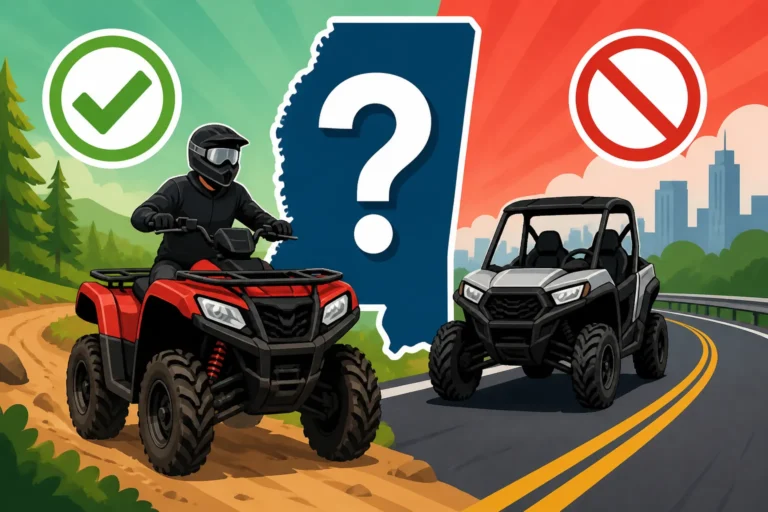
Let's be clear from the outset: Mississippi state law, as it stands, is quite definitive about ATVs and UTVs (which often fall under the ROV definition). [Mississippi Law Flatly Bars ATVs From Public Roads]. This isn't a suggestion; it's a direct prohibition. The few exceptions are highly specific, such as for agricultural purposes on certain roads for limited distances, or by law enforcement or utility workers. Casual riding on city streets, county roads, or state highways is simply not permitted.
The reasons for this statewide ban are primarily safety-related. ATVs and UTVs are designed for off-road environments. They typically lack the safety features (like airbags, crumple zones, and sometimes even proper turn signals or brake lights) that make traditional vehicles safe for public roads. Their suspension systems, tire types, and handling characteristics are also optimized for varied terrain, not paved surfaces, which can make them unstable or difficult to control at higher speeds or in traffic. So, while you might see a golf cart legally cruising a residential street, you should never assume the same applies to your quad or side-by-side.
Low-Speed Vehicles (LSVs) and Their Own Set of Rules
To add another layer to the mix, there's a category of vehicle known as a Low-Speed Vehicle, or LSV. These are distinct from golf carts and ATVs, and they operate under their own specific rules, often at both federal and state levels.
An LSV is generally defined as a four-wheeled vehicle with a top speed greater than 20 mph but not greater than 25 mph. Crucially, to be considered an LSV, the vehicle must meet federal safety standards for LSVs, which are much more stringent than those for a typical golf cart. These standards typically include:
- Headlamps
- Stop lamps
- Turn signal lamps
- Taillamps
- Reflex reflectors
- A rearview mirror (or mirrors)
- A parking brake
- A VIN (Vehicle Identification Number)
- Safety glazing (windshield)
- Seatbelts for all seating positions
Because LSVs meet these higher safety standards and have VINs, they are usually eligible for state registration and can be legally operated on public roads where the posted speed limit is 35 mph or less, unless specifically prohibited by a local ordinance. This means an LSV can go places a standard golf cart cannot, and certainly places an ATV cannot. If you're considering a machine for street use, understanding the difference between a modified golf cart and a purpose-built LSV is critical. Details on how these are handled can be found in [Mississippi LSV Registration Rules].
Here's a quick comparison of how these different machine types generally fare on Mississippi streets:
| Feature/Category | ATV/ROV (e.g., Quad, Side-by-Side) | Golf Cart (Standard) | Low-Speed Vehicle (LSV) |
|---|---|---|---|
| State Road Legality | Generally PROHIBITED | Generally depends on LOCAL ordinance | Generally PERMITTED on roads ≤ 35 mph |
| Primary Design | Off-road terrain | Golf courses, private communities | On-road short-distance travel |
| Max Speed (Typical) | Varies widely (often > 50 mph) | ~15-25 mph | 20-25 mph (by definition) |
| Required State Reg. | No | No | Yes (state registration, title, license plate) |
| Required Equipment | None for road (since prohibited) | Varies by local ordinance (lights, signals, mirrors etc.) | Federal (DOT) standards (full lighting, VIN, belts) |
| Driver's License Req. | No (for off-road use) | Often required by local ordinance for street use | Yes (valid driver's license) |
| Insurance Req. | No (state level) | Varies by local ordinance for street use | Yes (state minimums for motor vehicles) |
| Title in Mississippi | Starting July 2025 for new machines | No | Yes |
This table highlights the significant legal and practical differences that define how each type of machine can be used on Mississippi's public thoroughfares. It's a reminder that while the idea of a fun, open-air ride on city streets is appealing, the specific rules of the road depend heavily on the vehicle you're operating and where you intend to ride.
Disclaimer
This article is for general informational purposes only and does not constitute professional advice. Laws, prices and regulations vary by location and change over time. Consult a qualified professional for guidance on your specific situation.