Mississippi Nonhighway Tire Definitions
It can be incredibly confusing to figure out the exact rules and regulations for your ATV or UTV in Mississippi. You’re trying to enjoy your machine, but then you start wondering about things like what kind of tires are even allowed. Specifically, understanding what "nonhighway tires" actually means for your off-road vehicle here in the Magnolia State is key to staying safe and legal. This guide will walk you through the definitions, implications, and practical advice for navigating Mississippi's rules on nonhighway tires.
Understanding the Basics of Nonhighway Tires in Mississippi
When you hear the term "nonhighway tires" in the context of ATVs and UTVs in Mississippi, it's really about the fundamental design and intended use of these vehicles. Unlike passenger cars or trucks, ATVs and UTVs are primarily engineered for off-road environments, and their tires are a big part of that distinction.
What "Nonhighway" Really Means for Your Tires
At its core, a "nonhighway tire" simply means a tire that isn't designed or intended for regular use on paved public roads and highways. Think about the tires on your car – they're smooth, have shallow treads, and are built to provide grip and disperse water efficiently at higher speeds on asphalt. Nonhighway tires for ATVs and UTVs are almost the complete opposite. They feature deep, aggressive tread patterns, often with widely spaced lugs, designed to dig into loose terrain like mud, dirt, sand, and gravel.
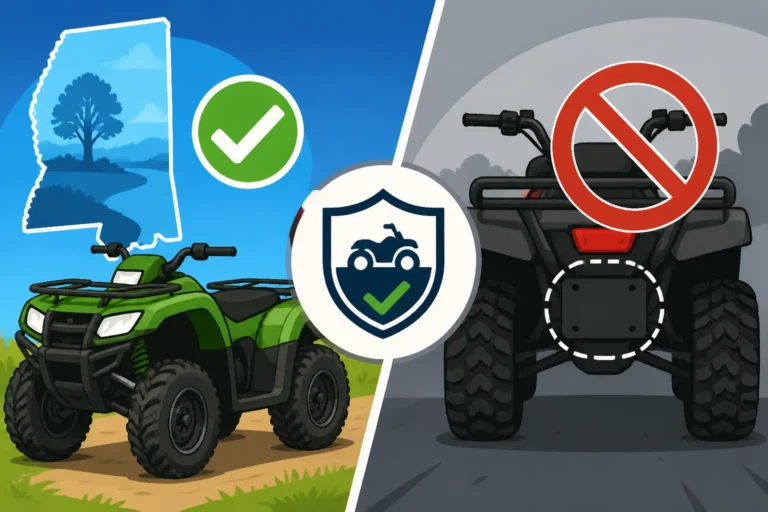
This distinction is crucial because in Mississippi, ATVs and UTVs are generally banned from public roads. The very nature of their tires reinforces this legal stance. If your machine is equipped with tires meant for ripping through trails and mud pits, it’s clearly signaling its purpose as an off-road vehicle. This isn't just a technicality; it's a practical reality for both performance and safety. Trying to run deeply lugged, low-pressure nonhighway tires on pavement can be dangerous, leading to poor handling, rapid tire wear, and even blowouts at sustained road speeds.
Why Tire Type Matters for Mississippi Riders
The type of tire you choose isn't just about adhering to a vague definition; it directly impacts your riding experience, safety, and even your potential legal exposure. For Mississippi riders who traverse everything from sandy river bottoms to dense forest trails, having the right nonhighway tires is paramount. They provide the necessary traction to climb hills, navigate slippery mud, and maintain control over uneven terrain, which standard street tires simply cannot do.
Beyond performance, understanding nonhighway tire definitions matters for legal reasons. While Mississippi law doesn't get into super granular definitions of tire tread patterns in its off-road vehicle statutes, the overarching rule is that ATVs and UTVs are not street-legal. If you're ever in a situation where you're questioned about riding on a public road, the type of tires on your machine can be an indicator of its intended use. Sticking to clearly identifiable nonhighway tires reinforces your intention to ride responsibly and off-road, aligning with the spirit of the law. Plus, choosing the right tires also impacts their longevity and your overall enjoyment, as using inappropriate tires can lead to faster wear and more frequent replacements, cutting into your riding time and budget.
Common Characteristics of Mississippi Nonhighway Tires
When you're out on the trails or exploring a new hunting camp, you want tires that can handle whatever Mississippi throws at them. This means looking for specific design features that set nonhighway tires apart from their street-legal cousins.
Tread Patterns and Their Purpose
The most obvious distinguishing feature of nonhighway tires is their aggressive tread pattern. Unlike the relatively smooth, siped surfaces of car tires designed for pavement and rain, off-road tires boast deep, widely spaced lugs, often in V-shapes or paddle designs. These patterns are engineered to dig into loose or soft surfaces, providing maximum grip and traction. For example, a mud tire will have exceptionally deep, self-cleaning lugs that shed mud as the wheel spins, preventing the tire from becoming slick and losing traction.
In Mississippi, where you can encounter everything from thick Delta mud to sandy creek beds and rocky forest trails, different tread patterns serve different purposes. All-terrain (AT) tires offer a versatile balance, with a tread that's aggressive enough for most off-road conditions but still offers a relatively smooth ride. For those dedicated to specific types of riding, like competitive mud bogging, specialized paddle tires or extremely aggressive mud-specific designs are crucial. These patterns ensure that whether you're climbing a slick bank or powering through a shallow stream, your tires are actively gripping the ground, not just spinning uselessly.
Construction and Durability for Off-Road Use
Beyond the tread, the construction of nonhighway tires is fundamentally different from street tires, built for the rigors of off-road environments. They typically feature higher ply ratings, indicating more layers of material in the tire's construction, which translates to greater resistance against punctures and tears from sharp rocks, sticks, and other trail debris. Imagine hitting a hidden stump on a wooded trail; a robust sidewall and multiple plies can mean the difference between airing down and continuing your ride, or being stranded with a flat.
Many off-road tires are also designed with reinforced sidewalls to protect against damage when flexing over obstacles or running at lower pressures. The rubber compounds used are often tougher and more resilient to chips and cuts, though this can sometimes come at the cost of faster wear on hard-packed surfaces or pavement. Understanding these construction differences is vital for riders in Mississippi, as the diverse terrain, from the pine roots of the De Soto National Forest to the muddy banks of the Mississippi River, demands tires that can take a beating and keep on rolling. Investing in tires with appropriate construction for your primary riding style means less downtime and more time enjoying the ride.
Legal Distinctions and What Mississippi Law Says
Navigating the legal landscape for ATVs and UTVs in Mississippi can feel like driving through dense fog at times. Riders often wonder how specific components like tires factor into the law. It’s important to understand that while state law isn't overly granular on tire definitions, the overall intent is very clear.
Where Mississippi Law Touches on Tire Definitions
Mississippi's state law regarding ATVs and UTVs, primarily found in [Mississippi Code Section 63-31-1] and [Mississippi Code Section 63-31-3], focuses more on the definition of the vehicle itself and its general prohibition from public roads rather than getting into detailed specifications for tires. The statutes broadly define off-road vehicles as those not designed for highway use, and the types of tires typically found on these machines inherently support that designation. There isn't a long list of specific tire characteristics that qualify a tire as "nonhighway" within the legislative text.
What this means for you, the rider, is that the absence of a hyper-specific tire definition doesn't give you a loophole to use highway tires on your ATV for road travel. The law's intent is to keep these vehicles off the streets because they are not safely equipped for them, and their nonhighway tires are a key part of that inherent design. If you're ever in doubt, consider the common sense application: if your tires look like they belong on a dirt bike or a tractor rather than a car, you're likely meeting the spirit of "nonhighway." This is why a document for your machine, such as a bill of sale or ownership agreement, which can be drafted with assistance from services like LawDepot, should always acknowledge the off-road nature of the vehicle.
The Implications for Road Use and Enforcement
The biggest implication of Mississippi's stance on nonhighway vehicles, and by extension their tires, is the steadfast ban on riding ATVs and UTVs on public roads. Even if you theoretically put street-legal tires on your off-road machine, the vehicle itself is still classified as an off-road vehicle and is prohibited from public roadways. A deputy isn't going to pull out a measuring tape to inspect your tread depth; they're going to see an ATV or UTV on a road where it shouldn't be. [Mississippi Fines for Road Riding] can be levied for such infractions, emphasizing the state's clear stance.
This also means that the presence of aggressive, nonhighway tires on your machine acts as visual confirmation of its intended off-road use. While [Mississippi's ATV Law Is Only Two Sections Long] doesn't delve into tire specifics, it establishes a clear boundary: ATVs belong off the pavement. Attempts to circumvent this by altering tires don't change the vehicle's classification. The purpose of your nonhighway tires is to conquer challenging terrain, not to cruise down Highway 49. It's crucial for riders to understand that the vehicle's overall design and the state's intent to regulate off-road vehicle use are what matters most, rather than finding a loophole in tire definitions. This is also why [Why Mississippi's Road Ban Lists No Exceptions] is such a critical piece of information for any rider to understand.
Choosing the Right Nonhighway Tires for Your Mississippi Adventures
Mississippi offers a diverse range of riding environments, from the challenging mud pits of private parks to the winding trails of national forests. Picking the right nonhighway tires for your ATV or UTV is crucial for both performance and safety, ensuring you get the most out of your adventures.
Matching Tires to Mississippi Terrain
The "best" nonhighway tire for you largely depends on where you plan to ride most often in Mississippi. If you're tackling the deep, soupy mud common in the Delta region or at popular spots like [Red Creek Off-Road in Mississippi], you'll want dedicated mud tires. These tires feature extremely aggressive, widely spaced lugs that dig deep and self-clean, preventing mud from packing up and turning your tires into slicks. They excel in soft, loose conditions, pulling you through otherwise impossible terrain.
For more varied riding, such as the numerous trails at [Bethel OHV Trails in Mississippi] or other national forest paths, an all-terrain (AT) tire is often the most practical choice. AT tires offer a good balance of grip on dirt, light mud, and rocky sections, while still providing a relatively comfortable ride on harder packed trails. If your adventures take you to sandy riverbeds (where legal and safe) or areas with significant loose sand, specialized paddle tires can provide unmatched flotation and propulsion, preventing you from sinking in. Always consider the terrain you'll encounter most frequently, as a mud tire, while excellent in its element, can be loud and wear quickly on harder surfaces.
Tire Sizing, Ply, and Pressure Considerations
Once you've considered the terrain, delve into the specifics of tire sizing, ply rating, and proper pressure. Most ATVs and UTVs come from the factory with a specific tire size that is well-suited to the machine's design and capabilities. Sticking to this size for replacements is often the easiest path, as it maintains the vehicle's handling characteristics and avoids potential issues with suspension clearance or gearing. However, some riders choose to upsize for increased ground clearance or a larger contact patch, but this can impact power, braking, and steering, so research carefully. Remember, some trails, particularly in public areas, might have [Mississippi Trails With Width Limits], so be mindful if upsizing radically alters your machine's dimensions.
The ply rating of a tire indicates its strength and resistance to punctures. Higher ply ratings (e.g., 6-ply or 8-ply) mean a tougher tire, which is a great asset when navigating trails filled with sharp rocks and hidden roots. While radial tires offer a smoother ride and better handling due to their flexible sidewalls, bias-ply tires often have stronger sidewalls, making them highly durable in extremely rugged conditions. Finally, tire pressure is critically important. Off-road tires are often run at lower pressures than street tires to increase the contact patch and improve traction and shock absorption. Always consult your vehicle's manual or the tire manufacturer's recommendations, and experiment within safe limits to find the optimal pressure for your specific machine and the conditions you're riding in.
| Tire Type | Ideal Mississippi Terrain | Key Characteristics | Pros | Cons |
|---|---|---|---|---|
| Mud Tires | Deep mud, swampy areas, wet trails | Deep, widely spaced, aggressive lugs; self-cleaning | Excellent traction in mud; good for soft terrain | Poor handling on hardpack/pavement; faster wear |
| All-Terrain (AT) | Varied trails, light mud, dirt, gravel | Moderate lug depth; balanced tread pattern | Versatile; good all-around performance; decent ride | Not ideal for extreme mud or deep sand |
| Sand Tires | Beaches, riverbeds, dunes | Paddle-like lugs (rear); ribbed (front) for steering | Unmatched flotation and traction in sand | Extremely poor on other terrains; road unsafe |
| Sport/Hardpack | Race tracks, hard-packed dirt, groomed trails | Tightly packed, smaller lugs; sometimes more rounded profile | Excellent grip on hard surfaces; agile handling | Limited traction in mud/sand; less puncture resistance |
Maintenance and Care for Your Nonhighway Tires
Just like any other critical component of your ATV or UTV, your nonhighway tires require regular attention and care to ensure their longevity, performance, and your safety on the trails. Neglecting your tires can lead to premature wear, unexpected flats, and costly replacements.
Regular Inspection and Repair
After every ride, especially if you've been through challenging terrain, make it a habit to thoroughly inspect your tires. Look for embedded objects like thorns, nails, or sharp rocks that could lead to a slow leak or a sudden flat on your next outing. Check the sidewalls for any cuts, tears, or bulges, as these can indicate internal damage and are serious safety concerns. Also, pay close attention to the tread depth. Uneven wear can suggest alignment issues or improper tire pressure, while overall low tread means it might be time for replacements.
Don't ignore small punctures. A quality tire plug kit can be a lifesaver for minor tread punctures, allowing you to quickly get back on the trail or safely home. However, understand the limitations: sidewall damage, large tears, or multiple punctures might be beyond a simple plug repair and could necessitate professional repair or, more likely, a full tire replacement. Always err on the side of caution when it comes to tire integrity. A good LawDepot liability waiver for a group ride, for instance, could specify that all riders are responsible for the safe operating condition of their own machines, including tires.
Cleaning, Storage, and Longevity Tips
Mississippi's climate, with its high humidity and temperature extremes, can be tough on tires. Proper cleaning and storage are vital for maximizing their lifespan. After a muddy adventure, wash off all the mud and debris from your tires and wheels. Not only does this keep your machine looking good, but it also prevents corrosive elements in the mud from degrading the rubber and metal components over time. Use a gentle soap and water, avoiding harsh chemicals that can dry out the rubber.
When storing your ATV or UTV for extended periods, especially over a humid southern winter, try to keep the tires out of direct sunlight. UV rays are a tire's worst enemy, causing the rubber to dry out, crack, and become brittle – a condition known as dry rot. If possible, lift the machine off the ground to take the weight off the tires, or at least roll the machine periodically to prevent flat spots. Maintaining proper inflation even in storage is also important. These simple steps, combined with regular inspections, will help ensure your nonhighway tires are ready for countless more Mississippi adventures.
Disclaimer
This article is for general informational purposes only and does not constitute professional advice. Laws, prices and regulations vary by location and change over time. Consult a qualified professional for guidance on your specific situation.