Leaving a Southern Trailhead Tidy
A tidy trailhead is easier to leave than to clean up later, especially when mud, snack wrappers, fuel containers, and wet gear all come out of the same truck bed. A little preparation makes the end of a Mississippi riding day less chaotic and helps keep shared parking areas usable for the next group. This guide covers practical habits for keeping your staging spot clean from arrival through departure.
Get ready before you reach the trailhead
Pack for cleanup, not just for the ride
Cleanup is much easier when you bring the right supplies along. Set aside sturdy trash bags, a separate bag for recyclables if you use one, paper towels or shop towels, and a small container for anything that could leak. Keep these items somewhere reachable—not buried under helmets, tools, and muddy tie-downs. When everyone is tired and ready to head home, a cleanup kit within arm’s reach is more likely to get used.
Plan for wet, dirty gear. A lidded tote or washable tub can keep muddy gloves, boots, and recovery straps from spreading grit through the truck or trailer. Bring an extra bag for damp clothing and a small brush for knocking loose dirt off equipment where permitted. Avoid sweeping or rinsing mud into a parking area, ditch, stream, or storm drain; take the mess home or use a designated wash area if the riding site provides one.
Make room for your own rubbish, even if you expect a bin to be available. Some trailheads may not have garbage service, and a full or closed bin is not a place to pile bags beside it. Pack out food scraps, drink containers, broken parts, and used wipes. A small personal waste bag for each vehicle is often more useful than one large bag everyone assumes someone else will manage.
Check access, conditions, and parking arrangements
Before loading up, check the riding area’s current notices and instructions. A trail may be closed after heavy rain, a parking area may be unavailable, or a private park may have its own staging and cleanup procedures. For Mississippi forest riding, use the relevant official information and contact the appropriate office when the status is unclear. Checking Trail Conditions Before You Load the Trailer can help you build that check into your departure routine.
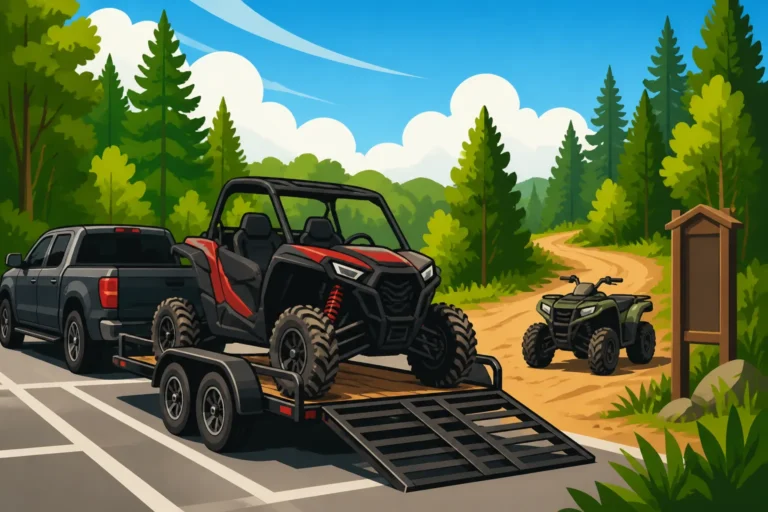
Pay attention to posted parking directions when you arrive. Keep the truck and trailer within marked or clearly established parking areas, leave room for other trailers to maneuver, and avoid blocking gates, access roads, or emergency routes. If you are meeting a group, agree on a staging location in advance instead of spreading vehicles across several spaces while people search for one another. For a broader look at how drivers can make room for each other, see Mississippi Trailhead With Trailer Parking.
A mapping app such as onX Offroad can help you review your planned route and orient yourself before riding, but use posted signs and site instructions as the final word on access. A map does not give permission to enter a closed road, cross private property, or use an undesignated staging area. Keep a paper backup or a saved route available when cell service is unreliable, and avoid standing in a travel lane while studying a screen.
Keep your staging area orderly
Unload without spreading gear across the lot
A crowded staging area can get messy quickly: ramps are down, helmets are on the ground, someone is looking for a key, and a trailer is still blocking the lane. Before unloading, position your vehicle so the ramp and machine can be handled without spilling into the main travel path. Follow the site’s instructions about where to unload, and leave enough room for other riders to pass safely.
Group your belongings into a defined area beside your vehicle rather than scattering them around the parking space. Put tools back in a toolbox, keep loose straps together, and move fuel containers away from hot engines, exhaust, and direct impact points. This makes your space easier to clean and reduces the chance that something will be left behind when the group is ready to go.
If you are riding with several families or a large club, decide who is watching the shared staging area while machines are being unloaded. One person can collect packaging and loose rubbish as it appears, while another keeps the trailer and gear organized. That small bit of coordination prevents the familiar end-of-day scramble in which everyone assumes another person packed the last bottle or picked up the last zip tie.
Handle fuel, fluids, and mud carefully
Fuel and maintenance supplies deserve extra care. Keep containers closed and upright, and use them only where the site allows. If a spill happens, stop what you are doing, keep people and ignition sources away, and follow the park or land manager’s instructions for reporting and cleanup. Do not wash a spill away with water or cover it with loose soil unless site staff direct you to do so.
Likewise, do not drain oil, coolant, or other fluids at a trailhead. Carry waste fluids home in a suitable sealed container and dispose of them through an appropriate local collection option. A small leak under a machine can be easy to miss, so look at the ground before you leave. If you spot a fresh drip, identify the source and clean or report it according to the site’s guidance rather than leaving it for the next visitor.
Mud is part of riding in the South, but a parking lot is not a wash bay. Let loose mud fall only in places where that is allowed, and do not scrape it into ditches or waterways. If a facility provides a wash station, follow its rules and use it as intended. For other practical ways to reduce trail and site wear, Mississippi Trail Etiquette Locals Expect is a useful companion topic.
Leave shared riding areas better than you found them
Pack out everything you bring in
A good rule is to treat every item brought to the trailhead as something that needs a trip home unless a clearly marked disposal option says otherwise. This includes drink cans, food wrappers, paper towels, broken bungee cords, cable ties, packaging, and small machine parts. Wind can carry light rubbish out of a truck bed or open trailer, so secure loose items before driving and check the area around your vehicle after loading.
Food waste counts too. Fruit peels, nutshells, and leftovers may look harmless, but they can attract animals and leave an unpleasant mess for other riders. Put them in the trash bag rather than tossing them into brush. Keep waste contained during the ride, too; a bag attached securely to a machine or carried in a pack is better than stuffing a wrapper into a pocket and forgetting it.
Do not assume that a nearby bin is meant for every kind of waste. Some sites may have limited facilities or specific disposal directions. If a container is marked for a particular material, follow the label. If it is full, broken, or unclear, keep your rubbish with you and ask the operator or land manager what to do. For a general overview of responsible conduct on shared routes, see Mississippi Trail Etiquette Locals Expect.
Respect the site and the people using it
Leave signs, gates, barriers, and other site features as you found them. Do not move a barricade to make room for a trailer or create a shortcut from the parking area. A closed gate or blocked route may protect wildlife, prevent damage, or mark a boundary; use the authorized entrance and follow posted directions. If you are unsure where a route goes, stop somewhere safe and check the official information rather than exploring a side road.
Be considerate of other visitors, including people who may be arriving, unloading, camping, or walking near the staging area. Keep noise and idling to a minimum where site rules or local conditions call for it, and avoid revving engines while others are trying to communicate. When your group gathers around a vehicle, keep the main access lane open and move the conversation out of the way of trailers backing in.
Trail conditions can affect the condition of the staging area as well as the route itself. After heavy rain, avoid driving or parking in soft ground where tires could rut the surface or trap a vehicle. Follow closures and do not try to bypass muddy sections by cutting around a marked route. Mississippi Trail Conditions After Rain explains why waiting for a site to reopen can be better than turning a wet day into lasting damage.
Do a final sweep before you leave
Use a simple departure checklist
Riders are often tired at the end of the day, and that is when small items get forgotten. Before pulling out, assign one person to check the parking space while another secures the machines and trailer. Walk around the vehicle and look beneath the trailer, beside the ramp, and along the edge of the parking spot. Pick up anything that belongs to your group, even if it is a small item such as a glove, bottle cap, or tie-down strap.
A practical final check can be as simple as this:
- Confirm every rider is accounted for and all machines are loaded or secured.
- Collect rubbish, food scraps, used towels, and packaging.
- Check for fuel or fluid drips and follow site instructions if you find a spill.
- Put tools, straps, ramps, and personal gear back in their proper places.
- Look over the ground and nearby edges of your space for anything left behind.
- Make sure your vehicle is not blocking a gate, road, or another visitor’s parking access.
If you rode with a group, make the sweep a shared responsibility rather than leaving it to the last person who happens to be standing nearby. A quick call of “check the ground before we go” can catch the loose can or dropped strap that everyone else missed.
Use a clear cleanup plan for different situations
Not every trailhead has the same facilities. A public forest staging area, a private riding park, and a small informal gathering spot may each have different rules. When instructions are posted, follow them even if your usual routine is different. If the area has no obvious rubbish facilities, assume you need to carry your waste out.
| Situation | Better choice | Avoid |
|---|---|---|
| No trash bin is available | Keep rubbish in a secured bag and take it home | Leaving bags beside a post or full container |
| A machine is covered in mud | Use an approved wash area or contain the mess for cleanup at home | Rinsing mud into a ditch or waterway |
| Fuel or fluid spills | Keep people clear and follow site cleanup or reporting directions | Washing it away or covering it without guidance |
| Parking is crowded | Use marked spaces and keep lanes open | Unloading across the access road |
| A route or gate is closed | Stop and follow posted directions | Moving barriers or finding an unmarked detour |
| Rain has softened the ground | Avoid rutting the area and check closure notices | Driving around a muddy section into vegetation |
For navigation, onX Offroad may help riders review their route before setting out, while posted information and land-manager instructions remain essential at the site. Use the app as a planning aid, not as a substitute for checking closures, boundaries, or local rules. If you are riding in a group, make sure everyone knows the agreed route and where the authorized staging area is; that reduces last-minute wandering through parking areas.
A clean departure takes only a few minutes, but it matters. The next rider should be able to pull in, unload, and enjoy the same space without finding your cans, loose straps, food scraps, or fluid stains. Build cleanup into the ride plan, carry what you bring in back out, and leave the trailhead ready for the next person.
Disclaimer
This article is for general informational purposes only and does not constitute professional advice. Laws, prices and regulations vary by location and change over time. Consult a qualified professional for guidance on your specific situation.