Heat Illness on a Southern Summer Ride
Mississippi’s summer heat can turn a fun ATV or UTV ride into a frightening situation, especially when humidity, mud, heavy gear, and a long walk back all add up. This guide explains how to recognize heat illness, plan around the conditions, carry useful supplies, and respond quickly if someone becomes unwell on a trail.
Why summer rides in Mississippi can become risky
Heat and humidity make it harder to cool down
Your body sheds heat partly through sweat evaporating from your skin. When the air is humid, sweat evaporates less efficiently, so you may keep sweating without cooling as well as you expect. That can happen on a slow trail ride just as easily as during strenuous work.
The machine can make it harder to notice what is happening. A helmet, goggles, gloves, boots, and protective clothing are important, but they can also trap heat. Riding in mud or soft terrain may require more effort than cruising on a clear trail, and helping a stuck machine can quickly turn a comfortable ride into hard physical work.
A rider may also underestimate the strain because they are seated. The sun is still beating down, the machine may be radiating heat, and the rider may be concentrating on steering rather than noticing thirst or fatigue. In Mississippi’s humid conditions, don’t treat “I’m not working that hard” as proof that you’re staying cool.
Know the difference between heat exhaustion and heat stroke
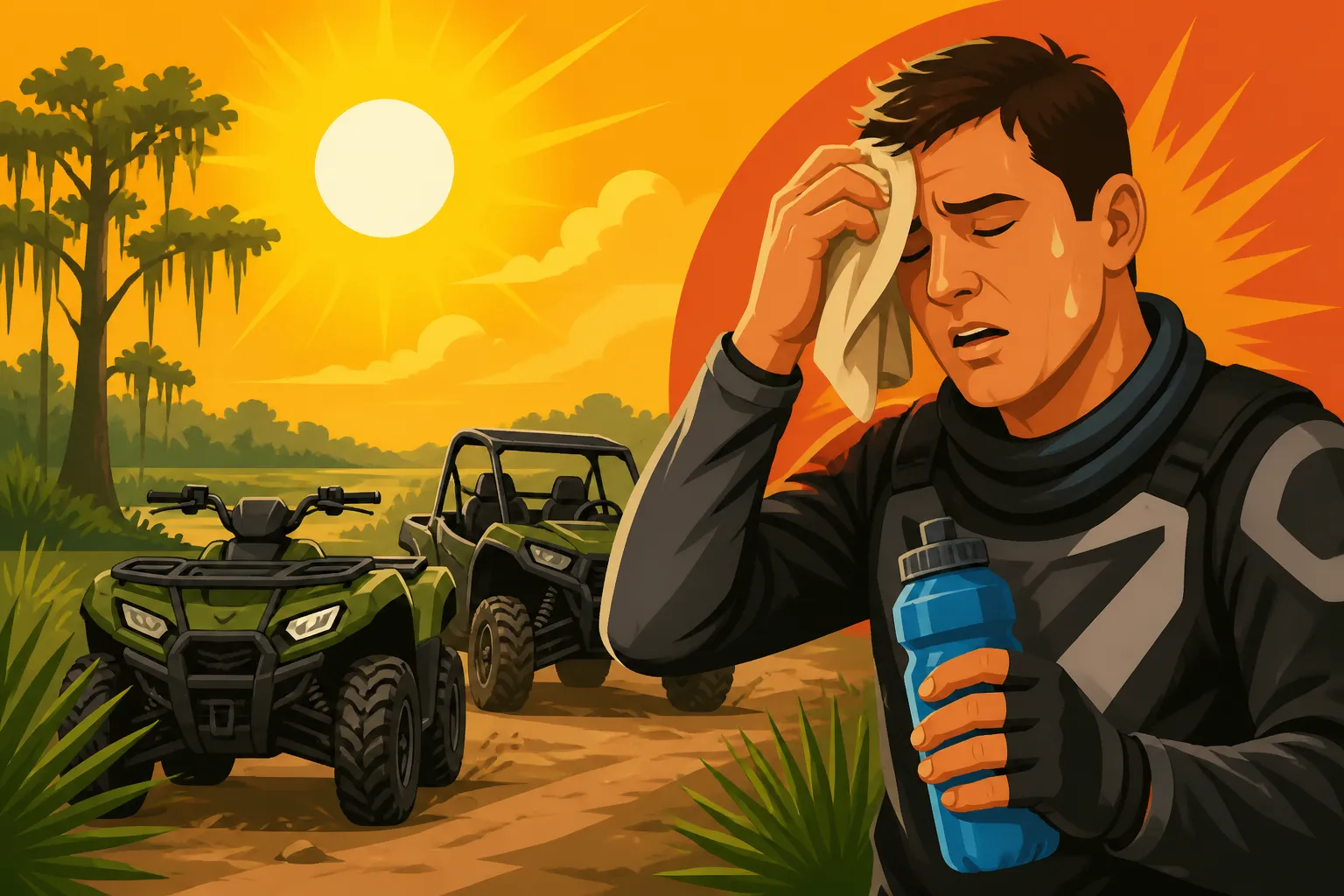
Heat illness can worsen quickly. Heat exhaustion may bring heavy sweating, weakness, headache, dizziness, nausea, cramps, unusual tiredness, or faintness. A person may feel clammy or have trouble keeping up with the group. These symptoms are a signal to stop riding, get the person into a cooler place, and begin cooling them.
Heat stroke is a medical emergency. Warning signs can include confusion, unusual behavior, loss of coordination, fainting, seizures, or becoming difficult to wake. The person may feel very hot, but sweating can still be present; do not use the presence or absence of sweat as the only way to judge how serious it is. A rider who is confused or acting strangely should not be encouraged to “push through” or ride back under their own power.
Call emergency services if you suspect heat stroke or if symptoms are severe, worsening, or not improving promptly. Move the person out of the sun, remove unnecessary outer layers, and cool them while help is on the way. Use cool water, wet cloths, or other available cooling methods. If the person is confused, unconscious, vomiting, or unable to swallow safely, do not give them anything to drink.
The trail setting changes your response time
Heat illness is more concerning when you are far from a road, parking area, or reliable cell service. A rider who feels weak may not be able to steer safely, and a group that splits up may lose valuable time trying to find one another. Before riding in places such as De Soto National Forest, consider how far the planned route is from an accessible exit and whether your group knows where it is.
A mapping app such as onX Offroad can help riders review a route and keep track of where they are, but a digital map is not a rescue plan. Download maps for offline use where available, carry a backup navigation method, and confirm that your intended route is open and permitted. Cell coverage, trail access, and conditions can vary; the group should know how it will respond if a rider needs help in a dead zone.
For preparation beyond heat-specific supplies, see First Aid on a Long Southern Loop and Cell Dead Zones in De Soto National Forest. Heat planning is most useful before you leave the staging area, not after someone is already dizzy on the trail.
How to plan a ride around the heat
Choose a route and schedule that leave room to turn back
Plan a shorter ride than you might choose in cooler weather, especially if anyone in the group is new to riding, recovering from illness, or unused to the heat. A route that looks manageable on a map can take longer when there is mud, a stuck machine, a slow rider, or a break to cool down. Leave enough time to return without rushing.
Whenever park or trail hours allow, consider riding during cooler parts of the day and avoiding the hottest stretch. Check the forecast and heat index before loading up, then reassess if conditions feel harsher than expected. A forecast is a planning aid, not a guarantee that a shaded forest trail will be comfortable or that a sunny open section will be safe.
Use onX Offroad or another mapping tool to look over the route, identify nearby roads or trailheads, and agree on a turnaround point. Check access rules and closures separately rather than assuming a map indicates permission to ride. For broader seasonal planning, Mississippi Riding in Summer Heat and Mississippi Riding Season Month by Month can help you think through how the ride changes as the season and conditions change.
Set a group pace that makes breaks normal
Before starting, agree that anyone can call for a pause without having to justify it. Riders often keep going because they don’t want to slow the group down or be seen as inexperienced. A simple rule—stop when someone asks, and check on the whole group at every break—makes it easier to speak up early.
Take breaks in shade where possible, loosen or remove protective layers only when safely stopped, and let riders cool down before continuing. Don’t treat a quick stop for a drink as enough if someone is already showing symptoms. If they remain dizzy, nauseated, unusually weak, or confused, end their ride and respond to the symptoms rather than trying to stick to the original plan.
A buddy system can catch problems early. Pair riders, keep the group together, and have someone check in with the rider at the back rather than assuming silence means everyone is fine. When riding a larger or unfamiliar area, use a shared route plan and make sure everyone knows the meeting point if the group becomes separated.
Check conditions and access before you haul the machine
Rain can change trail surfaces, access, and ride effort. Soft ground or muddy sections may demand extra work from both rider and machine, while a closure can force a longer route or a change of plan. Check the relevant land manager or riding area’s information before you head out, and be prepared to choose a different day or location if conditions are unsuitable.
For a public trail system or private riding area, confirm its current rules, operating status, and any restrictions that affect your machine or group. Local access details matter: a route that appears close on a map may cross land where riding is not allowed. Mississippi Trail Conditions After Rain and Checking Trail Conditions Before You Load the Trailer are useful companions to a heat-focused plan.
What to carry and how to stay hydrated
Bring water for the whole group, not just yourself
Carry more water than you expect to drink, and plan how the group will keep it accessible. A bottle buried under cargo is less useful than water that can be reached during a safe stop. Keep a reserve separate from the water you expect to use early in the ride, especially if the route is remote or there is no dependable place to refill.
Drink regularly rather than waiting until you feel intensely thirsty. If you are sweating heavily for a prolonged period, consider bringing an appropriate electrolyte drink or food as part of your plan. Follow product directions and avoid assuming that a sports drink or supplement makes it safe to continue riding through heat symptoms. People with medical conditions or fluid restrictions should follow advice from their healthcare professional.
Water is only one part of the plan. Riders should also have a way to stop, get into shade, and cool down. For more practical ideas about supplies and clothing, see [Hydration at a Southern Mud Park] and Packing for Southern Humidity.
Pack cooling and emergency basics
A useful summer riding kit should make it easier to cool someone and get help. Adapt the contents to the distance, group size, and remoteness of the ride.
| Item or preparation | Why it helps |
|---|---|
| Drinking water for every rider | Supports regular drinking and provides a reserve if the ride takes longer than expected |
| Electrolyte drink or suitable salty snacks | Can be useful during prolonged heavy sweating when used appropriately |
| First-aid kit | Helps address minor injuries while the group decides whether more help is needed |
| Cool, wet cloths or similar cooling supplies | Provides a practical way to begin cooling someone who feels unwell |
| Charged phone and backup power | Helps you contact assistance when service is available |
| Offline map or backup navigation | Helps the group stay oriented if cell coverage is limited |
| Emergency contact and route plan | Gives someone a clearer idea where to look if the group does not return as expected |
| Appropriate protective gear | Helps protect riders while allowing them to take cooling breaks when safely stopped |
Keep the kit secured and easy to reach. Tell the group where the supplies are before the ride begins; there is little value in a cooling cloth packed at the bottom of an inaccessible cargo box. If you use onX Offroad for route planning, make sure the group understands how to access the route information and what the backup plan is if a phone battery dies.
Use clothing and gear thoughtfully
Protective gear should fit properly and be appropriate for the activity. Don’t remove a helmet or other essential protection while the machine is moving. Instead, stop in a safe place before loosening layers or taking a cooling break, and put gear back on before riding again.
Lightweight, breathable clothing can help with comfort, but exposed skin still needs protection from sun, brush, and injury. Use sunscreen on exposed areas and reapply as directed. Keep a dry layer available if conditions change, and avoid assuming that a shady trail eliminates the risk of overheating.
A rider who is already feeling ill should not be sent ahead alone to “get back to the truck.” If the person is weak or lightheaded, another rider should stay with them, and the group should use the safest available way to reach help. The right decision may be to stop the ride altogether.
What to do when someone shows symptoms
Stop riding and assess the person
As soon as someone reports dizziness, nausea, weakness, headache, or unusual fatigue, stop in a safe location. Move them into shade or another cooler area, have them sit or lie down, and remove unnecessary outer layers. Keep the machines out of the way of other riders and make the stop visible to the group.
Ask simple questions and watch how the person responds. Are they speaking clearly? Do they know where they are? Can they stand and walk normally? A rider who is confused, unsteady, fainting, or getting worse needs urgent attention. Do not let them operate a machine, and do not leave them alone while someone else rides away for help.
If the person is alert and able to swallow, offer small, comfortable sips of water. Do not force fluids. If symptoms are serious, if the person cannot drink safely, or if you are unsure whether this is heat stroke, call emergency services and continue cooling them. For heat stroke, rapid cooling and urgent medical help are more important than getting the group back to its planned route.
Keep the response simple and coordinated
Assign one person to stay with the affected rider, another to call for help if needed, and another to guide responders from a known access point when possible. Share the location as clearly as you can, using a map reference, trail name, nearby road, or other identifiable landmark. If phone service is unavailable, follow your group’s prearranged emergency plan rather than sending everyone off in different directions.
Do not put a seriously ill person on an ATV or UTV and drive over rough terrain unless that is the only available way to reach immediate help and it can be done safely. Movement can worsen risk, and a confused or faint rider may fall or be injured. Wait for professional guidance when possible, keep cooling the person, and monitor changes in alertness and breathing.
After the incident, don’t restart the ride simply because the person says they feel a little better. Heat illness can be serious, and a rider who has had significant symptoms needs appropriate medical evaluation. The rest of the group should also reconsider the day’s conditions. If one person is struggling, others may be closer to trouble than they realize.
Make the next ride safer without blaming anyone
Talk through what happened once everyone is safe. Did the route take longer than expected? Was water hard to reach? Did the group miss early symptoms because breaks were too infrequent? These are planning lessons, not reasons to shame the rider who became ill. People often wait too long to speak up because they don’t want to disrupt the group.
Use what you learn to adjust the next trip: shorten the route, carry more water, add planned shade breaks, or choose a less demanding area. Keep the group’s route and expected return time with a trusted person who is not riding. When using mapping tools such as onX Offroad, treat the mapped route as one part of preparation alongside current access information, communication planning, and judgment on the ground.
Good trail etiquette includes looking out for other riders and respecting conditions that make a route unsafe. Mississippi Trail Etiquette Locals Expect offers more context for sharing riding areas responsibly. For a broader preparation checklist, Packing for Southern Humidity can help you think through comfort and supplies before the next hot-weather trip.
Disclaimer
This article is for general informational purposes only and does not constitute professional advice. Laws, prices and regulations vary by location and change over time. Consult a qualified professional for guidance on your specific situation.