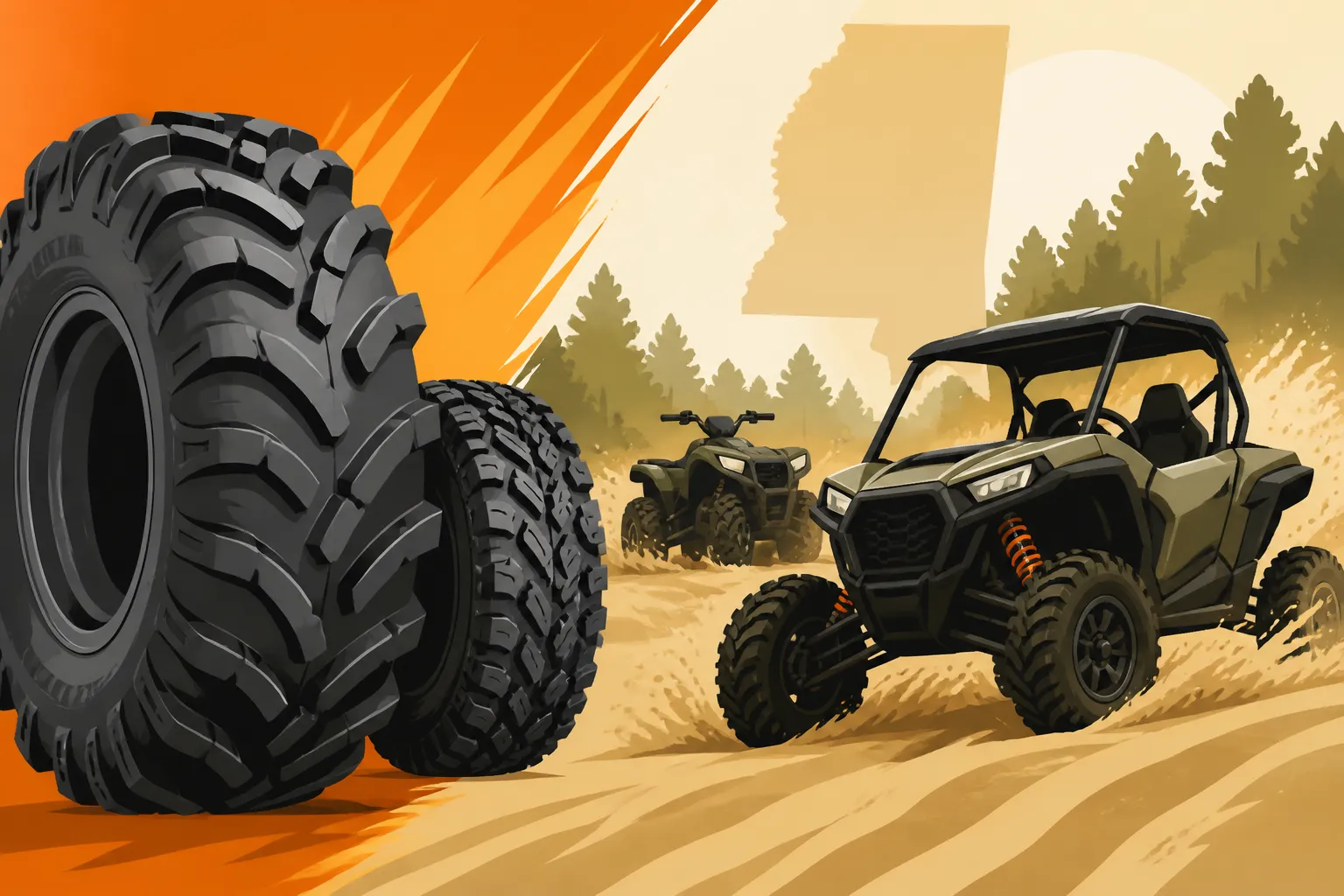
Tires for Southern Sand
Soft Mississippi sand can make an ATV or UTV feel sluggish, wander in ruts, or bury itself when you least expect it. The right tires help the machine float and steer more predictably, but there is no single setup for every sandy trail. This guide explains what to look for, how to adjust tire pressure cautiously, and how to prepare for local riding conditions.
How Southern sand changes the way a machine rides
Loose sand rewards flotation and steady momentum
In soft sand, a tire can sink instead of rolling cleanly. That creates drag, makes steering feel heavy, and may leave the machine digging rather than moving forward. A tire with a suitable footprint and tread can help it stay on top of the surface, but tire choice is only part of the picture. Rider input, machine weight, tire pressure, and the depth and dampness of the sand all matter.
Mississippi riding conditions can vary from sandy stretches beneath pine trees to more compact, damp ground after rain. A setup that feels manageable on a firm trail may feel completely different in a deep, dry patch. Before planning a route, check what is open and permitted, and review [Mississippi Trails With Sand](Mississippi Trails With Sand) and [Mississippi Coast and De Soto National Forest Riding](Mississippi Coast and De Soto National Forest Riding) for relevant local context.
In soft sections, smooth inputs usually work better than abrupt ones. A sudden throttle burst can spin the tires and dig a hole; a sharp turn can push the front end outward. Keep a controlled pace, look ahead for deeper or rutted areas, and avoid stopping in the softest part of a climb if you can safely keep moving. If the machine starts to bog down, avoid repeatedly revving it while stationary, which can quickly deepen the hole.
Sand is not the same as mud
It is tempting to assume that an aggressive mud tire will work well everywhere in Mississippi. But deep lugs designed to clear sticky mud can dig into loose sand rather than help the machine float. The result may be extra wheelspin, less predictable steering, and a rougher ride. A tire that works well in a mud pit can be a frustrating choice for long sandy stretches.
Sand also changes with weather and location. Damp sand can feel firmer than dry, loose sand, while ruts, roots, and uneven ground may be mixed into a forest trail. There is no reliable label that guarantees a tire will behave perfectly in every condition. Think about the places you ride most often, then choose a tire that suits those routes without sacrificing too much control elsewhere.
Choosing ATV and UTV tires for sand
Compare tread, width, and overall versatility
For most recreational riding, a versatile all-terrain tread with a reasonably open pattern is a practical starting point. It can offer useful traction across mixed surfaces without behaving like a dedicated paddle tire. Specialty sand tires may be designed for particular conditions and machines; they are not automatically the best choice for wooded trails, public riding areas, or routes that also include firmer ground.
Tire width and overall diameter affect more than flotation. A wider tire can change steering effort and the machine’s footprint, while a larger tire can affect clearance, gearing, braking feel, and drivetrain load. On a UTV, occupants, cargo, accessories, and the weight of the machine all influence how the tires behave. Check the owner’s manual and manufacturer guidance before moving far from the recommended tire size.
| Tire characteristic | Possible benefit in sand | What to consider |
|---|---|---|
| Moderate, open all-terrain tread | Useful traction across mixed terrain | Very deep lugs may dig in loose sand |
| Wider footprint | May help spread the machine’s load | Can change steering feel and clearance |
| Larger diameter | May provide more ground clearance | Can affect gearing and drivetrain demands |
| Dedicated sand tread | Can suit specific soft-sand riding | May be less useful on mixed trails |
| Reinforced sidewall | Can add support for some uses | Extra stiffness does not replace correct pressure |
The table is a way to organize trade-offs, not a promise of performance. Tire construction, machine setup, trail conditions, and rider technique all affect the result. If you are comparing models, match the tire’s intended use to your typical riding rather than buying solely by appearance.
Avoid choosing by aggressive looks alone
A chunky tread can look reassuring, especially if you are used to riding in mud. But the most aggressive-looking tire is not necessarily the most comfortable or predictable choice in loose sand. Think about how much of your riding is on sand, how often you encounter mud or hardpack, whether you ride solo or carry passengers, and how much highway or trailer travel the machine sees.
For a machine used on a mix of sandy woods roads and firmer trails, an all-terrain tire may be a better compromise than a specialized tire. If deep sand is the main use, ask a knowledgeable tire shop or dealer about options approved for your particular machine and wheel setup. For public riding, confirm the area’s rules and route conditions before you haul out. [Mississippi National Forest Riding Explained](Mississippi National Forest Riding Explained) can help frame the distinction between riding areas and the specific routes available to riders.
Tire pressure and setup for sandy trails
Use the manufacturer’s guidance as your starting point
There is no single tire-pressure number that works for every ATV or UTV in sand. The correct pressure depends on the machine, tire, passenger and cargo load, and manufacturer recommendations. Starting too low can increase the risk of a tire rolling off its bead, damaging the sidewall, or handling poorly. Starting too high may make the tires feel harsh or reduce the footprint on loose ground.
Begin with the pressure guidance in the owner’s manual or on the machine’s tire information label. Use a suitable low-pressure gauge, check all tires when they are cool, and keep a way to reinflate them if you make a permitted adjustment. If you experiment, make only small changes within the manufacturer’s limits, then assess steering and stability in a safe, open area. Do not assume that a setting another rider uses is appropriate for your machine.
Pressure can also shift during a ride as tires warm up or the terrain changes. Recheck after a major change in conditions, and inspect the tires for cuts, bulges, embedded debris, or a bead that appears to be losing air. If the machine begins to feel vague, unstable, or unusually hard to steer, stop somewhere safe and inspect it rather than trying to power through.
Match the setup to the load and route
A UTV carrying passengers, tools, or hunting gear has a different load from the same machine driven empty. Added weight can increase tire deflection and change how the vehicle responds in turns and soft ground. Follow the machine’s load limits, distribute cargo securely, and use the pressure guidance that applies to the expected load.
Before heading out, check whether your route is open and suitable for your machine. A trail that looks sandy on a map may include narrow sections, firm ground, water crossings, or restrictions that affect access. Mapping tools such as onX Offroad can help with route planning, but map information should not replace posted signs, land-manager guidance, or current closure notices. For conditions that can change quickly, consult [Mississippi Trail Conditions After Rain](Mississippi Trail Conditions After Rain) and [Checking Trail Conditions Before You Load the Trailer](Checking Trail Conditions Before You Load the Trailer).
Riding and caring for tires in Mississippi sand
Ride in a way that limits digging and damage
Look well ahead and choose a line before reaching a soft patch. Keep your speed steady and moderate, avoid abrupt steering, and do not race another machine through a narrow or rutted section. If you lose momentum, stop spinning the tires. Where it is safe and allowed, easing back, changing your line, or using recovery equipment carefully may be safer than digging deeper.
Stay on routes where riding is permitted. Cutting around a wet or blocked section can widen the trail, damage vegetation, and create a new path that other riders may follow. Posted signs, gates, and local rules take priority over a line shown on an app. Reviewing [Mississippi Trail Etiquette Locals Expect](Mississippi Trail Etiquette Locals Expect) and [Mississippi Trail Difficulty Ratings](Mississippi Trail Difficulty Ratings) can help you plan for a more considerate ride.
If you ride with a group, leave enough space to see the terrain and react without crowding the machine ahead. Let a rider know if you need to stop, and avoid gathering in a place where other trail users cannot get past safely. Sand can hide uneven ground, roots, and ruts, so a relaxed pace is often more useful than trying to keep up with the fastest machine.
Inspect and clean tires after the ride
After riding, check each tire for cuts, punctures, missing tread chunks, sidewall damage, and unusual wear. Look for sand packed around the wheels or lodged in places that could interfere with brakes or other components. Follow the manufacturer’s cleaning guidance, especially if you used water or cleaning products; avoid directing high-pressure spray at seals, bearings, or electrical connections.
Before the next outing, check pressure again rather than assuming it stayed where you left it. Confirm that the lug nuts are secure according to the owner’s manual, and inspect the wheels and valve stems. If you use a tire repair kit, learn how it works before you are stuck on a trail with a flat. Carry an appropriate gauge and a way to reinflate the tires, and make sure someone in your group knows where those supplies are stored.
Choosing tires for Southern sand is ultimately a balance: enough flotation and control for loose stretches, without giving up the versatility you need on the rest of the ride. Start with the machine manufacturer’s specifications, consider the terrain you actually ride, and make cautious adjustments rather than copying another setup. A little preparation can make a sandy Mississippi trail feel far less unpredictable.
Disclaimer
This article is for general informational purposes only and does not constitute professional advice. Laws, prices and regulations vary by location and change over time. Consult a qualified professional for guidance on your specific situation.