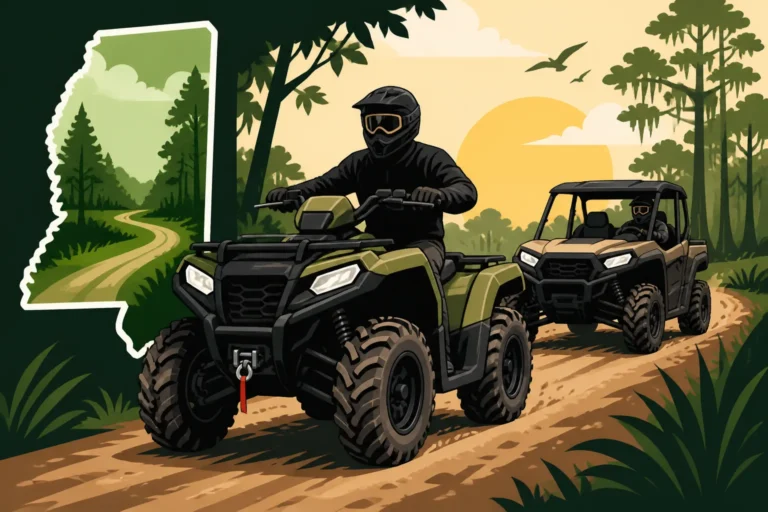
Mississippi Cabins Near a Riding Area
Finding a cabin near an ATV trail can be harder than planning the ride itself: a place that looks close on a map may still leave you with a long haul to the trailhead, no trailer parking, or no legal riding access from the property. This guide explains how to choose a practical Mississippi cabin base, check trail access, and plan a smoother weekend.
How to choose a cabin near a Mississippi riding area
Start with the riding area, not the cabin listing
A cabin described as “near trails” may be near a forest, park, or recreation area without being close to an open ATV route. Before booking, identify the specific riding area you plan to visit and check its rules, operating days, and access points. A short distance on a map can still mean a long drive if the roads wind around private land or the trailhead is on the opposite side of a large forest.
Mississippi offers different kinds of riding destinations, and they do not all work the same way. A private off-road park may have defined entry procedures and on-site lodging, while a National Forest ride may require you to drive from your cabin to a designated trail or road. Start with [Mississippi ATV Trails: Where to Ride](Mississippi ATV Trails: Where to Ride) and [Mississippi Trails With Cabins Nearby](Mississippi Trails With Cabins Nearby) to compare the kinds of areas and lodging options worth investigating.
Be cautious about assuming that a cabin’s land includes riding permission. A private property owner may allow guests to park a trailer but not ride across the property. Likewise, a nearby forest does not mean every road or track is open to ATVs. Confirm the exact route and permitted access with the land manager or property owner before you unload.
Match the cabin to your group and machine
A comfortable cabin for two people may not work for a family with children, several riders, and two machines. Look beyond the bed count. Ask whether there is a place to park a truck and trailer, whether the driveway is easy to turn around in, and whether the machines can be secured overnight. If you are bringing a side-by-side, confirm that the parking and access area can accommodate its width and turning radius.
A few practical questions can prevent a frustrating arrival:
- Is trailer parking allowed, and is there enough room to maneuver?
- Can machines be parked on the property, or must they stay on the trailer?
- Is there a hose or another suitable place to rinse mud off?
- Are there rules about noise, riding gear, pets, or outdoor cleaning?
- What is the plan if heavy rain changes trail access?
Do not assume that the cabin has a wash station simply because it caters to riders. Muddy gear, wet boots, and a machine covered in red clay can create a mess quickly, especially when the group is sharing a small space. Confirm what the host permits before you arrive, and bring a tarp or washable floor covering if you expect to carry wet gear indoors.
Compare the main lodging setups
The best base depends on whether you value trail proximity, privacy, or a comfortable place to return to after a long day. Use this table as a starting point, then verify details directly with the property and riding area.
| Lodging setup | Often works well for | What to confirm before booking |
|---|---|---|
| Cabin at or near a private riding park | Riders who want to minimize daily driving | Park access, lodging rules, machine parking, and whether riding is permitted on the arrival or departure day |
| Cabin outside a National Forest riding area | Groups seeking a quieter place to stay | Distance to an open trailhead, current route access, trailer parking, and whether nearby roads are actually open to machines |
| Cabin in a nearby town | Families or mixed groups who want food and other conveniences | Drive time to the ride, trailer security, late-arrival instructions, and parking restrictions |
| Campground cabin | Riders who prefer shared outdoor facilities | Quiet hours, machine rules, wash areas, pet policies, and whether the campground itself allows ATV use |
If you are considering a private park around Perkinston, look into [Red Creek Off-Road in Mississippi](Red Creek Off-Road in Mississippi) and [Red Creek's Cabins and RV Sites in Mississippi](Red Creek's Cabins and RV Sites in Mississippi). The park’s lodging details and riding rules should be checked together, not separately. A cabin booking does not automatically answer questions about riding access, entry procedures, or where to leave a trailer.
Mississippi areas to consider when planning a cabin stay
Private parks and lodging near Perkinston
A private riding park can simplify some parts of a weekend because the riding destination and lodging may be close together. That can reduce the daily routine of loading machines, driving to a trailhead, and finding parking. It can also make a short trip easier for a group that wants to spend more of its time riding and less of it coordinating vehicles.
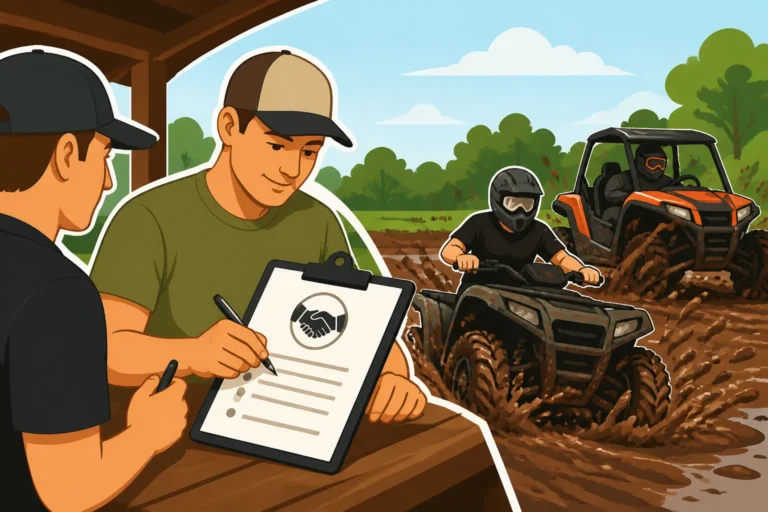
The trade-off is that private parks set their own rules. Check whether the cabin is on the park property or simply nearby, whether guests must complete a waiver, and how the park handles operating hours, trail closures, and machine requirements. If the group includes children or first-time riders, ask about age rules and any equipment requirements before making plans.
A booking may also come with conditions that affect the whole itinerary. For example, [Booking a Red Creek Cabin for Two Nights](Booking a Red Creek Cabin for Two Nights) is a useful topic to review if you are comparing a short overnight stay with a longer riding weekend. Confirm the minimum stay, check-in and check-out process, and what happens if weather disrupts your planned ride. Do not build your schedule around a trail day until you know how the lodging and park policies fit together.
De Soto National Forest and the Mississippi Coast
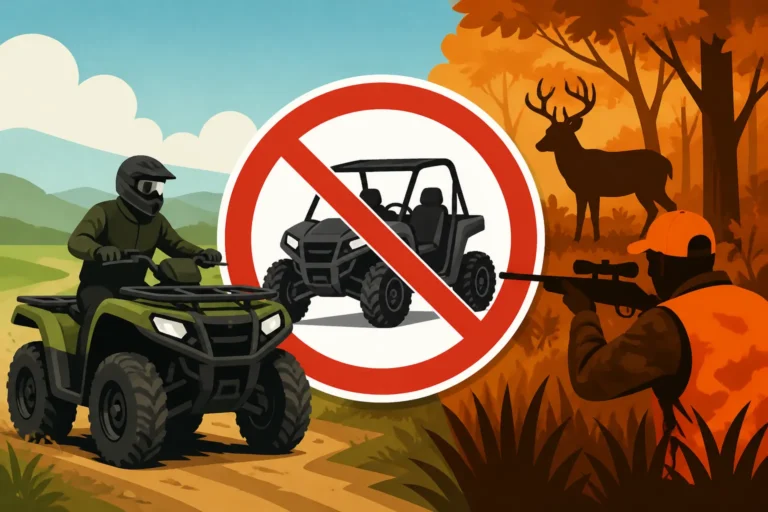
The De Soto National Forest can be a useful area to consider when you want to combine forest riding plans with a cabin or other lodging nearby. The important detail is that a forest is not one continuous, unrestricted ATV trail. Access depends on designated routes, posted signs, closures, and the rules for the particular area you intend to visit. A cabin somewhere in the region is not permission to ride from the property to the forest.
If you are looking around the coast, compare lodging and access in the broader area described in [Mississippi Coast and De Soto National Forest Riding](Mississippi Coast and De Soto National Forest Riding). Ask which trailhead or designated route you will use, how you will get there with a trailer, and whether the route is open for your intended dates. Conditions can change after storms or other closures, so check the relevant forest office before a long drive.
Mapping tools, including onX Offroad, can help you orient yourself and compare possible routes while you plan. Treat a map as a planning aid, not as permission to ride. Confirm access with official signs and the land manager, especially when a route approaches private property, a closed gate, or a road that is not clearly designated for ATV use.
A cabin in town as a practical fallback
A cabin or rental outside the immediate riding area may be a better choice for families or groups that want restaurants, groceries, or a more comfortable place to unwind. Hattiesburg can be a useful base to investigate for some southern Mississippi trips; start with [Mississippi Riding Near Hattiesburg](Mississippi Riding Near Hattiesburg) and compare the actual driving route to your chosen riding area.
A town-based stay usually means loading and unloading each day, so consider whether the time and effort are worth the extra comfort. Look for a property with clear trailer-parking permission, a driveway that can handle your rig, and a safe place to keep equipment. If you are traveling with multiple vehicles, ask whether the listing allows them all to park overnight.
Before choosing a town as your base, map the entire trip from cabin to trailhead and back. onX Offroad may help you review the route and nearby public-land context, but confirm road conditions and permitted access separately. A route that looks direct can include roads where trailers are difficult to turn around or where riding is not allowed.
How to verify trail access before you book
Confirm the trailhead and rules with the right office
First identify the exact area where you intend to ride. Then contact the responsible park, forest office, or property manager to confirm that the route is open to your type of machine. Ask whether there are width limits, pass requirements, vehicle restrictions, seasonal closures, or special rules for children and passengers. These details matter even when your machine is otherwise suitable for off-road riding.
If the plan involves National Forest land, check the specific riding area rather than relying on a general description of the forest. [Mississippi National Forest Riding Explained](Mississippi National Forest Riding Explained) can help you understand why forest access and designated riding routes should be checked separately. For an overnight trip, [Mississippi OHV Camping With Trail Access](Mississippi OHV Camping With Trail Access) is also a useful companion topic when comparing places to stay near riding areas.
When you call, give the staff enough information to answer clearly: the machine type, approximate width, planned dates, and the trailhead you are considering. Ask where to check for cancellations or temporary closures on the day you travel. Save the office number and any written instructions with your trip notes.
Treat maps and listings as starting points
Cabin listings, social media posts, and map apps can make an area look easier to navigate than it is. A property pin might be close to a forest boundary but far from the legal entrance. A track shown on a map may cross private land, be closed, or not be intended for ATV use.
Use onX Offroad or another mapping tool to examine the general layout, but verify each key leg of the trip. Check the road from your cabin to the staging area, the trailer entrance, and the route you plan to ride. If the map shows a gate, an unclear connection, or a road that appears to cross private property, ask before proceeding. Never treat a mapped line as proof that access is public.
It also helps to save offline directions and contact information before leaving home. Cell reception can be limited in forested areas, and a phone that cannot load a map at the trailhead is not much help. Carry a paper map or written directions as a backup, especially if your lodging is outside a town and you expect to return after dark.
Build a weather and backup plan
Mississippi rain can change trail conditions and access plans. Before you leave, check whether the park or forest has issued a closure notice and confirm what the cabin host expects if you return with muddy equipment. Avoid assuming that a trail is open just because it was open on a previous visit.
Plan one alternative for a wet or closed riding day. That might mean shifting the riding day, exploring a nearby town, or using the cabin as a rest day rather than trying to find an unofficial route. A good backup plan protects both your trip and the land. Riding around a barrier or onto an unapproved road can create safety and access problems for everyone.
On the morning of the ride, check conditions again and let someone outside the group know where you are going and when you expect to return. Keep the cabin address, trailhead details, and park or forest contact information accessible. Those small steps are easy to overlook when everyone is eager to unload, but they make a trip much less stressful if plans change.
A simple booking checklist for a smoother weekend
Before you reserve
Write down your priority: shortest drive to the trails, room for a larger group, secure trailer parking, or access to town conveniences. Then compare cabins against that priority instead of choosing only by photos or a broad “near trails” description.
Before paying or confirming, get clear answers about:
- The actual drive to the trailhead you plan to use.
- Trailer and machine parking, including any size limitations.
- Whether the property allows equipment washing and muddy gear.
- Cabin rules for pets, noise, and outdoor storage.
- Cancellation or schedule changes if the riding area closes.
- Whether the park or forest requires passes, waivers, or other preparation.
For a park-based stay, check lodging and riding access with the park. For a cabin outside a public riding area, confirm both the property details and the official trail information. Those are separate conversations, even when the listing makes the two seem connected.
Pack for the cabin as well as the trail
A riding weekend can leave a cabin entryway full of damp gloves, helmets, muddy boots, and rain gear. Bring bags or bins for dirty equipment, towels for cleanup, and a change of clothes for the drive home. If the host does not provide a place to rinse machines, carry basic cleaning supplies and plan to use only an approved wash area.
Keep important papers and contact details in one place. Include your booking information, directions, trail rules, pass or waiver details, and emergency contacts. If the group is splitting into multiple vehicles, share the trailhead and return plan with everyone before the ride begins.
For longer trips, check [Mississippi Trail Conditions After Rain](Mississippi Trail Conditions After Rain) before loading the trailer. A little preparation helps you avoid arriving at a closed trailhead, discovering that your trailer will not fit, or learning too late that a cabin’s “nearby access” does not mean direct riding access. The right cabin is not simply the one closest to a trail on a screen; it is the one that fits your group, your machine, and the rules of the place you plan to ride.
Disclaimer
This article is for general informational purposes only and does not constitute professional advice. Laws, prices and regulations vary by location and change over time. Consult a qualified professional for guidance on your specific situation.