Gates on a Southern Timber Road
You’ve loaded up your ATV or UTV, fueled up, and are ready for a day of exploring Mississippi’s beautiful timberlands. But all too often, that excitement can turn to frustration when you round a bend only to find your path blocked by a heavy, often locked, gate across what looks like a perfectly good road. It’s a common scenario that leaves many riders wondering about their rights and responsibilities. This guide will help you understand the purpose of those gates, the legalities of riding on timber roads, and how to approach them responsibly, so you can enjoy your ride without any unwelcome surprises or legal trouble.
Understanding Why Timber Roads Have Gates
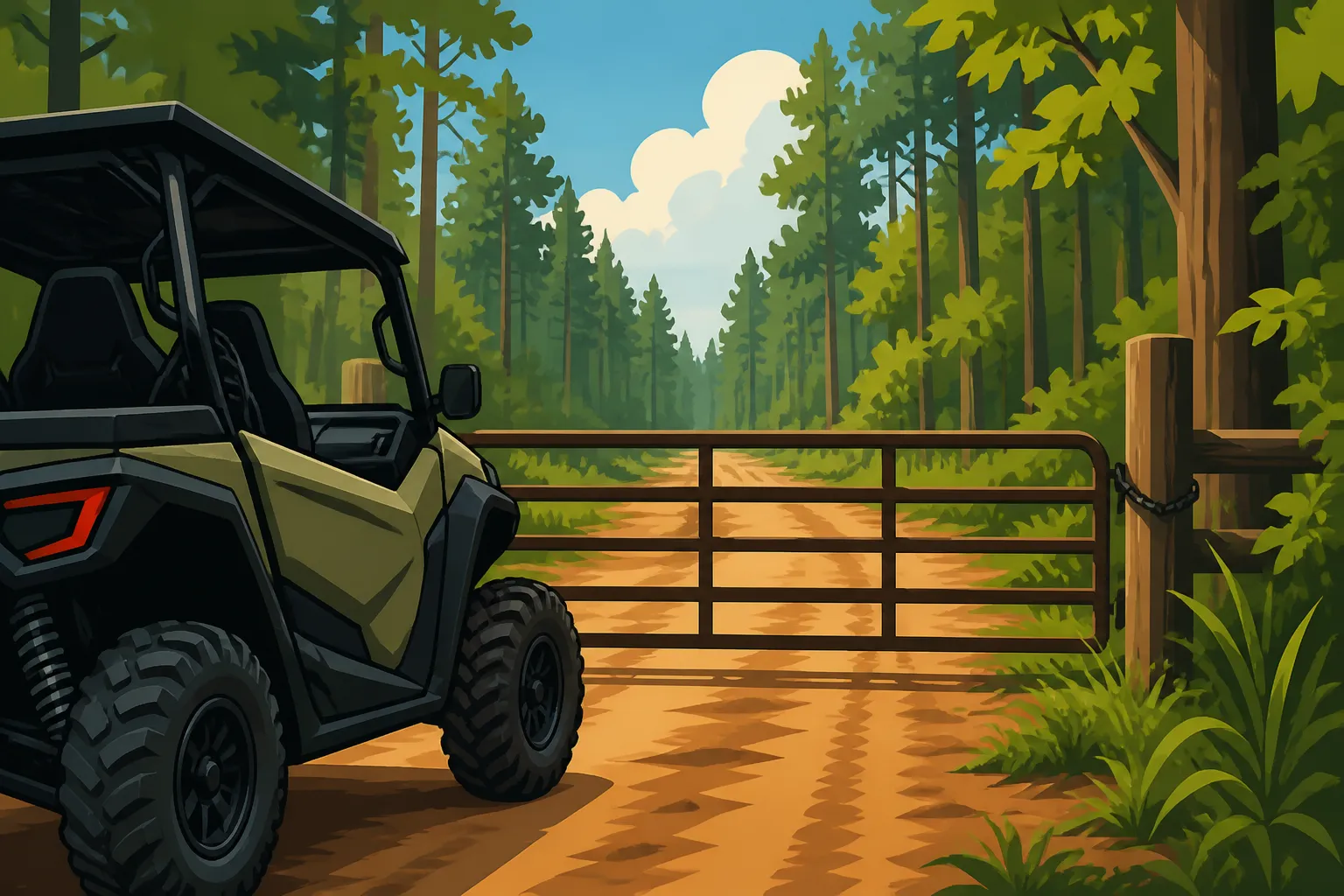
When you encounter a gate on a timber road in Mississippi, it's rarely there just to be an annoyance. These gates serve multiple, very important functions for the landowners, and understanding their purpose can help you respect them, even when they put a damper on your riding plans.
Protecting Private Property and Resources
Timber companies and private landowners invest heavily in their land and the resources on it. Those towering pines and sprawling hardwoods aren't just scenery; they're valuable assets. Gates are a primary defense against theft of timber, equipment, and even wildlife. Without gates, it would be far too easy for unauthorized individuals to enter, poach deer or turkey, cut down trees, or steal anything from tools to fuel. It’s about safeguarding their livelihood and their property from misuse. You might see signs mentioning "Timber Company Property" or "No Trespassing," and the gate simply reinforces that message.
Managing Liability and Safety
This is a huge one for landowners. In Mississippi, if someone gets hurt on their property, especially if they weren’t invited, it can lead to massive legal headaches and financial burdens for the owner. Gates act as a clear signal: "Enter at your own risk, or better yet, don't enter at all." They’re trying to prevent accidents involving ATVs, UTVs, dirt bikes, or even larger vehicles that could collide with logging equipment, fall into hidden ditches, or simply get lost. Active logging operations, for instance, are incredibly dangerous places, with heavy machinery, falling trees, and unstable ground. Gates keep unauthorized recreational riders out of harm’s way and keep the landowner protected from potential lawsuits.
Controlling Access and Operations
Timber companies need to manage who comes and goes on their roads. These aren't public roads; they're essentially private driveways for industrial operations. Gates allow them to control access for their logging crews, foresters, and other authorized personnel. They might close a gate for a few weeks during a specific logging phase, or to allow new growth to establish itself without disturbance. Sometimes, the roads are not maintained for public use and may have washouts, deep ruts, or other hazards that could damage your machine or leave you stranded. By using gates, they can ensure only authorized vehicles are on the property, which helps maintain the roads and ensures smooth operations.
Legalities of Gated Timber Roads for ATV/UTV Riders
Riding an ATV or UTV in Mississippi requires a keen awareness of property rights, and this is especially true when it comes to gated timber roads. What might look like an inviting trail could quickly become a legal headache if you don't understand the rules.
Understanding Trespass Law
In Mississippi, simply entering private property without permission, whether by foot, ATV, or UTV, constitutes trespass. A gate, especially one that is closed and/or locked, serves as a very clear indicator that you are not welcome to enter. Even if a gate is open, but there are "No Trespassing" signs or clear indications of private land, entering can still be considered trespass. It doesn't matter if you didn't see a sign or thought the road looked public; the burden is on you, the rider, to know whose land you're on and if you have permission. You don't want to find yourself explaining your intentions to a sheriff's deputy. The penalties for [Mississippi Trespass Law for Riders] can range from fines to more serious consequences, especially if damage occurs or if it's a repeat offense.
The Myth of "Implied Permission"
Some riders mistakenly believe that if a gate is open, or if no "No Trespassing" sign is visible, they have "implied permission" to ride. This is a dangerous misconception. In Mississippi, permission to enter private land is generally explicit, meaning it's either given directly by the landowner or posted clearly. An open gate on private timberland should not be interpreted as an invitation. It often means a work crew is active, or the gate simply hasn't been secured yet. Always assume a gated road on timberland is private unless you have definitive, clear permission from the landowner or manager. This could come in the form of a written agreement, a permit, or direct verbal confirmation. When in doubt, it’s always best to turn around.
Public Easements vs. Private Roads
This is where things can get tricky. Sometimes, a private timber road might have a public easement running over a portion of it, allowing access to a separate parcel of land, or perhaps a utility company has an easement. However, the existence of an easement does not automatically grant recreational riding rights. An easement only allows specific, defined access for its stated purpose. Riding for pleasure on an easement that is part of a private timber road could still be considered trespass, especially if your activity exceeds the scope of the easement. To avoid any issues, it’s crucial to understand the specifics of any public access claims. If you're unsure, you can often check county records or contact the landowner directly for clarification. Remember, most private timber roads are just that – private – and are not intended for public use by ATVs or UTVs. For more information on what constitutes public versus private access, you might look into [Mississippi Rules for Riding a Timber Road].
How to Approach Gated Timber Roads Responsibly
Encountering a gate on a timber road doesn't have to be a ride-ending frustration. With the right approach, you can either find legal ways to access these lands or discover alternative riding opportunities. Responsibility and respect are your best tools here.
Seeking Permission from Landowners
The most straightforward and legal way to ride on gated timber roads is to get permission. This might sound obvious, but many riders skip this step. Identify the landowner – often there will be signs with timber company names or "Posted" notices. Sometimes county tax assessor records can help you identify owners for private tracts. Once you know who owns the land, reach out to them. Explain your intentions, what type of machine you ride, and assure them you will respect their property. Some landowners are open to granting permission for specific purposes, such as hunting access, or even for recreational riding during certain times of the year. Always try to get [Written Permission From a Southern Landowner], outlining the terms and duration of your access. This protects both you and the landowner.
Joining Hunting Clubs or Lease Agreements
Many timberlands in Mississippi are leased out to hunting clubs. If you're interested in using a timber road for access to hunting grounds, joining such a club might be your best bet. These clubs often have agreements with landowners that include access to the internal road systems for members. This means the gates might be open to club members, or you'll be given a key or code. However, club rules can be strict, so make sure you understand the specifics of [What a Hunting Lease Says About ATV Use] before committing. Typically, these agreements specify where and when you can ride, what type of machines are allowed, and what responsibilities you have regarding property maintenance and gate security.
Respecting Closed Gates and Posted Signs
This is non-negotiable. A closed gate, whether locked or not, means "Do Not Enter." Attempting to climb over, cut a lock, or drive around a gate is not only illegal but also incredibly disrespectful to the landowner. You risk criminal charges for trespass and property damage, and you could ruin any chance of future access, not just for yourself, but potentially for other riders in the area. The same goes for "No Trespassing" signs. These are clear legal warnings. If you see one, even if the gate is somehow open, turn around. It's far better to err on the side of caution than to face legal repercussions or confrontation.
Here’s a quick guide to what different gate scenarios might mean:
| Scenario | Typical Implication for Riders | Recommended Action |
|---|---|---|
| Gate Closed, Locked, "No Trespassing" | Absolutely no entry. Private property. | Turn around. Do not attempt to bypass. |
| Gate Closed, Unlocked, "No Trespassing" | No entry. Even if unlocked, permission is denied. | Turn around. Do not open or enter. |
| Gate Open, "No Trespassing" Sign | Still no entry. Permission denied, even if open. | Turn around. Do not enter. |
| Gate Closed, No Signs (Timberland) | Assume private. Do not enter without permission. | Turn around. Seek landowner permission if interested. |
| Gate Open, No Signs (Timberland) | Assume private. Do not interpret as permission. | Turn around. Seek landowner permission if interested. |
| Gate Open, "Public Access" Sign | Indicates legitimate public access. Ride responsibly. | Proceed cautiously. Follow all posted rules and laws. |
What to Do When Encountering a Gate
So, you're out riding and you hit a gate. What's the best course of action? Your options are pretty clear, and they all revolve around legality and respect.
Never Force or Damage Gates
This cannot be stressed enough: do not under any circumstances try to force open, cut, or damage a gate. Whether it's a simple chain and padlock or a robust metal structure, a gate is a landowner's property, and damaging it is a criminal offense. Even attempting to drive your UTV around a gate through brush, which could damage the surrounding land, is a bad idea and can be seen as an act of trespass and destruction of property. Not only could you face significant fines and potential jail time, but you'll also burn bridges with landowners and give all ATV/UTV riders a bad name. This kind of behavior makes it harder for everyone to find legal places to ride.
Turn Around and Find Alternative Routes
The safest and most responsible action when faced with a locked or clearly private gate is to simply turn around. It might be disappointing, but there are many other places to ride legally in Mississippi. Research [Mississippi ATV Trails: Where to Ride] for designated public and private parks that welcome off-road vehicles. While you might be tempted to push further, remember that going around gates often leads to getting lost, encountering dangerous conditions, or violating trespass laws. Plan your routes beforehand, focusing on known public access areas or private lands where you have explicit permission.
Utilizing Proper Equipment for Legal Riding
While a gate means stopping, there's plenty you can do to prepare your machine for legal adventures on legitimate trails or with permission. For instance, if you're exploring trails where you have explicit permission, having a reliable winch from a brand like SuperATV on your UTV can be a game-changer for self-recovery from mud or getting over an obstacle. Similarly, if you are granted access to a particularly rugged timber road, ensuring your machine has robust skid plates and heavy-duty suspension, components often available from manufacturers like SuperATV, can protect it from debris and rough terrain. Remember, these are for enhancing your experience on approved paths, not for attempting to bypass obstacles on private property. Good tires, a GPS, and a way to communicate in areas with no cell service are also vital when venturing out on any remote trail, ensuring you can navigate safely and signal for help if needed. Always make sure your machine is well-maintained and ready for the challenges of Southern trails, whether it's [Mississippi Riding in Summer Heat] or tackling the mud after a heavy rain.
Disclaimer
This article is for general informational purposes only and does not constitute professional advice. Laws, prices and regulations vary by location and change over time. Consult a qualified professional for guidance on your specific situation.