Mississippi Trespass Penalties for Riders
It's a familiar ache for many of us who love hitting the trails: you've got your ATV or UTV all prepped, maybe even upgraded with some heavy-duty protection, and you're just itching to ride. But finding legitimate places to enjoy your machine can be a real headache, especially in a state like Mississippi where public access isn't as widespread as we might wish. This frustration often leads to riders accidentally—or sometimes intentionally—venturing onto private property, which can land you in a heap of trouble with serious trespass penalties. This guide is here to unravel the complexities of Mississippi's trespass laws for ATV and UTV riders, helping you understand the rules, the risks, and most importantly, how to steer clear of costly mistakes.
Understanding What Constitutes Trespassing in Mississippi
Before we even get to the penalties, let's talk about what "trespassing" actually means when you're out there on your quad or side-by-side. It's not always as cut-and-dry as a "No Trespassing" sign, and many riders fall into traps because they misunderstand the fundamental rules of land access in the Magnolia State.
Private Property vs. Public Land: The Key Distinction
The vast majority of land in Mississippi is privately owned. We're talking about timber company land, farms, hunting leases, family homesteads, and even those seemingly abandoned tracts that look ripe for a little adventure. It's a common, and often dangerous, assumption that if land isn't fenced or explicitly marked with "No Trespassing" signs, it's fair game for riding. Unfortunately, that's almost never the case.
Think about it from a landowner's perspective: they might have invested heavily in their property, whether for farming, hunting, or simply as a private retreat. They have no way of knowing if the rider on their land is harmlessly passing through or up to no good. The law generally presumes that unless you have express permission, you are not welcome on private land. This is particularly true if your riding causes any damage, creates a nuisance, or simply disrupts their peace and quiet. This "open access" mentality, where you assume permission until told otherwise, can quickly lead to an unpleasant encounter with law enforcement or an angry property owner.
Even old logging roads or forgotten utility easements that appear unused are typically part of a larger private parcel. Just because a path exists doesn't mean it's a public right-of-way. It's on you, the rider, to know whose land you're on and whether you have legal standing to be there. This is why it's so critical to do your homework before your tires ever hit the dirt.
How Permission Works, or Doesn't
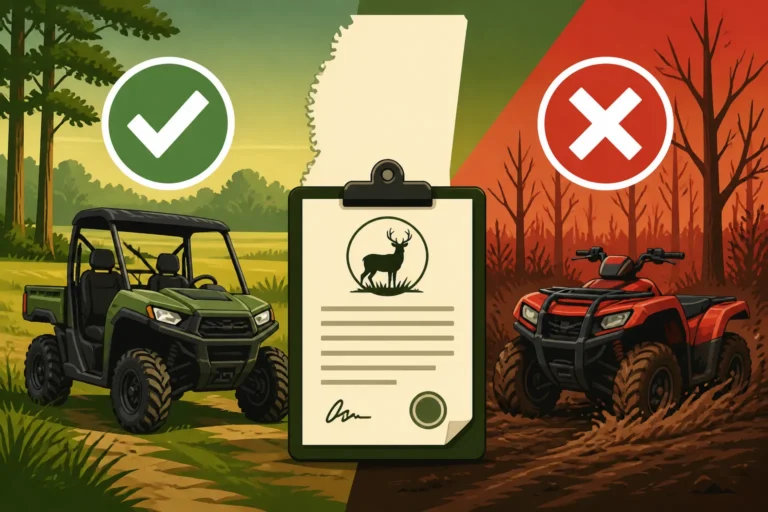
When it comes to accessing private land, permission is king. But not all permission is created equal, and getting it wrong can still lead to legal trouble. In Mississippi, the safest and most legally sound form of permission is always in writing. A simple written note, signed by the landowner, explicitly stating you have permission to ride your ATV or UTV on their property for a specified period, can be your best defense against a trespass charge. This prevents any "he said, she said" arguments later on and provides clear proof that you were legally present. [Written Permission From a Southern Landowner] delves deeper into why this is so important and what such a document should ideally contain.
Verbal permission, while seemingly friendly and straightforward, carries significant risks. Imagine this scenario: you're riding with a buddy, and he says, "My Uncle Bob owns that land, and he said we can ride out there anytime!" You trust your friend, you head out, and next thing you know, a sheriff's deputy is asking for your name. Turns out, Uncle Bob might have meant "ride on the gravel driveway to his house," or he might have revoked that permission last year, or perhaps he only gave permission to your friend, not to you or your entire riding group. Without it in writing, you're relying on a memory, a loose interpretation, or even a misunderstanding. This leaves you vulnerable, as the burden of proof will often fall on you to demonstrate that you had legitimate permission.
Even if you have permission for one specific area, make sure you understand the boundaries. "Can I ride on your back forty?" might not mean "ride anywhere you want, including the sensitive wetland area or near my neighbor's property line." Always clarify the scope and limits of any permission granted, especially if you're not intimately familiar with the land. A little bit of over-communication here can save you a lot of grief down the line.
Public Lands and Designated Access
It's not just private property where trespass can occur. Even on public lands, such as state parks, Wildlife Management Areas (WMAs), or National Forests, there are strict rules about where and how you can ride. These areas often have designated trails or roads where off-road vehicles are permitted, and straying from these can also constitute a form of trespassing or violating specific regulations.
For example, [Mississippi WMA Road Riding] explains that on Wildlife Management Areas, ATV and UTV use is typically restricted to designated roads only, and often only during certain seasons or for specific purposes like game retrieval. Veering off a marked road onto a sensitive habitat area, or riding during a closed season, can lead to citations and penalties, even though you might technically be on "public" land. These rules are in place to protect wildlife, natural resources, and other users of the land, such as hikers or equestrians.
Similarly, National Forests might have designated OHV trail systems, like the Bethel Trails. However, these trails often have width restrictions (e.g., 50 inches) and can be closed due to weather or seasonal conditions. Riding a wider side-by-side on a narrow, ATV-only trail, or riding when a trail is clearly marked as closed, can result in fines and charges. So, while public land offers fantastic opportunities, it's vital to research and understand the specific rules and regulations for that particular area before you load up your machine.
The Penalties for Trespassing with an ATV or UTV in Mississippi
So, what actually happens if you're caught trespassing on your ATV or UTV in Mississippi? It's not just a polite request to leave. The state's laws can carry significant consequences, ranging from fines to civil lawsuits, and even the impoundment of your beloved machine.
Misdemeanor Charges and Fines
In Mississippi, trespassing is generally classified as a misdemeanor offense. This means it's considered a less serious crime than a felony, but it's still a criminal charge that goes on your record. The specific fines can vary, but generally, you can expect to face monetary penalties. These fines aren't just a slap on the wrist; they can easily run into hundreds of dollars, especially if there's any damage involved or if it's a repeat offense.
Beyond the initial fine, you'll likely incur court costs, which can add a significant amount to your bill. Appearing in court, potentially needing legal representation, and the stress of dealing with the justice system can turn a fun day of riding into a very expensive headache. [Mississippi Trespass Penalties for Riders] further details the statutory fines associated with various levels of trespass, emphasizing that the costs quickly add up. A deputy stopping you on private land is not just going to ask you to turn around; they have the authority to issue a citation, and you'll be answering to a judge.
It's also worth noting that if you are part of a group, each individual rider on their machine can be charged separately. So, if five of you are caught riding on someone's private timberland, that's five individual trespass charges and potentially five sets of fines and court costs. This multiplies the financial burden significantly for everyone involved.
Potential Civil Damages and Restitution
The legal repercussions don't necessarily end with criminal charges. A property owner who suffers damages due to your trespassing can pursue civil action against you. This means they can sue you in civil court to recover the costs of any damage you caused. Imagine tearing up a freshly planted crop field, leaving deep ruts that destroy months of hard work and thousands of dollars in investment. Or perhaps you break a fence, damage a gate, or cause erosion on a sensitive hillside.
The landowner isn't just out the cost of repair; they could also claim lost income (e.g., from a ruined crop) or the cost of restoring the land to its previous condition. These civil claims can amount to far more than any criminal fine. For instance, [Levee Damage Treated Seriously] highlights how critically officials view damage to vital infrastructure like levees, which could result in very substantial restitution costs to repair. Repairing a fence might be a few hundred dollars, but re-sodding a large area of pasture or replanting damaged crops could easily run into thousands.
In these civil cases, even if you claim you didn't intend to cause damage, your presence on the land without permission makes you liable. The burden will be on you to pay for the repairs or losses incurred by the landowner, and this can stretch on for months or even years through the civil court system. It's a risk many riders simply don't consider when they decide to "just quickly ride across that field."
Machine Impoundment and Confiscation
Perhaps one of the most immediate and impactful consequences of trespassing on an ATV or UTV is the potential for your machine to be impounded. Law enforcement officers, particularly county deputies, have the authority to seize vehicles used in the commission of a crime, and trespassing often falls under this category. This means your prized quad or side-by-side, maybe one you've spent months saving for and customizing with top-of-the-line components from companies like SuperATV, could be loaded onto a tow truck and taken to an impound lot.
When an ATV is impounded, you're not just looking at a criminal fine. You'll also be responsible for towing fees, daily storage fees, and any administrative fees the impound lot or law enforcement agency charges. These costs can quickly add up, easily surpassing the initial trespass fine, especially if it takes you a few days or weeks to sort out the legal mess and get your machine released. [When an ATV Gets Impounded After a Stop] details the process and associated costs, emphasizing how quickly they can escalate. Getting your machine back often requires not only paying all outstanding fees but also resolving the criminal charges.
In more egregious or repeated cases of trespassing, especially if significant damage or a blatant disregard for property rights is shown, there's even the risk of your machine being subject to civil forfeiture. While less common for simple trespass, it's a possibility if your actions are deemed severe enough. Losing your machine permanently is a nightmare scenario for any rider, making the decision to respect private property boundaries all the more critical.
| Consequence Type | Description | Typical Legal Outcome | Potential Cost / Impact |
|---|---|---|---|
| Criminal | Violation of state trespass laws | Misdemeanor charge, citation | Fines (hundreds of dollars), court costs, criminal record |
| Civil | Damage caused to private property | Lawsuit by landowner for damages | Restitution for repairs, lost income (thousands of dollars) |
| Machine Related | Vehicle used in commission of crime | Impoundment, towing, storage, administrative fees, forfeiture | Hundreds to thousands of dollars, potential loss of machine |
| Social | Damage to reputation, strained community relations | Landowner confrontation, local distrust | Loss of future riding opportunities, community resentment |
Avoiding Trespass: Best Practices for Mississippi Riders
The best way to deal with trespass penalties is to avoid them entirely. It might seem like common sense, but a proactive approach and a few simple habits can save you from a world of trouble, keeping you on the right side of the law and ensuring your riding remains a pleasure, not a problem.
Do Your Homework Before You Ride
One of the most crucial steps you can take is to know where you're riding before you even leave your driveway. Technology has made this much easier than it used to be. Utilize online county tax assessor maps, property line apps on your smartphone, or even traditional paper maps to identify land ownership. These tools can often show you property boundaries, owner names, and parcel numbers. This allows you to clearly see where private property begins and ends, and whether there are any public access points.
Imagine planning a ride near a friend's hunting camp. Instead of just guessing, take 15 minutes to look up the surrounding parcels. You might discover that the old road you thought was public actually cuts through three different private properties. Knowing this upfront allows you to plan an alternative route or, even better, seek explicit permission from those landowners. [Mississippi Ordinance Lookups Before You Ride] can also be a valuable resource for identifying any local rules that might impact land access, though these usually pertain more to road riding than private property.
It's also a good idea to scout the area if possible, or at least study satellite imagery. Look for fences, gates, "No Trespassing" signs, and other indicators of private property. Just because a trail looks inviting doesn't mean it's legal. A little bit of research can prevent accidental incursions and save you from the stress of a potential confrontation or citation. Being informed is your first and best line of defense against trespassing.
Always Seek Explicit Permission
This cannot be stressed enough: when in doubt, don't go out. If you're not absolutely 100% sure that you have legal permission to be on a piece of land, then stay off it. The consequences of guessing wrong are simply not worth the momentary thrill of riding where you shouldn't. The best practice is to always seek explicit permission from the landowner, preferably in writing.
Approaching landowners respectfully is key. Don't just show up on their doorstep in your riding gear; find out who owns the land, and make a polite, formal request. Explain what you want to do, when, and for how long. Be prepared to assure them you will respect their property, pick up any trash, close gates, and stick to specific trails if requested. You might be surprised how many landowners are willing to grant permission to responsible riders, especially if they see you as a trustworthy individual. Building a good relationship with a landowner can open up fantastic private riding opportunities that are otherwise inaccessible. [Asking Your County Supervisor Where You Can Ride] might be more about public land, but the principle of asking local authorities about access to specific areas applies universally.
Remember, permission for hunting doesn't automatically mean permission for recreational ATV riding. A hunting lease might grant access for specific purposes during hunting season, but not for joyriding. Always clarify the scope of permission. If a landowner says "yes," take the time to write it down, get it signed, and keep a copy with you.
Respect Posted Signs and Boundaries
While we've discussed that land doesn't have to be posted to be private, you absolutely must respect any "No Trespassing," "Private Property," or "Keep Out" signs you encounter. These signs are a clear, unambiguous statement from the landowner that they do not want unauthorized individuals on their property. Ignoring them is a direct challenge to their property rights and will almost certainly result in charges if you are caught.
Fences and gates are also clear indicators of private property. Even if a gate is open, it doesn't grant you permission to enter. Always assume that fences and gates mark private boundaries. If you open a gate to pass through (with permission, of course), always close it behind you. This small act of respect can prevent livestock from escaping and shows you care about the landowner's property. [Posted Land Means for Mississippi Riders] goes into detail about the legal significance of such markings and why they must be obeyed without question.
It's also important to be vigilant for subtle boundary markers, especially in wooded areas. Look for painted trees, survey markers, or changes in fencing. Property lines can sometimes zig-zag in unexpected ways, so relying solely on what "looks" like the edge of someone's land can be misleading. Always err on the side of caution. If you're unsure if you're about to cross a boundary, turn around and find an alternative route. This small decision can be the difference between a peaceful ride and a legal nightmare.
Common Misconceptions and Local Nuances
Navigating land access in Mississippi can feel like a minefield, especially with pervasive myths and regional peculiarities. Let's debunk some common misunderstandings that frequently lead riders into trouble.
The "Everybody Rides Here" Myth
This is perhaps one of the most dangerous myths circulating among ATV and UTV riders: "Oh, everybody rides on this old logging road/power line/field edge, so it must be okay." The simple truth is that "everybody else does it" does not make it legal or right. Just because you see tire tracks or other riders using a particular area does not grant you permission or immunity from trespass laws. In fact, it often means that the landowner is probably already frustrated by repeated trespass and is more likely to call the authorities.
Think about it from the landowner's perspective: a few occasional riders might be tolerated, but a consistent stream of ATVs and UTVs can cause significant damage, noise, and erosion. It only takes one complaint, from one fed-up neighbor or landowner, to bring law enforcement down on an entire riding spot. [One Neighbor's Complaint Changes a Town Rule] illustrates how quickly local attitudes and regulations can shift in response to public outcry, often leading to stricter enforcement or outright bans on riding in areas that were once informally tolerated.
Furthermore, many "informal" riding spots are simply the result of years of unchallenged trespassing. But all it takes is a new landowner, a new land manager, or a renewed effort by the existing owner to enforce their property rights, and suddenly a popular "everybody rides here" spot becomes a ticket trap. Don't risk it. Your ATV, potentially outfitted with rugged accessories from SuperATV for those tough trails, deserves to be ridden on legal grounds, not in constant fear of being caught.
The Old Road Bed or Pipeline Myth
Another common misconception revolves around old roadbeds, pipeline cuts, power line easements, or abandoned railroad grades. Many riders assume that these linear features are public access routes, regardless of whose land they cross. However, this is rarely the case. While utility companies or old railway lines may have an easement or right-of-way for their specific purposes (e.g., maintaining power lines or pipelines), these easements typically do not grant public access for recreational activities like ATV riding. The underlying land still belongs to the private property owner.
For instance, [Mississippi Rules for Riding a Pipeline Cut] and [Mississippi Rules for Riding a Power Line Cut] clarify that while a utility company has the right to access and maintain its infrastructure, that right does not extend to the public for recreational use. You might be riding directly over someone's private land, even if it feels like an open corridor. Without explicit permission from the landowner (not just the utility company), you are trespassing.
These easements are often maintained and can look like inviting trails, but they are not public thoroughfares. Landowners often have legal agreements that dictate how these easements can be used, and public recreational riding is almost never part of that agreement. Always assume that any linear feature on private land remains private, even if it hosts utilities, unless you have written permission from the property owner.
Agricultural Exemptions (or Lack Thereof)
Many Southern states have provisions or informal understandings regarding the use of ATVs and UTVs on farm property, particularly for agricultural purposes. While Mississippi certainly acknowledges the utility of these machines for farmers, it's a common misunderstanding that using an ATV for "farm work" automatically grants you access to any farmland, regardless of ownership. This is incorrect.
If you are using your ATV or UTV for bona fide agricultural work on land that you own or have explicit permission to operate on, you are generally fine. However, if you are riding on a neighbor's field, or cutting across a farmer's property to get to your own, or simply going for a recreational ride through farmland, you are trespassing unless you have prior permission. [Mississippi Machines Used Only on a Farm] clarifies the specific parameters under which machines are considered for agricultural use, but this designation primarily impacts titling and registration, not the fundamental requirement for land access permission.
There is no blanket "agricultural exemption" that allows you to ride on any farm property in Mississippi without the owner's consent. Even if you're helping a friend with chores, ensure you're on the property with the landowner's express knowledge and permission. Otherwise, you're just another trespasser, regardless of whether you're carrying a shovel or a fishing pole. Always obtain explicit permission, preferably in writing, before you and your machine set a tire on any land you don't personally own.
Disclaimer
This article is for general informational purposes only and does not constitute professional advice. Laws, prices and regulations vary by location and change over time. Consult a qualified professional for guidance on your specific situation.