Mississippi Rules for Riding a County Road
It’s a common scenario across Mississippi: you’ve got your ATV or UTV, the perfect machine for traversing fields, timber tracts, and even your own property. But what about that dusty county road that connects your land to your buddy's hunting camp, or that short stretch you need to cross to get to the next section of trail? The temptation to just hop on the road for "just a minute" is strong, and the rules around it can feel incredibly confusing, with everyone hearing something different. This guide will cut through the noise and explain Mississippi's specific rules regarding ATV and UTV use on county roads, helping you understand what's legal and what could land you in hot water.
The Hard Truth: Mississippi's Statewide Road Ban
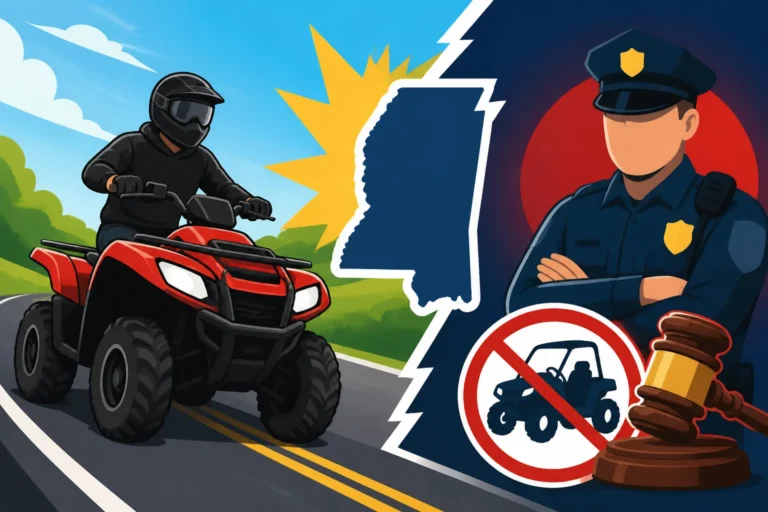
Let’s get straight to it: for the vast majority of Mississippi, riding your ATV or UTV on a county road is against state law. This often comes as a shock to riders, especially those who see machines on roads in neighboring states or in more rural parts of Mississippi where enforcement might seem lax. But the reality is, state law is pretty clear, and it makes no special exceptions for the type of road or the reason you need to use it.
What the Law Actually Says (and Doesn't Say)
Mississippi’s state law regarding off-road vehicles (which includes ATVs and UTVs) is surprisingly brief, especially compared to the extensive statutes for cars and trucks. The core of it can be found in a couple of short sections of the Mississippi Code. These sections define what an off-road vehicle is and then explicitly state that they are generally prohibited from public roads. There isn't a long list of caveats or specific circumstances where it becomes okay.
This means that, at the state level, there's no "farm road exception" for driving your utility quad down a gravel road to check on livestock, nor is there a "crossing exception" that allows you to briefly traverse a paved county road to get from one private property to another. While these provisions exist in some other states, [Mississippi Bans ATVs on Public Roads] generally. This lack of nuance in the state law is often the root of much of the confusion and frustration for riders who simply want to use their machines practically. The law, as written, doesn't distinguish between a major highway and a quiet, dead-end county lane. You can find the specific language in [Mississippi Code Section 63-31-3], which lays out these prohibitions clearly.
Why This Ban Causes So Much Frustration
It's completely understandable why this flat ban causes so much head-scratching and aggravation. You might live in an area where local deputies have historically turned a blind eye, or perhaps you've heard anecdotal stories about someone who "never got a ticket." This creates a sense of uncertainty and often leads riders to believe that the rules are more flexible than they actually are. The common perception is that if a road is unpaved, sparsely traveled, or leads directly to private land, it should be fair game for an ATV or UTV.
However, relying on unofficial interpretations or past leniency is a risky gamble. The law exists, and even if it's not enforced strictly every time, it can be enforced at any time. The consequences can range from a simple ticket to more severe penalties if an accident occurs or if property damage is involved. The potential penalties, which we’ll discuss more, can be a real headache, far outweighing the convenience of a short road ride. This is why it’s so critical to understand the actual letter of the law rather than what you wish it said or what your neighbors think it says. You're trying to use a tool efficiently, and when the rules feel like they're preventing that, it's natural to feel exasperated.
The Only Exception: Local Ordinances (and How Rare They Are)
Now, here's where a tiny sliver of possibility sometimes opens up, but it's important to approach this with a hefty dose of realism. While state law largely prohibits ATVs and UTVs on public roads, individual cities or counties do have the authority to pass their own local ordinances that might create exceptions. The key word here is "might" – and frankly, it's quite rare for these to specifically allow ATVs or UTVs on county roads.
How Local Ordinances Can Change Things
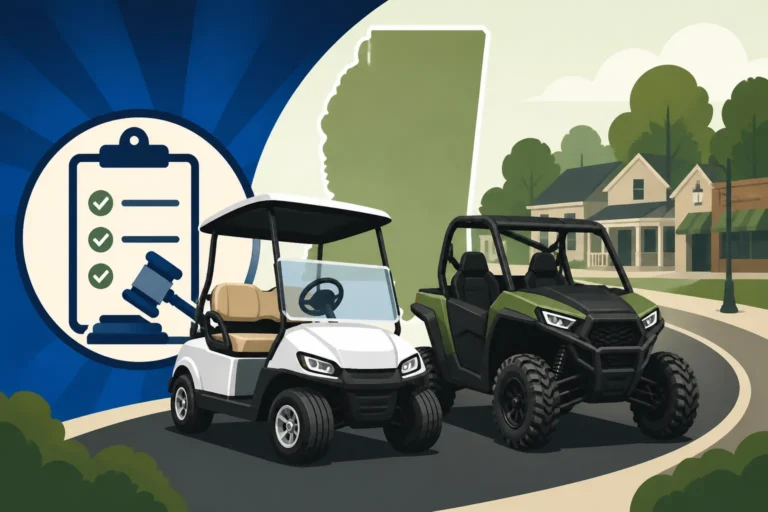
Some municipalities have indeed enacted ordinances that allow certain types of off-road vehicles on specific public roads. However, these are far more commonly for golf carts or Low-Speed Vehicles (LSVs) within city limits, not typically for full-blown ATVs or UTVs on county roads. A city might decide that golf carts can be used on streets with a speed limit of 30 mph or less, for example, to help residents access local businesses or amenities. You can learn more about these specific provisions in resources like [Mississippi Golf Cart and LSV Ordinances]. These local rules are a patchwork, meaning what's allowed in one town or county might be strictly forbidden just a few miles down the road in another.
The critical distinction here is that these local ordinances must be explicit. They can't just be an absence of enforcement; they have to be a formally adopted law by the local governing body (like a city council or county board of supervisors) that specifically overrides the state's general prohibition. If you don't have a local ordinance that directly addresses ATVs or UTVs on county roads in your specific area, then the state ban remains fully in effect. It's a heavy lift for local governments to create these, often due to concerns about safety, insurance liability, and the general impact of off-road vehicles on public infrastructure.
What to Look For in a Local Ordinance
If you suspect or hear whispers that your particular county or city might have such an ordinance, you need to do your homework thoroughly. This isn't the time for assumptions. You would need to contact the county clerk's office, the city hall, or perhaps even the local sheriff's department to inquire about any specific laws pertaining to ATVs or UTVs on public roads. It's crucial to ask for a copy of the actual ordinance itself, not just rely on someone's interpretation. Remember, even if an ordinance exists, it will likely come with a host of restrictions.
These restrictions often include limitations on the type of machine (e.g., only golf carts, or ATVs under a certain weight/width), specific roads where riding is allowed (e.g., only roads with a posted speed limit under 35 mph, or only within certain zones), hours of operation, and requirements for safety equipment like lights, turn signals, and helmets. Some ordinances can even be incredibly specific, going so far as to name particular brands of machines that are barred or allowed, as seen in cases like [Ocean Springs Names the ATV Brands It Bars]. It's a maze, and the only way to navigate it safely is with the official text in hand. Always use resources like [How to Check If Your Town Has an Ordinance] to guide your research. Without a clear, written, and specific local ordinance, assume the state ban is active. It’s better to be safe and informed than to risk a ticket or worse.
| Feature | State Law (Generally) | Potential Local Ordinance (If Enacted) |
|---|---|---|
| ATVs on County Roads | Prohibited | May allow on specific roads/conditions |
| UTVs on County Roads | Prohibited | May allow on specific roads/conditions |
| Farm Road Exception | No statewide exception | Highly unlikely, but technically possible |
| Crossing Exception | No statewide exception | Highly unlikely, but technically possible |
| Required Equipment | Generally none for road use (as it's banned) | Likely to require lights, signals, mirrors |
| Helmet Law | [Mississippi Helmet Law for Riders Under 16] | May apply to all riders, regardless of age |
| Driver's License | Not applicable for illegal road use | Often required if allowed on roads |
| Speed Limits | Not applicable | Typically restricted to low-speed roads (e.g., < 35 mph) |
| Hours of Operation | Not applicable | May restrict to daylight hours only |
Practical Advice for Navigating the Rules
Understanding the law is one thing, but knowing how to act when faced with a real-world situation is another. It’s vital to be prepared for potential encounters with law enforcement and to understand the implications of illegal road use. This knowledge can save you a lot of grief, expense, and even help you contribute to a safer riding community.
What to Do When Approached by Law Enforcement
If you find yourself riding your ATV or UTV on a county road and a law enforcement officer approaches you, the absolute best course of action is to stop safely and comply with all instructions. Arguing or attempting to flee will only escalate the situation and lead to more serious charges. Remember, deputies and police officers are simply doing their job, enforcing the laws that are on the books. They aren't trying to ruin your day personally.
Have your paperwork ready, including proof of ownership (like a title or bill of sale, if applicable for your machine's age) and any identification you carry. Be polite and respectful. Explain your situation calmly if asked, but avoid making excuses or admitting to knowingly breaking the law. If an officer asks to see documents, it’s best to provide them. This falls under what [What a Mississippi Deputy Can Ask to See] when they stop you. Even if you believe you have a local ordinance that permits your ride, this is the time to present that documentation. Having it readily accessible, rather than having to dig through a backpack, can make the interaction smoother. While it's frustrating to be stopped, a calm and cooperative demeanor can go a long way.
Understanding the Consequences of Illegal Road Use
The primary consequence for riding an ATV or UTV illegally on a public road in Mississippi is typically a citation and a fine. While the fines for initial offenses might not seem astronomical, they can quickly add up, especially once court costs are factored in. More importantly, repeated offenses or riding recklessly can lead to more severe penalties. For instance, your machine could be impounded, resulting in significant towing and storage fees before you can get it back. There’s nothing quite like the headache and expense of retrieving an impounded vehicle to make you regret a quick road ride. Learning about [When an ATV Gets Impounded After a Stop] can really drive this point home.
Beyond fines and impoundment, consider the insurance implications. Your standard ATV insurance policy is designed for off-road use. If you have an accident while operating your machine illegally on a public road, your insurance company might deny coverage. This could leave you personally responsible for property damage, medical bills, and any legal fees, which can be devastating. [Insurance for a Mississippi ATV Crossing a Public Road] is a complex topic, but generally, when a machine is operated illegally, its coverage is severely compromised. It's a risk that far outweighs the convenience of taking a shortcut on a county road.
Advocating for Change (Safely and Legally)
Many riders feel that the existing laws are outdated or don't serve the needs of the modern ATV/UTV community. If you share this sentiment, there are proper and legal channels to advocate for change. Rather than breaking the law, consider engaging with your local government. Attend county board of supervisors meetings or city council meetings. Present your case respectfully, highlighting the economic benefits of ATV tourism, the need for safe connectivity between private lands, and the responsible practices of riders.
Gather support from other local riders and present a unified voice. Education is key; often, lawmakers are unaware of how ATVs and UTVs are actually used responsibly. While it's a slow process, advocating for specific, well-thought-out ordinances is the legal and most effective path. We've seen bills attempting to create more statewide access, like [Mississippi's Failed 2025 Road Access Bill], which show there's an ongoing conversation, but these legislative efforts require broad support. Discussing options and solutions by bringing your question to your local officials, as detailed in [Bringing an ATV Question to Your Board of Aldermen], is the right way to foster change.
Keeping Your Ride Legal: Where You Can Ride
Given the strict limitations on county roads, it becomes even more important to understand and utilize the legal riding opportunities available in Mississippi. There are fantastic places to ride, and focusing on these areas ensures your enjoyment without the stress of legal repercussions.
Designated Trails and Private Land
The primary places you can legally ride your ATV or UTV in Mississippi are on private land with the owner's explicit permission and on designated public trail systems. Mississippi boasts some excellent off-road parks and trails that cater specifically to ATVs and UTVs. These include spots within the National Forests and various private mud parks spread across the state. These areas are designed for off-road fun and provide a safe, legal environment to enjoy your machine. You can find comprehensive information on these spots in resources like [Mississippi ATV Trails: Where to Ride].
When riding on private land, always ensure you have [Written Permission From a Southern Landowner]. This isn't just a courtesy; it's a legal safeguard against trespass charges, which can be just as problematic as road riding violations. Many landowners are happy to grant permission, especially for hunting or land maintenance, but always ask first and respect their property. For public trails, be sure to check the specific rules and regulations of each park or forest district. Places like [Mississippi National Forest Riding Explained] and [Mississippi Private Mud Parks] often have their own unique requirements regarding passes, vehicle types, and operating hours. Embracing these legal venues allows you to experience the thrill of off-road riding without the constant worry of a deputy around the next bend.
Equipping Your Machine for Safe Off-Road Use
Even though you’re sticking to legal off-road areas, ensuring your machine is properly equipped for safety and performance is paramount. This isn't about making it street-legal, but about making it trail-ready and safe for the conditions you'll encounter off-road. Good lighting, for example, is essential for visibility, whether you're riding at dusk on a private trail or navigating dense woods. Aftermarket LED light bars can dramatically improve your ability to see and be seen by other riders, especially in challenging terrain.
Other critical safety gear includes proper helmets (especially for riders under 16, as mandated by [Mississippi Helmet Law for Riders Under 16]), eye protection, and sturdy riding boots. For more aggressive riding or utility tasks, a winch can be a lifesaver if you get stuck in mud or need to move downed timber. Skid plates protect vital undercarriage components from rocks and stumps, while durable tires designed for mud or rocky terrain enhance traction and control. Companies like SuperATV specialize in producing a wide array of high-quality aftermarket parts and accessories designed to enhance the safety, durability, and performance of ATVs and UTVs for off-road use. While these parts do not make a machine street-legal in Mississippi, they are invaluable for maximizing the enjoyment and safety of your legal off-road adventures. Don't forget that if you're riding on public land, having a valid driver's license or a safety certificate may be required for certain ages and situations, as outlined in [Mississippi Requires a License or a Safety Card]. Preparing your machine and yourself thoroughly for legal off-road adventures is key to enjoying your time safely and responsibly.
Disclaimer
This article is for general informational purposes only and does not constitute professional advice. Laws, prices and regulations vary by location and change over time. Consult a qualified professional for guidance on your specific situation.