Mississippi ATV Age Requirements
Riding ATVs and UTVs in Mississippi is a beloved pastime for countless families, but trying to figure out the exact age requirements for young riders can feel like navigating a swamp in the dark. Parents often worry about what’s legal, what’s safe, and what rules apply where their kids want to ride. This guide is here to shed some light on Mississippi's ATV age requirements, breaking down the state laws, park regulations, and common-sense safety practices to ensure everyone has a fun and compliant ride.
The Core of Mississippi's ATV Age Requirements and Where the Confusion Lies
Mississippi's off-road vehicle laws, particularly concerning ATVs and UTVs, are often a source of head-scratching for riders, especially parents. Unlike some states with extensive, detailed statutes for every nuance of off-road activity, Mississippi's framework is surprisingly concise. This brevity, while seemingly simple, can actually lead to more confusion because it leaves many specifics up to interpretation or to the discretion of local jurisdictions and land managers.
State Law vs. Common Misconceptions
One of the biggest hurdles riders face is distinguishing between actual state law and widely circulated misconceptions or rules from other states. Many assume that a comprehensive set of "road rules" or age-specific mandates exists for every situation, when in reality, [Mississippi's ATV Law Is Only Two Sections Long]. These two sections primarily focus on defining off-road vehicles and prohibiting their use on public roads. They touch upon age and safety, but not with the granular detail many expect.
For instance, you might hear a neighbor insist that "no one under 16 can ride any ATV anywhere," which isn't entirely accurate or reflective of the full picture. The state law provides a baseline, but specific riding areas—like National Forests, Wildlife Management Areas (WMAs), or private parks—often overlay their own, more restrictive rules. This layered approach means that while the state sets a foundation, where you choose to ride your ATV heavily influences the age-related regulations you'll encounter.
Minimum Age for Operating on Public Land
When it comes to operating an ATV on public land in Mississippi, there is a clear directive regarding younger riders. The law states that riders under the age of 16 are required to wear a helmet, and if they are operating an ATV on public property, they must possess a safety certificate. This isn't about riding on public roads—which is generally prohibited across the board—but rather on designated public lands such as trails within state forests (if they existed) or specific WMA paths where ATV use is permitted.
Understanding "public property" in this context is crucial. It typically refers to land managed by state or federal agencies that is open for public recreation, even if ATV riding isn't explicitly the primary use. This regulation underscores Mississippi's commitment to safety, recognizing the inherent risks associated with off-road riding, particularly for less experienced younger operators. The requirement for a safety certificate ensures that these young riders have at least a foundational understanding of safe operation and trail etiquette before venturing out. It's a proactive step to prevent accidents and promote responsible riding from an early age.
Navigating Age Restrictions on Different Riding Lands in Mississippi
The age requirements for ATV and UTV riders in Mississippi aren't a one-size-fits-all situation. The rules can shift dramatically depending on whether you're riding on federal land, state-managed areas, or private property. This patchwork of regulations means that what's perfectly fine in one location might land you a citation in another, especially concerning younger riders.
Age Rules for National Forests and WMAs
If you're planning a family ride on federal lands, like parts of the De Soto National Forest, or within one of Mississippi's Wildlife Management Areas, you need to be aware that their rules often supplement—and sometimes supersede—state laws regarding age. These entities typically have specific operating plans for off-road vehicles, and they prioritize safety and environmental stewardship. For example, [Mississippi National Forest Riding Explained] might detail specific age minimums for operators on designated trails, often requiring direct adult supervision for minors.
Similarly, [Mississippi WMA Riding Rules] frequently designate specific roads or trails where ATVs are allowed, and these areas often come with their own age stipulations. A common theme is the emphasis on safety certificates for young riders, even if the state law only mentions it for "public property." Federal and WMA managers want to ensure that anyone, especially a child, operating a machine on their land has demonstrated a basic level of competency and safety awareness. These rules are in place not to restrict fun, but to protect riders, other visitors, and the natural environment. Always check with the specific National Forest ranger district or WMA office before you go, as rules can change seasonally or for specific events.
Private Parks and Property Age Policies
Mississippi is home to several fantastic private mud parks and riding areas, and this is where the age rules can become highly individualized. Unlike public lands governed by broader statutes, private parks have the autonomy to set their own terms of entry and operation, including specific age minimums for riders. [Mississippi Private Mud Parks] often have strict policies on who can ride, what type of machine they can operate, and whether parental supervision is required for minors. It's not uncommon for parks to require a parent or legal guardian to sign a liability waiver for any rider under 18, and some may even have higher minimum ages for certain trails or machine types.
For example, a park might say riders must be 12 years old to operate their own ATV on beginner trails, but 16 to tackle more challenging mud pits, even with supervision. They might also specify that youth-model ATVs are only allowed in certain designated areas. Before you load up the trailer, always visit the park's website or call ahead to confirm their [Mississippi Private Park Age Minimums]. You don't want to drive for hours only to find your child is too young for their policies. For parents looking to enhance safety and control for their younger riders within these varying rules, accessories like speed governors or upgraded suspension systems can be beneficial. Companies like SuperATV offer a range of products designed to improve machine handling and protection, which can be particularly useful when adapting a youth machine to specific park requirements or simply to boost rider confidence.
Age and Passenger Rules
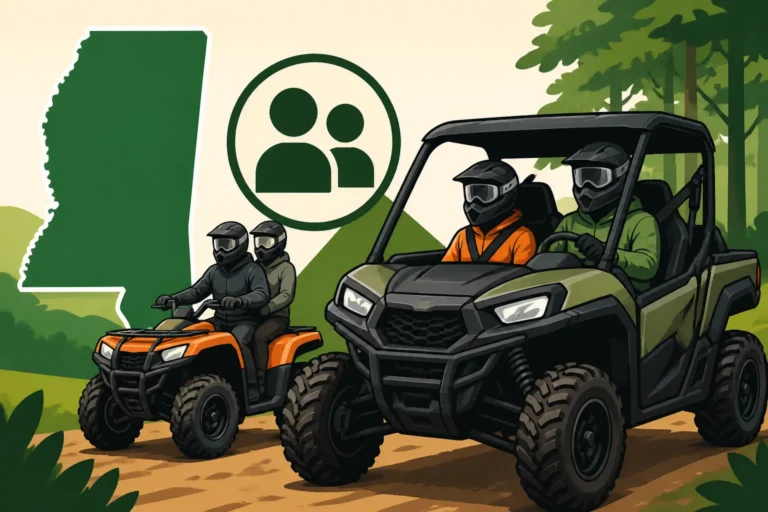
Beyond who can operate an ATV, Mississippi also has guidelines, both explicit and implicit, about who can be a passenger, particularly regarding children. Generally, the rule of thumb is that passengers are only permitted on ATVs specifically designed by the manufacturer to carry more than one person. This means if your ATV has a single seat, it's designed for a single rider. Period. Trying to squeeze a child onto the front rack or behind the operator on a single-seat ATV is not only incredibly dangerous but also often against park rules and common safety recommendations.
The dangers of carrying passengers on a single-rider ATV are well-documented: it throws off the machine's balance, makes steering and control more difficult, and significantly increases the risk of rollover or ejection. For UTVs (side-by-sides), which are built with multiple seats and seatbelts, carrying passengers is generally permitted, provided everyone is properly secured. However, even with UTVs, some private parks may have age restrictions for passengers, especially very young children. Always ensure that if a child is riding as a passenger, they meet any age or height requirements, can reach the grab handles, and are securely belted in. The spirit of the law, and good common sense, emphasizes that [Passengers Only on a Factory Two-Seat Machine] should be the standard.
| Riding Area Type | General Age Guidance (Operator) | Supervision Required (Minors) | Safety Certificate Required (Minors) | Passenger Rules (Minors) |
|---|---|---|---|---|
| Mississippi State Law (Public Property) | Under 16 | Yes | Yes (for public property) | Only on factory-designated multi-seat machines |
| National Forests | Varies (often 12+, sometimes 16+) | Yes | Yes (often for all under 16) | Varies, usually on factory multi-seat machines only |
| Wildlife Mgmt. Areas | Varies (check specific WMA) | Yes | Yes (often for all under 16) | Varies, generally on factory multi-seat machines only |
| Private Parks | Varies Widely (park-specific) | Often Yes | No (but courses highly recommended) | Varies, usually stricter on ATVs, more lenient for UTVs |
Equipping Young Riders Safely and Legally
Beyond just understanding the age limits, a critical part of ensuring a safe and compliant ride for young ATV and UTV enthusiasts in Mississippi involves proper equipment and training. This isn't just about adhering to the letter of the law; it's about minimizing risk and fostering a lifelong love for off-road recreation in a responsible manner.
The Mandate for Helmets and Safety Gear
Mississippi state law is clear on one crucial piece of safety equipment: helmets. For riders under the age of 16 operating an ATV on public lands, a helmet is not just recommended, it's [Mississippi Helmet Law for Riders Under 16]. This isn't some arbitrary rule; it's a critical safety measure designed to protect the most vulnerable part of a young rider's body. The law often specifies that these helmets must meet certain safety standards, like those set by the Department of Transportation (DOT), ensuring they provide adequate protection in the event of an impact. It’s imperative to ensure your child’s helmet fits properly – not too loose, not too tight – and is in good condition.
But helmets are just the beginning. While not always mandated by state law for all ages or private lands, a full complement of safety gear is absolutely essential for any rider, especially children. This includes eye protection (goggles or a face shield), sturdy over-the-ankle boots, long pants, a long-sleeved shirt, and gloves. Many experienced riders also advocate for chest protectors and knee/elbow pads, particularly for youth. Think of it this way: when you're riding an ATV, you're exposed to branches, rocks, dust, and potential falls. Proper gear acts as a second skin, preventing scrapes, bruises, and more serious injuries. Investing in good quality gear for your child is as important as choosing the right machine.
The Importance of ATV Safety Courses
For young riders navigating Mississippi's public lands, possessing a safety certificate isn't just a good idea; it's a legal requirement for those under 16. These courses are invaluable, going far beyond simply teaching how to start and stop a machine. They cover essential topics such as proper riding posture, understanding vehicle dynamics, navigating different terrains, emergency braking, evasive maneuvers, and basic maintenance. They also instill a crucial understanding of environmental responsibility and trail etiquette.
Organizations like the Mississippi State University Extension Service often provide approved [Mississippi Safety Course Certificates] that meet state requirements. These courses are typically hands-on and taught by certified instructors, giving young riders practical experience in a controlled environment. The [Mississippi Safety Course Length] might vary, but the investment of time is minimal compared to the lifelong skills and safety awareness gained. Even if your child primarily rides on private land where a certificate isn't legally required, enrolling them in a course is one of the best investments you can make in their safety and riding proficiency. It builds confidence and competence, which translates directly to a safer and more enjoyable riding experience.
Choosing the Right Machine for a Young Rider
Perhaps one of the most critical decisions a parent makes for a young rider is selecting an appropriately sized and powered machine. This isn't just about buying a "youth" model; it's about matching the ATV or UTV to the child's physical size, weight, and developmental stage. A machine that is too large or too powerful for a child can be incredibly difficult to control, leading to fatigue, loss of balance, and a significantly increased risk of accidents.
Most ATV manufacturers provide age recommendations for their youth models (e.g., 6+, 10+, 14+), which are based on factors like engine displacement, top speed, and overall machine size. These recommendations are not arbitrary; they are developed through extensive testing and safety considerations. A child should be able to comfortably reach the handlebars and controls, operate the brakes, and shift their weight effectively to steer. If they have to stretch or struggle, the machine is too big.
For parents looking to fine-tune a youth machine for optimal safety and control, there are many aftermarket options. Companies like SuperATV offer components that can improve stability, adjust suspension for lighter riders, or even provide additional protective elements like sturdy brush guards and skid plates. These modifications can help ensure the machine handles predictably and offers maximum protection, giving both the rider and the parent greater peace of mind on the trails. Ultimately, the goal is to provide a machine that empowers the child to learn and grow as a rider safely, rather than one that overwhelms them.
Common Pitfalls and Parental Responsibilities
While the thrill of off-road riding is undeniable, especially for younger enthusiasts, it comes with significant responsibilities for parents and guardians. Overlooking these can lead to unfortunate accidents, legal headaches, and a lot of preventable stress. Understanding these common pitfalls and embracing your role as a responsible supervisor is paramount to a safe and enjoyable experience for everyone.
Understanding Parental Supervision Requirements
It's a common misconception that once a child meets the minimum age requirement and has a safety certificate, they're free to roam unsupervised. This couldn't be further from the truth, especially in Mississippi. Even when a child is legally allowed to operate an ATV, direct adult supervision is almost always mandated on public lands and is strongly enforced at most private parks. [Mississippi Parent Riding With a Child] isn't just a quaint idea; it's often a legal and safety necessity.
Supervision means more than just being present in the same general area. It implies active observation, guidance, and the ability to intervene if necessary. A parent should be close enough to see and hear their child, offering advice, reminding them of safety rules, and ensuring they aren't venturing into areas beyond their skill level or violating park regulations. Negligent supervision can have severe consequences, not only in the event of an accident but also legally. If an unsupervised minor causes damage or injury, the parent could be held liable. The bottom line is, until a young rider is demonstrably proficient, responsible, and mature enough to handle complex situations independently, a watchful eye is essential.
Legal Implications of Non-Compliance
Ignoring Mississippi's ATV age requirements, helmet laws, or safety certificate mandates can lead to more than just a stern talking-to. The legal implications for non-compliance can range from monetary fines to more serious penalties, especially if an accident occurs. While [Mississippi Fines for Road Riding] specifically target riding on prohibited public roads, other citations can be issued for violating age-related rules on regulated public lands.
For instance, if a deputy or park ranger encounters a child under 16 riding on public property without a helmet or a required safety certificate, the parent or guardian could receive a citation. While the fines for such infractions might seem minor compared to traffic tickets, they can still add up, especially when court costs are factored in. More significantly, in the event of an injury or accident where regulations were clearly violated, the consequences can be far-reaching, impacting insurance claims and potentially leading to civil lawsuits. Adhering to the rules is not just about avoiding a ticket; it's about mitigating risk and demonstrating respect for the law and the safety of others.
Educating Yourself and Your Young Rider
The world of ATVs and UTVs is constantly evolving, with new machines, new technologies, and sometimes, new regulations. As a parent, your responsibility doesn't end after your child completes a safety course or gets their first machine. It's an ongoing commitment to stay informed and to continuously educate your young rider. This means regularly checking for updates on state laws, particularly if there are legislative changes proposed, and staying current with the specific rules of any parks or lands your family frequents.
Beyond formal education, it's about fostering a culture of safety at home. Before every ride, take a few minutes to review safety rules, check the machine's condition, and discuss the specific conditions of the trail. Encourage your child to ask questions, to voice concerns, and to always prioritize safety over speed or showing off. Teach them about the importance of riding within their limits, respecting private property, and being courteous to other trail users. By setting a strong example and maintaining open communication, you'll not only help your child become a safer and more responsible rider but also instill values that extend far beyond the trail.
Disclaimer
This article is for general informational purposes only and does not constitute professional advice. Laws, prices and regulations vary by location and change over time. Consult a qualified professional for guidance on your specific situation.