The 2025 Road Access Bill That Passed 48-2
It’s a scenario many of us in Mississippi have faced: you’ve got your ATV or UTV loaded up, ready for a day of trail riding, but getting from your property to the nearest path feels like an impossible mission without loading onto a trailer. The dream of simply riding down a quiet county road to connect to a different section of trails, or even just to grab a snack, remains just that – a dream for most. This guide dives into the hopes and disappointments surrounding the 2025 Road Access Bill, explaining what it meant for riders, why it generated so much excitement, and what ultimately happened to it, so you understand the current state of ATV and UTV road access in our beloved Magnolia State.
The Longstanding Roadblock for Mississippi Riders
For years, the question of whether ATVs and UTVs could legally share our public roads has been a source of ongoing discussion and, frankly, frustration for riders across Mississippi. The desire for more freedom and convenience is deeply felt, but the legal landscape has always been a challenging one to navigate.
The Current State of ATV Road Access in Mississippi
Let's not beat around the bush: for the vast majority of our state, the answer is a resounding "no." [Mississippi Law Flatly Bars ATVs From Public Roads]. This isn't just a suggestion or a guideline; it's the law, plain and simple. What this means for you, the rider, is that your off-road machine is generally prohibited from operating on highways, streets, and county roads. You can't just hop on your quad and ride to the store, or take a scenic cruise down a paved backroad. This blanket prohibition is codified in state statute, particularly in sections like [Mississippi Code Section 63-31-3], which clearly defines off-road vehicles and restricts their use to non-public ways.
This can be incredibly frustrating. Imagine you live just a mile from your favorite hunting camp, but that mile is a paved county road. Under current state law, you can't simply drive your UTV down that road. Instead, you have to load it onto a trailer, drive that single mile, and then unload it. It adds time, effort, and often necessitates having a truck and trailer combination just for short distances. Riders often feel like they're being penalized for owning a machine that's perfectly capable of handling low-speed, low-traffic situations safely. The state's stance is often rooted in safety concerns and the idea that these vehicles aren't designed or equipped for road use, regardless of how responsibly an individual rider might operate them. And unfortunately, [Why Mississippi's Road Ban Lists No Exceptions] means there's very little wiggle room.
Why Riders Crave Road Access
The yearning for road access isn't just about convenience; it taps into the very spirit of off-road adventure and community. Many riders envision a world where they can easily link up with friends, explore new areas, and support local businesses without the constant hassle of trailering.
One of the biggest drivers is undoubtedly the convenience factor. Picture this: you're out on the trails, you've ridden for hours, and your fuel tank is running low. Being able to ride a mile down the road to the nearest gas station, instead of packing up, trailering, fueling, and then unloading again, would be a game-changer. It's about reducing friction in the riding experience. Similarly, imagine you're exploring a vast network of trails, but they're separated by a short stretch of public road. Road access would allow you to seamlessly transition between trail systems, opening up far more expansive riding opportunities. This connectivity could truly transform how we experience the outdoor landscape in Mississippi. For many, a short, low-speed ride on a rural road feels no more dangerous than driving a golf cart in a permitted community, especially if machines are equipped with proper safety features like lights and mirrors.
Another significant aspect is the desire to support local economies. Small towns often thrive on tourism, and off-road riders represent a significant demographic with disposable income. If riders could legally access local shops, restaurants, and lodging directly from trails, it could provide a much-needed boost to these communities. It's not just about personal convenience; it's about seeing our machines as part of a broader recreational and economic ecosystem, much like snowmobiles in northern states or even golf carts in some of our own coastal towns. The potential for more local exploration and enjoyment is immense, and it’s why riders keep pushing for legislative change.
Diving Deep into Senate Bill 2258 (The 2025 Road Access Bill)
The frustrations over road access aren't new, and they consistently lead to legislative attempts. One of the most promising recent efforts was Senate Bill 2258, which captured the attention and hopes of countless ATV and UTV enthusiasts across the state. It represented a genuine attempt to address the longstanding issue of road access.
What Senate Bill 2258 Proposed
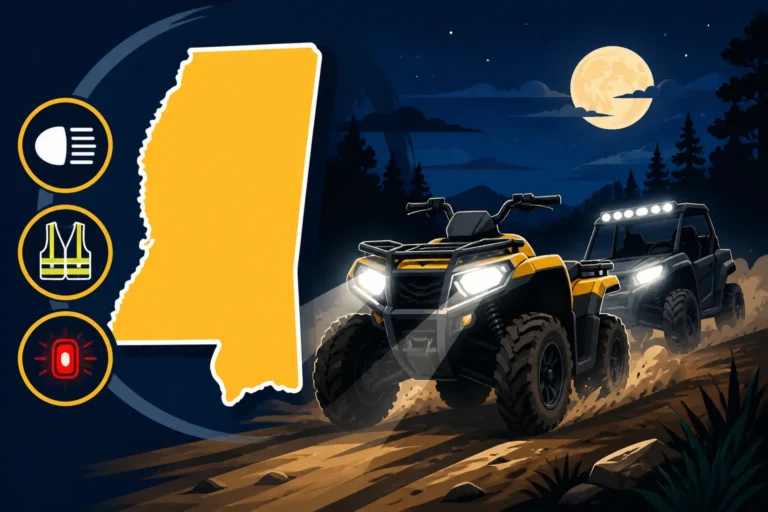
Senate Bill 2258, often referred to as "The 2025 Road Access Bill," was a significant piece of legislation for anyone who owns an off-road vehicle in Mississippi. If passed into law, it would have fundamentally changed how and where ATVs and UTVs could be operated. The bill aimed to create specific allowances for these machines on certain public roads, under defined conditions. While the full text can be quite detailed, the gist of [Mississippi Senate Bill 2258 and What It Would Have Done] involved allowing ATVs and UTVs on public roads with a posted speed limit of 50 miles per hour or less. This wasn't a free-for-all; it came with stipulations, such as requiring operators to be at least 16 years old and possess a valid driver's license. Machines would have to be equipped with specific safety features, including headlights, taillights, brake lights, a horn, and mirrors. Think about the common modifications many riders already make: adding turn signals, side mirrors, or even upgraded headlights from a brand like SuperATV – these would have become essential for legal road use under the proposed bill.
The intent behind these provisions was clear: to balance rider freedom with public safety. By restricting use to lower-speed roads and mandating specific equipment, the bill tried to mitigate concerns often raised by law enforcement and safety advocates. It also opened the door for local municipalities and counties to pass their own ordinances further restricting or permitting usage within their jurisdictions, offering a degree of local control over the matter. The bill was largely seen as a move toward modernizing Mississippi's off-road vehicle laws, bringing them closer to those in some neighboring states that offer more limited road access. For riders, it felt like a step in the right direction, acknowledging the evolving capabilities of modern ATVs and UTVs.
The Vote: "Passed 48-2" in the Senate
The legislative journey of Senate Bill 2258 saw a moment of significant triumph that ignited hope within the riding community: it passed the Mississippi Senate with an overwhelming majority of 48-2. This wasn't just a simple vote; it was a powerful statement of support from a large body of elected officials, signaling that the need for ATV/UTV road access was recognized and valued at a high level.
When a bill passes one chamber with such a decisive margin, it typically indicates strong bipartisan agreement and suggests that the arguments in favor of the legislation were compelling enough to sway nearly all senators. For riders who had been advocating for years, this vote felt like a breakthrough. News spread quickly through online forums and riding groups, creating a buzz of excitement. People began to imagine what this change would mean for their weekend rides, their hunting trips, and their ability to connect with friends and local businesses. It validated the efforts of countless individuals and organizations who had tirelessly lobbied for this cause, demonstrating that their voices were being heard in the state capital. The strong showing in the Senate truly made it feel like this time, the effort to gain road access might actually succeed, offering a tangible path forward after years of static laws.
The Path to Becoming Law (And Where It Stumbled)
The legislative process is often complex, with many hurdles a bill must clear before it can become law. Even with strong support in one chamber, there are numerous points where a bill can falter, as was the case with Senate Bill 2258.
The Legislative Journey of a Bill
Understanding how a bill becomes law in Mississippi, or any state for that matter, is crucial to grasping why some promising legislation never crosses the finish line. It's rarely a straightforward path from introduction to enactment; instead, it's a winding road filled with committees, votes, and deadlines. A bill typically starts in either the House or the Senate, where it's introduced by a legislator. From there, it's assigned to one or more committees. These committees are the gatekeepers; they hold hearings, debate the bill's merits, and can amend it, table it, or vote to send it to the full chamber. If it passes committee, it then goes to the floor for a full vote by all members of that chamber. As we saw with Senate Bill 2258, passing one chamber with strong support, like the 48-2 vote in the Senate, is a huge step.
However, the journey doesn't end there. For a bill to become law, it must pass both the House and the Senate in identical form. So, after passing the Senate, SB 2258 would have moved to the House of Representatives, where it would have gone through a similar committee process and a full floor vote. If the House amends the bill, it then has to go back to the Senate for concurrence on those changes. If they can't agree, a conference committee might be formed to iron out the differences. Finally, once both chambers pass the identical bill, it goes to the Governor for signature. The Governor can sign it into law, allow it to become law without a signature, or veto it. As you can imagine, there are numerous points along this journey where a bill can simply run out of time, lose support, or face insurmountable opposition, even if it had a stellar start in one chamber.
Why the 2025 Road Access Bill Died in Committee
Despite the immense hope and the strong 48-2 vote in the Senate, Senate Bill 2258 ultimately did not become law. Like many legislative initiatives, its journey came to an end in the intricate, often opaque, committee process of the other chamber. Specifically, [Why the 2025 Road Bill Died in Committee] was because it failed to advance out of the House Transportation Committee. This is a common fate for many bills, even those with significant initial momentum.
There are several reasons why a bill might stall in committee. Often, it comes down to competing priorities, strong opposition, or simply a lack of time during a busy legislative session. In the case of road access for ATVs and UTVs, concerns frequently revolve around public safety, the potential for increased accidents, and the enforcement challenges faced by local law enforcement agencies. While the Senate bill included provisions for safety equipment and speed limits, committee members in the House might have harbored lingering doubts about the practical implementation and the state's readiness to manage such a change. There could also have been strong lobbying efforts from groups concerned about the impact on traditional road users or the environment. Sometimes, it’s a matter of key legislators not prioritizing the bill, or simply running out of legislative days to thoroughly vet and debate it before deadlines. The disappointment among riders was palpable, as a bill that seemed so close to success ultimately met the same fate as [Earlier Road Access Bills From 2022 and 2024], leaving the status quo firmly in place.
What This Means for Mississippi ATV/UTV Owners Today
The outcome of Senate Bill 2258, while disappointing, serves as a crucial reminder of the current legal landscape. For now, the rules remain largely unchanged, meaning riders need to be exceptionally mindful of where and how they operate their machines.
No Changes to Current Road Access
The critical takeaway from the fate of Senate Bill 2258 is that, for the moment, nothing has changed regarding statewide road access for ATVs and UTVs in Mississippi. [Mississippi Bans ATVs on Public Roads] continues to be the prevailing law. This means that if you own an ATV or a side-by-side, you generally cannot operate it on any public road, street, or highway within the state. This includes everything from bustling main streets to quiet, unpaved county roads in rural areas. The only universally accepted exceptions often involve directly crossing a public road (at a 90-degree angle, after stopping and yielding to traffic), or for specific agricultural or utility purposes where the machine is an essential tool for authorized work on private property adjacent to a road.
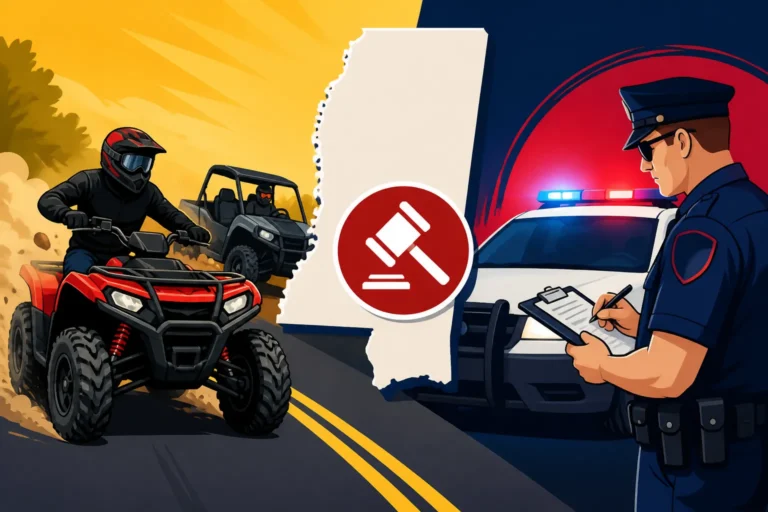
Operating your machine illegally on public roads carries significant risks. You could face citations, fines, and even have your machine impounded. The penalties, such as [Mississippi Fines for Road Riding], might not seem astronomical compared to some traffic violations, but they can quickly add up, especially when court costs and potential towing/storage fees are factored in. Furthermore, accidents on public roads can lead to much more severe legal and financial consequences, particularly if your ATV isn't insured for road use (which most aren't, as it's not typically required for off-road machines). It’s a harsh reality, but until state law explicitly changes, riding on public roads means you're breaking the law and exposing yourself to considerable hassle and expense.
Local Ordinances as the Only Pathway
Given the statewide prohibition, the only realistic avenue for limited road access for ATVs and UTVs currently comes from local ordinances. However, this is a nuanced and often confusing area for riders. While the state broadly bans ATVs and UTVs on public roads, it often grants municipalities and counties some degree of authority to regulate traffic within their own borders. This is where you might find exceptions, but they are typically very specific and often don't apply to traditional ATVs.
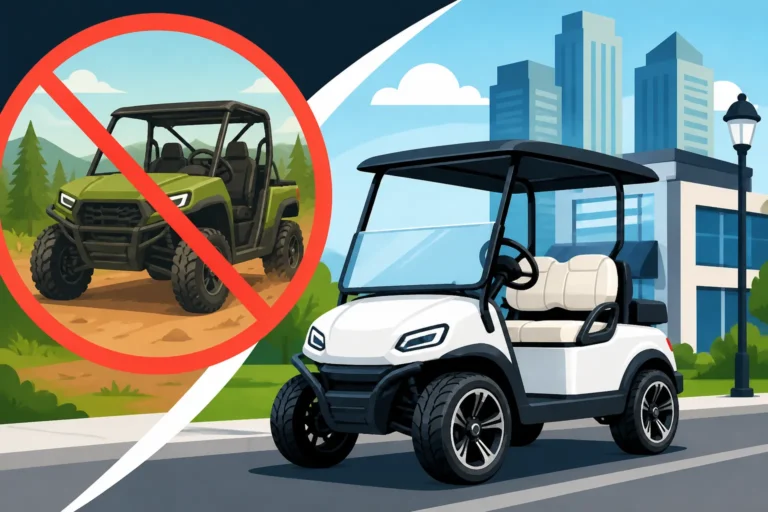
Many of these local ordinances are primarily designed for golf carts or low-speed vehicles (LSVs), which meet different definitions and safety standards than ATVs or UTVs. For instance, [Mississippi Towns With Cart Ordinances] are becoming more common, especially in coastal or resort communities, allowing golf carts on roads with lower speed limits. However, simply because a town allows golf carts doesn't automatically mean your side-by-side is covered. Some progressive towns might expand these ordinances to include certain types of UTVs, particularly if they are equipped with full street-legal kits (lights, turn signals, mirrors, horn, windshield, etc.). This is where a company like SuperATV could come in handy, offering a wide range of accessories to outfit your UTV for potential street-legal compliance if a local ordinance allowed it. But it's critical to understand that these modifications alone don't make your machine road-legal in the absence of a specific local law. The burden is entirely on the rider to research their specific town or county's rules. You cannot make assumptions. The best advice is to directly contact your local city clerk or county administrator's office. You absolutely need to know [How to Check If Your Town Has an Ordinance] to avoid an unwelcome conversation with local law enforcement. Without a specific, explicit ordinance, assume the statewide ban applies.
| Aspect | Senate Bill 2258 (Proposed) | Current Mississippi Law |
|---|---|---|
| Road Access | Limited on roads <= 50 mph | Generally prohibited on all public roads |
| Operator Age | 16+ with valid driver's license | No specific statewide provision for road use |
| Required Equipment | Headlights, taillights, brake lights, horn, mirrors, seatbelts | No specific road equipment required for off-road use |
| Local Control | Allowed municipalities to further restrict/permit | Local ordinances may permit specific LSVs/Golf Carts |
| Status | Passed Senate 48-2, died in House Committee | Remains in effect; no statewide road access for ATVs/UTVs |
Looking Ahead: Future Prospects for Road Access
While the outcome of the 2025 Road Access Bill was a setback, it doesn't mean the conversation is over. The desire for increased road access for ATVs and UTVs in Mississippi is deeply rooted, and efforts to change the law are likely to continue.
Continued Advocacy and Future Attempts
The defeat of Senate Bill 2258 was certainly a disappointment, but it also demonstrated the significant grassroots support and legislative will that exists for ATV and UTV road access. You can bet that this isn't the last we'll hear of such efforts. Rider groups, industry associations, and individual enthusiasts will undoubtedly continue to advocate for similar legislation in upcoming sessions. The legislative process is often one of perseverance, where ideas that fail one year are refined and reintroduced the next. Just look at the history of [Earlier Road Access Bills From 2022 and 2024] to see that this is a recurring theme. Each attempt builds on the last, helping advocates understand what worked, what didn't, and what specific concerns need to be addressed to gain broader support.
The landscape of off-road vehicle use is constantly evolving. Manufacturers like Polaris, Can-Am, and Honda are producing increasingly sophisticated and capable machines, often with features that bridge the gap between pure off-road and limited street use. As the popularity of these vehicles continues to grow, and as more states adopt some form of road access, Mississippi legislators may feel increasing pressure to revisit the issue. Factors that could influence future bills include shifts in the makeup of the legislature, a stronger push from tourism and economic development sectors looking to capitalize on outdoor recreation, and refined proposals that more effectively address public safety concerns through strict equipment and operational requirements. The conversation isn't ending; it's simply taking a pause and regrouping for the next legislative session.
What Riders Can Do to Prepare (and Stay Legal)
Even though statewide road access isn't a reality yet, there's plenty you can do as a responsible rider to prepare for potential future changes and, more importantly, to stay legal and safe right now. The best way to advocate for more freedom is to demonstrate responsible and respectful use of your machine.
First and foremost, always adhere to current laws. This means knowing where you can and cannot ride and understanding the consequences of illegal operation. Support efforts to create or expand designated riding areas, as these demonstrate a commitment to safe and legal riding. If you're passionate about seeing changes to road access, consider joining a local or state ATV/UTV club. These organizations are often at the forefront of legislative advocacy and can amplify your voice. You can also reach out to your local representatives and share your experiences and perspectives on the need for sensible road access.
Beyond advocacy, consider outfitting your machine with safety features that would typically be required for road use, even if you’re only riding on trails or private land for now. Components like turn signals, a horn, and additional lighting can enhance your safety and visibility, whether you’re on a dark trail or, hypothetically, if a local ordinance ever opens up certain roads. Companies like SuperATV offer robust kits for these very purposes. Having these safety features installed not only makes you a more visible rider but also demonstrates a commitment to safety, which can only help your cause should future legislation be introduced. Always ensure your machine is well-maintained, and prioritize rider education and safety courses. By being exemplary riders, we can collectively build a stronger case for future road access.
Disclaimer
This article is for general informational purposes only and does not constitute professional advice. Laws, prices and regulations vary by location and change over time. Consult a qualified professional for guidance on your specific situation.