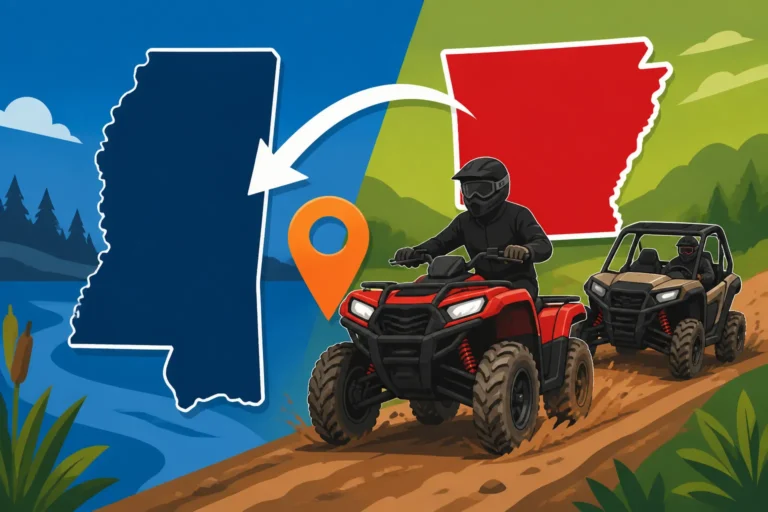
Mississippi Has No Farm Road Exception
It's a common frustration for folks in Mississippi who own ATVs and UTVs: you've got land, you've got fields, maybe even a timber plot down the road, and you just want to take your machine a short distance to get from one section to another. It seems like a logical, low-impact thing to do. However, a widespread misconception is that there's a special "farm road exception" that permits this kind of travel. This guide is here to tell you, directly and without sugarcoating, that in Mississippi, no such exception exists for operating your ATV or UTV on public roads, regardless of agricultural use. We'll dive deep into what the law actually says, the real-world implications, and how you can avoid serious trouble.
The Core Reality: Mississippi's Strict Road Ban
Many states have intricate laws when it comes to off-road vehicles (ORVs), often including carve-outs for specific uses like farming or logging. In Mississippi, however, the law is refreshingly, if frustratingly, clear: ATVs and UTVs are generally prohibited from public roads. This isn't just a minor technicality; it's a fundamental aspect of how the state views these machines.
Understanding the State's Stance on Off-Road Vehicles
The state of Mississippi classifies ATVs and UTVs as "off-road vehicles," and this classification comes with a very specific set of rules. Unlike cars, trucks, or even motorcycles, these machines are not designed or legally equipped for road use. They lack the necessary safety features, like specific types of lighting, turn signals, or rearview mirrors, that are mandated for on-road vehicles. More importantly, the state legislature has simply not passed any broad legislation allowing them on public thoroughfares. This means that while your machine might be perfectly suited for crossing a muddy field or navigating a timber tract, it's not considered suitable for the paved or gravel county roads that connect those areas. It's a hard pill to swallow for many, especially those who rely on these machines for their livelihood or for accessing remote hunting leases.
Why the "Farm Road Exception" is a Myth in Mississippi
The idea of a "farm road exception" is often born out of necessity and common practice in rural areas. You might see neighbors or even local farmers using their quads or side-by-sides to hop across a county road to get to another parcel of land. It might seem like "everyone does it," or that it's "too short a distance to matter." But here's the stark truth: there is no provision in Mississippi state law that grants ATVs or UTVs the right to operate on public roads for agricultural purposes, no matter how brief the journey or how essential the task. This is a common point of confusion, and unfortunately, it's a myth that can lead to significant legal headaches. Law enforcement, particularly sheriff's deputies in rural counties, are often aware of the state's clear stance on this. Even if you're just moving between your own fields, if that journey involves touching a public road, you could be cited. Many folks have been caught off guard, genuinely believing they were within their rights because they were on "farm land" or a "farm road." The law, however, doesn't distinguish that way. [Mississippi Has No Farm Road Exception] isn't just a phrase; it's the legal reality.
What Mississippi Law Actually Says About ATVs on Roads
To truly understand why the farm road exception is nonexistent, it helps to look at the specific legal framework in Mississippi. Unlike some states with pages of ATV regulations, Mississippi's laws on this topic are surprisingly concise, which often leaves little room for interpretation or special cases.
The Two Key Sections of Mississippi ATV Law
Mississippi's primary laws concerning ATVs and UTVs are found in Title 63, Chapter 31 of the Mississippi Code. Specifically, Section 63-31-1 defines what an "off-road vehicle" is, and Section 63-31-3 outlines where these vehicles cannot be operated. It's really that straightforward. Section 63-31-3 clearly states that "it is unlawful for any person to operate an off-road vehicle upon the public streets or highways of this state." There are no asterisks, no footnotes, and no sub-sections detailing exceptions for farmers, hunters, or anyone else for that matter. This succinctness is both a blessing and a curse; it makes the law easy to understand but also incredibly restrictive. [Mississippi Code Section 63-31-3] is the critical piece of legislation to be aware of. It's important to remember that this chapter of the code is short and to the point, leaving very few ambiguities regarding road use.
What Constitutes a "Public Road or Highway" in Mississippi
When the law talks about "public streets or highways," it's not just referring to multi-lane interstates or bustling city avenues. The definition is broad and encompasses virtually any road or thoroughfare that is publicly maintained or open to public travel, whether by the state, a county, or a municipality. This includes:
- Paved State Highways: Obvious no-go zones.
- Paved County Roads: Even quiet, rural paved roads fall under this ban.
- Gravel County Roads: Many rural residents rely on these, but they are still public roads. [Mississippi Rules for Riding a County Road] are clear on this.
- City Streets and Avenues: Absolutely prohibited, unless a specific local ordinance says otherwise (which is rare for ATVs). [Mississippi Rules for Riding a City Street] also make this plain.
- Designated Public Paths: Any path or right-of-way maintained by a public entity for vehicle travel.
Essentially, if it has a road name, is on a map, and is not explicitly on private property or a designated off-road trail system, it's considered a public road. This means that even a short hop across a two-lane county blacktop or a quick dash down a gravel road to check on a different field can put you in violation of the law.
Common Scenarios Where Riders Get Caught
The strict interpretation of Mississippi's ATV laws often clashes with the practical realities of rural life. Many riders find themselves inadvertently breaking the law, often because they misinterpret what constitutes a "public road" or assume their specific situation warrants an exception.
Crossing the Road: A Brief Journey, Big Trouble
One of the most frequent ways riders get into trouble is simply attempting to cross a public road. Imagine you have a large property divided by a county road. You’re working on one side, and you need to get to the other, maybe just a few hundred feet away, to check on livestock or access equipment. It feels like such a minor act, a momentary presence on the road. However, the law makes no distinction between traveling a mile down the road and simply crossing it. Even a quick perpendicular pass from one private property line to another is considered operating on a public street or highway. A deputy on patrol, seeing an ATV on the road, has every right to stop you and issue a citation. This scenario highlights the importance of truly understanding that [Mississippi Bans ATVs on Public Roads] in almost all circumstances.
Farm-to-Farm Travel: The Illusion of Exemption
Another common scenario involves farmers needing to move between different plots of land that might be separated by a public road, even a seldom-used one. Perhaps you cultivate several fields, and the only way to get from the north 40 to the south 40 is by traversing a county road. You might think, "I'm a farmer, this is farm equipment, surely there's an allowance for this." But as we've discussed, the state law makes no such allowance for a farm road exception. This can be incredibly inconvenient and costly, forcing farmers to load their machines onto trailers for even short trips, or use other, street-legal vehicles. The financial and time burden this places on agricultural operations is real, but unfortunately, it doesn't change the letter of the law. The law's silence on this specific type of use is often where the "illusion" of an exemption takes root, leading to unpleasant surprises for otherwise law-abiding citizens.
Riding on Gravel Roads and Dirt Paths
In many parts of Mississippi, especially outside of urban centers, gravel roads and dirt paths make up a significant portion of the public road network. These aren't pristine paved surfaces, and they often feel more like trails than traditional roads. This can lead to a mistaken belief that because they are unpaved, they somehow fall outside the purview of the "public road" definition for ATVs. This is incorrect. If a gravel road is maintained by the county, has a road sign, and is open for public vehicular travel, it is absolutely considered a public road. This also extends to certain dirt paths or old logging roads if they are on publicly owned land or designated as public access routes. Similarly, riding on levees is also generally off-limits. [Mississippi Levee Riding Is Prohibited] due to potential damage to infrastructure and general public safety rules. The best practice is to assume any road or path not explicitly designated as a private trail system or private property is off-limits for your ATV or UTV.
Local Ordinances: The Only Glimmer of Hope (Sometimes)
While Mississippi state law is uncompromising on the general ban of ATVs on public roads, there is one narrow pathway that could allow for limited street use in very specific, localized situations: local ordinances. However, this path is fraught with limitations and should never be assumed without direct verification.
How City and County Ordinances Can Differ
The state legislature gives municipalities and counties some power to enact their own local laws, often called ordinances, that can govern specific local issues. In rare cases, a city or county might pass an ordinance that permits the use of certain types of off-road vehicles (though typically golf carts or low-speed vehicles, not ATVs or UTVs) on certain designated public roads within their jurisdiction. These ordinances are highly specific, often limiting use to particular streets (usually those with low speed limits), during certain hours, or for specific purposes. [Mississippi Local Ordinances Are the Only Path] to any legal road riding, but even then, it's usually not for ATVs. You'll often find these for golf carts in resort towns or small communities. For instance, a town might allow golf carts on streets posted 30 mph or less. But this typically doesn't extend to the more powerful and less road-friendly ATVs and UTVs.
The Limitations of Local Ordinances for ATVs
Even when a local ordinance exists, it's crucial to understand its severe limitations, especially concerning ATVs and UTVs.
- Vehicle Type Specificity: Most ordinances that allow for limited street use are written specifically for golf carts or low-speed vehicles (LSVs), which have different definitions and safety requirements than ATVs or UTVs. [Mississippi Towns That Refuse ATVs on Streets] are common, even if they allow golf carts.
- Geographic Scope: An ordinance only applies within the specific city limits or unincorporated county areas that enacted it. Cross that invisible boundary into a neighboring town or county without a similar ordinance, and you're back under the statewide ban.
- Road Restrictions: Ordinances almost always designate which roads are permissible, usually local streets with low speed limits. They never open up state highways or major thoroughfares.
- Equipment Requirements: If an ordinance does allow for any ORV use, it will likely stipulate additional equipment requirements, such as turn signals, brake lights, mirrors, and often a visible slow-moving vehicle (SMV) sign. Your stock ATV or UTV might not meet these.
- Permitting/Registration: Some ordinances might require a special local permit or registration, even if the state doesn't.
Simply put, you cannot assume that because you've heard of any local ordinance allowing some type of off-road vehicle on some streets, that it applies to your ATV or UTV or your specific location.
Finding Out Your Local Rules
So, how do you know if your specific town or county has one of these rare ordinances? You cannot rely on hearsay or what a friend of a friend heard. The only way to know for certain is to directly contact the authoritative local bodies:
- City Clerk's Office: For rules within incorporated city limits.
- County Board of Supervisors Office: For rules in unincorporated county areas.
- Local Law Enforcement (Sheriff's Department/Police Department): They are the ones who enforce the rules and can provide clarity, though it's best to confirm with the administrative offices as well.
When you call, be specific. Ask if there are any ordinances pertaining to the use of "all-terrain vehicles (ATVs)" or "utility task vehicles (UTVs)" on "public roads or streets" within their jurisdiction. Get the ordinance number if one exists, and try to obtain a copy to read it yourself. Don't be surprised if the answer is a firm "no." In the vast majority of Mississippi, the answer will be that the state's general prohibition still applies.
Practical Implications for Mississippi ATV/UTV Owners
Given the strict statewide ban and the scarcity of local exceptions, what does this mean for you, the ATV or UTV owner in Mississippi? It means you need to be strategic and thoughtful about how you use and transport your machine.
Planning Your Routes and Transportation
Since public roads are largely off-limits, your planning needs to center around private property and designated off-road areas.
- Stick to Private Land: The safest and most legal place to ride your ATV or UTV is on private property with the owner's permission. This includes your own land, a friend's property, or a hunting lease. Always ensure you have explicit permission to avoid trespass issues.
- Utilize Trailers for Transport: If you need to move your machine from one private property to another, or to a designated riding park, a trailer is your best friend. This is the most common and legally sound method. Investing in a reliable utility trailer is almost a necessity for any serious ATV/UTV owner in Mississippi. Remember to ensure your trailer is properly tagged and road-legal. [Mississippi Trailer Tags for Hauling Your Quad] are essential if you plan on using public roads for transport.
- Designated Off-Road Parks: Mississippi has some fantastic private mud parks and also the Bethel Trails system within the Bienville National Forest where you can legally ride. Plan your trips to these locations and trailer your machine there. [Mississippi ATV Trails: Where to Ride] offers many options.
- Wildlife Management Areas (WMAs): If you're using your machine on a WMA for hunting or game retrieval, be aware that even there, specific rules apply. You're typically restricted to designated WMA roads, and often those are only open during certain seasons or for specific purposes. [Mississippi WMA Designated Roads Only] is a critical rule to follow.
Equipping Your Machine for Off-Road Use (and not road use)
Because your machine is primarily for off-road use, your focus should be on performance and safety within that context, rather than trying to make it street legal. Many riders customize their machines to handle the specific terrain Mississippi offers. For instance, if you're a mud enthusiast, you might consider lift kits and larger tires from brands like SuperATV to get better ground clearance and traction. If you're navigating dense timberland, skid plates and heavy-duty bumpers become crucial.
However, resist the urge to add "street legal" modifications like turn signals, mirrors, or horns with the intent of riding on public roads. While some of these might be useful off-road for communication with riding buddies, adding them does not magically make your ATV or UTV legal for road use in Mississippi. The legal classification remains "off-road vehicle," and the ban on public roads still stands. Focus your modifications on improving your off-road experience and safety.
Alternatives to Road Riding
If the thought of not being able to ride your machine on local roads is a major deterrent, consider alternatives that are street legal:
- Golf Carts: As mentioned, many Mississippi towns have ordinances that allow golf carts on specific, low-speed public streets. These are typically slower, less powerful, and designed for casual, short-distance travel.
- Low-Speed Vehicles (LSVs): These are vehicles that look a bit like golf carts but are designed to go a bit faster (up to 25 mph) and typically come equipped with full road-legal features like seatbelts, headlights, turn signals, and windshields from the factory. They require registration, a license plate, and insurance, just like a car.
- Farm Tractors/Equipment: Genuine farm tractors and other self-propelled farm equipment often have specific exemptions that allow them on public roads for agricultural purposes. If your primary need is farm-to-farm travel, a small tractor might be a more legally viable option than an ATV or UTV.
Understanding these distinctions can save you a lot of grief and ensure you're enjoying your time outdoors without unnecessary legal risk.
Consequences of Ignoring the Road Ban
It's tempting to think that a quick trip down a rural road won't hurt anyone, or that you won't get caught. But ignoring Mississippi's clear ATV road ban carries tangible risks and consequences that can range from minor inconvenience to significant financial and legal burdens.
Fines and Penalties You Could Face
Operating an ATV or UTV on a public road in Mississippi is a misdemeanor. While it might not seem as severe as a felony, the penalties can still be impactful. You're generally looking at fines, and these aren't always cheap. While specific amounts can vary depending on the county and the discretion of the judge, you could be facing a base fine plus court costs. A typical citation might result in a fine similar to a traffic ticket, but it's important to remember that this isn't just a minor moving violation. [Mississippi Fines for Road Riding] can add up quickly, especially if you're cited multiple times. Furthermore, repeat offenses could potentially lead to more severe penalties. It’s also worth noting that some local jurisdictions might have their own fine schedules that could be different from standard state penalties.
The Risk of Impoundment and Legal Troubles
Beyond monetary fines, one of the most significant consequences of getting caught riding your ATV or UTV on a public road is the risk of impoundment. Law enforcement has the authority to seize your machine if it's being operated illegally. This means your prized possession could be towed away, and you'd then be responsible for impoundment fees, daily storage fees, and potentially other administrative costs to get it back. These fees can quickly accumulate, often dwarfing the initial fine. Imagine having to pay hundreds of dollars just to retrieve your machine, all because of a short, illegal ride.
Moreover, if you are involved in an accident while illegally operating your ATV on a public road, the legal ramifications can escalate dramatically. You could be found liable for damages to other property or injuries to other individuals. This isn't just a simple traffic accident; your illegal presence on the road could compound any charges and make your legal defense much more complicated and expensive.
Insurance Implications for Off-Road Violations
Many ATV and UTV owners carry insurance, and it's always a smart idea, even if the state doesn't mandate it for off-road use. However, your typical off-road ATV insurance policy is designed to cover incidents that occur on private property or designated off-road trails. If you're operating your machine illegally on a public road and get into an accident, your insurance company may deny your claim. Most policies have exclusions for illegal acts or operating the vehicle outside of its intended use. This means you could be personally responsible for all damages, medical bills, and legal fees resulting from an accident. That expensive UTV you just bought could become an even more expensive liability if you're not careful. It’s a costly gamble to take for a quick trip down the road.
| Scenario | Legal Status in Mississippi (State Law) | Common Misconception | Potential Consequences |
|---|---|---|---|
| Riding on a paved county road | Illegal | "It's a quiet road, no one will care." | Fines, impoundment, insurance denial |
| Crossing a state highway | Illegal | "Just a quick hop, barely touched it." | Fines, impoundment, accident liability |
| Riding a gravel county road | Illegal | "It's unpaved, so it's like a trail." | Fines, impoundment, legal action |
| Farm-to-farm on public road | Illegal (no farm exception) | "For farm work, it must be allowed." | Fines, impoundment, increased scrutiny |
| Riding on a WMA main road | Often restricted | "It's public land, I can ride anywhere." | Fines, exclusion from WMA, conservation tickets |
| Riding on private property | Legal (with owner permission) | "I need to stick to my own land." | Generally safe, fewer legal risks |
This article is for general informational purposes only and does not constitute professional advice. Laws, prices and regulations vary by location and change over time. Consult a qualified professional for guidance on your specific situation.