Mississippi’s Thin Off-Road Vehicle Chapter
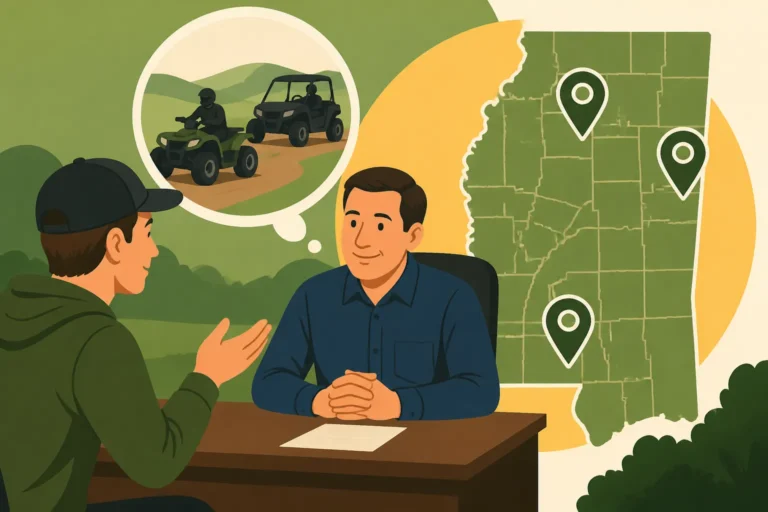
Navigating the labyrinthine world of ATV and UTV laws in Mississippi can feel incredibly frustrating, especially when you just want to understand where you can legally ride your machine. Many riders assume there must be some special exception for farm use, crossing roads, or cruising down a quiet county lane, only to find the reality is far more restrictive. This comprehensive guide will peel back the layers of Mississippi's off-road vehicle statutes, explain why they're so brief, and clarify the rigid limitations on riding ATVs and UTVs on public roads.
The Core of Mississippi's ATV Road Law: A Straightforward Prohibition
When you delve into Mississippi's state laws concerning off-road vehicles, you might be surprised by how concise and unambiguous they are. Unlike some states with pages of regulations, exceptions, and specific classifications, Mississippi keeps it remarkably simple. And in this case, simple means restrictive.
Why the Law is So Short and Direct
The brevity of Mississippi's off-road vehicle chapter, specifically [Mississippi Code Section 63-31-1] and [Mississippi Code Section 63-31-3], is often a source of confusion for riders. Many expect a detailed list of where they can ride, but instead, they find a clear definition of what constitutes an off-road vehicle and a blanket prohibition on public roads. This isn't an oversight or a sign that the state hasn't thought about it; rather, it reflects a legislative decision to largely keep ATVs and UTVs off public thoroughfares at the state level. There's no complex system of permits, no reciprocity agreements with other states for road use, and no nuanced clauses about agricultural exceptions. The law's succinctness is its strength in maintaining the ban. It leaves little room for interpretation regarding the state's stance on ATVs on public roads, shifting the burden of any deviation from this rule entirely to local governing bodies. This minimalist approach often frustrates new riders or those accustomed to more permissive laws in other states, but it's the fundamental reality of riding in the Magnolia State.
The Flat Ban on Public Roads
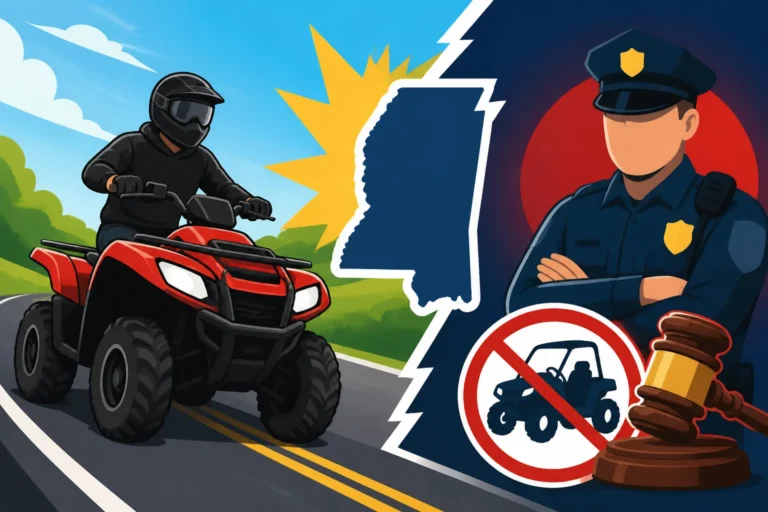
Let's cut right to the chase: [Mississippi Bans ATVs on Public Roads]. This isn't a suggestion or a guideline; it's a direct legal prohibition. The statute explicitly states that off-road vehicles, which include ATVs and UTVs, are not to be operated on public roads, streets, or highways within the state. This means if it has a yellow line, a white line, or is maintained by the county, state, or federal government for public travel, your ATV or UTV is generally unwelcome. This ban applies across the board, whether you're talking about a bustling city street in Jackson, a quiet two-lane highway between small towns, or even a gravel county road that sees minimal traffic. The intent is to separate off-road vehicle traffic from conventional vehicular traffic for safety reasons. It's a non-negotiable aspect of Mississippi's ATV laws, and it's vital for every rider to understand this foundational principle before even thinking about heading out. This clear stance is why you won't see state-issued license plates for ATVs or UTVs, unlike cars or motorcycles.
What "Public Road" Actually Means
Defining "public road" might seem straightforward, but it's crucial to grasp the full scope in Mississippi. A public road isn't just a paved, multi-lane highway. It encompasses any street, road, highway, or thoroughfare that is publicly owned and maintained, and generally open to the public for vehicular travel. This includes dirt or gravel county roads, city streets, state highways, and even the shoulders and rights-of-way adjacent to these thoroughfares. The key is public ownership and purpose. Private roads, often found within large hunting leases, timber company lands, or designated off-road parks, are a different story, but the moment you hit a publicly maintained surface, you're under the state's prohibition. Understanding this distinction is paramount, as many riders mistakenly believe a quiet, unpaved county road falls outside the "public road" definition. It doesn't. You need to always assume that if the general public can drive a car on it without explicit permission, it's considered a public road by Mississippi law.
Exceptions, Or the Lack Thereof in Mississippi's State Law
One of the most common misconceptions among ATV and UTV riders in Mississippi is the belief that certain "common sense" exceptions apply to the state's road ban. Unfortunately, at the state level, these exceptions simply do not exist. This can be a rude awakening for riders who've moved from states with more lenient regulations or who operate under assumptions based on local customs rather than law.
No Farm Road Exception
Many agricultural states have provisions allowing farmers to use ATVs or UTVs on public roads for specific farming operations, such as moving between fields or accessing equipment. Mississippi, however, has [Mississippi Has No Farm Road Exception] written into its state statutes. This means that even if you're driving your utility-focused UTV, perhaps outfitted with accessories from a brand like SuperATV to handle tough farm tasks, directly from one field to another across a public road, you are technically in violation of state law. This often surprises long-time residents and new arrivals alike, as off-road vehicles are so integral to farm life in the rural South. While local law enforcement might occasionally exercise discretion in extremely remote areas for brief, necessary crossings, it's crucial to understand that no legal carve-out exists at the state level. Relying on assumed exceptions can lead to citations, and in more severe cases, potential impoundment or other legal consequences, especially if an incident occurs.
No "Crossing the Road" Exception
Another widespread assumption is that merely "crossing" a public road to get from one section of private land to another is permissible. Sadly, [Mississippi Rules for Crossing a Highway] makes no such allowance. The state law does not differentiate between riding on a road and merely crossing it. Both actions fall under the general prohibition against operating an off-road vehicle on a public thoroughfare. This means that even a quick jaunt across a two-lane blacktop to access your hunting grounds or a neighbor's property is technically illegal under state law. This lack of an exception often frustrates landowners whose properties are divided by public roads, forcing them to either trailer their machines for even short distances or risk a citation. It underscores the broad and encompassing nature of Mississippi's ban, prioritizing clear separation of vehicle types on public roads over convenience for off-road users.
Why Local Ordinances are the Only Path
Given the state's firm stance, any legal road riding for ATVs and UTVs in Mississippi must stem from a [Mississippi Local Ordinances Are the Only Path]. This means that cities, towns, or even counties (though county ordinances are less common for this specific issue) have the authority to create their own rules allowing or restricting the use of off-road vehicles on their municipal or county-maintained streets. This is why you might hear conflicting information from different parts of the state. What's allowed in Hattiesburg might be strictly prohibited in Ocean Springs. These local ordinances are often highly specific, detailing permissible streets (e.g., those with speed limits under 30 mph), times of day, equipment requirements (like turn signals or mirrors), and sometimes even type of vehicle (often favoring golf carts or low-speed vehicles over traditional ATVs/UTVs). If you plan to ride on any public road, even a small residential street, you absolutely must research the specific ordinances for that particular municipality. Do not assume that because one town allows it, another will.
Understanding Local Ordinances and Their Limits
As we've established, if you want to legally ride your ATV or UTV on a public road in Mississippi, your hope lies entirely in local ordinances. But these local rules aren't a free pass; they come with their own set of restrictions and important distinctions that every rider needs to understand.
How Towns Adopt ATV/UTV Ordinances
The process for a town to adopt an ATV/UTV ordinance typically involves a local government (like a Board of Aldermen or City Council) identifying a need or desire to regulate these vehicles within their jurisdiction. This can be prompted by resident requests, safety concerns, or a push for recreational opportunities. The process usually includes drafting a proposed ordinance, holding public hearings to gather input from citizens and law enforcement, and then voting on its adoption. Once passed, the ordinance becomes local law, superseding the state's blanket ban within that specific municipality's boundaries, but only for the roads under its control. These ordinances are often very specific, outlining designated streets, speed limits (e.g., [Golf Carts Only on Streets Posted 30 mph]), times of operation, and required safety equipment. It's not uncommon for these ordinances to be more restrictive than what riders might hope for, as public safety is always a primary concern for local officials. For example, some ordinances might require more than just basic headlights and taillights; they might mandate turn signals, brake lights, a horn, and even a windshield to enhance visibility and safety for approved vehicles.
The Difference Between ATVs, UTVs, and Golf Carts
This is where things get particularly tricky. Many local ordinances are written with specific types of vehicles in mind, and the terms "ATV," "UTV" (or "side-by-side"), and "golf cart" are not interchangeable in the eyes of the law. Generally, golf carts are explicitly defined and are the most common off-road vehicle type to receive street-legal status in towns. Low-Speed Vehicles (LSVs) also have their own class. ATVs and UTVs, despite their often similar appearance to some LSVs, are typically viewed differently due to their design, speed capabilities, and intended off-road use. For instance, [Why a Cart Ordinance Does Not Cover a UTV] is a common point of confusion. A town might have a detailed ordinance for golf carts but specifically exclude ATVs and UTVs, sometimes even by brand name or width limit. This is why it's crucial not to assume that if golf carts are allowed, your side-by-side or quad automatically is too. When checking an ordinance, look for the exact definitions used by the municipality to describe the vehicles it permits. If the ordinance is silent on ATVs or UTVs, then the state's general prohibition still applies.
Here's a quick comparison of how they're often treated in local ordinances:
| Feature | ATV (All-Terrain Vehicle) | UTV (Utility Terrain Vehicle / Side-by-Side) | Golf Cart | LSV (Low-Speed Vehicle) |
|---|---|---|---|---|
| Seating | Straddle-style, 1-2 riders | Bench or bucket, 2-6 riders | Bench, 2-6 riders | Bench or bucket, 2-6 riders |
| Steering | Handlebars | Steering wheel | Steering wheel | Steering wheel |
| Road Status | Generally Prohibited (state level) | Generally Prohibited (state level) | Permitted by many local ordinances | Often permitted by state/local rules |
| Speed | High, varies by model | High, varies by model | Typically < 20 mph | 20-25 mph (by definition) |
| Purpose | Recreation, sport, light utility | Utility, recreation, work | Golf, short-distance transport | Short-distance transport, street legal package |
| Street Legal Pkg | Not standard, often aftermarket | Not standard, often aftermarket | Often aftermarket or factory-equipped for streets | Factory-equipped for street legal status |
Even if a local ordinance does allow UTVs, it might have specific requirements for lights, mirrors, or even tires that your off-road machine may not have from the factory. Aftermarket parts from companies like SuperATV can certainly enhance a UTV's capabilities, but for street legality, you'd need to ensure those parts specifically address the local ordinance's requirements (e.g., DOT-approved tires, turn signal kits, rearview mirrors).
What to Look for in a Local Ordinance
If you're determined to explore legal road riding in a specific Mississippi town, you need to be a diligent researcher. Start by contacting the municipal clerk's office or checking the town's official website for their codified ordinances. Specifically look for sections pertaining to "off-road vehicles," "ATVs," "UTVs," "golf carts," or "low-speed vehicles." Key things to scrutinize include:
- Vehicle Definitions: Does the ordinance explicitly name ATVs or UTVs, or does it only refer to golf carts and LSVs? [Mississippi Golf Cart Statutes] are quite distinct from ATV laws.
- Permitted Streets: Which streets are designated for use? Is it all municipal streets under a certain speed limit, or only specific routes?
- Hours of Operation: Are there time restrictions, such as daylight hours only?
- Required Equipment: What safety features are mandated? This often includes headlights, taillights, brake lights, turn signals, mirrors, a horn, and potentially a safety flag or windshield.
- Age and Licensing Requirements: Does the driver need a valid driver's license? Are there age restrictions? [Mississippi Rules for a Side-by-Side Driver] could be different from a golf cart driver.
- Registration/Permit: Does the town require a local registration sticker or permit for your machine? This might involve a small fee and inspection.
- Insurance: Is proof of liability insurance required to operate on public streets?
If an ordinance exists, read it thoroughly. Don't rely on hearsay or what a friend "thinks" the rules are. The wording of these ordinances can be precise, and missing a single detail could lead to a citation.
Penalties and Enforcement for Illegal Road Riding
Despite Mississippi's relatively sparse state laws on off-road vehicles, the prohibition on public roads is still enforceable. Understanding the potential consequences of violating this ban is crucial, as the inconveniences and costs can quickly add up, far outweighing the perceived benefit of a quick road ride.
The Modest Fines and Their Impact
[Mississippi Fines for Road Riding] are often described as relatively modest compared to other traffic violations. You might be looking at a citation that, while certainly an annoyance, doesn't carry the hefty fines associated with speeding tickets or other moving violations. However, don't let the smaller dollar amount mislead you into thinking it's a minor infraction. Even a small fine, when combined with court costs, can become a significant unexpected expense. Moreover, a citation means a record, and repeat offenses can lead to escalating penalties. While the fine itself might not break the bank, the inconvenience of dealing with court appearances, potential legal fees, and the possibility of your machine being impounded (which we'll discuss next) are all factors that make illegal road riding a risky proposition. It's often remarked that [Why the Penalty Costs Less Than a Parking Ticket] often belies the full hassle involved in a citation.
When a Deputy Can Stop You
Any law enforcement officer – be it a municipal police officer, a county deputy, or a state trooper – has the authority to stop you if they observe you operating an ATV or UTV on a public road in violation of state law or a local ordinance. [What a Mississippi Deputy Can Ask to See] might include proof of ownership, your driver's license, and, if applicable, documentation of any local permit. They don't need to see you driving recklessly or causing a disturbance; merely being on a public road where you're not legally permitted is sufficient grounds for a stop. This means even a slow, careful ride down a quiet street can put you at risk. Officers are often keenly aware of the rules regarding off-road vehicles in their jurisdiction, especially in rural areas where such machines are common. Ignorance of the law is generally not considered a valid defense, so relying on "I didn't know" won't get you out of a ticket.
The Risk of Impoundment
Perhaps the most significant and often overlooked penalty for illegal road riding is the risk of impoundment. If you're caught operating your ATV or UTV unlawfully on a public road, law enforcement has the discretion to seize your machine. [When an ATV Gets Impounded After a Stop] can happen, and it's a major hassle and expense. When your machine is impounded, you're not just facing a fine; you're also responsible for towing fees, storage fees, and potentially other administrative costs to get your ATV or UTV back. These fees can quickly accumulate, often dwarfing the original citation amount. Imagine paying hundreds of dollars just to retrieve your machine from an impound lot, on top of any fines. This makes illegal road riding not just a legal risk, but a significant financial gamble. Furthermore, the impoundment process can tie up your machine for days or even weeks, disrupting your plans for recreation or work. It's a powerful deterrent that many riders fail to consider when making the decision to take their machine onto public thoroughfares.
Essential Safety and Equipment Considerations (Even for Private Land)
Even if you're strictly riding on private land or within a sanctioned off-road park, certain safety and equipment considerations are paramount. While state road laws may not apply, safety is universal, and in some cases, state statutes do dictate equipment for certain riders, regardless of where they are.
Helmet Requirements for Young Riders
Mississippi has specific laws regarding helmet use for younger riders, regardless of whether they're on public land or private property. [Mississippi Helmet Law for Riders Under 16] mandates that anyone under the age of 16 must wear an approved safety helmet when operating or riding as a passenger on an ATV. This isn't just a suggestion; it's a legal requirement designed to protect our most vulnerable riders. The helmet must be properly fitted and meet certain safety standards, often DOT (Department of Transportation) approved. Parents or guardians who allow children under 16 to ride without a helmet could face legal consequences if an incident occurs or if they are observed by law enforcement. This rule highlights the state's commitment to rider safety, even if it has a strict hands-off approach to general road access. Investing in a good quality helmet for young riders is non-negotiable, providing vital protection in the event of an accident, which unfortunately can happen quickly and unexpectedly, even on familiar terrain.
Driver's License or Safety Card on Public Property
While a state-issued driver's license isn't a permit to ride your ATV on Mississippi's public roads generally, it is relevant for public land access in some contexts, and certainly if a local ordinance allows street use. For instance, if you're riding in a national forest like the De Soto, or on specific Wildlife Management Areas (WMAs) where ATVs are permitted on designated trails, you will generally need a valid driver's license. [Mississippi Driver's License on Public Property] is often required for adult riders. For riders under 16, a state-approved ATV safety course certificate may be required instead. [Mississippi Safety Certificates as an Alternative] are crucial for young enthusiasts. These courses teach safe operating practices, hazard awareness, and responsible riding etiquette, and are typically offered through entities like the Mississippi State Extension Service. Even if your town has an ordinance allowing street riding, it will almost certainly stipulate that the operator must hold a valid driver's license. These requirements ensure that anyone operating a powerful machine, even off-road, has at least a basic understanding of vehicle control and safety principles.
Spark Arrestors and Noise Limits
Many designated riding areas, particularly public lands like national forests or even some private parks, have strict rules regarding spark arrestors and noise limits. A spark arrestor is a device that prevents hot carbon particles from exiting the exhaust system, significantly reducing the risk of wildfires, especially in dry Mississippi summers. Most modern ATVs and UTVs come equipped with factory-installed spark arrestors, but if you've modified your exhaust system, you need to ensure it still meets these requirements. Removing or bypassing a spark arrestor is illegal on many public lands and can result in fines and immediate eviction from the riding area.
Similarly, noise limits are often enforced to minimize disturbance to wildlife and other users of public lands, as well as to local residents near riding parks. Excessive noise can also be a significant issue in areas where local ordinances permit street use. Many parks or public lands will have a decibel limit, often around 96 dB or less, and may conduct spot checks. While Mississippi state law doesn't impose a general noise limit for off-road vehicles on private land, violating these rules on permitted trails or under local ordinances can lead to citations or being asked to leave. Custom exhaust systems from manufacturers like SuperATV that enhance performance might also increase noise levels, so riders need to be mindful of local regulations. Always check the specific rules of your intended riding destination before you go.
Key Distinctions: ATVs vs. Golf Carts vs. Low-Speed Vehicles (LSVs)
Understanding the legal differences between various types of off-road and low-speed vehicles is absolutely critical in Mississippi. The state's laws, and crucially, local ordinances, often treat these machines very differently when it comes to road use. Confusing one for another can lead to tickets and impoundment.
Mississippi's Definitions and Road Use
Mississippi law provides specific definitions for various vehicle types, and these definitions are the foundation for what is allowed where. [Mississippi ATV and ROV Legal Definitions] clearly distinguish between these powerful, off-road machines and other vehicle types. Generally, an ATV (All-Terrain Vehicle) is a motorized off-highway vehicle designed to travel on four or more low-pressure tires, having a seat designed to be straddled by the operator, and handlebars for steering control. An ROV (Recreational Off-Highway Vehicle), often called a UTV or side-by-side, is typically designed for multiple passengers, has a steering wheel, and may be capable of higher speeds and greater payloads.
Golf carts, on the other hand, are generally defined as vehicles specifically designed for use on golf courses and for short-distance personal transportation. Low-Speed Vehicles (LSVs) are a distinct class of street-legal vehicles that look much like golf carts but are manufactured to meet specific federal safety standards, including seatbelts, headlights, turn signals, and often a maximum speed of 20-25 mph. While LSVs are designed for street use, ATVs and UTVs are not, by state definition, designed or intended for public road operation. This fundamental difference in definition dictates their legal status on Mississippi roads.
Why Golf Cart Ordinances Don't Automatically Apply to ATVs
This is perhaps the most critical point of confusion for many riders. Just because a town has a [Hattiesburg's Cart Ordinance in Mississippi] or other similar ordinance allowing golf carts on its streets, it absolutely does not mean that ATVs or UTVs are permitted. [Why a Cart Ordinance Does Not Cover a UTV] is simple: local ordinances are almost always written to precisely define the type of vehicle allowed. Golf carts have specific characteristics (lower top speed, typically electric or small gas engines, less aggressive tires, often no suspension travel or ground clearance comparable to an ATV). UTVs and ATVs, even those similar in size to a golf cart, possess different capabilities – higher speeds, more robust off-road suspension, powerful engines – that make them fundamentally different from golf carts in the eyes of the law and for safety concerns.
Many towns, like [Ocean Springs Names the ATV Brands It Bars], actively differentiate and specifically exclude ATVs and UTVs, or only allow certain types of LSVs that are factory-equipped for street use. Trying to argue that your UTV should be allowed because it "looks like a golf cart" or has similar features is unlikely to succeed with law enforcement or in court. It's imperative to read the exact wording of any local ordinance to ensure your specific type of machine is included.
The Role of Manufacturer Design
The manufacturer's original design and intent play a significant role in how a vehicle is classified and treated by the law. An ATV or UTV is manufactured as an "off-road vehicle" (ORV), not a "motor vehicle" intended for highway use. This is evident in the lack of federally mandated safety features found on cars and motorcycles, such as crumple zones, advanced braking systems for highway speeds, or specific lighting requirements for road use. While you can certainly add aftermarket accessories to your ATV or UTV, such as those from SuperATV, including turn signals, mirrors, or DOT-approved tires, these modifications generally do not change the fundamental legal classification of the machine as an off-road vehicle in Mississippi.
Even if you equip your side-by-side with every conceivable street-legal accessory, it is still, by its core design and state definition, an off-road vehicle. For a vehicle to be truly street-legal under state law, it must be designed and manufactured to meet specific federal motor vehicle safety standards (FMVSS) for on-road use, as LSVs do. This is why attempting to "make" an ATV or UTV street legal in Mississippi by adding accessories is largely a futile exercise under state law. The only exception is if a very specific local ordinance provides a pathway, and even then, it's typically for use on very limited, low-speed municipal roads, not state highways.
Navigating Specific Scenarios and Common Questions
Beyond the general rules, riders often have very specific questions about how Mississippi's ATV laws apply to their unique situations. Let's tackle some of the most common scenarios and clarify what's permissible and what's not.
Riding on Levees and Sandbars
The allure of riding on Mississippi's extensive river levees or sprawling sandbars can be strong, but riders must proceed with extreme caution. [Mississippi Levee Riding Is Prohibited] in most, if not all, instances. Levees are typically managed by levee boards or other government agencies (like the Army Corps of Engineers) for flood control and infrastructure protection. They are not public roads or recreational trails. Unauthorized ATV use can cause damage to the levee structure, which is a serious offense, or interfere with maintenance activities. Signs are often posted explicitly prohibiting vehicular traffic. Violating these rules can lead to significant fines and penalties, not just for trespass but for property damage. Always assume levees are off-limits unless you have explicit, written permission from the controlling authority.
Sandbars along rivers like the Mississippi can also be tempting. However, [Is It Legal to Ride a Mississippi River Sandbar?] is a murky area. While some sandbars might be considered part of the navigable waterway and not strictly "private land" in the traditional sense, access often requires crossing private property or violating other regulations. Environmental concerns, wildlife protection, and navigational safety can all play a role in restricting access. Furthermore, if you need to cross a public road or gain access through a public boat ramp to reach a sandbar, you're back to the state's road ban. The safest approach is to assume that riding on river sandbars is generally not permitted unless you have specific information to the contrary for a given location, and you can access it without violating other laws.
Accessing Hunting Land via Roads
For many hunters, an ATV or UTV is an essential tool for accessing remote hunting stands, hauling gear, or retrieving game. However, [Mississippi WMA Road Riding] rules can be complex. While Wildlife Management Areas (WMAs) often allow ATVs on designated roads or trails for specific purposes like game retrieval during hunting season, this is distinct from riding on public roads. On WMAs, you must stick to marked trails or administrative roads, and usually, your machine must meet specific requirements (e.g., [Mississippi WMA Designated Roads Only]).
If your hunting land is private property and you need to cross or travel on a public road to get to it, you face the same state ban discussed earlier. There is no special "hunting access" exception. This often means trailering your machine even for short distances between your home and your hunting lease, or between different sections of your lease if a public road separates them. Always consult the specific rules for the WMA or timber company land you plan to hunt on, and never assume you can ride on public roads simply because you're going hunting. The state law provides no such relief, and the only potential workaround would be a rare and specific local ordinance covering that particular road.
What to Do When Moving to Mississippi with a Machine
If you're relocating to the Magnolia State with an ATV or UTV from another state, it's critical to understand that Mississippi's laws will apply to you immediately. [Mississippi Rules for an Out-of-State Machine] are straightforward: your machine is subject to all Mississippi laws and regulations, regardless of where it was previously titled or registered. This means if you had a street-legal ATV in, say, Arizona or Tennessee, those privileges do not transfer to Mississippi. [Mississippi Has Nothing to Reciprocate] when it comes to road use because the state itself has no general provisions for street-legal ATVs.
You won't need to "re-register" it for road use, because there's generally no such thing at the state level. You will, however, be subject to Mississippi's new titling requirements if your machine was manufactured after July 2025 or if you choose to voluntarily title an older machine. [Mississippi ATV Titling Starts July 2025] is a key date. You'll need to follow the process for [Mississippi Title for a New Resident] through your county tax collector's office. Your out-of-state title will be helpful for this process. The most important takeaway is to shed any assumptions about road legality based on your previous state's laws; in Mississippi, you start fresh with a clean slate of restrictions.
Disclaimer
This article is for general informational purposes only and does not constitute professional advice. Laws, prices and regulations vary by location and change over time. Consult a qualified professional for guidance on your specific situation.