Loaded Rifles Stay 100 Feet From the Road
A ride through a Mississippi Wildlife Management Area can put you near hunters, designated roads and changing access rules. The 100-foot firearm setback is easy to misread as permission to carry or use a loaded rifle everywhere else. It is not. Know which rule applies, keep the machine on an authorized route, and confirm the area’s current regulations before carrying a firearm.
What the 100-foot setback means
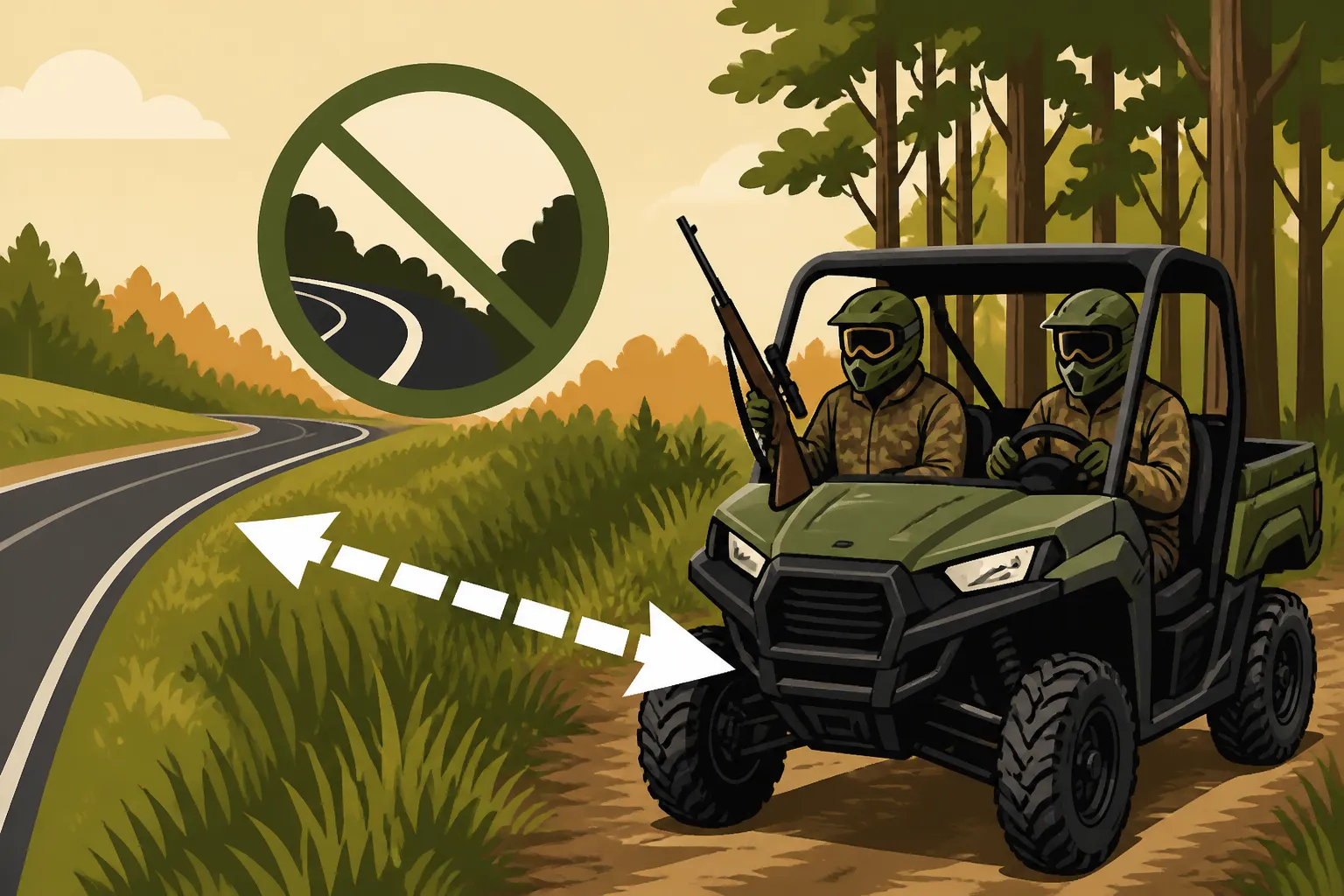
On a Mississippi Wildlife Management Area, the 100-foot setback is a firearm-safety restriction tied to roads. A loaded rifle must be kept at least 100 feet from the road where the applicable WMA rule sets that distance. The restriction is about where a firearm may be loaded in relation to the road; it does not make the road a shooting area, grant permission to hunt, or authorize ATV travel.
The precise wording in the regulations for a particular area matters. Do not assume that “100 feet from the road” means 100 feet from the centerline, the nearest tire track, a road sign or the edge of a cleared right-of-way. If the regulation or posted notice defines the measurement point, follow that definition. If it does not, the safe choice is to stay well beyond the minimum rather than trying to calculate the closest possible spot.
A useful practical distinction is:
| Question | What the setback does | What it does not do |
|---|---|---|
| Can a loaded rifle be near a road? | It requires the firearm to remain outside the restricted distance when the rule applies. | It does not create a general right to carry a loaded rifle on a road. |
| Can a rider load a rifle just off the road? | Only if the applicable WMA rules allow it and the rider is outside the setback. | It does not override hunting, firearm, vehicle or access rules. |
| Can an ATV travel on the road? | Nothing about the firearm setback grants road access. | It does not permit riding behind a closed gate or on an unauthorized route. |
| Can a person hunt from that location? | The distance rule may be one condition to consider. | It is not a hunting license or authorization to hunt a particular spot. |
Treat the setback as one part of a larger set of rules. Wildlife Management Areas can have area-specific limits on roads, seasons, weapons and access. A road that appears usable may be closed to motor vehicles, and a legal place to ride is not automatically a legal place to hunt. For the riding side, see Mississippi WMA Riding Rules and Mississippi WMA Designated Roads Only.
Why the rule matters when you are riding
An ATV or side-by-side can make it tempting to carry hunting gear close at hand, stop wherever the trail looks convenient, and sort out the details later. That is a poor approach around firearms and public land. A road may be used by other riders, hunters, wildlife staff or vehicles, and a rifle carried or handled beside it can create a serious safety risk.
A road is also a poor reference point for making quick decisions about distance. The machine may be stopped on a shoulder or turnout that looks separate from the road but is still close to it. Brush and uneven ground can obscure how far away you are. A rider may also confuse an informal path with an established road, or assume that a gate means the route is open to people traveling on foot. Check the posted information and the current area rules instead of relying on appearance.
The 100-foot restriction should not be treated as a target. Meeting a minimum distance does not settle questions about safe direction of fire, other people nearby, hunting authorization, or whether the land is open to the activity. A rifle can be outside a setback and still be handled unsafely or in violation of a separate rule. Keep the muzzle pointed in a safe direction, handle the firearm only when lawful and appropriate, and do not discharge it from or across a road.
There may also be a separate restriction on carrying a loaded firearm while riding. Do not assume that a rifle becomes lawful to transport loaded simply because the ATV is more than 100 feet from a road. Review Mississippi WMA Weapon Restrictions and the specific rules for the management area before loading or transporting a firearm. When the rules are unclear, transport the firearm unloaded and secured until you have confirmed what is allowed.
The same caution applies to passengers. A firearm’s position on a rack, in a case or within reach of a rider does not remove the rider’s responsibility to follow the applicable rules. A loose rifle can shift on rough ground, interfere with steering or fall from the machine. Secure any unloaded firearm so it cannot move, and keep it separate from ammunition when that is required or is the safer way to transport it.
Separate the firearm rule from permits and road access
Riders often bundle several questions together: whether they need a permit, whether they can ride a particular road, whether they can carry a firearm, and whether they may hunt. These are separate issues. A permit or pass for one activity does not automatically cover the others.
For example, a forest OHV pass and WMA hunting access are not interchangeable. A pass may apply to a particular trail system or activity, while a WMA may have its own road designations, seasonal closures and firearm regulations. Likewise, permission to use a designated WMA road does not mean that a firearm may be loaded on that road or that the rider may hunt from the vehicle.
Before a trip, check each part of the plan:
- Confirm the land unit. Identify the exact WMA or other public-land area. Rules can differ between management areas and between public land categories.
- Check whether the route is open to machines. Use the area’s current map and signs. A route that appears on a map may still be subject to seasonal or temporary closure. See Mississippi WMA Road Closure Signs.
- Check firearm rules separately. Confirm the 100-foot setback, any restriction on loaded firearms while riding, and any weapon or season-specific limits.
- Confirm hunting requirements. A road setback is not a hunting license, season authorization or permission to take game. Check the requirements that apply to the intended hunt.
- Plan where the machine will stop. Do not stop beside a road and load a rifle based on a visual guess. Identify a lawful, safe location well outside the restricted distance.
- Carry and secure equipment safely. Follow firearm transport rules and secure the unloaded firearm against movement while the machine is in motion.
If the ride includes retrieving game, do not assume the ATV may leave a designated road to reach an animal. Access and retrieval rules can be different, and some areas restrict where a machine may travel. Check Mississippi WMA Game Retrieval Rules and the specific WMA’s instructions before the hunt. Riding across a closed route or through a restricted area can create a separate violation even if the firearm was handled correctly.
Reciprocity is not a shortcut around these checks. A license, permit or vehicle sticker from another state should not be treated as proof that Mississippi rules are satisfied. The access rules for the land you are visiting still matter, as do Mississippi firearm and hunting requirements. For riding access, see Mississippi Rules for an Out-of-State Machine. For forest trail access, distinguish a forest pass from management-area rules with What a Mississippi Forest Pass Does Not Cover.
A safer way to plan a ride and hunt
The simplest approach is to make firearm handling part of the trip plan before unloading the machine. Choose the riding route, identify authorized stopping areas, and decide how the firearm will be transported. If the plan depends on loading the rifle close to a road or guessing where the 100-foot distance begins, change the plan.
Use a conservative buffer. Rather than measuring only to the apparent road surface, move farther away and check the WMA’s wording for the correct reference point. A tape measure or map measurement may help with planning, but it does not replace the official rule or a clear view of the location. If the road boundary is unclear, do not load the rifle there.
Pay attention to signs at entrances and along routes. A sign may identify a closure, a permitted route, a seasonal restriction or an area-specific condition. Do not assume that a sign applies only to cars or that an ATV can pass around a barrier. Check Mississippi WMA Access for a Quad if the trip depends on machine access, and turn around when a route is posted closed or its status is uncertain.
Avoid loading or unloading a firearm while seated on a moving machine, beside a traveled route, or where another person could enter the area unexpectedly. Stop in a safe, authorized location, secure the machine, and follow the firearm’s safe-handling procedures. Keep the firearm unloaded while riding unless you have confirmed that carrying it loaded is lawful under the rules that apply. A separate rule may prohibit loaded weapons while riding even when the road setback is not the issue.
If a game animal is down near a road, the setback does not authorize unsafe firearm handling or machine travel. Follow the applicable hunting and retrieval rules, and do not shoot toward or across a road. If reaching the animal would require leaving an authorized route, verify whether that is allowed before moving the ATV. A firearm setback and a vehicle-access rule solve different problems.
A practical pre-ride check can prevent confusion at the trailhead:
- Read the current WMA regulations, not only an old map or a summary.
- Note the roads and routes open to machines.
- Identify any firearm setback and determine how the distance is measured.
- Confirm whether loaded firearm transport is restricted while riding.
- Check the hunting season and weapon rules for the area.
- Keep the firearm unloaded and secured while traveling unless the applicable rules clearly allow otherwise.
- Ask the responsible land or wildlife office if the posted directions and written rules do not resolve a specific question.
When speaking with an official, describe the exact location and plan: the WMA, the road or route, whether you will be riding or on foot, and whether the firearm will be loaded. A general question such as “Can I carry my rifle?” may not reveal the separate issues that affect the answer. For other questions riders commonly need to verify, see Mississippi WMA Weapon Restrictions.
The key point is straightforward: the 100-foot setback is a minimum road-related firearm restriction, not a broad permission to load, carry, hunt or ride wherever you choose. Keep a generous distance, treat firearm transport and ATV access as separate questions, and follow the rules posted for the specific management area.
Disclaimer
This article is for general informational purposes only and does not constitute professional advice. Laws, prices and regulations vary by location and change over time. Consult a qualified professional for guidance on your specific situation.