No Loaded Weapon While Riding
A firearm may be legal to possess on a Mississippi ride and still be prohibited in a particular condition or place. For ATV and UTV riders, the key is to separate carrying a weapon from carrying it loaded, then check the rules for the land and season. This article explains how to approach that distinction, especially on wildlife management areas.
What “No Loaded Weapon While Riding” Means
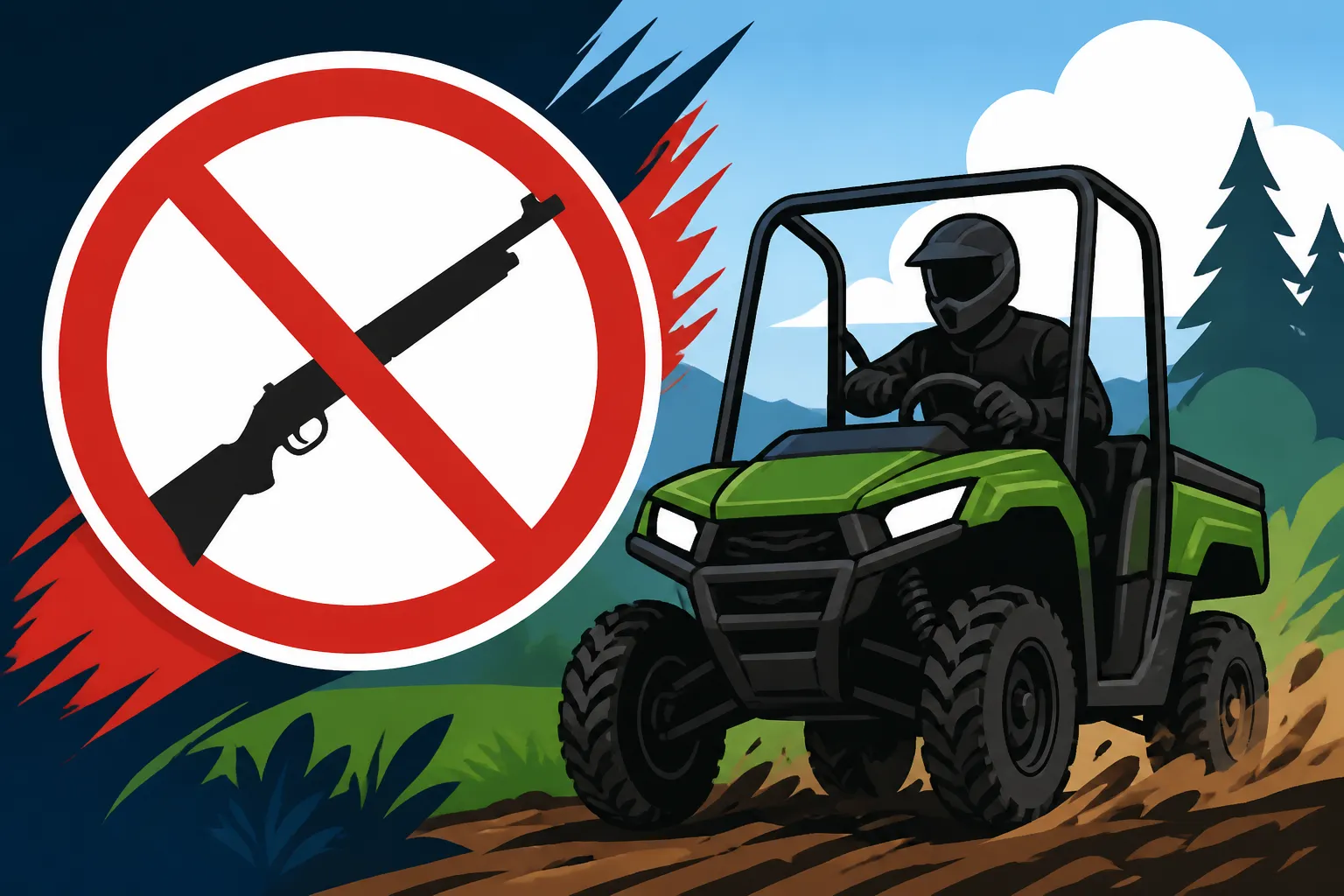
Mississippi riders should treat “no loaded weapon while riding” as a practical rule to follow on public hunting land, especially wildlife management areas. A weapon that is unloaded before a ride is easier to handle safely and less likely to violate a rule that applies while traveling on an ATV, UTV, or other vehicle. The exact requirements can depend on the area, the season, and the current regulations.
A firearm’s purpose does not necessarily change how a rule applies. Carrying it for protection rather than hunting may not exempt you from a restriction on having a loaded firearm while on a vehicle. Likewise, a hunting license or a concealed-carry permit should not be assumed to override land-specific rules.
The word “loaded” can also have a technical definition under a particular law or regulation. It may depend on whether ammunition is in the chamber, magazine, or another part of the firearm. Don’t rely on a casual understanding of the term. If a regulation does not make its definition clear, ask the land manager or the Mississippi Department of Wildlife, Fisheries, and Parks (MDWFP) how it applies before riding.
As a straightforward safety practice, unload the firearm fully before getting on the machine. Keep the firearm pointed in a safe direction while unloading, confirm its condition, and secure it so it cannot shift or be reached accidentally during a rough ride. Store ammunition separately when practical. These steps are sensible precautions, not a substitute for checking the rule’s legal definition.
It also helps to distinguish three different questions:
| Question | What it addresses | What to check |
|---|---|---|
| May you possess the firearm here? | Whether firearms are allowed on the property | The area’s access and weapon rules |
| May it be loaded while you are riding? | The firearm’s condition during vehicle travel | Current WMA or land-manager regulations |
| May you hunt or shoot here now? | Whether hunting or discharge is allowed | Season dates, species rules, locations, and closures |
Being allowed to possess a firearm does not automatically mean you may carry it loaded while moving, hunt from a machine, or discharge it from a road. Those are separate issues. The broader Mississippi WMA Weapon Restrictions are worth checking before planning a trip.
Where the Rule Matters and What Else Can Restrict You
Wildlife management areas (WMAs) have their own access and hunting rules. A rider’s route, firearm, and activity may be regulated differently from those on private land or a private riding park. Start with the regulations for the specific WMA you plan to visit, rather than assuming one area’s rules apply everywhere.
On WMAs, riders also need to pay attention to where machines may travel. A road that looks passable is not necessarily open to ATVs or UTVs. Routes may be limited to designated roads, and gates, signs, berms, or temporary closures can make a route off-limits. Review Mississippi WMA Designated Roads Only and Mississippi WMA Road Closure Signs before choosing a route. A permitted firearm does not give you permission to ride through a closed area.
The season matters, too. Rules for firearm possession, hunting, and access may change with the activity or season, and a road or area may have restrictions that are not in place at other times. Check the current regulations and posted notices before unloading your trailer. If a seasonal restriction is unclear, ask the relevant WMA office or MDWFP rather than interpreting silence as permission.
Keep firearm setbacks and road-use restrictions separate from the unloaded-while-riding rule. For example, a rule about how close a firearm may be to a road during a particular hunting activity does not necessarily answer whether a firearm may be loaded while you travel. Each rule addresses a different situation. The related Mississippi WMA Firearm Distance Rules can help you identify the setback issue, but confirm the details for your area and activity.
The same care applies when retrieving game. A rule allowing a machine to help retrieve a downed animal, where applicable, does not automatically allow hunting from the machine, carrying a loaded firearm while riding, or driving on a closed road. Read Mississippi WMA Game Retrieval Rules alongside the firearm and road provisions so you don’t treat one limited permission as a general exception.
Public land and private land are not interchangeable
Rules for a WMA should not be casually extended to every private trail, farm, or riding park. Private property may have its own conditions set by the owner or operator, and a lease or event waiver may add restrictions. Conversely, permission from a landowner does not cancel a law that applies to the way a firearm is carried or used.
If your route moves between properties or crosses a public road, check each part of the trip. A rule that applies inside a WMA may not be the only relevant rule, and a private trail’s policy may not answer what is allowed on a public road or public hunting area. Keep the land’s identity and the route boundaries clear before riding.
Carrying is different from hunting
Possessing a firearm while riding is not the same as hunting from a vehicle. Hunting rules may restrict shooting from or with the aid of a motorized vehicle, even where a rider is allowed to transport an unloaded firearm. Do not assume that being legally present with a weapon makes every hunting method lawful.
If the goal is to hunt, check the applicable season, license, equipment, and method-of-take rules separately. If the goal is simply to travel with a firearm, check the possession and transport rules for the land. If you are unsure which category applies, explain the exact situation to the land manager: the machine type, route, season, and whether you intend to hunt or only transport the firearm.
How to Prepare Before Riding
A few checks before leaving home can prevent confusion at a gate or during a stop. Confirm the rules for the exact property, not just the county or region. Then make a clear plan for transporting the firearm safely and lawfully.
- Identify the land and route. Confirm whether the ride is on a WMA, private property, a riding park, or a mixture. On a WMA, verify which roads are open to your machine.
- Check current regulations and notices. Look for firearm-condition rules, hunting-season limits, road restrictions, closures, and any special conditions for the area. Use current official information and heed signs at the entrance and along the route.
- Clarify what “loaded” means. If the rule’s wording leaves doubt about a chamber, magazine, or ammunition carried with the firearm, ask MDWFP or the land manager before the ride.
- Unload before mounting. Handle the firearm safely while stationary. Confirm it is unloaded and secure it so bumps or a rollover cannot cause it to shift or become accessible unintentionally.
- Keep ammunition and the firearm controlled. Follow the applicable rules for transporting both. A separate, secure location for ammunition can reduce the chance of accidental loading during the ride.
- Recheck after stopping. Don’t load or handle a firearm just because you have reached a trail junction, parked beside a road, or arrived at a hunting location. First make sure the location and activity allow it.
- Ask before relying on an exception. If someone tells you a particular road, season, or retrieval situation is an exception, verify that claim against the current rule.
For a side-by-side, secure the firearm for the actual ride rather than placing it loosely on a seat, rack, or floor. A rough trail can shift gear quickly. Make sure it cannot fall, point toward a passenger, or be reached by a child. Passengers should know not to handle it while the machine is moving.
A storage case may help protect a firearm from mud and vibration, but a case does not by itself make transport lawful. The firearm still needs to meet the applicable condition and location rules. Similarly, placing a loaded firearm in a case does not necessarily make it count as unloaded under a regulation. When the wording is uncertain, get an authoritative answer rather than relying on the container.
Common Mistakes and a Simple Pre-Ride Check
One frequent mistake is assuming that a firearm carried for personal protection is treated differently from one carried for hunting. The purpose may be important to some rules, but it is not a safe basis for ignoring a restriction on loaded firearms while riding. Check the language that applies to the location and keep the firearm unloaded unless you have confirmed otherwise.
Another mistake is treating an unloaded firearm as permission to ride anywhere. Firearm rules and machine-access rules are independent. You may have to stay on designated roads even when the firearm is properly secured. You may also need to stop for a gate, closure, or seasonal restriction regardless of what you are carrying.
Riders can also confuse “transport” with “use.” Moving a firearm from a parking area to an authorized location does not necessarily permit hunting from the machine or firing near a road. Before loading or using a firearm, stop and confirm that the place, season, and activity allow it. Check any relevant Mississippi WMA Firearm Setbacks rather than guessing at a safe distance.
Finally, don’t rely on an old screenshot, a friend’s recollection, or rules from a neighboring state. Regulations and area notices can change, and conditions may differ from one WMA to another. Check the current official information before the trip and call the land manager if an important detail is unclear.
Use this short check before unloading the trailer:
- Have you confirmed the property and the route are open to your machine?
- Have you checked the current firearm and hunting rules for that area?
- Is the firearm unloaded before the machine moves?
- Is it secured against shifting, accidental access, or contact with passengers?
- Are ammunition and firearm stored in a way that follows the applicable rules?
- Do you know where you may stop, hunt, or handle the firearm?
- Have you checked signs and closures at the entrance and on the route?
If any answer is no, pause and verify the rule before riding. A conservative approach—unload first, secure the firearm, stay on authorized roads, and confirm the current area rules—helps prevent a safety problem from becoming a citation or a disrupted trip.
Disclaimer
This article is for general informational purposes only and does not constitute professional advice. Laws, prices and regulations vary by location and change over time. Consult a qualified professional for guidance on your specific situation.