Retrieving a Hog by Machine
A hog can be heavy, awkward to move, and far from the truck, but a Mississippi Wildlife Management Area is not an open-access trail system. Whether you can use an ATV or UTV to retrieve a harvested hog depends on the area’s current rules and where the machine may travel. Check those rules before hunting, then plan a retrieval route that keeps you within them.
The short answer depends on the WMA
There is no safe blanket assumption that a hunter may drive an ATV or UTV anywhere on a Mississippi WMA to recover a hog. Machine access is controlled by the rules for the specific area. A general allowance for retrieving game, where one applies, does not automatically permit off-road travel, crossing a closed gate, or riding wherever the animal is found.
Start with the current WMA regulations and access information for the area you plan to hunt. Look for language about ATVs, UTVs, roads open to vehicles, game retrieval, and seasonal or temporary closures. If the wording is unclear, ask the managing office or agency contact before your hunt. Do not rely on a rule you remember from another WMA; access can differ between areas and may change with conditions or management decisions.
The distinction between carrying out a hog and riding to its location matters. A rule might allow a limited trip to retrieve legally taken game while still restricting routine riding to designated roads. It may also limit the days, times, routes, or types of machines allowed. Follow the exact terms rather than treating “retrieval allowed” as permission to use the entire property.
| Situation | What to do |
|---|---|
| The WMA’s current rules clearly allow machine retrieval | Follow every stated limit on routes, timing, machines, and the animal’s legal harvest |
| Rules allow riding only on designated roads | Stay on those roads unless the WMA specifically provides a retrieval exception |
| The rules are silent or hard to interpret | Contact the area manager or agency before riding |
| A road, gate, or route is posted closed | Do not enter just because it would shorten the trip |
| You are hunting near private land or a boundary | Confirm the animal’s location and your permission before entering or recovering it |
A public-land permit or hunting license does not, by itself, grant permission to ride a machine. These are separate questions: whether you may hunt, whether you may operate a machine, and whether a particular route is open. For related access rules, see Mississippi WMA Rules for Riders, Mississippi WMA Access for a Quad, and Mississippi WMA Designated Roads Only.
Check access before the hunt, not after the shot
A retrieval problem is hardest to solve when the machine is already parked, the animal is down, and daylight is fading. Make a plan before hunting. Confirm what the WMA allows, identify roads you may legally use, and decide how you would move the hog if machine access to the recovery point is not permitted.
Verify the current area rules
Use the latest regulations and notices for the exact WMA, not just general information about Mississippi public land. Look for restrictions that may apply to the particular part of the property or time of year. Posted signs at entrances and along roads matter too. A route that appears on an old map may be closed, and a road open to some users may not be open to ATVs or UTVs.
A phone call is worthwhile if the regulations do not answer a practical question, such as whether a machine may leave a designated road to reach a harvested hog. Ask plainly:
- May an ATV or UTV be used to retrieve a legally harvested hog on this WMA?
- Must the machine remain on designated roads, or is there a specific retrieval exception?
- Are there limits on dates, daylight, machine type, or the number of trips?
- Are any gates, roads, or areas currently closed?
- Does the rule require notice, authorization, or another step before retrieval?
Write down the answer and the name of the office or contact, but still obey posted closures and instructions on the property. If an answer is conditional, make sure you understand the condition rather than remembering only that someone said “yes.”
Separate hunting permission from vehicle access
A valid hunting license or WMA permit does not settle the vehicle question. Nor does owning the machine, having a title, or being able to reach the WMA entrance. Machine rules apply to where and how you ride on the property.
This is especially important when a route crosses a gate or leaves a designated road. A gate may mark a closed road, a boundary, or a route restricted for management reasons. It is not an invitation to ride around it. An exception for retrieving game should be followed only if the current rules actually provide one and you meet its conditions. See Mississippi WMA Road Closure Signs and Closed Gates on a Wildlife Management Area Road for more on why a closure should be treated as a firm boundary.
Do not assume that a neighboring property’s policy applies. A private hunting lease, national forest, state park, and WMA can each have different rules. The land’s identity determines which rules to check.
Keep the recovery legal and safe
Even where machine retrieval is allowed, the exception is about recovering lawfully taken game, not creating a new riding route. Keep the trip limited to the purpose and route the rule permits. Avoid shortcuts through woods, wetlands, fields, or other closed areas unless the WMA expressly authorizes that travel.
If the hog is not where you thought it fell, stop and reassess. Do not keep driving farther into closed land because the trail has become difficult to follow. If you cannot recover the animal without breaking a rule, contact the WMA manager or the appropriate enforcement office for direction.
Confirm the animal’s location
Before loading or riding, make sure the hog is on the WMA where you have permission to hunt and retrieve it. An animal may cross a property line, reach a road, or be found near land with different access rules. Permission to hunt one parcel does not automatically authorize entry onto adjoining private land or another public property.
If the animal is on private land, obtain permission from the landowner before entering to recover it. If its location is uncertain, do not cross a boundary on the assumption that recovery rights follow the animal. A careful check can prevent a trespass problem on top of an already difficult recovery.
Handle firearms before riding
A firearm that was carried while hunting should not remain loaded while you are riding. Mississippi public-land rules include restrictions on riding with a loaded weapon; check the applicable requirements and handle firearms accordingly. Unload and secure firearms before getting on the machine, and keep them safely positioned during transport. Do not point a firearm at anyone or handle it while the machine is moving.
Do not assume that a scabbard or case makes a loaded firearm acceptable. Follow the rule on the weapon’s condition, not just how it is carried. For related information, see No Loaded Weapon While Riding and Mississippi WMA Weapon Restrictions.
If another person helps with the recovery, make sure everyone understands the firearm and machine rules before moving. One rider’s compliance does not excuse another person’s violation. A short safety check before setting off is easier than sorting out a mistake at the road or trailhead.
Use a machine that can manage the load
A hog’s weight and the terrain can make an otherwise manageable trip unsafe. Follow the machine manufacturer’s load limits, use a suitable rack or approved cargo arrangement, and secure the animal so it cannot shift into the rider, controls, tires, or exhaust. Do not overload a youth machine or carry a passenger in a way the machine is not designed to support.
Keep the load low and balanced where possible. If the hog is too heavy or awkward to move safely, use a hand cart, drag system, or help from another person if those methods are allowed and practical. Avoid attempting to lift a heavy animal alone, especially on uneven ground. A strained back or rollover can turn a recovery into an emergency.
Use caution around mud, water, steep banks, and soft ground. A machine stuck in a wet area can damage habitat and create a second recovery problem. If the route is not open or the ground is unsafe, do not force the machine through it.
A practical retrieval plan
A simple plan reduces pressure to improvise after a successful hunt. Before leaving home, check the WMA’s current rules, identify legal vehicle access, and decide what you will do if the hog falls beyond that access. Pack equipment for a manual recovery as well as the machine trip, and make sure someone knows where you will be hunting.
After the animal is down, take these steps:
- Confirm the harvest and location. Follow applicable hunting requirements, make sure the hog is on land where you may lawfully recover it, and note the route from an open road.
- Check the WMA rule again if needed. If access is unclear or conditions have changed, stop and contact the area manager or enforcement office rather than guessing.
- Unload and secure firearms. Do this before riding, and keep firearms safely secured throughout the trip.
- Use only the permitted route. Stay on designated roads unless a current, specific retrieval rule authorizes more. Do not pass a closure or go around a gate.
- Bring only what is needed. Keep passengers, cargo, and equipment within the machine’s limits, and avoid unnecessary trips.
- Stop if the route becomes unsafe or unauthorized. Use an allowed manual method or ask the WMA contact for direction instead of pushing farther into closed ground.
- Leave the area as you found it. Remove gear and waste, avoid damaging roads or vegetation, and report an incident or damage as required by the area rules.
A retrieval plan should also account for weather and visibility. Rain can make an open road difficult to travel, and dusk can reduce visibility for riders and other users. If conditions make the trip unsafe, wait or choose another permitted method. A legal route is not automatically a safe route in every condition.
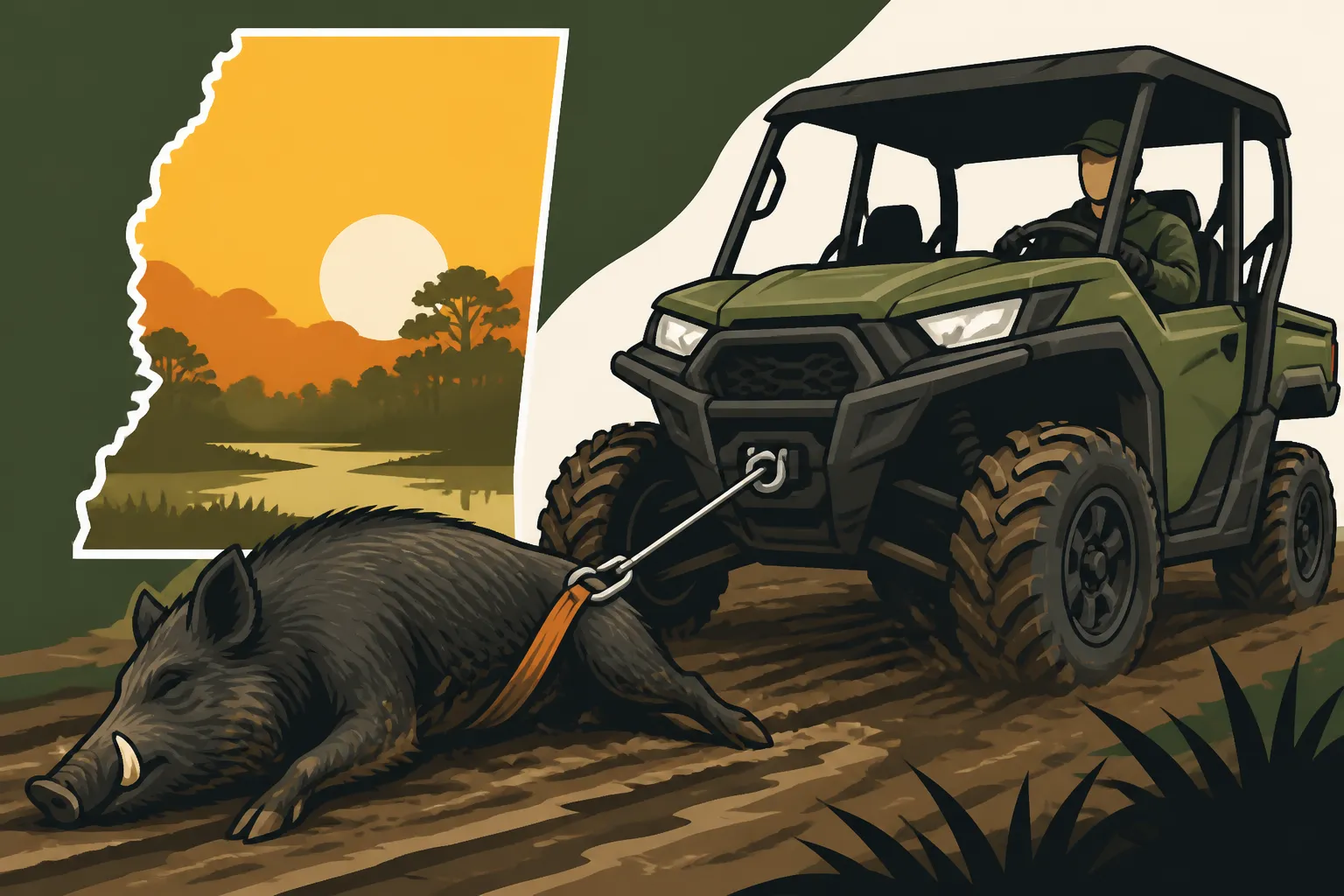
It also helps to discuss roles before the hunt. Decide who will handle the machine, who will guide the load, and where firearms will be secured. Keep people clear of tires, winches, and other moving equipment. If a winch is used, follow its operating instructions and keep bystanders away from the line.
Common mistakes to avoid
The most common mistake is treating an animal-retrieval purpose as a general vehicle pass. A limited exception, if the WMA offers one, does not erase road closures or open every part of the property to machines. The second mistake is relying on an old regulation, a friend’s recollection, or a rule from another WMA. Confirm the current rule for the exact area.
Other avoidable errors include:
- Riding around a gate because the animal is nearby.
- Assuming a machine may leave a designated road without checking for a specific exception.
- Carrying a loaded firearm while riding.
- Crossing onto private land without permission.
- Continuing when the animal’s location or the allowed route is uncertain.
- Overloading the ATV or UTV, or carrying a passenger contrary to the machine’s design.
- Treating a permit to hunt as permission to ride.
- Ignoring temporary closures, posted notices, or instructions from area staff.
If you are stopped or asked about your activity, remain calm, explain what you are doing, and follow lawful instructions. Keep any required permits or proof of harvest available as the applicable rules direct. The best way to avoid a dispute is to know the retrieval rule before hunting and stay within its limits.
When no machine-retrieval permission is clear, do not assume it exists. Ask before the hunt and plan a legal alternative. Mississippi WMA access is managed area by area, so checking the specific rules is part of responsible hunting, not an unnecessary extra step.
Disclaimer
This article is for general informational purposes only and does not constitute professional advice. Laws, prices and regulations vary by location and change over time. Consult a qualified professional for guidance on your specific situation.