Mississippi Private Park Camping Rules
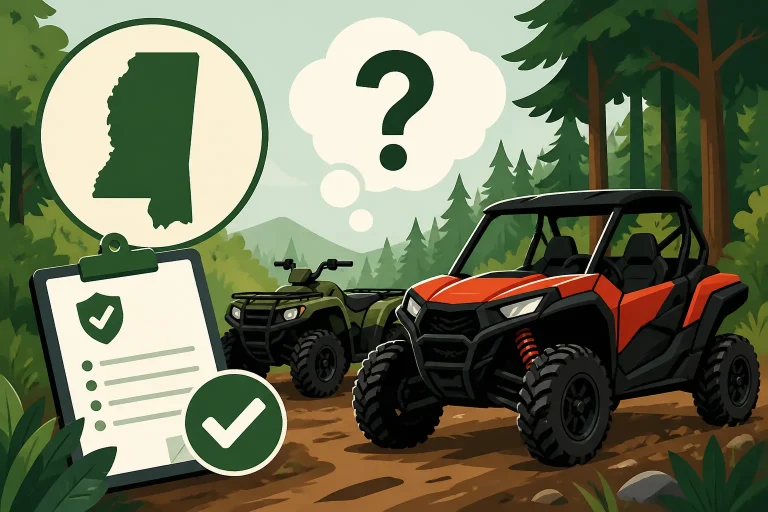
Planning an ATV or UTV weekend at a private park in Mississippi means checking two sets of details: how the park handles camping and what it requires for riding. Rules can differ from one property to another, so a reservation alone may not confirm trail access, permits, vehicle limits, or camp policies. A quick call before you load the trailer can prevent a frustrating arrival.
Know Which Rules Apply at a Private Park
A private riding park controls access to its property and can set conditions for using its trails, campsites, and facilities. Those conditions may cover reservations, waivers, noise, pets, alcohol, helmets, passenger arrangements, and the machines allowed on particular routes. There is no reason to assume that one park’s rules apply at another.
State and local laws still matter, but a private park’s admission requirements are not the same thing as a general Mississippi ATV registration or a public-land permit. Ask the park what it requires from visitors rather than assuming that a sticker, pass, or document from another riding area will be accepted.
This distinction is especially important for riders traveling from another state. An out-of-state registration or other proof of ownership may help answer questions about your machine, but it does not automatically satisfy a private property’s own entry conditions. Check Mississippi Rules for an Out-of-State Machine for the separate state-law considerations, then confirm the park’s visitor requirements directly.
| Question | Why to ask before traveling |
|---|---|
| Does the camping reservation include trail access? | A campsite booking and a riding admission may be handled separately. |
| Does the park require a pass, wristband, waiver, or proof of ownership? | The operator sets its check-in process and may require documents before entry. |
| Are all machine types allowed on the trails? | Route access may depend on vehicle type, size, or other park-specific limits. |
| Can you camp overnight on the dates you plan to ride? | Camping availability, operating days, and riding hours may not match. |
| What are the site rules for guests, pets, fires, and quiet hours? | These policies affect everyone sharing the camping area. |
A private park may ask riders to sign a liability waiver or follow age, equipment, and supervision policies. Read the form before signing and ask what it covers; do not treat it as a permit or as proof that the park has approved your machine for every trail. For a broader look at operator-set conditions, see Mississippi Private Park Waivers and Rules.
Private parks are not public riding areas
A private property’s rules should not be confused with requirements for a national forest, wildlife management area, or state park. Public land can have its own passes, designated routes, age conditions, and other access rules. A document or permit associated with one type of property may not authorize riding on another.
If your trip includes more than one riding area, check each location separately. A private park might require its own admission process while a public riding area may have a different pass or access system. The same goes for camping: a campsite reservation at one property is not permission to camp on nearby public land.
State parks also set their own conditions, which can differ from private operators’ policies. If you are comparing a private park weekend with public facilities, review Mississippi State Park Waiver Requirements rather than assuming the two check-in procedures are interchangeable.
Confirm Camping and Riding Before You Book
The most useful question to ask is not simply, “Can we camp?” Confirm that the site is available for your dates and clarify whether you can ride during the same visit. Some properties may manage camping, trail access, and day-use admission separately. Ask what the booking includes and whether every rider needs a separate registration, waiver, or admission credential.
Before paying a deposit or making a long drive, get clear answers to these points:
- Camping dates and check-in: Ask when you can arrive, when you must leave, and whether late arrival is possible. Confirm what to do if the office is closed when you reach the property.
- Trail operating hours: Find out when riding is allowed and whether the trails close at certain times, on certain days, or because of weather.
- Camping-to-riding access: Ask whether a campsite booking includes trail use or whether riding access must be arranged separately.
- Machine eligibility: Give the operator the vehicle type and, if asked, its width or other relevant measurements. Confirm that the machine can use the routes you want.
- Occupancy and visitors: Ask how many people and vehicles the site can accommodate, and whether day visitors or extra campers need advance approval.
- Changes and closures: Find out how the park communicates weather-related closures and what happens to a reservation if trails or camping facilities become unavailable.
Do not rely on a general social media post or an old review for details that could change. A park’s current booking page or staff can clarify its active schedule and requirements. Keep the confirmation and any instructions where the group can access them, especially if the reservation was made by someone who will arrive later.
Ask about machine limits directly
A park may set different access rules for ATVs, side-by-sides, dirt bikes, or other off-road vehicles. It may also restrict certain trails by width, condition, rider skill, or other factors. Do not infer eligibility from photos of machines at the park or from a general description such as “ATV trails.”
Give staff an accurate description of your machine and ask about every planned route. If your group includes a full-size UTV and smaller quads, confirm that the group can ride together or learn whether routes split by vehicle type. This avoids arriving with a machine that is allowed on the property but not on the trails you expected to use.
If camping and riding require separate payments, credentials, or check-in steps, ask how those are handled. For named companies or parks, policies can change; confirm current terms with the operator rather than relying on a previous visit or another rider’s account.
Prepare for Check-In, Permits, and Camp Rules
Make a small document folder before leaving home. The park may ask for a booking confirmation, identification, a signed waiver, proof of ownership, or other information. Requirements are property-specific, so this is a preparation list—not a statement that every private park requires every item.
Call ahead if you have an unusual situation, such as a rented machine, a machine titled in someone else’s name, a youth rider, or a group arriving in separate vehicles. Ask which person must complete the waiver and whether it must be done before arrival. If a park requires proof of insurance, confirm what kind of proof it accepts and whether it applies to each machine. The questions in Mississippi Insurance Proof at a Gate can help you prepare for that conversation.
A park may also require its own wristband, tag, pass, or other marker. Ask whether the park issues it at check-in, whether it must remain visible, and whether one credential covers only a rider, one vehicle, or a larger party. Do not assume a pass from another property will transfer. For questions about park-specific equipment and operating conditions, see [Mississippi Private Park Helmet Rules] and ask the operator whether its helmet policy applies to every rider.
Keep the original or an accessible copy of your reservation and required paperwork, but avoid leaving sensitive documents loose at a campsite. If the park checks credentials at a gate or trail entrance, follow its instructions about where to carry or display them.
Confirm rules for children and passengers
If children are riding, ask about minimum ages, supervision, training or safety documentation, helmet use, and who may operate a machine. The private park may have policies beyond the rules that apply on public land. Do not interpret a child’s ability to ride at home as confirmation that the park will admit them or allow them on every route.
For passengers, confirm that the machine is designed to carry them and that the park permits the planned arrangement. A passenger policy should not be guessed from the number of seats or from what another visitor appears to be doing. Ask the operator if there is any doubt.
Related park policies may be covered in Mississippi Private Park Age Minimums. For a group with young riders, get answers before booking so you can choose a property and trails that suit everyone.
Ask about camping policies as carefully as trail policies
Camping rules can affect whether your setup is allowed, even if the machine itself is welcome. Ask whether the property offers tent sites, RV sites, or both, and whether each site has the services your group expects. Confirm rules for generators, fires, cooking equipment, quiet hours, and vehicle parking rather than assuming ordinary campground practices apply.
Pets and alcohol are also worth asking about explicitly. A park may restrict them in certain areas or set conditions for bringing them onto the property. Review [Mississippi Private Park Pet Rules], Mississippi Private Park Alcohol Rules, and Mississippi Private Park Quiet Hours as starting points for the questions to raise, then confirm the current policy with the park.
Pack according to what the operator confirms. For example, do not bring a fire ring, portable generator, or extra vehicle unless the site rules allow it. If replacing small camping items through Amazon, check the site’s restrictions and the item’s dimensions before ordering; a product that suits a home campsite may not fit the assigned space or park rules.
Make a Practical Plan for the Weekend
Once the park confirms access, build a plan that accounts for both riding and camping. Share the booking details, arrival instructions, and park contact information with everyone traveling. Agree on a meeting point if vehicles arrive separately, and make sure each rider knows which trails the group is allowed to use.
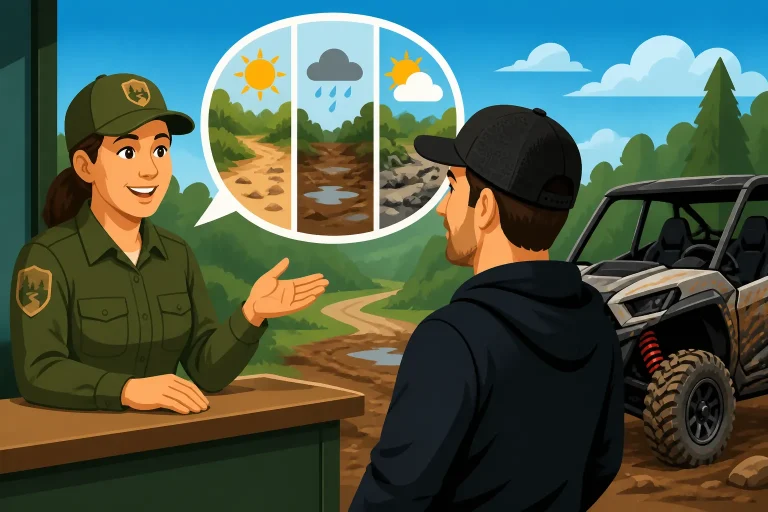
Pack the items the park requires, along with practical supplies for the trip: water, appropriate riding gear, basic first aid, lights, tools, and a way to secure equipment. Bring only what fits the confirmed site and vehicle setup. Check trail and weather conditions before departure, since heavy rain or other conditions can affect access even when a reservation remains in place.
At arrival, follow posted signs and staff directions. Ask where to park the trailer, unload machines, store equipment, and reach the trail entrance. Do not ride through a camping area or use a road as a shortcut unless the park says it is allowed. If a route is closed, treat the closure as a boundary rather than looking for a way around it.
A simple pre-trip checklist helps keep the rules from getting lost in the group’s packing plans:
- Verify campsite dates, arrival instructions, and occupancy.
- Confirm trail access, operating hours, and machine eligibility.
- Ask whether camping and riding are booked or checked in separately.
- Complete required waivers and bring requested documents.
- Confirm the park’s rules for children, passengers, helmets, and insurance.
- Check policies for pets, alcohol, fires, generators, and quiet hours.
- Review weather updates and closure notices before towing.
- Save the operator’s contact information and share it with the group.
If a rule is unclear, ask before the group rides or sets up camp. A staff member can explain how the policy works on that property; a different park’s custom, a visitor’s guess, or an old online comment cannot replace that confirmation. Keeping the distinction clear between private-park rules and public-land permits makes it easier to plan a lawful, predictable trip.
Disclaimer
This article is for general informational purposes only and does not constitute professional advice. Laws, prices and regulations vary by location and change over time. Consult a qualified professional for guidance on your specific situation.