Mississippi State Park Helmet Requirements
A helmet rule can be easy to miss when you are planning a ride at a Mississippi state park, especially if you have heard that state law treats younger riders differently from adults. Park rules may be stricter than the general rule. Here is how to think about the requirement, what to check before loading your machine, and how to avoid arriving without the right gear.
What Mississippi State Parks Require
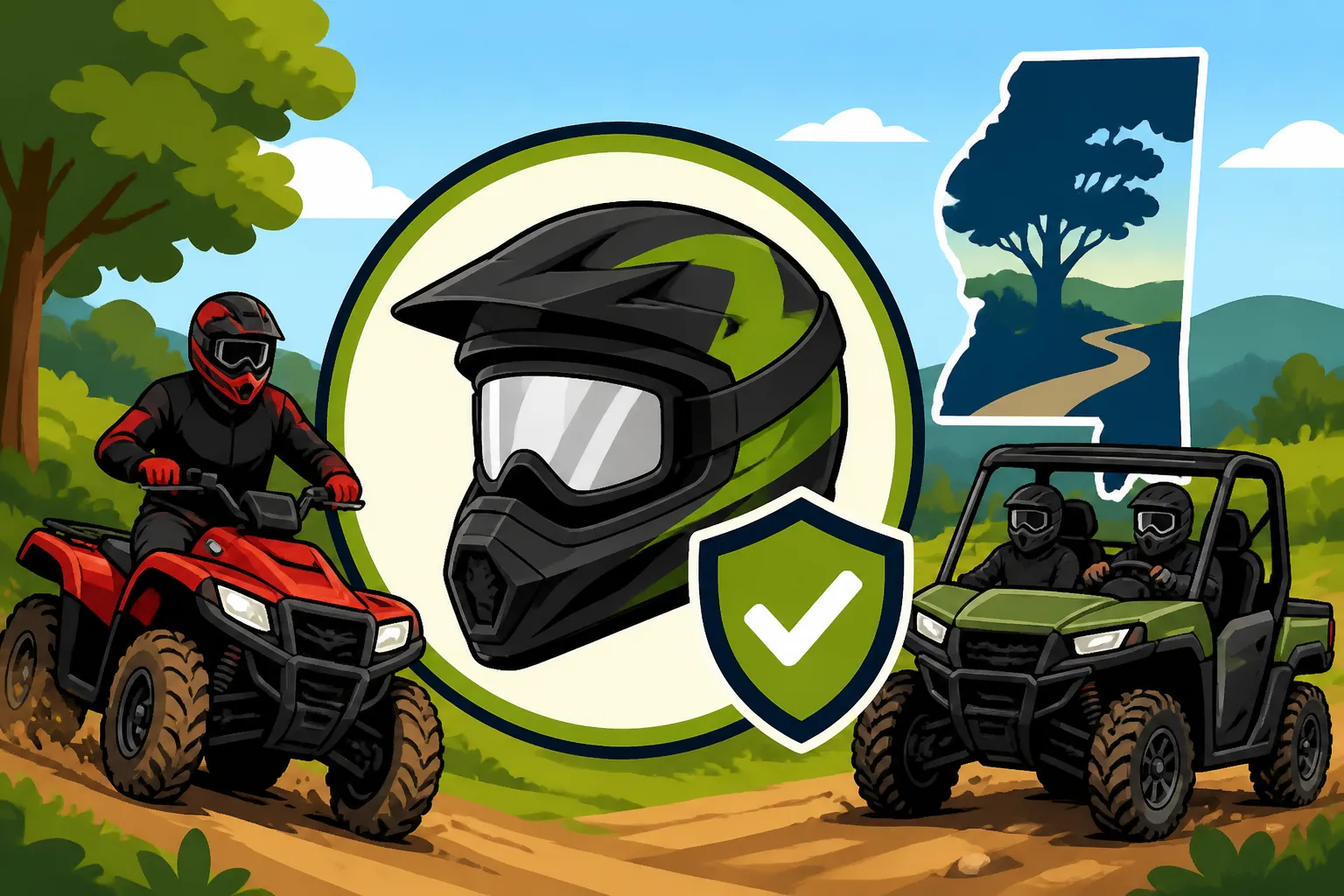
At Mississippi state parks that allow ATV or UTV riding, expect every rider to wear a helmet, not only children. That is the safest way to plan unless the park confirms a different requirement for your specific riding area or activity. Do not assume that an adult can ride without one because a state-law rule you heard about applies only to riders under a certain age.
The park requirement is part of the conditions for riding on that property. It can apply to the operator and any passenger, and it may be enforced at check-in or on the trail. A helmet that is available in the truck, but not being worn, will not meet a rule that requires riders to wear one while operating.
There is an important distinction between a state park and other places to ride. Mississippi’s rules can vary across public land, private parks, and roads. A helmet requirement for a park does not automatically describe the rule everywhere in the state, and a less restrictive rule elsewhere does not cancel a park’s conditions. For related park requirements, see Mississippi State Park ATV Rules and State Parks Require a Helmet for Every Rider.
Also confirm that the park permits your type of machine and the riding activity you have in mind. A helmet does not make an otherwise prohibited ride permissible. Some state parks may have designated riding opportunities, while others may not allow ATVs or UTVs on the routes you want to use. Check the park’s current rules before traveling rather than treating every state park as an OHV destination.
| Question | Practical answer |
|---|---|
| Should an adult bring a helmet? | Yes. Plan for every rider to wear one at a state park that allows ATV or UTV use. |
| Does the rule apply to passengers? | Plan as if it does. Confirm passenger requirements with the park before riding. |
| Is a helmet enough to enter? | No. Other park rules, waivers, age conditions, and machine restrictions may apply. |
| Can a helmet rule differ elsewhere? | Yes. Park conditions may be stricter than rules for other locations. |
| Should you rely on an old visit or online listing? | No. Verify the current requirements with the park before departure. |
How Park Rules Differ From Mississippi’s General Rules
Riders often confuse a statewide rule with the rules of a particular place. The distinction matters because you may satisfy a general age-based requirement and still be required to wear a helmet at the park where you are riding.
Mississippi’s general helmet provisions for young riders are not a promise that adults may ride helmet-free on every kind of public property. Public land can have its own conditions, and a state park can set requirements for participation on its grounds. The park rule is the one to follow while riding there. For the age-related background, see [Mississippi Rules for Riders Under 16] and Mississippi Helmet Law for Riders Under 16.
This is also why comparing state parks with national forest trails or a private riding area can lead to the wrong conclusion. Each setting may have its own access rules, safety conditions, and age restrictions. A helmet policy you followed at one trail system does not necessarily tell you what a state park will require.
Consider three separate questions before your trip:
- What does Mississippi law generally require? This gives you the statewide baseline, but it may not cover every property-specific rule.
- What does the park require? The park’s current conditions determine what riders must do on its grounds.
- What does the riding area allow? Confirm that your machine and intended activity are permitted at that location.
If the answers do not line up, follow the stricter applicable condition for the place where you will ride. When the park’s public information is unclear, ask its office directly. Ask whether all operators and passengers must wear helmets, whether the park specifies an accepted helmet standard, and whether there are any additional requirements for children.
These checks are particularly useful for visitors who ride in several states. A helmet rule from a neighboring state is not a substitute for Mississippi park rules. Similarly, a visitor’s home-state registration or sticker does not determine whether a Mississippi park will allow the machine or what safety gear its riders must wear. The location’s access conditions remain central.
Choosing a Helmet and Checking It Before the Ride
A helmet needs to fit securely and be in usable condition. The park may have specific requirements about the helmet type or safety standard, so ask before buying or borrowing gear. Do not rely on a product photograph or a vague listing description to establish that a helmet meets a park’s rule.
A practical pre-ride check includes:
- Confirming the accepted type or standard. Ask the park whether it requires a particular certification or label. If you cannot find a clear answer, contact the park office rather than guessing.
- Checking the fit. The helmet should sit level, feel snug without painful pressure, and remain in place when you move your head. The retention strap should fasten securely.
- Inspecting the shell and interior. Look for cracks, damaged padding, loose parts, or signs of a significant impact. Do not use a helmet whose condition or history makes its protection uncertain.
- Making sure it is the right size for each rider. A helmet that fits an adult may not fit a child safely. Do not treat an adjustable strap as a replacement for the correct size.
- Packing it where it will stay clean and protected. A helmet tossed loose among tools or heavy equipment can be damaged before the ride begins.
If you are shopping online, including through Amazon, read the product details carefully and verify the actual certification label when the helmet arrives. Product titles can be broad, and a listing that says “for ATV” does not by itself prove that the helmet satisfies a park’s specific rule. Keep the packaging or product information until you have checked the label and fit.
A helmet also needs to be worn as intended. A loose chin strap, a helmet perched too far back, or a passenger carrying one instead of wearing it defeats the point of bringing it. If the helmet has a visor or face protection, check that it does not block the rider’s vision. Choose eye protection suitable for trail conditions, especially where dust, branches, or debris may be present.
For children, fit deserves extra attention. Kids can outgrow helmets, and a helmet that fit last season may now move around or sit incorrectly. If a young rider is not comfortable wearing the helmet securely, pause and address the fit before starting the ride. Review any additional age, supervision, and proof requirements through Mississippi State Park Age Proof and Mississippi State Park Waiver Requirements.
What to Confirm Before You Leave Home
A short call or check of the park’s official information can prevent a wasted trip. Ask questions in plain terms and confirm the rules for the exact park and riding area you plan to visit. Statewide summaries and old trip reports may not reflect current access conditions.
Use this checklist:
- Confirm that ATV or UTV riding is allowed at your destination. Ask which areas or routes are open to machines and whether access is seasonal or otherwise restricted.
- Ask who must wear a helmet. Confirm whether the requirement covers every operator and passenger, including adults.
- Ask about the helmet standard. If the park specifies a certification or other condition, get the details before relying on a helmet you already own.
- Check age and supervision rules. Ask whether children need proof of age, an adult supervisor, or a safety certificate.
- Ask about waivers and check-in. Some park procedures require riders to complete paperwork or show identification before entering the riding area. Review Mississippi State Park Waiver Steps if you need help preparing.
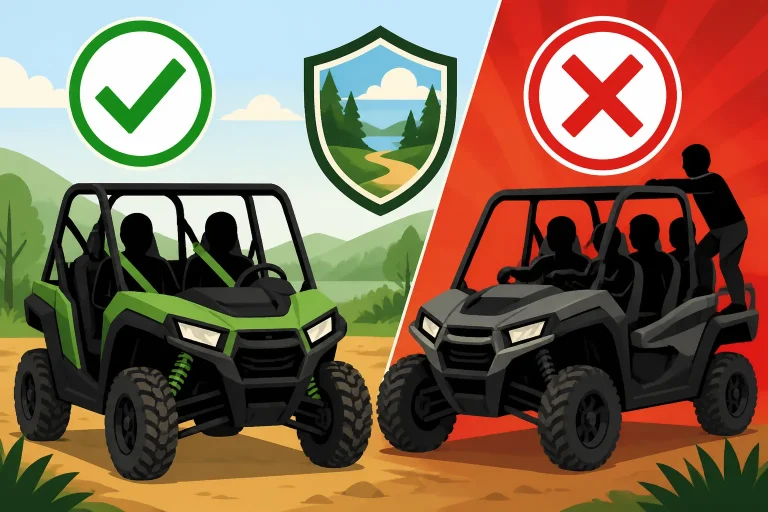
- Check the machine rules. Confirm allowed vehicle types, passenger arrangements, and any equipment requirements. A machine that can carry a passenger does not automatically mean that every passenger arrangement is allowed.
- Recheck conditions before departure. Access can change because of closures, weather, maintenance, or park operations.
If a park employee gives you a specific instruction that differs from a general summary, ask for clarification and follow the park’s direction while on site. Avoid relying on a friend’s experience from another park or another visit; the rule may be different, or the conditions may have changed.
It is sensible to pack a helmet for every person who may ride, even when you are still confirming details. That avoids the common problem of arriving with one helmet for a two-person machine or assuming a passenger can ride without one. But bringing helmets is only one part of preparation. Check the park’s access rules, required paperwork, and machine restrictions as well.
Finally, keep helmets available during the visit rather than leaving them behind after check-in. If park staff conduct a safety check or you switch riders, each person should have properly fitting gear ready. A simple plan—one helmet per rider, correctly fitted and worn—reduces uncertainty and helps keep the focus on riding safely.
Disclaimer
This article is for general informational purposes only and does not constitute professional advice. Laws, prices and regulations vary by location and change over time. Consult a qualified professional for guidance on your specific situation.