What a Mississippi Deputy Can Ask to See
There’s nothing quite like the freedom of hopping on your ATV or UTV and hitting the trails or exploring private land here in Mississippi. But let’s be real, that feeling can quickly turn to anxiety when you see blue lights flashing in your rearview mirror, or a deputy pulls up alongside you. Many riders aren't entirely sure what information they are legally required to provide, or what documents a law enforcement officer can actually ask to see. This guide aims to clear up that confusion, giving you a solid understanding of your rights and responsibilities so you can ride with confidence.
Understanding the Legal Framework for ATVs and UTVs in Mississippi
Riding off-road vehicles in Mississippi is a unique experience, largely because our state laws regarding ATVs and UTVs are surprisingly sparse compared to those for cars or trucks. This can lead to a lot of confusion, not just for riders, but sometimes even for deputies who might not regularly deal with off-road situations. Knowing the basic legal landscape is your first line of defense in understanding what a deputy might ask of you.
The Core Off-Road Vehicle Statutes
Mississippi's state law on off-road vehicles, or "ATVs" as they're broadly defined in the statutes, is remarkably brief. In fact, it's primarily confined to just two sections of the Mississippi Code: [Mississippi Code Section 63-31-1] and [Mississippi Code Section 63-31-3]. These sections are foundational, but they mainly focus on what you cannot do. The most critical takeaway for any rider is that [Mississippi Law Flatly Bars ATVs From Public Roads]. This isn't just a suggestion; it's a direct prohibition. When a deputy stops you on a public road, highway, or even the shoulder, this state law is almost certainly the basis for their interaction. They're looking to enforce this core rule, and your ability to ride legally often hinges on being off these prohibited areas. The simplicity of these laws means there aren't many state-level documents or registrations to carry, which can be both a blessing and a curse for riders trying to navigate the rules.
Because the state laws are so narrow, they don't delve into things like mandatory registration for all machines, specific equipment requirements beyond a spark arrestor on public lands (if applicable), or insurance mandates. This void in state legislation often leaves riders feeling adrift, wondering if they're missing something vital. What it really means, however, is that while the state draws a hard line on public roads, the rules for other places, like private land or designated trails, often fall to different authorities or are less explicitly defined by state statute. This ambiguity can sometimes lead to questions from law enforcement who are trying to ascertain whether your riding activity is legal in a given location.
Local Ordinances and Their Impact
While the state law provides a broad prohibition against riding on public roads, the real complexity often comes from local ordinances. Many counties, cities, and towns in Mississippi have taken it upon themselves to create their own rules regarding off-road vehicles, particularly in areas where golf carts or low-speed vehicles might be allowed. What's perfectly legal in one town might get you a ticket just a few miles down the road in another. For example, some [Mississippi Towns With Cart Ordinances] might make specific allowances for golf carts on certain streets, but these ordinances almost never extend to ATVs or UTVs, even if they look similar to a side-by-side.
A deputy's questions might stem directly from these local rules. If you're stopped within city limits, they'll likely be checking to see if your machine, and your riding activity, falls within any local allowances or, more commonly, prohibitions. These ordinances can specify everything from where you can ride, to what hours you can operate, and even age limits for drivers. It’s crucial to remember that local rules can impose additional requirements or restrictions that aren't mentioned in state law. This is why a quick check with the local police or sheriff's department in the area you plan to ride is always a good idea. Failing to understand these hyper-local rules is a common way riders inadvertently find themselves in a bind, leading to a deputy's inquiry about their documentation or intended route.
What Documents a Deputy Can Legally Request
When a Mississippi deputy pulls you over or approaches you while you’re riding, their primary goal is to ensure public safety and confirm that you are operating your machine legally. This often involves asking for certain documents. While [Mississippi Does Not Register ATVs] in the same way it does cars, there are still crucial pieces of paper you should have on hand to demonstrate ownership, identity, and compliance with specific regulations.
Proof of Ownership and Title
Even though Mississippi doesn't have a state-wide registration system for ATVs, proof of ownership is absolutely vital. A deputy will want to know that the machine you're operating belongs to you, or that you have permission to use it. This is especially true if there's any suspicion that the machine might be stolen. For machines built after a certain date – specifically, [ATVs Made After July 2025 Must Be Titled] – you'll need a physical title certificate. This title serves as clear evidence of ownership, just like a car title. It lists the owner's name and the machine's vehicle identification number (VIN). If your machine is newer than this cutoff date, carrying your title, or at least a clear photo of it on your phone, is a smart move.
For older machines, things can get a bit trickier. Many older ATVs and UTVs in Mississippi were never titled, as there was no requirement to do so. However, the state now offers [Mississippi Voluntary Titles for Older Machines] if you wish to obtain one. Whether or not you have a title, a bill of sale is crucial for any used machine. A well-prepared [Mississippi Bills of Sale for a Used Machine] should clearly state the buyer, seller, date of sale, purchase price, and the machine's VIN. This document provides a paper trail for ownership and is often the best proof you have for older, untitled machines. It's often overlooked, but having a legitimate bill of sale can save you a lot of hassle and questions from a deputy, especially if they are trying to verify that the machine isn't reported stolen. For landowners granting permission for someone to ride on their property, a simple, formal document stating that permission can be invaluable; resources like LawDepot offer templates for such agreements, ensuring all necessary parties and details are included.
Rider Identification and Safety Requirements
Just like driving any other vehicle, a deputy will always ask for your personal identification. This typically means a valid driver's license. If you're riding on any public land where a license is required, or if you're crossing a public road (even illegally), having your driver's license readily available is non-negotiable. Beyond just proving who you are, it's about proving you meet the legal requirements to operate an off-road vehicle in certain contexts. [Mississippi Requires a License or a Safety Card] for anyone operating an ATV on public lands, or even if they briefly interact with public roadways in ways that might draw law enforcement attention. If you're a younger rider who doesn't have a driver's license, a state-approved ATV safety course certificate can often fulfill this requirement, demonstrating that you’ve received proper training.
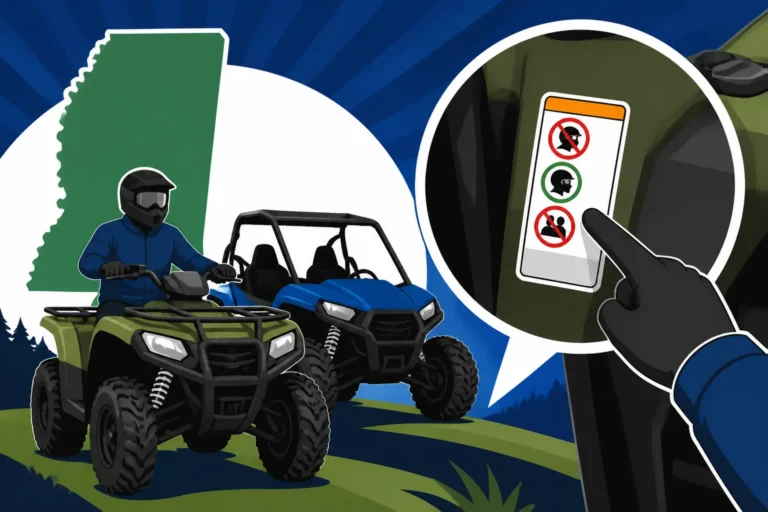
Furthermore, safety equipment is often a point of inquiry, especially for younger riders. Mississippi has specific laws regarding helmets for minors: [Mississippi Helmet Law for Riders Under 16]. If a deputy sees a rider under 16 without a helmet, they will definitely stop to address this. They might ask for proof of age or inquire about the rider’s safety training. Ensuring that young riders are properly equipped and, if necessary, have completed a safety course, not only keeps them safe but also prevents unnecessary interactions with law enforcement. Always be ready to identify yourself and, if applicable, show proof of your ATV safety education.
Situational Documents: Permits and Landowner Permission
Sometimes, the need for documentation depends entirely on where you are riding. If you're enjoying the vast trails of a national forest, you might need a special pass. For example, riding in the De Soto National Forest requires specific authorization, often in the form of [Mississippi National Forest OHV Passes]. A deputy (or a forest ranger, who often has law enforcement powers on federal land) will absolutely ask to see this pass. It’s your ticket to legal access on those trails, and without it, you could be cited. These passes are usually purchased annually and signify that you’ve agreed to abide by the rules of that specific riding area. Always check the rules of any public riding park or forest before you load up your machine.
Perhaps the most important "situational document" for many Mississippi riders is landowner permission. So much of our riding happens on private property, whether it's timberland, farmland, or a friend's hunting camp. If you're on private land that isn't yours, and a deputy stops you, they'll want to confirm you have legal access. [Written Permission From a Southern Landowner] is ideal. A simple, signed note or a more formal agreement stating that you have permission to ride on specific property, perhaps created using a template from a service like LawDepot, can save you a lot of trouble. Without it, you could face trespass charges, even if you had verbal permission. A deputy cannot just take your word for it; they need tangible proof that you're not riding illegally. Having this on hand demonstrates that you’ve done your due diligence and respected property rights.
| Document Type | When a Deputy May Ask for It | Purpose |
|---|---|---|
| Driver's License/State ID | Any stop, especially on public land/roads | To confirm identity and eligibility to operate a vehicle |
| ATV Title (post-July 2025) | For newer machines, to confirm ownership | Proof of legal ownership, especially if machine is new |
| Bill of Sale | For older/untitled machines, or private sales | Proof of legal ownership for machines without a title |
| ATV Safety Certificate | For riders under 16 (or if no driver's license) | Proof of required safety training for young riders |
| National Forest OHV Pass | When riding on designated National Forest trails | Authorization to access specific public riding areas |
| Written Landowner Permission | When riding on private land that isn't yours | Proof of legal access to private property, avoiding trespass |
| Proof of Insurance | In case of an accident, though not always mandated | To cover potential damages or injuries (highly recommended) |
Common Scenarios and Deputy Interactions
Knowing what documents a deputy can ask for is one thing, but understanding the situations that might lead to an interaction is another. In Mississippi, off-road vehicle riders often encounter law enforcement in specific circumstances. Being prepared for these scenarios can make all the difference in how smoothly your interaction goes.
Riding on Public Roads
This is, without a doubt, the most frequent reason a Mississippi deputy will stop an ATV or UTV rider. As we've covered, [Mississippi Law Flatly Bars ATVs From Public Roads], and this includes county roads, state highways, and even most city streets. Many riders mistakenly believe that if a road is unpaved, or if they're just "crossing" a road to get to another trail, it's acceptable. Unfortunately, the law is quite clear. When a deputy sees you on a public road, they're not usually looking for intent; they're looking for compliance with a very straightforward prohibition.
During such a stop, the deputy will first and foremost be verifying your identity and questioning why you are on a public roadway. They'll ask for your driver's license and proof of ownership for the machine. They might inquire about where you're coming from and where you're headed, trying to ascertain if you were intentionally using the public road as a thoroughfare. Expect them to explain the law and likely issue a citation. The [Mississippi Penalties for an Illegal Road Ride] are usually not severe in terms of fines, but the inconvenience and potential for impoundment of your machine can be substantial. It's a frustrating reality for many riders who just want to connect trails, but it's a critical legal line that deputies are tasked with upholding.
Riding on Private Land or Designated Trails
Interactions with deputies on private land or designated public trails tend to be different. Here, the presumption isn't necessarily that you're breaking a primary state law, but rather that you might be violating other regulations or have drawn attention for other reasons. On private property, a deputy might be responding to a complaint, perhaps about noise, property damage, or suspected trespassing. In these instances, proving you have [Written Permission From a Southern Landowner] is your strongest defense. The deputy will ask for your ID and then likely verify your permission by attempting to contact the landowner. If you're on land without permission, you could face trespass charges.
On designated trails, like those in a national forest or a private mud park, the deputy (or park ranger) is often ensuring compliance with park-specific rules. They might ask to see your [Mississippi National Forest OHV Passes] or your park wristband, check for spark arrestors, or verify that younger riders are wearing helmets and possess a [Mississippi Safety Course Certificates]. They might also enforce speed limits, quiet hours, or rules about alcohol consumption, depending on the venue. These interactions are usually about maintaining order and safety within a specific riding area, rather than enforcing a blanket prohibition like the public road ban. Being familiar with and adhering to the specific rules of the trail system you're on will significantly reduce the likelihood of any negative encounter. For private land, having a simple, legally sound permission form, which can be easily generated through services like LawDepot, can alleviate many potential headaches.
Accident or Incident Investigations
No one ever wants to think about it, but accidents happen. If you're involved in an ATV or UTV crash, whether on private land, a trail, or heaven forbid, involving a public road, a deputy will be called to the scene. Their role shifts immediately to investigation. In this scenario, they will absolutely ask for your identification (driver's license or state ID), and they'll want to verify ownership of your machine through your title or bill of sale. They'll also be collecting information for an [Mississippi Accident Reporting for an ATV Crash].
While Mississippi doesn't mandate ATV insurance, a deputy will likely ask if you have it. Having [Why Mississippi Riders Still Buy ATV Insurance] is a smart choice, even if not legally required, because it can cover damages, medical bills, or liability in an accident. The deputy will document the scene, interview witnesses, and determine if any laws were broken leading up to the crash. This is a serious situation where providing all requested documentation and cooperating fully is crucial. Your preparedness with identification, ownership papers, and even insurance information can help streamline a difficult process.
What to Do During a Stop
An interaction with law enforcement, even when you know you’re doing nothing wrong, can be stressful. But knowing how to handle yourself and what to expect can make the process much smoother. Your attitude and preparedness go a long way in shaping the outcome.
Be Prepared and Polite
The best way to navigate a deputy interaction is to be prepared. Before you even head out, ensure you have all your necessary documents stored securely on your person – perhaps in a waterproof bag or a zipped pocket. This includes your driver's license or state ID, proof of ownership (title or bill of sale), and any required permits or written landowner permission. Taking a picture of these documents on your phone as a backup isn't a bad idea, but always aim to have the physical copies.
When a deputy approaches, remain calm and courteous. Turn off your machine, keep your hands visible, and don’t make any sudden movements. Greet the deputy respectfully and await their instructions. They will typically explain why they are stopping you. Listen carefully to their questions and answer truthfully and concisely. Avoid arguing or becoming confrontational. If you don't understand a question, politely ask for clarification. Remember, their primary concern is typically safety and adherence to the law, and a cooperative attitude on your part can significantly de-escalate any tension.
Know Your Rights and the Law
While politeness is key, it’s also important to know your rights. You are generally required to provide identification and proof of ownership if requested by a law enforcement officer. If they ask to search your machine, you have the right to politely decline unless they have a warrant, probable cause, or your consent. However, if they state they have probable cause or a warrant, do not physically resist, but clearly state that you do not consent to the search.
Understanding the specific laws that govern ATVs and UTVs in Mississippi is your most powerful tool. You should know that [Mississippi Law Flatly Bars ATVs From Public Roads]. You should also be aware of any local ordinances in the area you are riding. If a deputy cites a law you believe is incorrect, you can address it in court later, but trying to debate it on the spot is rarely productive. Document everything, including the deputy's name, badge number, and the specific reasons for the stop and any citations issued. If you feel your rights were violated, you can pursue that through the appropriate channels after the interaction is concluded. A little knowledge about what is and isn't permitted can empower you to respond appropriately and protect your interests during any interaction with law enforcement.
Disclaimer
This article is for general informational purposes only and does not constitute professional advice. Laws, prices and regulations vary by location and change over time. Consult a qualified professional for guidance on your specific situation.