Reading a Compliance Label
Oh, the humble compliance label! You might glance at it once and then forget it's even there, tucked away on your ATV or side-by-side. But let me tell you, that little sticker holds a surprising amount of power, especially here in Mississippi, where the rules for off-road machines are getting a bit of an update. If you've ever felt confused about whether your quad needs a title, or struggled to figure out exactly what year your machine truly is, this guide is going to walk you through exactly how to read that crucial compliance label and why it's far more important than just a manufacturing detail.
What is a Compliance Label and Why Does it Matter?
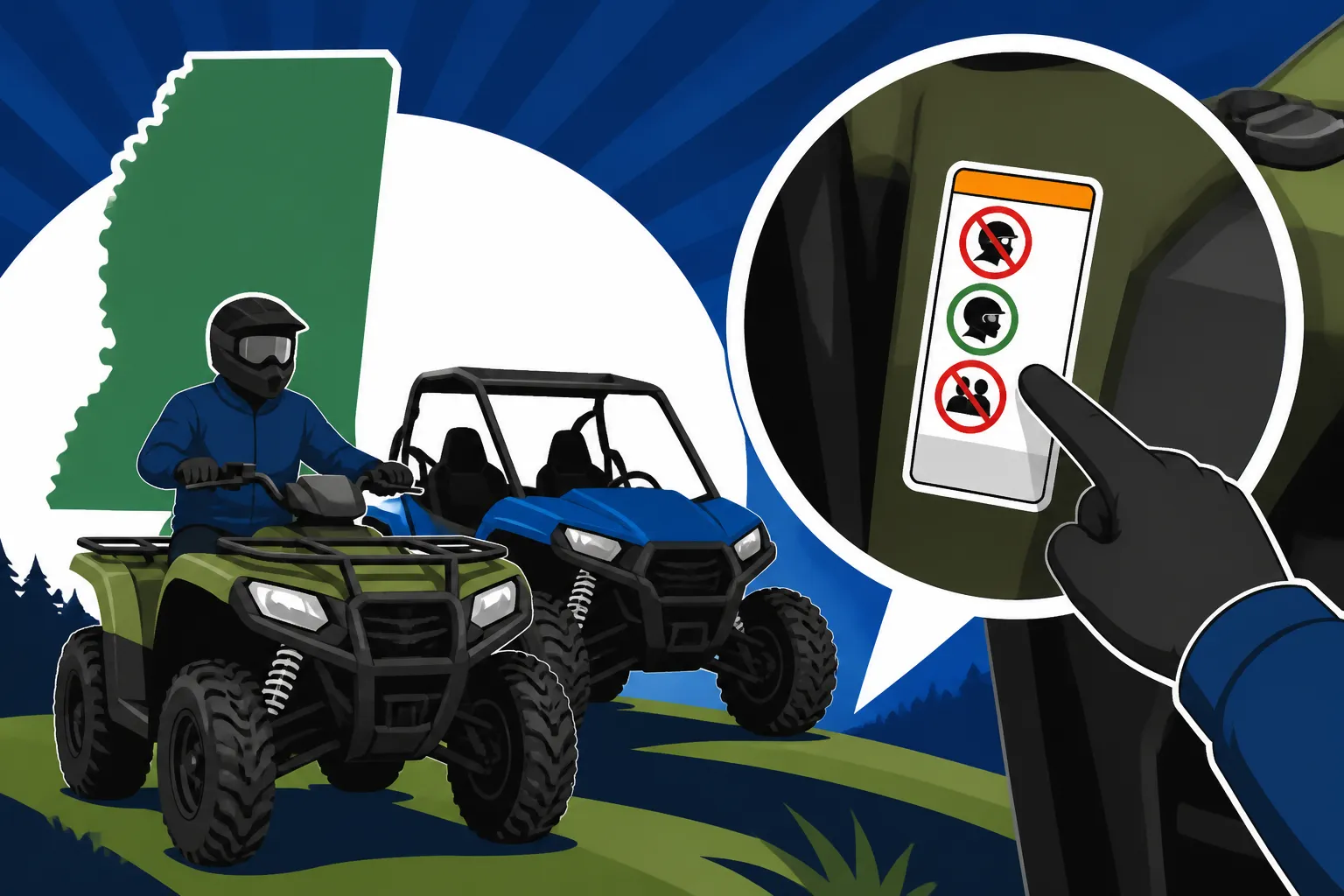
Imagine your ATV or UTV as a mini-vehicle with its own birth certificate and identification card rolled into one small, often metallic, label. That's essentially what a compliance label is. It's not just some random sticker; it's a critical piece of information directly from the manufacturer, certifying that your machine meets certain safety and regulatory standards at the time it was built. Ignoring it means missing out on vital information that can affect everything from titling to resale.
Decoding the Manufacturer's Intent
At its core, a compliance label is the manufacturer's official stamp of approval. It's their way of telling the world (and regulatory bodies) exactly what they built, when they built it, and that it met the standards they set out to achieve. Think of it as a quality control certificate that's permanently affixed to your machine. For most of us, this means knowing we have a legitimate, factory-produced machine. Without it, verifying the authenticity or even the basic details of an off-road vehicle can become incredibly challenging. When you're buying or selling, it's the first place to look for verifiable facts, cutting through any confusion about a machine's origins.
The Mississippi Connection to Your Compliance Label
Now, where does Mississippi come into all of this? Well, our state has made some significant changes regarding the titling of ATVs and UTVs, with [Mississippi ATV Titling Starts July 2025] being a major landmark. The biggest factor in determining if your machine must be titled is its manufacture date. And guess where you'll find that date? You guessed it – on the compliance label. This label works hand-in-hand with your machine's Vehicle Identification Number (VIN), which is also often prominently displayed on the label, to create a clear, traceable history. Without a clear and readable compliance label, proving your machine's age and identity to the county tax collector can turn into a real headache. It’s the definitive proof of your machine’s vintage, which, in Mississippi, matters a whole lot more now.
Key Information You'll Find on a Compliance Label
That small sticker might seem packed with jargon, but once you break it down, each piece of information is quite logical and serves a specific purpose. Understanding these details will empower you to navigate Mississippi's new titling landscape with confidence.
Manufacturer's Name and VIN
One of the most straightforward pieces of information you'll find is the manufacturer's name. This tells you instantly whether you're looking at a Polaris, Honda, Can-Am, or Yamaha. Right alongside that, you'll almost always see the Vehicle Identification Number, or VIN. This is a 17-character alphanumeric code that is unique to your specific machine – no two are alike. It's like the serial number for your ATV or UTV. The VIN is absolutely critical for just about everything: titling, insurance, tracking stolen machines, and even ordering parts. If you ever need to apply for a title, the VIN on your compliance label must perfectly match the VIN stamped on the machine's frame. Any discrepancy, even a single digit, will throw a wrench into the works.
Vehicle Type and Model Information
The compliance label will also typically identify the type of vehicle. It might explicitly state "All-Terrain Vehicle" (ATV), "Utility Task Vehicle" (UTV), or perhaps a specific model name. This is helpful for broadly classifying your machine. While Mississippi's state titling laws don't always differentiate between ATVs and UTVs in terms of requiring a title (it's the manufacture date that rules), knowing the vehicle type can be important for local ordinances or for understanding specific manufacturer recalls or safety bulletins. For example, some small towns might have distinct rules for golf carts versus UTVs, and this label helps clarify where your machine fits in.
Manufacture Date: The Most Crucial Detail for Mississippi
Alright, let's talk about the big one for Mississippi riders: the manufacture date. This is often displayed in a clear month/year format, like "MM/YY" or "Built: MM/YYYY." For machines built in our state, this date is the linchpin that determines your titling requirements. If your machine's compliance label shows it was manufactured after July 2025, then congratulations (or commiserations, depending on your perspective!), your machine falls under the new mandatory titling laws. This means you absolutely must secure a title for it to legally transfer ownership and prove you own it. You can learn more about these requirements in [Mississippi Title Requirements for 2026].
However, if your compliance label clearly states a manufacture date before July 2025, your machine is not subject to the mandatory titling. It might not need a state-issued title, but you can still opt for a [Mississippi Voluntary Titles for Older Machines] to protect your investment and make future sales smoother. This date, printed clearly on the label, is the final word, not when you bought it, not when you first rode it, but when the factory finished building it. The date on your compliance label cuts through all ambiguity about whether your quad or side-by-side [ATVs Made After July 2025 Must Be Titled] or if [Quads Built Before July 2025 Need No Title].
Gross Vehicle Weight Rating and Occupancy Limits
Beyond identification, the label also provides important safety information. You might see a Gross Vehicle Weight Rating (GVWR), which is the maximum operating weight of the vehicle, including the vehicle itself, its passengers, cargo, and any accessories. This isn't just a random number; it's what the manufacturer deems safe for the machine to handle. You'll also typically find occupancy limits, stating how many people the vehicle is designed to safely carry. While Mississippi's state laws don't typically enforce these strictly for off-road use, exceeding these limits can compromise your safety and the machine's performance. Always refer to these numbers for safe operation, especially when carrying passengers or hauling heavy loads.
Tire and Pressure Information
Another common piece of information on a compliance label is the recommended tire size and inflation pressure. This might seem minor, but using the correct tires at the proper pressure is vital for the safe handling and performance of your ATV or UTV. Incorrect tire pressure can lead to poor traction, premature wear, and even blowouts, especially when navigating varied terrain. Adhering to the manufacturer's recommendations ensures your machine performs as intended and helps prevent unnecessary wear and tear on components like axles and bearings.
Where to Find and How to Read Your Compliance Label
Finding your compliance label is usually pretty straightforward, but reading one that's seen years of mud, sun, and grime can be a bit more of an archaeological dig. Don't worry, we've got some tips.
Common Locations on Your Machine
Manufacturers are pretty consistent about where they place these labels, but it can vary slightly by make and model. Here are the most common spots to check:
- On the frame: Often near the front suspension, under the seat, or along the main frame rail, especially on the left side (driver's side for UTVs).
- Under the seat: Lift the seat and look at the frame underneath or on the plastic housing.
- Fender well: Sometimes tucked away on the inside of a fender, particularly on side-by-sides.
- Glove box or console: For UTVs, check inside storage compartments.
- Engine compartment: Less common, but sometimes found near the airbox or battery.
If you can't find it in one spot, don't give up! Look for a metallic sticker, often silver or white, that feels like it's riveted or permanently adhered, not just a paper decal. Take your time, sometimes they're intentionally placed in less exposed areas to protect them, which can make them tricky to spot.
Tips for Deciphering a Worn Label
Years of sun exposure, mud, pressure washing, and just general wear and tear can make a compliance label almost impossible to read. But don't despair! Here are a few tricks that often help:
- Clean gently: Use a mild soap and water solution with a soft cloth to carefully wipe away dirt and grime. Avoid abrasive cleaners or harsh chemicals that could further damage the label.
- Angle of light: Sometimes, shining a flashlight at an extreme angle across the label can help the raised or indented text become visible through wear.
- Rubbing technique: Very carefully, try placing a thin piece of paper over the label and gently rubbing a pencil or crayon over it, much like you would do a grave rubbing. This can sometimes pick up the texture of the numbers and letters.
- Photograph it: Take several high-resolution photos from different angles and with different lighting. You might be able to zoom in and enhance the contrast on a digital image to make out faint details that are hard to see with the naked eye.
The key is patience and gentleness. You don't want to accidentally destroy the last remnants of crucial information.
What to Do if Your Label is Missing or Unreadable
This is where things can get a bit complicated, especially if you're dealing with an older machine or one that has seen a lot of hard use. If your compliance label is completely missing or utterly unreadable, you're going to face challenges when trying to title your machine in Mississippi. The county tax collector needs to verify the VIN and, crucially, the manufacture date.
Without the label, you'll need alternative documentation. For new machines, the Manufacturer's Certificate of Origin (MCO) is the gold standard. For used machines, a clear and comprehensive [Mississippi Bills of Sale for a Used Machine] is absolutely essential. This bill of sale should include the VIN, the stated year of manufacture (even if estimated), and the names and signatures of both buyer and seller. If you're missing an MCO and don't have a solid bill of sale, you might find yourself needing to pursue a [Mississippi Title Bond Procedure]. This is a process where a surety bond is purchased to guarantee ownership, essentially replacing lost paperwork. Resources like LawDepot can be helpful for generating legally sound bills of sale or other necessary documentation, giving you a template to ensure all required information is included for smooth transactions. Having robust paperwork, even if it's generated after the fact to confirm details, can save you a lot of grief.
Practical Implications for Mississippi ATV/UTV Owners
Understanding your compliance label isn't just an academic exercise; it has very real, tangible effects on how you own, operate, and even sell your off-road machine in Mississippi.
Titling Implications: New vs. Old Machines
As we've discussed, the manufacture date on your compliance label is the ultimate decider for state-mandated titling in Mississippi.
- Machines built after July 2025: If your label shows a date of July 2025 or later, your ATV or UTV [ATVs Made After July 2025 Must Be Titled]. This isn't optional. You'll need to go through the proper steps to get a state title from your county tax collector. This process typically involves presenting the MCO (for new machines) or a bill of sale and previous title (for used machines), along with proof of identity and payment for fees like the [Mississippi Title Fee of $9] and the 7% machine tax.
- Machines built before July 2025: If your label indicates a manufacture date before July 2025, your machine is in a different category. While you are not legally required to title it, you have the option to pursue a voluntary title. Many riders find that getting a title for an older machine, even if not mandated, provides significant benefits. It solidifies your proof of ownership, makes the machine easier to sell (as many buyers now expect a title), and can even help with insurance claims by providing clear documentation of the machine's identity. This voluntary titling process is similar to the mandatory one but for older machines, you might rely more heavily on a strong bill of sale or even a [Mississippi Title Bonds When Papers Are Gone] if previous ownership documents are missing.
Buying and Selling Used Machines
When you're in the market for a used ATV or UTV in Mississippi, always make checking the compliance label one of your absolute first steps. The manufacture date can save you from unexpected titling hurdles. If a seller claims a machine is a certain year, and the compliance label contradicts that, you have a red flag. It's a non-negotiable piece of information that helps you verify the machine's true identity and status.
Similarly, if you're selling a machine, be prepared to show the compliance label to potential buyers. A transparent sale builds trust, and having a clear, readable label makes the process much smoother. For both parties, it's wise to use a detailed bill of sale that accurately records the VIN and manufacture date directly from the label. A reliable template, perhaps from a service like LawDepot, can ensure you capture all necessary details, protecting both buyer and seller. This documentation is critical for the new owner when they go to the county office.
Insurance and Financing Considerations
Even though [Mississippi Has No Insurance Mandate] for ATVs, many smart riders still choose to insure their machines to protect against theft, damage, or liability. When you apply for insurance, your provider will absolutely need the VIN and often the exact make, model, and year of manufacture. The information on your compliance label is what the insurance company will use to identify your machine and provide an accurate quote. Any discrepancies could lead to problems down the road if you ever need to file a claim.
If you plan to finance your ATV or UTV, lenders will also require precise identification of the machine. They will typically cross-reference the VIN and manufacture date to ensure they are loaning money against a legitimate and clearly identified asset. A clean compliance label with a verifiable VIN and manufacture date makes the financing process much smoother, as it provides the lender with confidence in the asset's identity. Without this clear identification, some lenders might be hesitant to offer a loan.
| Compliance Label Item | What It Tells You | Mississippi Relevance |
|---|---|---|
| Manufacturer's Name | Who made the machine (e.g., Honda, Polaris, Can-Am) | Essential for general identification and brand-specific information |
| VIN (Vehicle ID Number) | Unique 17-character identifier for your specific machine | Absolutely critical for titling, insurance, and proving ownership |
| Vehicle Type/Model | Whether it's an ATV, UTV, specific model name | Useful for local ordinances, parts ordering, and general classification |
| Manufacture Date | Month and year the machine was built (e.g., 03/2026) | THE MOST IMPORTANT DETAIL for mandatory vs. voluntary titling post-July 2025 |
| GVWR | Maximum safe operating weight (machine + cargo + riders) | Safety information for safe loading and operation |
| Occupancy Limits | Maximum number of passengers the machine is designed for | Safety guideline for proper use and manufacturer liability |
| Tire/Pressure Info | Recommended tire sizes and inflation pressures | Critical for safe handling, performance, and tire longevity |
Disclaimer
This article is for general informational purposes only and does not constitute professional advice. Laws, prices and regulations vary by location and change over time. Consult a qualified professional for guidance on your specific situation.