Mississippi ATV Clubs Worth Joining
Finding a good ATV club in Mississippi can be harder than finding a place to ride: groups change, social pages go quiet, and a big online membership count does not guarantee safe, well-planned outings. This guide explains which kinds of riding communities are worth your time, where to look around the state, and how to check that a group fits your machine and riding style.
Which Mississippi ATV clubs are worth joining
The best club for you is the one that regularly organizes rides you can actually attend, welcomes your type of machine, and treats safety and land access seriously. A nearby, well-run group can be more useful than a large statewide community if it helps you find riding partners and understand local trail conditions.
Rather than assuming every group calling itself a club has the same purpose, look at what it does in practice. Some communities are mainly social; others organize trail days, charity rides, family outings, or maintenance projects. Ask what a typical event looks like before paying dues or committing to a long drive.
Local riding clubs and community groups
A local riding club can be a good fit if you want recurring rides and familiar faces. Members may share practical knowledge about trailheads, trailer parking, wet-weather conditions, and the etiquette locals expect. That kind of informal help can make a first outing much less stressful, especially if you are new to riding in Mississippi.
Some groups operate more casually through social media or group chats rather than formal memberships. That can work well for coordinating a Saturday ride, but check whether the group has clear expectations about meeting places, pace, children, passengers, and who is responsible for checking land access. A friendly page is not automatically a reliable ride organizer.
Before joining, look for evidence of recent activity: ride announcements, post-ride updates, or replies to questions from newcomers. Ask whether the group rides ATVs, side-by-sides, or both. A club centered on narrow trails may not be suitable for a wide UTV, while a group built around mud parks may not match someone looking for a relaxed forest ride.
Event-focused and charity riding groups
If you enjoy meeting people without needing a formal club commitment, look for organized poker runs, charity rides, and park events. These can be a useful way to meet local riders, compare machines, and see how an organizer handles sign-in, route information, and safety reminders. The calendar can vary, so check for recent announcements rather than relying on an old event listing.
Read [Mississippi Poker Runs and Charity Rides] for more on what these events can involve. Before you go, find out whether the event is on private property, a permitted route, or designated public trails. A charitable purpose does not itself grant permission to ride across land or along a public road.
A well-organized event should make the basics clear: where to check in, what machines are allowed, whether children can participate, and what happens if weather changes the route. If the details are vague, ask before hauling your machine. That simple step can prevent a frustrating drive to a closed gate or an event that is not appropriate for your vehicle.
Where to find riding communities across Mississippi
Mississippi does not have one riding scene with a single style. The trails and riding areas around the De Soto National Forest, Bethel, and private parks attract different riders and may have different access conditions. Treat each location as a place to meet potential riding partners—not as proof that a particular club is currently active there.
Start with established riding areas
Riding areas can be natural meeting points because riders often share questions about access, trail conditions, machine limits, and trip planning. For example, [Bethel OHV Trails in Mississippi] can help you understand the public trail setting near Bethel, while [Red Creek Off-Road in Mississippi] offers a place to investigate private-park riding and events. Check each location’s current rules and conditions before you travel.
The De Soto National Forest is another area riders may discuss when planning a trip. Start with [Mississippi National Forest Riding Explained] to understand why designated routes, access rules, and current conditions matter. A club member’s suggestion is helpful, but it should not replace checking the managing agency’s information or posted signs.
When you visit an area, notice how people interact at the staging area. Are riders willing to answer a newcomer’s questions? Are group leaders clear about where the ride goes and what machines fit? Do people respect closures and keep speeds appropriate near other visitors? Those everyday details can tell you more about a community than its promotional posts.
Use local networks to discover current groups
A practical way to find active clubs is to ask at a riding area, check event notices, and look for recent conversations in local rider communities. You can also ask an experienced rider, local repair shop, or event organizer whether they know of groups that welcome newcomers. Ask for a recent ride date and the group’s preferred way to share updates.
Online trail-planning tools such as onX Offroad may help you prepare for a ride and discuss route options with other riders. Use onX Offroad as a planning aid, not as permission to ride: confirm that the route is open, legal for your machine, and appropriate for the day. Access can change with closures, weather, private-property boundaries, or local rules.
If you use onX Offroad to plan a route, compare what you see with official trail information and signs on the ground. A line on a map does not mean a trail is open to every vehicle. For a first group outing, ask the organizer to explain the route, expected pace, meeting point, and what to do if you get separated.
How to choose a club that fits your ride
A club may look appealing online and still be a poor match for your schedule, machine, or comfort level. Ask specific questions before joining or showing up. A responsible group should be able to explain its rides clearly without making you feel foolish for checking.
Compare clubs by the details that affect your day
The table below is a quick way to compare the kinds of communities you may encounter. It is not a ranking: the right choice depends on whether you want regular rides, occasional events, family outings, or a chance to help maintain access.
| Community type | Often a good fit for | Questions to ask |
|---|---|---|
| Local riding club | Riders seeking recurring meetups and familiar companions | How often do you ride, and where do you usually meet? |
| Social rider group | People who want informal ride coordination | Who confirms access and conditions before a ride? |
| Charity ride or poker run | Riders who enjoy organized events and a set gathering | What machines, ages, and experience levels are suitable? |
| Trail volunteer community | Riders willing to help with stewardship and maintenance | Who manages the land, and what work is permitted? |
| Private-park riding community | Riders focused on a particular park or event scene | What are the park’s current rules, fees, and operating conditions? |
Consider the practical fit, too. If a ride starts several hours away, the distance may turn a casual Saturday into a tiring weekend. If your machine is a wide side-by-side, ask about width restrictions and trail suitability instead of assuming that an ATV group accepts every vehicle. The same goes for youth riders, passengers, and beginners.
Ask about pace and difficulty. Some groups are comfortable stopping for new riders, while others prefer longer, faster loops. Neither is automatically better, but you should know which one you are joining. If you are unsure, request a beginner-friendly outing or ask whether you can attend as a guest before becoming a member.
Look for signs of responsible riding
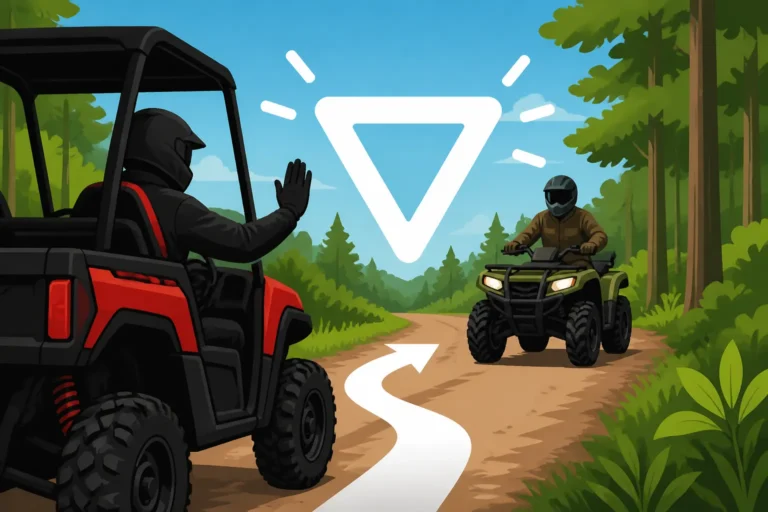
A good group respects land access, posted closures, and other trail users. It should not pressure members to ride public roads illegally, cross private land without permission, or ignore a closed gate. For a useful overview of shared-trail behavior, see [Mississippi Trail Etiquette Locals Expect].
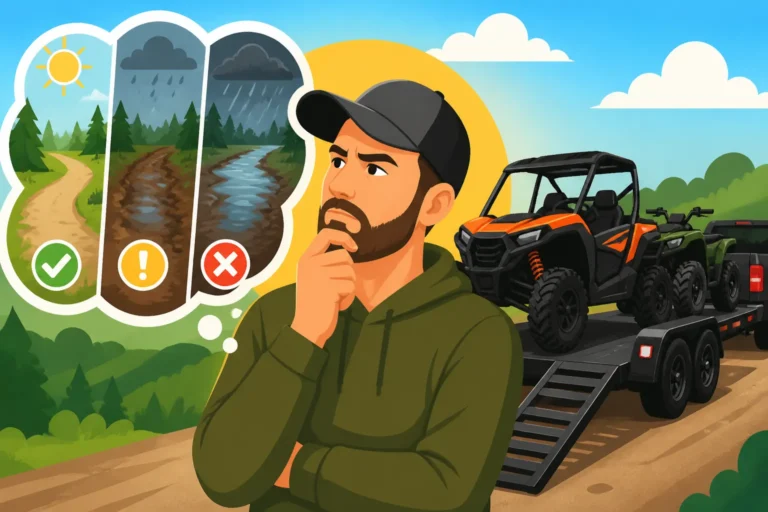
Weather habits matter in Mississippi. Heavy rain can turn a manageable route into deep mud, damage trails, or lead to a closure. Ask who checks conditions before a ride and whether the organizer changes plans when a route is unsafe or closed. [Mississippi Trail Conditions After Rain] is a helpful place to consider why a rainy forecast should change your planning.
Pay attention to how a group handles basic safety conversations. Riders should be able to discuss helmets, protective gear, communication, recovery equipment, and what to do if someone has a mechanical problem. You do not need a club to make every decision for you, but a group that treats safety questions as a nuisance may not be a good match.
How to join your first Mississippi group ride
You do not need to show up knowing everyone or owning every piece of specialized equipment. You do need to arrive with a clear plan, a machine suited to the ride, and a willingness to follow the organizer’s instructions. A little preparation makes the first meeting feel far less awkward.
Ask the organizer before you load up
Send a short message that says what you ride, where you are coming from, and whether you are new to the area. Then ask where the group meets, what kind of terrain to expect, whether the route suits your machine, and what time riders expect to return. If the answer is simply “come on out,” ask for a little more detail before you commit to the drive.
Confirm the access rules and any required permits or fees. This is particularly important when a ride is planned on public land, a managed trail system, or private property. Do not assume that an invitation from a club member substitutes for permission from the land manager or owner.
Ask what to bring and what the group considers essential. A helmet, water, weather-appropriate clothing, basic tools, and a charged phone are sensible starting points, but the route and conditions may call for more. If you are considering an overnight outing, [Mississippi Trails With Camping] can help you think through how camping access fits into ride planning.
Make the first ride easier on yourself
Arrive with enough time to unload, check your machine, and meet the organizer before the group leaves. A quick check of tires, fuel, lights, and controls can help you catch small problems while you are still at the staging area. Let the leader know if you are new, unfamiliar with the route, or worried about keeping pace.
Stay with the group’s instructions, leave room between machines, and avoid trying to prove yourself on the first outing. If the pace feels uncomfortable, say so at a safe stop. It is better to adjust the plan than to ride beyond your ability or get separated in unfamiliar terrain. Experienced riders generally appreciate an honest question more than a preventable breakdown.
Afterward, thank the organizer and ask how the group shares future ride details. You can also ask whether members take part in trail cleanups or other volunteer efforts. [Mississippi Trail Volunteer Days] is relevant if you want to contribute to the places where you ride, not just use them.
A sensible way to make your choice is to attend one well-described event, see how the group handles access and safety, and decide whether you would ride with them again. For planning future outings, onX Offroad can help you discuss routes, but always check current trail rules and closures through the appropriate land manager. A club is worth joining when the people, pace, and riding habits make your time on the trail safer and more enjoyable.
Disclaimer
This article is for general informational purposes only and does not constitute professional advice. Laws, prices and regulations vary by location and change over time. Consult a qualified professional for guidance on your specific situation.