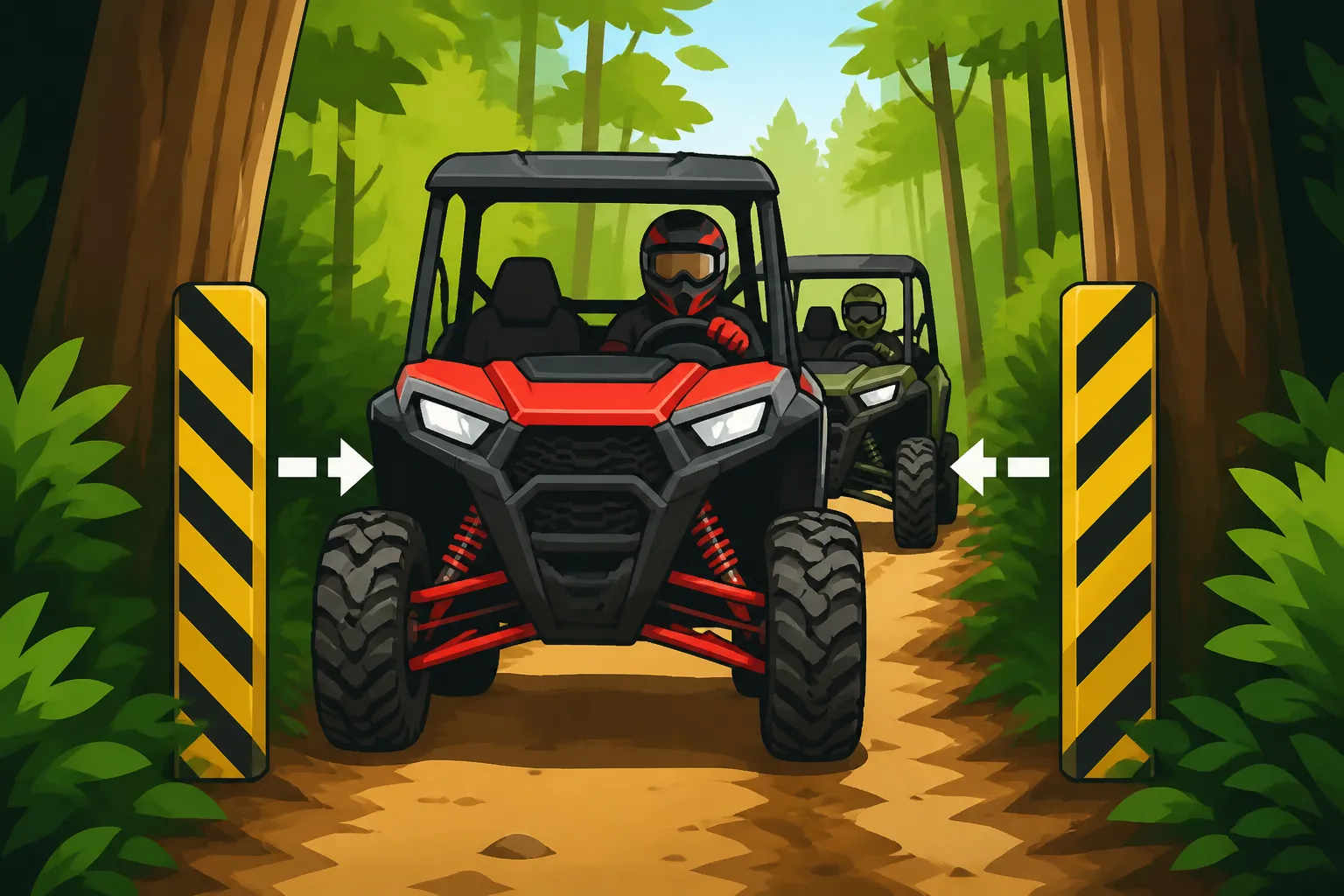
Mississippi Trails With Width Limits
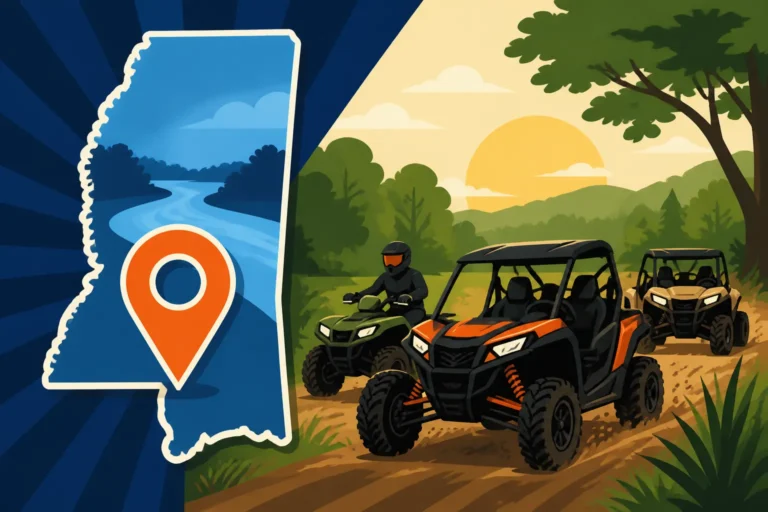
A machine that fits comfortably on your trailer may still be too wide for the trail you planned to ride. In Mississippi, width limits can determine whether an ATV or side-by-side is allowed on a particular route, and a trail’s rules are not the same as a machine’s road classification. This guide explains what to check before you load up.
Why Mississippi ATV trail width limits matter
Trail limits are not the same as vehicle classifications
A width limit is a trail-access rule: it describes the maximum machine width permitted on a particular route or riding area. It does not automatically tell you whether your ATV or UTV is legal on public roads, nor does a machine’s legal classification guarantee that it can use every trail.
That distinction matters most when choosing a side-by-side. A UTV may meet a state definition for a recreational vehicle and still be too wide for a narrow trail. Likewise, an ATV that seems compact can exceed a trail’s limit if it has wider wheels, aftermarket suspension, or other modifications.
For a broader look at where width restrictions apply, see [Mississippi Trails With Width Limits]. And if you are comparing a UTV with a trail’s permitted vehicle types, [Mississippi Trails That Allow Side-by-Sides] is a useful companion topic. Treat each route’s posted rules as the final word for that ride, rather than assuming one machine’s access applies across an entire forest or park.
A listed width is a limit, not a target
When a trail is described as suitable for machines 50 inches wide or narrower, a machine that measures exactly 50 inches may leave little room for uncertainty. Tire bulge, wheel changes, accessories, and the way a manufacturer states width can all complicate the comparison.
Check the machine’s specifications and ask the riding area how it applies its rule. If the policy is unclear, don’t assume that a near-match will be accepted. A ranger, gate attendant, or park manager can clarify whether the limit is based on the manufacturer’s stated width or another measurement. That quick check is much easier than arriving with a trailer full of machines that cannot enter.
Also remember that posted rules may differ between routes at the same location. A trail system can have a general vehicle limit, individual routes with narrower restrictions, or designated areas meant for different kinds of machines. Before riding, confirm which specific trails are open to your vehicle.
Why narrow trails can be a poor fit for wide machines
Width rules help match machines to the trail corridor. A narrow route may pass between trees, cross a tight bridge, or include turns that leave little room on either side. A wider machine can be difficult to maneuver there, even if the trail looks open at the entrance.
It can also create problems for other riders. On a tight section, a wide UTV may block the route while its driver tries to turn around or pass another group. The issue is not just whether the machine can physically squeeze through. It is whether the route is designed and authorized for that machine.
If you are unsure about your setup, compare the manufacturer’s specifications with the published restriction, then contact the land manager or riding area. Do not rely only on a photo, a forum comment, or a map line that does not clearly show vehicle rules.
Bethel OHV Trail and the 50-inch limit
What to know before taking a machine to Bethel
Bethel OHV Trail in the Holly Springs National Forest is associated with a 50-inch width limit, so it is especially important to check a machine’s fit before heading there. The trail system is often discussed as a destination for narrower ATVs and other machines built for restricted-width routes. See [Bethel's Width Limit in Mississippi] for more on the specific restriction.
A width limit can rule out many full-size side-by-sides, even if they are otherwise well suited to off-road riding. If your machine is close to the threshold, confirm its width and ask the appropriate forest office about the current access rules. Do not assume that a trail description from a previous season covers today’s routes or conditions.
Bethel is also described as having 43 miles of trail built for 50-inch machines. The distance is useful for planning, but it should not be read as a promise that every route will be open on every visit. Weather, maintenance, seasonal restrictions, and land-manager decisions can affect access. [Bethel's 43 Miles Are Built for 50-Inch Machines] provides additional background on the system.
How to check your ATV or UTV width
Start with the owner’s manual or manufacturer’s specification sheet. Look for the stated overall width, and make sure you are checking the exact model and configuration. Two versions of a model may have different wheel, tire, or suspension setups.
Then inspect modifications that could change the machine’s dimensions. Wider aftermarket wheels or tires, wheel spacers, and some suspension changes can make the vehicle wider than its original specification. Measure carefully if you need to, but ask the trail operator how it interprets the measurement before relying on your own estimate.
A useful pre-trip check looks like this:
- Find the width listed for your exact make, model, and trim.
- Note any changes to the tires, wheels, spacers, or suspension.
- Compare the information with the trail’s posted limit.
- Contact the land manager if the machine is near the limit or the measurement method is unclear.
- Recheck route access and closures before leaving home.
Keep the measurement or specification handy when you call. Saying “it’s a small side-by-side” is less helpful than giving the exact model and stated width.
What maps can and cannot tell you
A map can help you plan a route, find a trailhead, and understand how trails connect. Apps such as onX Offroad can be useful for organizing a ride and reviewing mapped routes, but a digital map should not replace official rules or current closure notices. A route appearing on a screen does not, by itself, establish that your machine is permitted there.
Use onX Offroad as one planning reference, then compare what it shows with the relevant land manager’s current information. Pay attention to whether the map distinguishes between vehicle types, trail widths, and seasonal closures. When those details are absent or unclear, call ahead rather than guessing.
This extra step is worthwhile for a group ride. If one person arrives in a machine that exceeds the limit, the group may have to split up, change plans, or skip the trail entirely. Confirming each vehicle’s eligibility before departure avoids that frustrating surprise.
Choosing a trail for your machine
Match the route to the vehicle, not just the destination
When browsing [Mississippi Trails With Width Limits], separate trails by the kind of machine they can accommodate. A narrow ATV may have access to routes that exclude a full-size UTV. Conversely, a wide machine may be better suited to a private riding area or route that explicitly permits it.
Before choosing a destination, make a quick comparison:
| What to check | Why it matters | What to do |
|---|---|---|
| Maximum permitted width | Determines whether your machine is eligible | Compare the rule with the exact model specification |
| Vehicle types allowed | A width limit may not be the only restriction | Confirm whether ATVs, UTVs, or both are permitted |
| Route-specific rules | Different trails can have different access conditions | Check the rules for the route you plan to ride |
| Current closures | A mapped trail may be closed temporarily | Review land-manager updates before driving |
| Machine modifications | Added width can change eligibility | Include tires, wheels, and spacers in your check |
| Pass or permit requirements | Access may involve separate conditions | Confirm what is required for your specific riding area |
A route that works for a friend’s compact ATV may not work for your UTV. Even two machines from the same manufacturer can have noticeably different dimensions. Get the model details from every rider in your group before settling on a trail.
Confirm access rules and passes separately
Do not assume that paying for or holding a pass overrides a width restriction. A pass may authorize access to certain trails or cover a particular riding area, while the trail’s vehicle-size rules still apply. Review [Mississippi Forest Pass Coverage] and [The 50-Inch Width Limit Written Into the Pass] to understand why access and vehicle eligibility need to be checked separately.
When you contact a forest office or riding area, ask a specific question: “Is this exact model, with this stated width, allowed on the route we plan to ride?” Also ask whether the restriction applies to the entire system or only certain trails. A clear answer can prevent confusion at the entrance.
If you are visiting from another state, do not assume that a permit or sticker from home substitutes for local requirements. Rules can differ by land manager and riding location. Confirm the Mississippi requirements for the place you intend to ride, including any pass, safety, or vehicle restrictions.
Use mapping tools as a planning aid
onX Offroad can help you review routes and think through a day’s ride, especially when you are coordinating a group or traveling to a trailhead you have not visited before. Use it to support planning, not to make the final call on legal access. Official signs and the land manager’s current instructions take priority.
A practical approach is to use a digital map to identify the area and route, then verify the route’s width and vehicle rules through official information. Save the relevant trailhead details before leaving, particularly if you expect limited cell service. If the information conflicts, pause and ask the land manager rather than choosing the version that is most convenient.
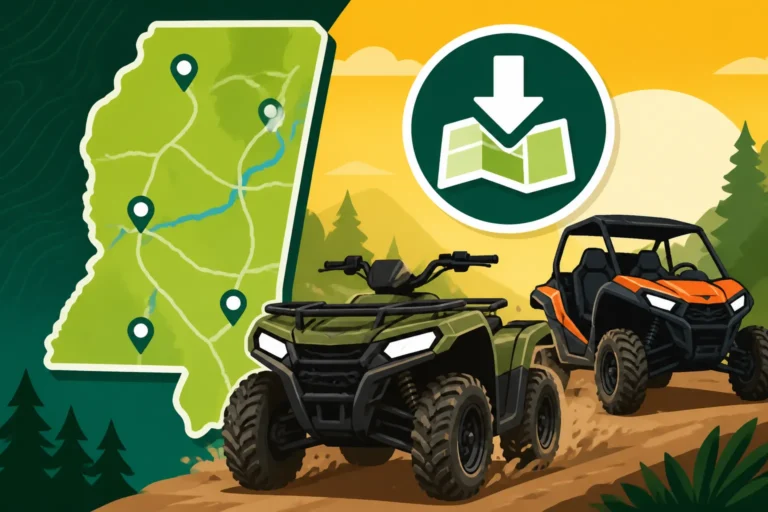
For additional preparation, use [Mississippi Trail Map Downloads] alongside official route information. And before loading the trailer, review [Checking Trail Conditions Before You Load the Trailer]. Conditions and access can change, so a map you checked weeks ago may not reflect the situation on your riding day.
A pre-ride checklist for width-restricted trails
Before you leave home
Start with the vehicle, not the destination. Confirm the exact model and width for every ATV or UTV in your group. If someone has installed wider tires, wheel spacers, or other modifications, account for those changes and ask the riding area whether they affect eligibility.
Next, verify the trail’s rules directly. Check the maximum width, permitted vehicle types, pass requirements, and any route-specific restrictions. If the information is vague, call the land manager or park operator. A quick conversation can clarify whether the rule applies to the whole trail system or only particular routes.
Finally, check for closures and weather-related updates. A route that is normally open may be affected by rain, maintenance, or seasonal management. [Mississippi Trail Conditions After Rain] offers related guidance, while [Mississippi Trail Etiquette Locals Expect] is helpful for preparing to share narrow routes respectfully.
At the trailhead
Read the signs before unloading or entering. Rules posted at the site may provide details that are missing from an online description, including which direction to travel, which routes are open, or which machines are allowed. If something does not match what you expected, stop and ask before proceeding.
Stay on the authorized route. Riding around a barrier or taking a bypass to avoid a narrow section can create safety and access problems, and may put you on a route that is closed or restricted. If your machine cannot safely fit through a section, turn around only where it is safe and permitted, or contact the land manager for direction.
Within a group, keep the narrowest route’s restriction in mind. Do not let a larger machine lead the group onto a trail that it cannot use. Agree on a plan before setting out, including what to do if riders need to separate or a trail is unexpectedly closed.
If your machine is close to the limit
When a machine is near the stated maximum, treat the situation as a reason to verify—not as permission to hope it will be accepted. Bring the exact model information, explain any modifications, and ask the operator how width is determined. If you cannot get a clear answer, choose a route that plainly allows your machine.
That may mean finding a wider trail or a riding area with rules designed for full-size side-by-sides. It is better to adjust the plan at home than to discover the mismatch at the gate after a long drive. For Bethel and other restricted-width systems, a careful check is part of planning the ride, just like checking fuel, straps, and weather.
Disclaimer
This article is for general informational purposes only and does not constitute professional advice. Laws, prices and regulations vary by location and change over time. Consult a qualified professional for guidance on your specific situation.