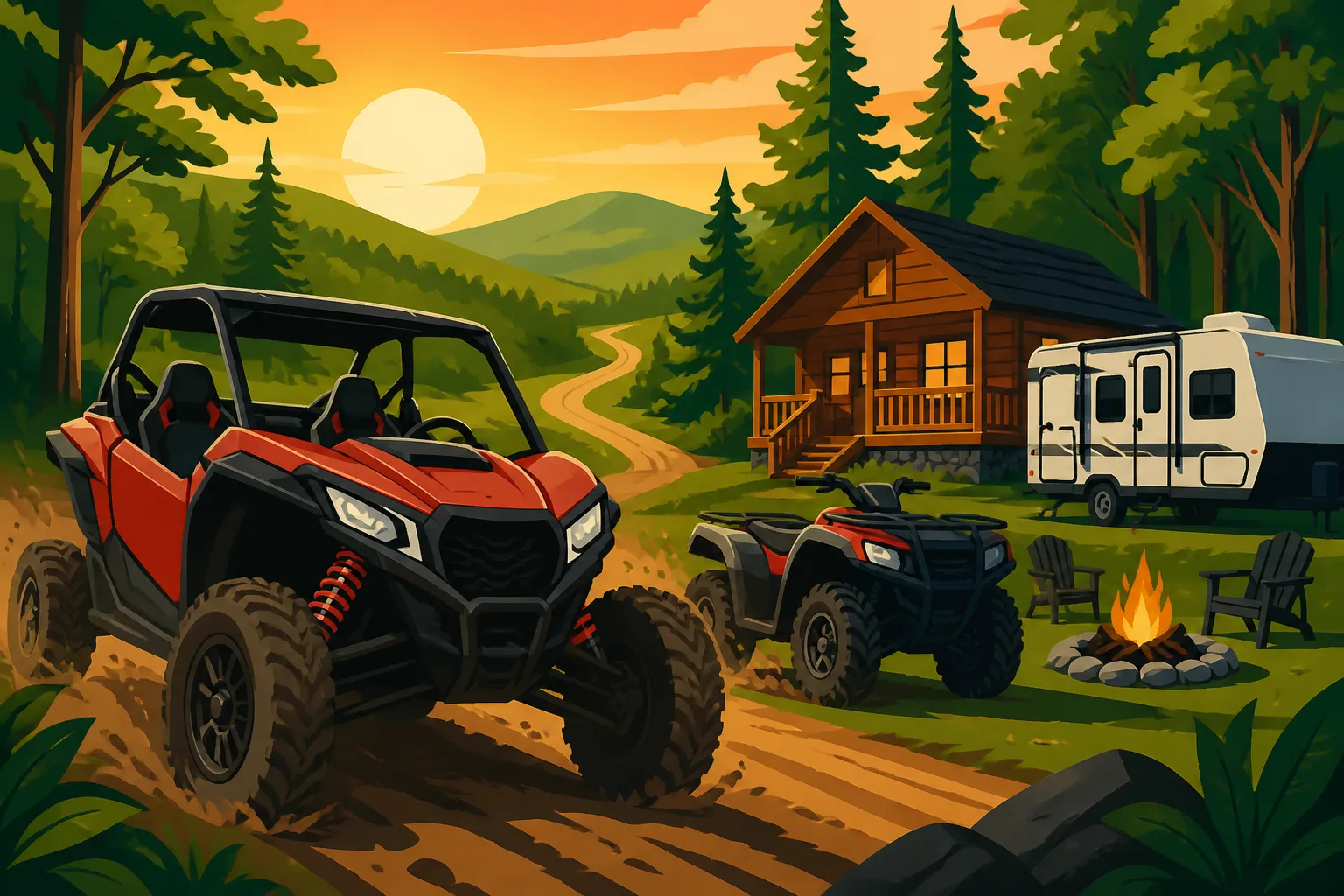
Red Creek’s Cabins and RV Sites in Mississippi
A weekend at Red Creek Off-Road can be more relaxing when you know where you’ll sleep, how your machine will get from the campsite to the riding area, and what to confirm before you arrive. Cabins and RV sites can simplify a muddy riding trip, but availability, amenities, and park schedules need checking before you hitch up. This guide helps you plan the stay without relying on assumptions.
What to Know About Staying at Red Creek Off-Road
Cabins and RV sites serve different kinds of trips
A cabin can make a riding weekend easier if you would rather not bring a tent or set up camp after a long drive. It may also be a welcome option for a mixed group: some people can ride while others prefer a more comfortable place to rest. But do not assume that every cabin has the same layout or supplies. Before reserving, ask what is included, what you need to bring, and whether the unit is close to the riding area or requires a separate trip by vehicle.
An RV site suits riders who already travel with a camper and want to keep their sleeping arrangements familiar. It can be convenient for families carrying riding gear, food, and spare clothes, especially when a muddy day means everyone needs a dry place to change. Still, an “RV site” does not automatically tell you whether hookups are available, what kind of vehicle fits, or whether the site can accommodate both a camper and a trailer carrying your ATV or UTV. Confirm those details for the exact site you are considering.
If your group has different preferences, decide early whether staying together matters more than having everyone use the same type of accommodation. One household might prefer a cabin while another brings an RV. Ask the park whether those options can be booked for the same dates and how far apart they are. A quick call can prevent the awkward surprise of discovering that your group is split up or that your trailer has nowhere suitable to park.
For a broader look at what to check when comparing lodging near riding areas, see [Mississippi Riding Areas With Cabins Nearby] and [Mississippi Riding Areas With RV Hookups]. Those topics are useful starting points, but the park itself is the place to confirm the exact amenities and rules for your planned stay.
Treat the reservation as a separate part of trail planning
A place to sleep does not automatically mean you can ride on the dates you want. Red Creek’s operating schedule and lodging availability are separate details to verify. The park information associated with [Red Creek Off-Road Opens Friday and Saturday Only] and [Why Red Creek Off-Road Is Closed Sundays] points to a schedule riders should check carefully before building a trip around a Sunday ride or a multi-day stay.
That distinction matters when you are planning a weekend. A cabin reservation might cover dates when the riding area is not open for riding, or your group might expect a full Sunday on the trails when that is not part of the usual schedule. Ask which days your reservation covers, when guests can arrive, when riding is permitted, and whether lodging guests have access outside public riding hours. Get the answers directly from the operator rather than relying on an old social post, a map listing, or another rider’s recollection.
The park information also flags a two-night minimum for cabins. Check the exact policy and how it applies to your dates before you book, especially if you are hoping for a one-night stop or are traveling around work and school schedules. [Red Creek's Two-Night Minimum in Mississippi] has more detail on that planning issue. If your trip cannot fit the minimum, ask whether another lodging option is available rather than assuming an exception will be made.
Confirm what the park means by a cabin or RV site
Lodging labels can sound more comprehensive than they are. A cabin may simply provide an indoor place to sleep, while an RV site may offer only a place to park. Neither description, by itself, confirms that you will have a kitchen, bathroom, bedding, electrical service, water, sewer access, or a designated spot for your trailer. Ask about each item that would affect your group’s comfort or safety.
Think through your actual weekend. If you have young children, an older family member, or someone who needs a private bathroom, those needs should be part of the first conversation. If your group plans to cook, ask whether cooking equipment is supplied or whether you need to bring a camp stove and utensils. If you rely on electricity for medical equipment or temperature control, confirm that the specific accommodation supports it and bring a backup plan where appropriate.
A short written checklist helps avoid miscommunication:
- Confirm the accommodation type and dates.
- Ask what furniture, bedding, kitchen items, and bathroom facilities are provided.
- Ask about water, power, and any RV hookups for the specific site.
- Check whether the riding machine and trailer can be parked nearby.
- Confirm arrival, departure, and riding access times.
- Ask about quiet hours, pets, guests, and cleanup expectations.
- Save the operator’s answers and reservation details where your group can find them.
Choosing Between a Cabin, RV Site, and Other Lodging
Compare the whole trip, not just the sleeping space
The right option depends on more than whether you prefer a bed or a camper. Consider your travel distance, how much equipment you are hauling, the number of people in your party, and how much setup you want to do after arriving. A cabin can reduce the amount of camping gear you pack, while an RV lets you bring a familiar sleeping space and keep supplies organized. Either can be a poor fit if your trailer does not have enough room or if the site’s facilities do not meet your needs.
| Option | May suit you if | Confirm before booking |
|---|---|---|
| Cabin | You want an indoor place to rest without bringing a camper | Sleeping arrangements, bedding, bathroom, kitchen items, arrival details, and parking |
| RV site | You travel with a camper and want to use your own setup | Hookups, site dimensions, vehicle and trailer space, water access, and waste arrangements |
| Tent or other camping | You prefer a simpler setup or the other options are unavailable | Whether it is permitted, where it is located, facilities, weather exposure, and park rules |
| Off-site lodging | You want a wider choice of rooms or services | Driving distance, check-in logistics, secure trailer parking, and park opening schedule |
Use the table as a question prompt, not as a promise about what Red Creek provides. The details can vary by accommodation and may change, so verify the specific site rather than relying on the broad category.
There is also a practical difference between “close to the trails” and “ready to ride.” Ask whether your machine can be ridden directly between the lodging area and the riding area, or whether it must be trailered or transported. Find out where you can unload, whether trailers can stay at the site, and if there are restrictions on moving machines around after hours. These are the details that can shape your whole first morning.
Match lodging to your group’s routine
Families often need a different plan from a group of friends arriving with one truck and several machines. A family may prioritize a predictable place to sleep, somewhere to store dry clothes, and a manageable routine for children. A riding group may care more about trailer space, a place to clean up after a muddy day, and whether the accommodation can hold everyone comfortably. Talk through those needs before you reserve so one person is not making assumptions for the whole group.
For an RV trip, map out the full vehicle arrangement: tow vehicle, camper, machine trailer, and any extra vehicle. A site that fits the camper may not also accommodate the trailer, and parking a loaded trailer elsewhere could create a hassle if access is restricted or distances are longer than expected. Ask whether the park has a designated place for trailers and whether you need to include its size or type when you book.
Cabins can simplify packing, but they do not eliminate the need to bring riding essentials. You will still want helmets, protective clothing, rain gear, towels, dry shoes, and a way to separate muddy equipment from clean bedding. If you are traveling with children, pack extra clothing and snacks where they are easy to reach. After a wet ride, a dry change of clothes can make the difference between a pleasant evening and a miserable one.
Have a backup plan for weather and availability
Outdoor trips in southern Mississippi can be affected by rain, heat, and muddy ground. A wet forecast may change trail conditions or influence whether the park can operate as planned. A cabin can give you a more sheltered place to regroup, but it cannot guarantee the riding area will be open. Ask what happens if weather affects riding during your reservation and whether lodging and riding policies are handled separately.
If your first-choice accommodation is not available, decide which compromise your group can tolerate. You might choose an RV site instead of a cabin, travel on different dates, or stay off-site and drive in for riding. Do not book a substitute without checking trailer parking, route access, and the park’s schedule. A lower-effort option on paper can become inconvenient if it adds a long morning drive or leaves your machine and trailer in an unsuitable place.
Keep a second plan for food, fuel, and downtime too. Do not assume a nearby store will be open when you arrive or that the park provides meals or supplies. Bring enough drinking water, snacks, and basic necessities to cover delays. If you use a map app such as onX Offroad to organize your wider route, remember that a map is a planning aid, not confirmation that a road or trail is open to your vehicle. Check directions and access with the park before setting out.
Planning Your Ride Around the Stay
Check the operating schedule before setting travel dates
The most important scheduling question is simple: on which days can you ride? A lodging reservation and a riding day are not interchangeable. Confirm the park’s current operating days, arrival window, riding hours, and any seasonal changes before booking transportation or taking time off work. [Red Creek's Hours in Mississippi] is a helpful related topic, but call the operator for the details that apply to your specific dates.
Build your itinerary with enough breathing room. If you plan to arrive after a long drive, allow time to check in, unload safely, and get settled before riding. If you have to leave early on your final day, avoid assuming you can squeeze in a full ride and pack up without a rush. A relaxed schedule leaves room for weather delays, a mechanical check, or a child who needs a break.
For a group coming from different parts of Mississippi, set one clear arrival plan. Decide who is responsible for checking in, who has the reservation information, and whether everyone should meet at the lodging area or another designated location. If a vehicle is delayed, the rest of the group should know the park’s rules for arriving separately and where they can wait without blocking access.
Prepare for trail conditions and navigation
Before unloading, ask which riding areas are open and whether any routes are closed or restricted. Conditions can change after rain, and a route that looked suitable on a map may be muddy, blocked, or inappropriate for your machine. The related guide [Mississippi Trail Conditions After Rain] covers why checking the surface matters. At Red Creek, get the day’s information from the park rather than assuming that last weekend’s conditions still apply.
Use onX Offroad or another mapping tool to prepare for the drive and keep track of your planned route, but do not treat a mapped line as permission to ride. Private property boundaries, posted restrictions, closures, and park rules take precedence. Download useful information before you leave if you expect weak mobile reception, and keep the park’s directions and contact details available offline or on paper.
The group should also agree on basic riding expectations before anyone heads out. Set a meeting point, choose a pace everyone can manage, and make sure each rider understands what to do if they become separated. Carry water, a charged phone, and any essential medication. For a larger group, keep a simple head count before and after each ride so nobody is left wondering whether a rider has returned.
Pack for mud, heat, and the trip back home
A riding weekend often produces more dirty gear than people expect. Bring separate bags or bins for clean clothes, wet clothing, boots, and equipment. Heavy-duty bags can help keep the vehicle or RV interior clean on the drive home. Pack towels and a change of clothes for each rider, and consider an extra set for anyone likely to get soaked or muddy.
Heat deserves the same attention as mud. In warm weather, plan regular water breaks and keep drinking water accessible rather than buried under luggage. A shaded place to rest is helpful, but do not assume a cabin or RV site provides all the cooling or hydration supplies your group needs. Check the weather before departure and adjust your riding pace if the day is unusually hot.
Finally, think about securing the machine overnight. Ask where it may be parked, whether it can stay on the trailer, and whether you should bring locks or covers. Keep keys, ownership documents, and other valuables in a secure place. Before leaving, check that muddy gear is contained, waste is disposed of as directed, and the site is left in the condition the park expects.
Booking and Arrival Checklist
Ask these questions before you reserve
A few direct questions can save a frustrating drive and an uncomfortable first night. Start with availability and the booking requirements, including any minimum stay. Then ask about the exact accommodation rather than relying on general descriptions. If you are reserving for a group, be specific about the number of people, vehicles, machines, and trailers.
Use this checklist when contacting the park:
- Is the cabin or RV site available for the full date range?
- Is there a minimum stay, and does it apply to these dates?
- What is included in the accommodation, and what should guests bring?
- Are water, electricity, bathroom facilities, or RV hookups available at this specific location?
- Can the machine trailer and tow vehicle be parked at or near the site?
- When can guests arrive, and when must they leave?
- Which days and hours can guests ride?
- What is the policy if weather affects trail access?
- Are there rules about pets, quiet hours, visitors, or fires?
- What payment, cancellation, and check-in procedures apply?
If you are booking a cabin, also ask about sleeping arrangements and whether linens are supplied. If you are booking an RV site, explain the dimensions and configuration of your setup. Do not assume that a large site is available just because your camper fits; the trailer and tow vehicle may need separate space.
Take notes while you speak with the operator and keep the confirmation details accessible to the person who will arrive first. If a detail is important enough to affect your decision—such as access to a bathroom, trailer parking, or riding on a particular day—ask for it clearly and confirm it in writing if possible.
Make arrival and departure easier
Before you leave home, load machines and equipment in a way that keeps the items you need first within reach. Helmets, gloves, water, reservation information, and a basic tool kit should not be buried at the back of the trailer. Check tie-downs and make sure your cargo is secure before driving, especially if the route includes rural roads or changing weather.
When you arrive, follow the park’s check-in instructions before unloading or riding. Confirm where guests may park, where the accommodation is located, and which areas are off limits. If anything differs from what you expected, speak with the operator before settling in. A small question at check-in is easier to resolve than a disagreement after your group has moved equipment or begun riding.
On departure day, give yourself more time than you think you need. Machines may need inspection and secure tie-downs, while wet gear and muddy boots can slow down packing. Check the accommodation for personal items, dispose of waste as instructed, and leave the site tidy. If the group is tired, assign one person to check the cabin or RV area while another checks the trailer and machines.
Keep expectations realistic for the whole group
The best lodging choice is the one that fits your group’s actual needs, not the one that sounds most convenient in a brief listing. A cabin may reduce setup but still require you to bring personal supplies. An RV site may keep your routine familiar but require careful planning for hookups and parking. In either case, the operator’s answers should guide your final decision.
Be especially clear with first-time riders and guests who are not familiar with off-road parks. Explain that riding access is governed by park rules and operating hours, not simply by having a place to stay nearby. Let everyone know where the group will meet, what they should bring, and what to do if weather or a mechanical problem changes the plan.
For location-specific planning, [Mississippi Riding Near Perkinston] offers a useful starting point for thinking about the area around the park. For the broader park overview, see [Red Creek Off-Road in Mississippi]. Use those resources to frame your questions, then confirm lodging, access, and trail details directly with Red Creek before traveling.
Disclaimer
This article is for general informational purposes only and does not constitute professional advice. Laws, prices and regulations vary by location and change over time. Consult a qualified professional for guidance on your specific situation.