Who to Call After an ATV Crash Off-Road
No one ever wants to imagine their exhilarating ride through Mississippi's beautiful trails turning into a nightmare, but the truth is, off-road vehicle incidents can happen to anyone, even the most experienced riders. When you're out in the woods, far from immediate help, confusion and panic can set in quickly after a crash. Knowing exactly who to call, what information to gather, and the steps to take in the immediate aftermath can not only protect your health but also your legal and financial interests. This guide is here to walk you through those critical moments, helping you navigate the chaotic period after an off-road ATV or UTV crash with a clear head.
Immediate Actions at the Scene of an Off-Road Incident
The moments right after an ATV or UTV crash off-road are critical. Your first priority, above all else, must be safety. It's easy to be overwhelmed by the suddenness of the event, the adrenaline coursing through you, or the shock of seeing your machine, or someone else's, overturned. But taking a few deep breaths and following a structured approach can make a world of difference. This isn't just about reacting; it's about being prepared for a situation that every rider hopes to avoid.
Prioritizing Safety and Assessing Injuries
The very first thing you need to do is check yourself for injuries. Even if you feel fine in the immediate adrenaline rush, do a quick mental scan from head to toe. Are you bleeding? Do you have any sharp pains? Can you move all your limbs? If you're with others, immediately check on them. Ask if they're hurt, where they're hurt, and if they can move. This immediate assessment is paramount. Someone might be calling out in pain, or worse, be unresponsive. Your focus needs to be on human well-being before anything else. Remember, helmets and protective gear, like those from SuperATV, are designed to save lives and prevent severe injury, but they don't make you invincible.
If anyone is seriously injured, or if you suspect head, neck, or spinal trauma, it is absolutely crucial not to move them unless they are in immediate danger, such as from a fire or another approaching vehicle. Moving someone with a spinal injury could cause permanent damage. Instead, try to keep them still and comfortable, offering reassurance. If you're physically able and the situation is safe, try to move yourself and any uninjured passengers to a safer spot away from the crashed machine or any immediate hazards like leaking fuel or unstable terrain. Finding a clear, elevated spot where you can see approaching help or get a better cell signal (if available) is ideal.
Securing the Scene and Preventing Further Harm
Once you've assessed injuries and moved to safety, your next step is to secure the scene. This means turning off the engine(s) of any involved vehicles to prevent accidental movement or further damage. If your machine is leaking fuel, oil, or other fluids, be extremely cautious. These can be slip hazards or, in rare cases, fire hazards. If the machine is blocking a trail or access point, and it's safe to do so without risking further injury or damage, you might attempt to move it slightly. However, if moving it requires significant effort or puts you in a risky position, it's often better to leave it until professional help arrives. Trying to right a heavy UTV on uneven terrain by yourself can lead to secondary injuries.
It's also a good idea to mark the area if you have anything on hand, like a brightly colored piece of clothing, a safety triangle (if you happen to carry one), or even branches, to alert any other riders who might come along. This is especially important on blind corners or dips in the trail where visibility is limited. Think about how easy it would be for another rider to come around a bend and encounter the scene unexpectedly. Taking these preventative measures can protect not only you and your group but also others enjoying the same trails.
Contacting Emergency Services and Local Authorities
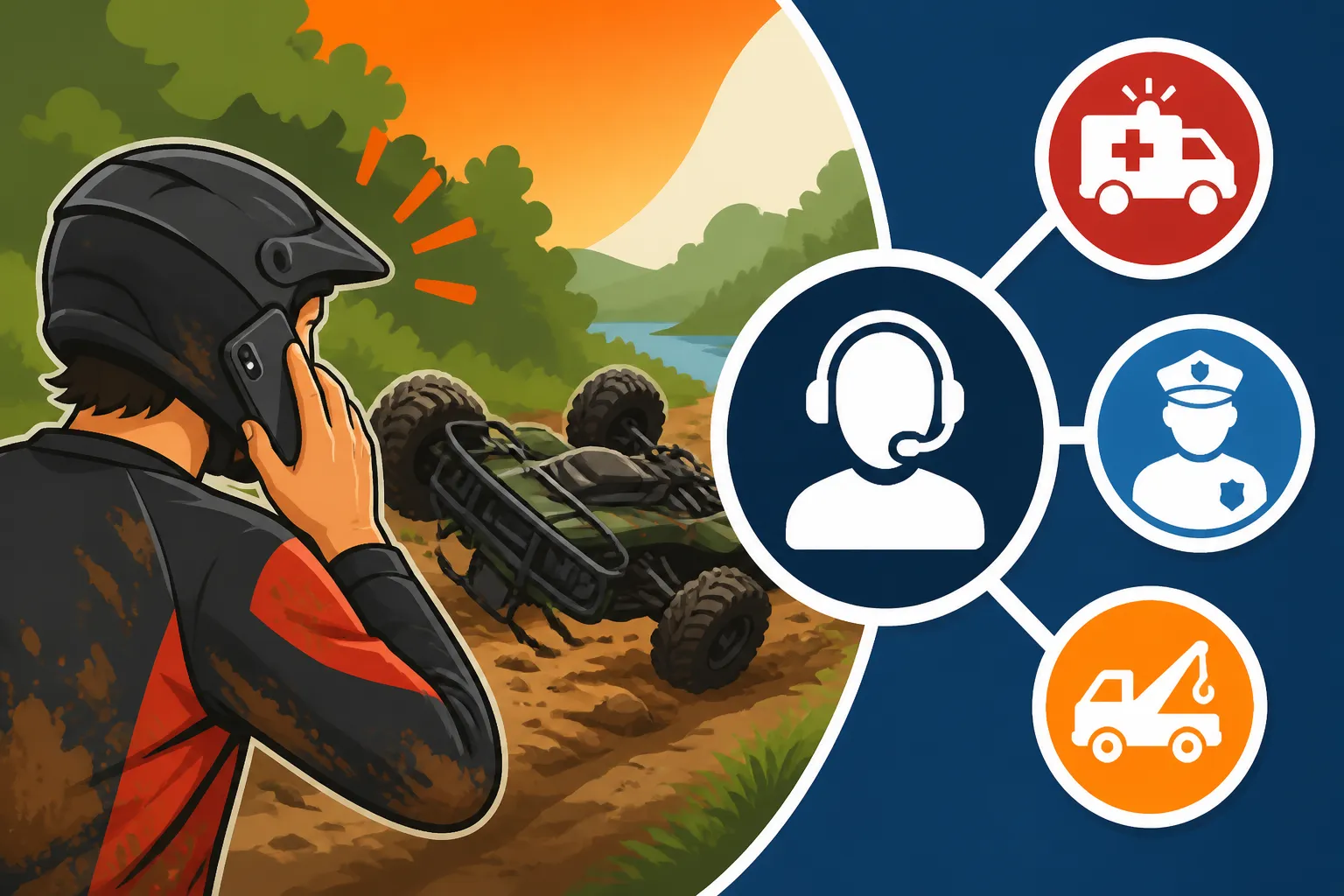
After ensuring immediate safety, the question inevitably arises: who do I call? The answer largely depends on the severity of the incident and your location. Whether you're deep in the De Soto National Forest or on a private mud park, the contacts you make are crucial for getting the right help.
When to Dial 911 Immediately
There are clear instances where calling 911 should be your absolute first communication. If anyone involved has serious injuries—think uncontrollable bleeding, broken bones, loss of consciousness, severe head trauma, or difficulty breathing—dial 911 without hesitation. If a vehicle is on fire, or if someone is trapped under a machine, this also warrants an immediate 911 call. Remember, 911 is for emergencies requiring immediate police, fire, or medical response. When you call, be as clear and calm as possible, providing your location with as much detail as you can. If you're using a GPS-enabled phone, you might be able to read off coordinates. Mention landmarks, trail names, or any distinctive features nearby. Getting lost in the technical jargon or trying to be overly precise can hinder timely assistance. Focus on clear, concise information.
Even if you're in a remote area with spotty cell service, try to get to higher ground or move your phone around to catch a signal. If your phone has an SOS feature, activate it. Many modern phones can send emergency messages with your location even with a weak signal. If you can't get through, and you're with a group, one person might need to go for help while others stay with the injured. This is a tough decision, especially when you're unsure how far away help might be. For more information on what to report, you might find details in [Mississippi Accident Reporting for an ATV Crash].
Non-Emergency Law Enforcement and Other Contacts
For less severe incidents—perhaps minor injuries that don't require immediate emergency medical attention, or incidents involving only property damage—you might consider contacting non-emergency lines for local law enforcement. This could be the county sheriff's office if you're on public land like a WMA or county property. On federal lands, such as national forests, contacting the U.S. Forest Service rangers might be appropriate. [Mississippi National Forest Riding Explained] gives good insights into these areas. They can help assess the scene, take a report, and advise on next steps, especially if there was an interaction with another rider or if there's a question of liability.
It's also vital to consider the type of land you're on. If the crash happened at a private mud park, contact the park management or staff immediately. They often have their own protocols for incidents, and may have first aid on site or designated procedures for summoning local emergency services. If you're on private land, you'll need to notify the landowner. This is crucial, especially if there's any damage to their property or if they need to be aware of your situation. Failure to notify could lead to issues, particularly related to [Mississippi Trespass Law for Riders]. Knowing [Who to Call After an ATV Crash Off-Road] is half the battle, and the context of your location often dictates the best course of action.
| Incident Severity / Location | What to Do Immediately | Who to Call | Notes |
|---|---|---|---|
| Serious Injury | Secure scene, provide first aid, stay with injured party. | 911 (Ambulance, Fire, Law Enforcement) | Be precise about location (GPS coordinates, landmarks). |
| Minor Injury | Self-assess, move to safety, assist others. | Non-emergency local law enforcement (Sheriff/Ranger) or 911 if remote. | Document everything; consider medical follow-up. |
| Major Machine Damage | Secure scene, document thoroughly, check for hazards. | Non-emergency law enforcement (if incident involved others), Insurance company. | Get photos before moving anything; note any SuperATV parts affected. |
| Minor Machine Damage | Document, assess safety for continued riding. | Insurance company (optional, depending on deductible). | Repair or replace parts; consider SuperATV for sturdy replacements. |
| Private Land | Assess safety, notify landowner. | Landowner, then law enforcement/EMS if needed. | Respect private property rules. |
| National Forest / WMA | Assess safety, secure scene. | Park Ranger, Forest Service, then 911/local law enforcement if needed. | Be aware of specific rules and regulations. [Mississippi WMA Riding Rules] |
| Unknown Location / Lost | Stay put, assess situation, conserve resources. | 911 (even if unsure of location, they can often trace). | Provide landmarks; stay calm and wait for instructions. |
Documenting the Incident and Notifying Others
In the chaotic moments after a crash, it might seem counterintuitive to focus on documentation. However, gathering information and notifying the right people is incredibly important for any potential insurance claims, legal proceedings, or even just for your own peace of mind. Without proper documentation, proving what happened can become a "he said, she said" situation, which rarely ends well.
Gathering Critical Information and Evidence
Once the immediate safety concerns are addressed, and assuming you're physically able, start gathering as much information and evidence as possible. Your smartphone is an invaluable tool here. Take numerous photos and videos of everything: the machines involved (from multiple angles), any visible injuries to yourself or others, the crash scene itself, and the surrounding trail conditions. Did you hit a rut? Was there an obstacle? Capture it all. Get close-up shots of any damage to your machine, especially if you have aftermarket accessories like those from SuperATV that might have been impacted. Detail skid marks, impact points on the ground, and any debris. The more visual evidence you have, the stronger your case for insurance or liability.
If other riders were involved or were witnesses, get their full names, contact information (phone number and email), and even their insurance details if they were part of the incident. Don't rely solely on verbal accounts; having their information allows for follow-up if needed. Make a mental note, or even better, write down the date, time, and exact location of the crash. The more specific you are, the better. Was it near a specific tree, a trail marker, or a geographical feature? These details will be crucial when you later recount the events to insurance adjusters or law enforcement. [Mississippi Accident Reporting for an ATV Crash] emphasizes the importance of accuracy in these reports.
Notifying Insurance and Landowners
As soon as reasonably possible, you should notify your insurance company about the incident, even if you're unsure whether you'll file a claim. Many policies have clauses that require timely notification, and delaying could potentially impact your coverage. Your insurer will want to know the date, time, location, a brief description of what happened, who was involved, and if there were any injuries or property damage. Be honest and factual; avoid speculating or admitting fault. Let the investigation determine the specifics. Understanding [Why Mississippi Riders Still Buy ATV Insurance] becomes crystal clear in these moments, as a good policy can be a lifesaver.
If you were riding on private property, whether a dedicated park or a friend's land, it's essential to notify the landowner or park management. They need to be aware of incidents occurring on their property, especially if there was property damage beyond your machine or if liability questions arise. Many private parks require you to sign waivers before riding, and these waivers often outline procedures for reporting incidents. Familiarize yourself with [Mississippi Private Park Waivers and Rules] beforehand, so you know what's expected. For public lands, like state parks or WMAs, contacting the managing authority, such as a park ranger or game warden, is the appropriate step. Their reports can also serve as independent documentation of the event.
Aftermath and Prevention: Moving Forward
An off-road crash isn't just a physical event; it can be an emotional and financial one too. The period after the immediate chaos of the incident is about recovery, learning, and ensuring you're prepared for future rides. It's about turning a negative experience into valuable lessons for yourself and your riding community.
Following Up with Medical and Legal Professionals
Even if you felt fine at the scene, or only had minor scrapes and bruises, it’s always wise to follow up with a medical professional. Adrenaline can mask injuries, and some symptoms, especially those related to head trauma or soft tissue damage, might not appear until hours or even days later. A quick visit to an urgent care clinic or your family doctor can rule out more serious underlying issues and create a medical record of your condition post-incident. This documentation is invaluable if you later discover a more significant injury that requires treatment or leads to a future insurance claim.
If the crash involved another party, resulted in significant injuries, or if there's any question of liability or negligence, it might be beneficial to consult with a legal professional. An attorney specializing in personal injury or off-road vehicle incidents can advise you on your rights, help navigate insurance claims, and represent you if the situation escalates. This is especially true if you receive a citation from law enforcement for an incident, even if you believe you were not at fault. Understanding potential legal repercussions, like those outlined in [Mississippi Penalties for Illegal Road Riding] if you were improperly on a road, can guide your decisions. They can also help you understand your options for compensation for medical bills, lost wages, and machine damage.
Learning from the Experience and Enhancing Safety
Every incident, no matter how minor, is a learning opportunity. Take the time to honestly evaluate what happened. Was it a mechanical failure? Rider error? Trail conditions? Or a combination? Inspect your machine thoroughly for damage, not just cosmetic but structural. This is where quality aftermarket parts and accessories, such as those offered by SuperATV, can play a role in both repair and future prevention. Did a component fail? Was a factory part not strong enough? Consider upgrading. For example, reinforced A-arms or heavy-duty tie rods might prevent similar issues down the line.
Review your riding gear. Was your helmet still in good condition? Did your boots offer enough ankle support? Is it time to replace older, worn-out protective clothing? Remember, [Mississippi Helmet Law for Riders Under 16] exists for a reason, but safety gear is essential for riders of all ages. Consider taking an ATV safety course or a refresher course. Even experienced riders can benefit from sharpening their skills and staying current on best practices. [Mississippi Safety Course Certificates] aren't just for new riders; they promote ongoing safe riding habits. By taking these proactive steps, you not only improve your own safety but also contribute to a safer riding environment for everyone who enjoys Mississippi's incredible off-road opportunities. It’s not just about avoiding future fines or insurance headaches; it’s about making sure you can continue to enjoy the sport you love for years to come.
Disclaimer
This article is for general informational purposes only and does not constitute professional advice. Laws, prices and regulations vary by location and change over time. Consult a qualified professional for guidance on your specific situation.