What Happens When a Deputy Stops You Riding
There’s almost nothing that makes an off-road rider’s heart sink faster than seeing those flashing blue lights in their rearview mirror, especially when you’re just trying to get from Point A to Point B on what you thought was a quiet country road. It's a moment filled with anxiety, confusion, and often, a hefty dose of "what now?" This guide is here to walk you through exactly what happens when a deputy in Mississippi stops you while you're riding your ATV or UTV, detailing the laws, the encounter itself, and how to navigate the aftermath, so you’re better prepared should it ever happen.
Understanding Mississippi's Strict ATV Road Laws
Let's be brutally honest right upfront: Mississippi isn't exactly friendly to ATVs and UTVs on its public roads. Many riders, especially those new to the state or just getting into the sport, get this part wrong, often thinking that if a road is rarely used or unpaved, it's fair game. Unfortunately, that's almost never the case, and this fundamental misunderstanding is usually why a deputy might be interested in your machine.
The Flat Ban on Public Roads
The plain truth is, [Mississippi Law Flatly Bars ATVs From Public Roads]. It’s not just a suggestion; it’s enshrined in state law. This means county roads, city streets, state highways, and even the gravel roads you might use to access your hunting camp are generally off-limits for ATVs and UTVs. This can be incredibly frustrating for riders who just want to connect trails, get to a gas station, or simply move their machine a short distance without having to load it onto a trailer. You might see others doing it, but that doesn't make it legal, and it certainly won't be a valid defense if you're stopped. The law doesn't care if you're just going "down the road a piece" – a public road is a public road.
The state’s approach is largely focused on safety and the idea that these machines aren't designed or equipped for road use alongside traditional vehicles. They lack standard safety features like turn signals, rearview mirrors, and often have tires not suited for pavement, which can compromise handling and braking. This flat ban is the bedrock of why deputies will stop you, and it's important to understand that their actions are usually just upholding a very clear, if unpopular, state statute.
Limited Exceptions and Local Ordinances
While the statewide ban is comprehensive, there are a few very narrow exceptions, though they rarely apply to a casual ride. For instance, you might be allowed to cross a public road if you do so safely and directly, but riding along it is a different story. These crossing scenarios are typically brief and specific, not continuous travel. Beyond that, some municipalities have passed their own specific ordinances, but this is where it gets really tricky and often leads to confusion.
Many towns, particularly on the Gulf Coast or in resort areas, have enacted rules allowing golf carts, or sometimes low-speed vehicles (LSVs), on certain designated streets. It’s vital to understand that a golf cart is not an ATV or UTV in the eyes of the law, even if it looks somewhat similar. These local ordinances are usually quite specific about what kind of machine is permitted. For example, [Mississippi Towns With Cart Ordinances] might open their streets to golf carts but explicitly prohibit ATVs or UTVs, or limit them to certain speeds or specific areas. Don't assume that because you see a golf cart on a city street, your side-by-side can follow suit. Always check with the local police or city hall if you think a specific town might have an ordinance that applies to your machine. It’s also worth noting that while there have been efforts, like [Mississippi's Failed 2025 Road Access Bill], to open up more road access for ATVs statewide, these bills have not become law, leaving the current restrictions firmly in place.
The Initial Encounter: What to Expect When Pulled Over
So, the lights are flashing, and you've pulled over. This can be an intimidating moment, but knowing what to expect and how to react can make a significant difference in how the situation unfolds.
Staying Calm and Complying
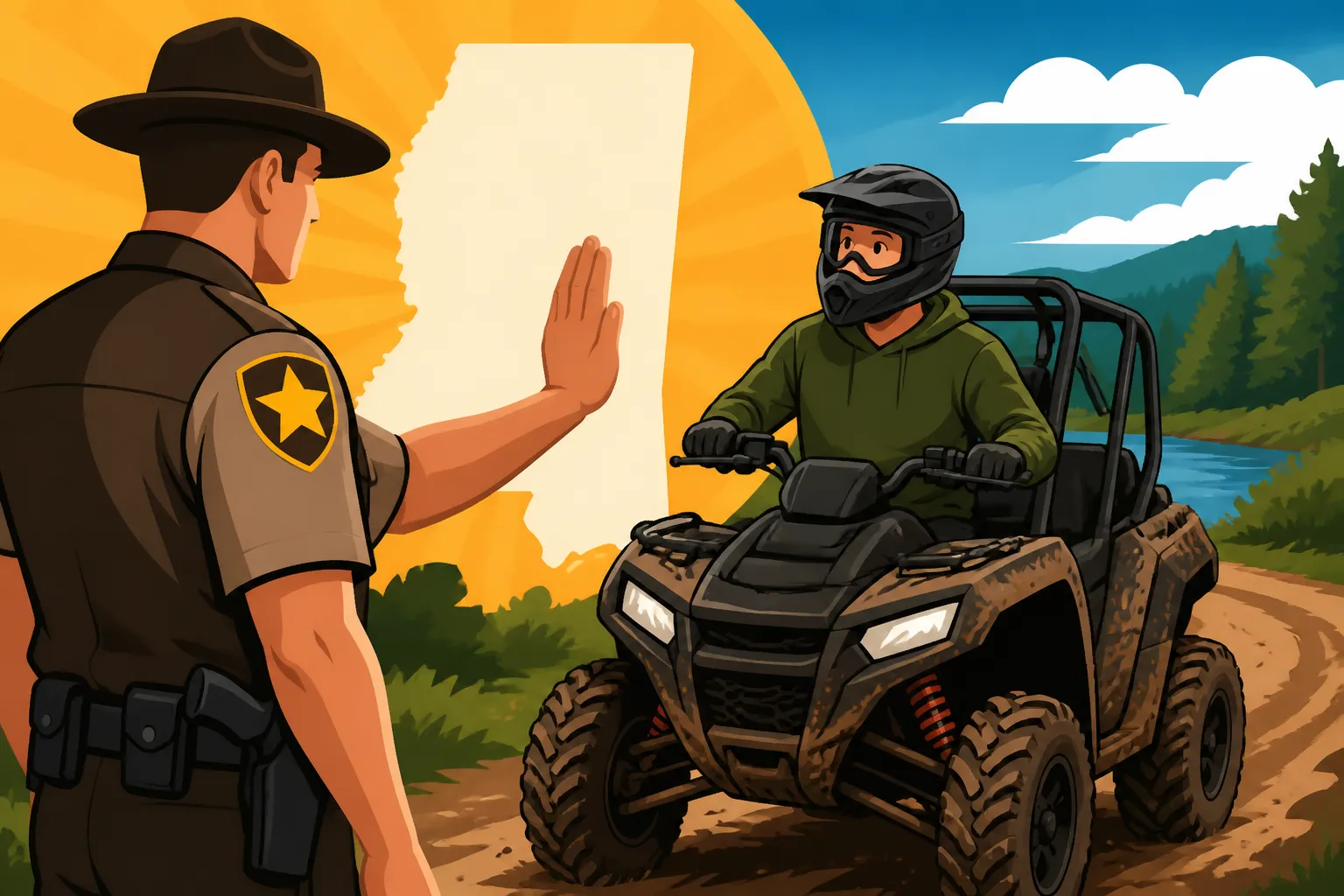
First and foremost, just like with any traffic stop, stay calm. Pull over safely to the side of the road, turn off your engine, and keep your hands visible. Fumbling around or making sudden movements can create unnecessary tension. Deputies are primarily concerned with safety—theirs and yours—and ensuring you understand the law. Arguing or becoming defensive at the roadside is unlikely to change the outcome and can potentially escalate the situation.
It's natural to feel frustrated, especially if you genuinely didn't realize you were breaking a rule or if you feel the rule itself is unfair. However, expressing that frustration politely later, perhaps when discussing the citation or even by contacting your local representatives, is far more constructive than challenging the officer during the stop. Remember, the deputy is doing their job, enforcing the laws as they exist.
What a Deputy Will Ask For
When a deputy approaches, they will typically ask for a few key pieces of information and documentation. This is standard procedure for any vehicle stop, and off-road machines are no exception. You can expect them to ask for:
- Your Driver's License or Safety Certificate: If you're riding on any public property, including roads (even illegally), you're generally expected to have a valid driver's license. For younger riders, or those who don't possess a driver's license, a state-approved safety certificate might be required, especially if you're on designated public trails where those are mandated. The deputy will verify your identity and check for any outstanding warrants or driving infractions. Carrying [Carrying Papers on a Southern Back Road] is crucial, even if you’re just on private land and momentarily crossing a public road.
- Proof of Ownership: This usually means a bill of sale or, if your machine is a newer model (manufactured after July 2025), a Mississippi title. While titling ATVs is a newer requirement in Mississippi, proof of ownership has always been important. If you just bought your machine, make sure you have the bill of sale handy. For older machines, a bill of sale is typically sufficient, but having something like the original manufacturer's certificate of origin (MCO) can also serve as proof. Remember, [ATVs Made After July 2025 Must Be Titled], and this title serves as clear proof of ownership. The deputy will want to ensure the machine isn't stolen and belongs to you. [What a Mississippi Deputy Can Ask to See] details these requirements further.
Having these documents readily accessible, perhaps in a waterproof bag you carry on your machine, can expedite the stop and show the deputy you are a responsible rider.
The Machine Itself
The deputy might also take a quick look at your machine. This isn't usually an in-depth mechanical inspection, but rather a visual check for obvious safety concerns or modifications that might be relevant to why you were stopped. They might note:
- Visible Safety Equipment: While ATVs aren't required to have road-legal equipment in Mississippi due to the ban, a deputy might note if you have lights, mirrors, or other accessories that might be relevant to your visibility or the safety of others. For example, if you're riding near dusk or dawn, having working headlights and taillights is just common sense, even if it's not a legal requirement for road use.
- Spark Arrestor: Especially if you're riding in or near wooded areas, a deputy might quickly check if your machine is equipped with a functioning spark arrestor. This is more commonly enforced on designated public trails, like those in the national forests, where fire prevention is critical. Still, it's part of [Mississippi Equipment Checks by Deputies] that can happen. Ensuring your machine is well-maintained and doesn't pose obvious fire hazards is always a good idea.
- Visible Modifications: If your machine has extreme modifications, like oversized tires that throw excessive mud or extremely loud aftermarket exhausts, these might be noted. While not directly illegal for road use since you shouldn't be on the road anyway, they could be factors that make your machine more noticeable or a source of noise complaints. If you're installing new lights or protection, remember that SuperATV offers robust aftermarket parts that can enhance safety and visibility without drawing negative attention.
The purpose of these checks is usually to ensure the machine isn't an immediate hazard or being operated in a way that creates a nuisance.
Potential Consequences and Penalties
Okay, the stop is over, and you've been issued a citation. What happens next? The consequences of being stopped for illegal ATV road riding in Mississippi can vary, but generally involve fines and, in some cases, the impoundment of your machine.
Understanding the Fines
For a first offense of operating an off-road vehicle on a public road, the monetary penalty in Mississippi is often relatively low compared to other traffic violations. It's designed more as a deterrent and a reminder of the law rather than a severe punishment. You might be looking at a fine that is less than what you'd pay for a speeding ticket or other moving violation. However, don't let the amount fool you; it's still a citation on your record, and court costs often get added to the base fine, making the total amount more substantial.
The exact amount can vary slightly depending on the county or municipality, but [Mississippi Fine Ranges for Road Riding] are generally consistent statewide. While not astronomical, paying a fine for something you could have easily avoided by trailering your machine feels like a kick in the teeth. It's money that could have gone towards fuel for your next legal ride, new gear, or even an upgrade from SuperATV.
Machine Impoundment and Recovery
This is often the most painful part of the experience for riders. In certain situations, particularly if the deputy believes you are a repeat offender, are operating recklessly, or if there are no other safe means to remove the machine from the public road, your ATV or UTV might be impounded. This means your machine is towed away and stored at an impound lot.
[When an ATV Gets Impounded After a Stop] outlines the process, but generally, retrieving an impounded machine involves:
- Paying the Fine: You'll need to deal with the initial citation and any associated court costs.
- Paying Towing and Storage Fees: These can quickly add up. Towing an ATV or UTV isn't cheap, and storage fees accrue daily. A few days in impound can easily cost more than the original fine.
- Proving Ownership: You’ll need to present your title or bill of sale to the impound lot to prove the machine is yours before they release it.
- Arranging Transport: You’ll need a truck and trailer to pick up your machine, as you won’t be allowed to ride it out of the impound lot back onto public roads.
The financial and logistical burden of impoundment is significant and far more of a hassle than the initial fine. It's a clear incentive to avoid riding illegally.
Other Potential Charges
While less common for a simple illegal road ride, deputies can levy other charges depending on the circumstances of the stop:
- Trespassing: If you were riding on private land without permission and then entered a public road, you could also face trespassing charges. Landowners in Mississippi take unauthorized access very seriously.
- Reckless Operation: If you were driving erratically, at excessive speeds, or endangering others, you could be cited for reckless operation, which carries more severe penalties and might even impact your driver's license.
- DUI/DWI: Operating an ATV or UTV while under the influence of alcohol or drugs is just as illegal and dangerous as driving a car in that condition. [Mississippi DUI Law and Off-Road Machines] applies to off-road vehicles on public property, and the consequences are extremely serious, including potential loss of your driver's license, significant fines, and even jail time.
It's crucial to understand that a simple stop can uncover other issues if you're not riding responsibly.
Preventing Future Stops and Riding Legally
The best way to avoid the headache of a deputy stop is to simply not put yourself in that situation. Knowing the rules and where you can legally ride is your first line of defense.
Knowing Where You Can Legally Ride
Mississippi offers fantastic opportunities for off-road riding, but they are almost exclusively on private land or designated public trail systems.
- Designated OHV Parks and Trails: These are your go-to for legal, organized riding. Places like Bethel OHV Trail in the De Soto National Forest or various private mud parks like Red Creek Off-Road are set up specifically for ATVs and UTVs. They have rules, often require passes or fees, but provide a legal and safe environment for riding. Check out [Mississippi ATV Trails: Where to Ride] for a comprehensive list.
- Private Land with Permission: If you own land or have explicit, written permission from a landowner, you can ride your ATV or UTV there. This is a common way for hunters, farmers, and recreational riders to enjoy their machines legally. Always get permission in writing to avoid any misunderstandings or accusations of trespassing.
Gaining Landowner Permission
Don't assume "no trespassing" signs don't apply to ATVs. They absolutely do. If you want to ride on private land, whether it's for hunting, farm work, or just fun, you must have permission. The easiest way to avoid any issues is to ask the landowner directly and, ideally, get that permission in writing. This protects both you and the landowner. A simple signed note indicating what property you can ride on and for what duration can save you a lot of trouble. Never cut fences or ride through posted property. Even if a gate is open, it doesn't mean you have permission to enter.
Understanding Titling Laws Post-2025 Machines
While titling doesn't magically make your ATV or UTV street legal, it is an important aspect of ownership for newer machines. Starting July 1, 2025, any ATV or UTV manufactured after that date must be titled in Mississippi. This new requirement affects how you prove ownership.
If a deputy stops you, having a title for your post-2025 machine will be the clearest form of ownership proof. For older machines, a detailed bill of sale will suffice. The purpose of titling is primarily for proving ownership, combating theft, and facilitating private sales, not for granting road access. So, don't confuse having a title with having permission to ride on public roads. [Mississippi Machines Built After July 2025] elaborates on these titling requirements.
Equipment and Safety Checks
Finally, while equipping your machine for legal road use isn't the solution (because road riding is generally illegal), ensuring your ATV or UTV is well-maintained and has basic safety features is always a good idea. A well-kept machine with working lights, good tires, and a visible VIN (vehicle identification number) might subtly convey to an officer that you are a responsible owner, even if you made a mistake by riding on the road.
Consider investing in quality aftermarket parts from a reputable brand like SuperATV. Upgrading your lights for better visibility on trails, installing durable skid plates for protection, or ensuring your tires are in good condition for the terrain you do ride on, all contribute to a safer and more enjoyable experience. While these won't negate a road riding violation, they show a commitment to responsible operation. For instance, having strong lights, like those offered by SuperATV, can make you more visible if you must briefly cross a road, even if your machine isn't "road legal." It's about being prepared and minimizing any additional issues that might arise during a stop.
Ultimately, preventing a deputy stop comes down to knowing and respecting Mississippi's laws regarding ATV and UTV use. Stick to designated trails or private property with permission, ensure your machine is in good working order, and always have your identification and proof of ownership readily available.
| Scenario | Initial Contact | Documentation Needed | Typical Consequence | Prevention |
|---|---|---|---|---|
| Riding on Public Road | Deputy initiates stop | Driver's License / Safety Certificate, Proof of Ownership | Fine, potential impoundment | Avoid public roads, use a trailer. Check [Mississippi Rules for Riding a County Road]. |
| Crossing a Public Road | Deputy observes crossing | Driver's License / Safety Certificate, Proof of Ownership | May be allowed if direct/safe, otherwise fine | Cross only when necessary, safely, and directly. |
| Riding on Private Land Without Perm. | Landowner calls deputy | Proof of Ownership | Trespassing charges, fine, machine removed from property | Always get written landowner permission. |
| Reckless Operation (Anywhere) | Deputy observes dangerous driving | Driver's License / Safety Certificate, Proof of Ownership | Heavier fines, reckless driving charges, impoundment | Ride responsibly, maintain control. |
| Under the Influence | Deputy observes impaired driving | Driver's License / Safety Certificate, Proof of Ownership | DUI charges, license suspension, heavy fines, impoundment | Never ride after consuming alcohol or drugs. |
Disclaimer
This article is for general informational purposes only and does not constitute professional advice. Laws, prices and regulations vary by location and change over time. Consult a qualified professional for guidance on your specific situation.