Mississippi Rules for a Side-by-Side Driver
Many folks in Mississippi buy a side-by-side with dreams of exploring the backroads, hitting the local general store, or simply getting around their rural property with ease. But then reality hits: the rules for driving these machines, especially on public roads, can feel like a tangled mess of confusion, leaving you wondering where you can actually take your pride and joy. This guide aims to untangle those rules, specifically for side-by-side drivers in Mississippi, so you can ride confidently and legally.
The Core Reality: Mississippi's Statewide Ban on Public Roads
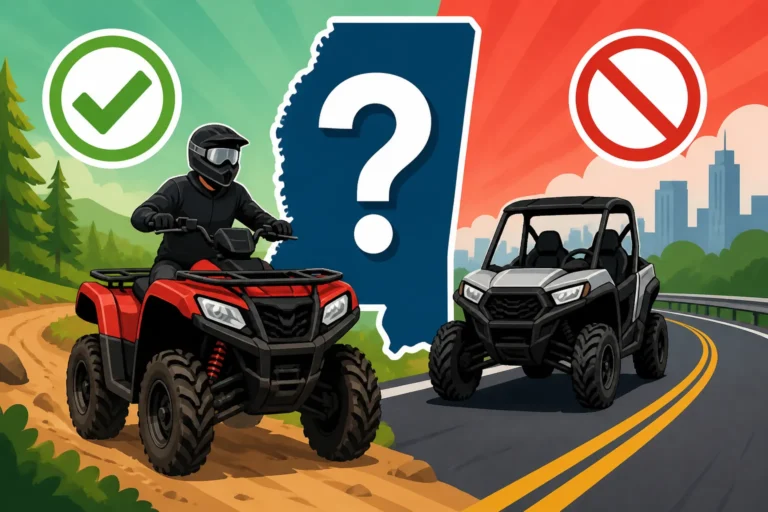
This is often the hardest pill for new side-by-side owners to swallow: Mississippi state law is incredibly clear about off-road vehicles on public roads. It's a flat-out ban, with very few exceptions carved out at the state level. Many riders mistakenly assume that because their side-by-side feels more substantial than a quad, it might be treated differently, but the law lumps them together under the umbrella of "off-road vehicles." This overarching restriction means that, unless a very specific local ordinance is in place, you simply cannot legally operate your side-by-side on state highways, county roads, or city streets.
Understanding the Legal Definitions ATV vs. ROV
It's easy to get lost in the jargon, but for Mississippi law, understanding the difference between an All-Terrain Vehicle (ATV) and a Recreational Off-Highway Vehicle (ROV), which includes most side-by-sides and UTVs, is crucial. The state defines an ATV as a motorized, off-highway vehicle designed to travel on four low-pressure tires, having a seat designed to be straddled by the operator, and handlebars for steering. Think your typical quad.
On the other hand, an ROV, or what we commonly call a side-by-side or UTV, has a steering wheel, non-straddle seating (like bucket seats or a bench), seatbelts, and is designed to travel on four or more non-highway tires. The key here is "non-highway tires" – these machines aren't built for asphalt. Even though a side-by-side often looks and feels more like a small car than a quad, the law groups them together when it comes to road use because they share that fundamental "off-highway" designation and specialized tire type. [Mississippi ATV and ROV Legal Definitions] further clarifies these distinctions.
This legal distinction matters because the statewide ban applies to both ATVs and ROVs. So, if you're driving a four-seat UTV, a powerful utility side-by-side with a dump bed, or a nimble sport model, the state views it similarly to a quad when it comes to public road access. No amount of aftermarket accessories, like turn signals or a horn – though valuable for trail safety – changes its fundamental legal classification for on-road use under state law. You might have added a fantastic SuperATV windshield and roof for comfort and protection, but it doesn't magically make your machine street legal in the eyes of the state.
Why the Statewide Ban Exists
The primary reason for Mississippi's strict statewide ban on off-road vehicles on public roads boils down to safety and vehicle design. Public roads are designed for vehicles that meet stringent safety standards for speed, braking, lighting, and crash protection. Off-road vehicles, including side-by-sides, are built for a completely different environment. Their suspension, tire design, and overall construction are optimized for uneven terrain, mud, sand, and trails, not paved or even gravel public roads.
Driving a side-by-side on a public road presents several inherent risks. Their specialized tires offer poor grip on pavement and can wear down quickly. They often lack the sophisticated lighting, mirrors, and turn signals required for safe road navigation, though many owners add these aftermarket. Furthermore, their lower top speeds can create dangerous speed differentials with other traffic, and their open-cab design offers limited protection in a collision with a passenger vehicle. It's truly a different beast than a car, and the state, in its current framework, simply hasn't deemed it safe enough to allow widespread road access. [Mississippi Bans ATVs on Public Roads] provides more context on this long-standing prohibition.
Another contributing factor is the historical evolution of vehicle laws. When many of these laws were written, side-by-sides as we know them today didn't exist or were far less common. The legislative framework hasn't fully caught up with the popularity and capabilities of modern ROVs. While there have been attempts to introduce more nuanced legislation, these bills have often faced significant hurdles. This means that, for now, the default position of Mississippi state law remains highly restrictive, prioritizing the safety of all road users by keeping these machines off the blacktop.
Consequences of Illegal Road Riding
Ignoring Mississippi's statewide ban on public road use for side-by-sides can lead to a number of unpleasant consequences. First and foremost, you could face fines. While the fines for road riding an ATV or ROV might seem relatively low compared to other traffic violations, often around $50, they can quickly add up with court costs. This might not sound like much, but who wants to pay a fine for simply trying to get from one point to another? [Mississippi Fines for Road Riding] outlines these penalties.
Beyond financial penalties, there are other, potentially more serious, repercussions. Your side-by-side could be impounded, leaving you with the hassle and expense of retrieving it. Even worse, if you're involved in an accident on a public road while illegally operating your side-by-side, your insurance coverage might be denied. Most ATV/ROV insurance policies have specific exclusions for accidents that occur during illegal operation, leaving you personally liable for damages, injuries, and legal fees. This can quickly turn a minor fender-bender into a financial disaster.
Furthermore, riding illegally can damage the reputation of the entire off-road community. When deputies or local residents see side-by-sides on public roads where they shouldn't be, it fuels negative perceptions and makes it harder for legitimate efforts to expand safe riding opportunities. It's a frustrating situation because many owners are responsible and simply want a safe path for limited road use, but illegal riding by a few can unfortunately cast a shadow on everyone.
Exceptions and Local Ordinances: A Glimmer of Hope?
While the statewide ban is indeed strict, it's not entirely without nuance. The "exceptions" are often misunderstood or overblown, leading to more confusion. The most significant potential for legal road use for side-by-sides in Mississippi comes from local ordinances, but these are not universal and require diligent research on your part. It's a patchwork quilt of regulations, which is exactly why so many riders feel frustrated and uncertain about where they can truly ride their machines.
The Myth of Farm Road Exceptions
One of the most persistent rumors or hopes among rural side-by-side owners is the idea of a "farm road exception" or a "rural property exception." Many believe that if they are simply traveling from one part of their farm to another, or moving between properties in a remote area, the state law doesn't apply. Unfortunately, as of right now, there is no statewide farm road exception written into Mississippi law that permits general ATV or ROV use on public roads, even for agricultural purposes. [Mississippi Has No Farm Road Exception] is a direct explanation of this absence.
While you might see farmers or landowners briefly crossing a public road to access another field, this is typically done out of necessity and often falls into a grey area of enforcement, rather than a codified legal right. Relying on this informal understanding can be risky. The law makes no specific allowance for a side-by-side to travel down a county road simply because it's being used for farm work or is operated by a landowner. The core prohibition against operating off-road vehicles on public roads remains.
This is a point of significant frustration for many, especially those who use their side-by-sides as essential tools for managing large rural properties. They feel their practical needs are overlooked by a blanket ban. While proposed legislation has attempted to address this in the past, such as bills that would have allowed limited road use for agricultural purposes or to access private property, these efforts have not yet resulted in a change in state law. So, until legislation changes, operate with extreme caution and assume no such exception exists for you.
How Local Ordinances Can Work
The real possibility for limited street legal side-by-side use comes from local ordinances passed by individual cities, towns, or counties. The state law does allow local jurisdictions to enact their own rules regarding the operation of ATVs and ROVs on public streets within their boundaries. This is why you might hear about one town where golf carts and even some side-by-sides are allowed, while in a neighboring town, it's strictly prohibited. [Mississippi Local Ordinances Are the Only Path] highlights this.
These local ordinances are highly specific. They might designate certain streets or areas where side-by-sides are permitted, often those with lower speed limits (e.g., 30 mph or less). They frequently impose additional requirements, such as mandating specific safety equipment (turn signals, horn, mirrors, DOT-approved tires), minimum driver age, and even proof of insurance. Some ordinances might even specify the types or brands of machines allowed or explicitly exclude ATVs while permitting golf carts and some UTVs. For example, some towns have enacted specific golf cart ordinances, which often do not extend to full-fledged side-by-sides due to differences in their design and intended use.
It's crucial to understand that these local rules only apply within the specific jurisdiction that passed them. You cannot assume that because you can ride on the streets of, say, Hattiesburg (which has a cart ordinance that might not cover all UTVs), you can do the same in Pearl. Crossing into a different town or even an unincorporated county area where no such ordinance exists means you are back under the statewide ban. This geographic limitation is what makes planning a road-based ride in Mississippi so incredibly complex.
Finding Out About Local Rules
Given the piecemeal nature of local ordinances, the only way to truly know if you can legally drive your side-by-side on public roads in a specific area is to do your homework. This isn't just a suggestion; it's a necessity to avoid fines and potential legal issues. Start by identifying the specific city, town, or county you plan to ride in.
Your best bet is to contact the local city hall, town clerk's office, or the county administrator's office directly. Ask them specifically about ordinances related to "off-road vehicles," "recreational off-highway vehicles," or "UTVs" on public streets. Don't just ask about golf carts, as those rules are often separate and won't apply to your side-by-side. You might also want to contact the local police department or sheriff's office, as they are the ones who enforce these laws on the ground and can provide clarity. [Mississippi Title Questions Clerks Hear] could be a good starting point for general queries, but for specific road rules, direct local contact is best.
When you do find an ordinance, make sure you get a copy of the actual text. Read it carefully to understand all the conditions, restrictions, and required equipment. Don't rely on hearsay or what a friend "heard" someone say. Print it out and keep it with you when you ride. Equipping your side-by-side with aftermarket accessories from companies like SuperATV, such as a turn signal kit or side mirrors, is a great step to meet common ordinance requirements, but always confirm the specific details for your chosen riding area. This proactive approach is the only way to be confident you're operating within the bounds of the law.
Rules for Riding on Private Land and Designated Trails
While public road access is severely limited, Mississippi offers fantastic opportunities for side-by-side riding on private property and at dedicated off-road parks. This is where your machine truly shines, designed for the very terrain found throughout the state. Understanding the rules and etiquette for these environments is just as crucial, if not more so, than knowing the road laws. Here, safety and respect for the land are paramount.
Essential Gear and Safety Practices
Whether you're tearing up a mud pit or cruising through a timber tract, safety should always be your top priority. For side-by-side drivers and passengers, seatbelts are non-negotiable – always wear them. Helmets, while not always legally mandated for adults on private land, are highly recommended, especially for challenging terrain. For riders under 16, a helmet is legally required on public land like national forests and is a smart move everywhere else. [Mississippi Helmet Law for Riders Under 16] is a good reference for younger riders.
Beyond personal protective gear, consider equipping your side-by-side with practical accessories. A good winch is almost a necessity for Southern mud and can save you from being stranded. A fire extinguisher, first-aid kit, and a small tool kit are also wise additions. Many riders also install upgraded lighting, like an SuperATV light bar, which dramatically improves visibility during early morning, late evening, or overcast rides, making your adventures safer for everyone in your group.
Always ride within your skill level and the capabilities of your machine. Understand how different terrain affects handling. Don't attempt obstacles that are beyond your experience, and never push your machine to its breaking point. Inform someone of your route and expected return time, especially if you're riding alone or in remote areas. A communication device, even if just a fully charged cell phone, is also vital, though keep in mind cell service can be spotty in many rural Mississippi areas.
Respecting Private Property
Mississippi is rich with private land, and respecting property rights is fundamental to enjoying your side-by-side here. Never, under any circumstances, ride on someone's private property without explicit, verifiable permission. "Looks like nobody's home" is not an excuse for trespass, and the penalties for illegal entry can be severe, including fines, property damage claims, and even machine impoundment. [Mississippi Trespass Law for Riders] provides insight into the legal ramifications.
If you have permission to ride on private land, treat it with the utmost respect. Stay on designated trails or within agreed-upon boundaries. Close all gates you open, don't litter, and avoid damaging crops, fences, or natural features. Be mindful of noise, especially near homes or livestock. Building and maintaining good relationships with landowners is key to preserving riding access. A simple conversation and a handshake can go a long way, and showing respect ensures future opportunities for yourself and others.
For hunting clubs or timberland leases, ensure you understand the specific rules for side-by-side use outlined in your lease agreement. Many clubs have strict guidelines on where and when machines can be operated, often coinciding with hunting seasons or timber operations. Adhering to these rules helps everyone enjoy the land safely and prevents conflicts.
Rules at Designated Riding Parks
Mississippi boasts several fantastic designated off-road riding parks that cater specifically to ATVs and side-by-sides. These parks, such as Bethel OHV Trails in the Holly Springs National Forest or private parks like Red Creek Off-Road, offer miles of managed trails and diverse terrain. Each park, whether public or private, will have its own set of rules and regulations designed for safety, environmental protection, and a positive visitor experience. [Mississippi ATV Trails: Where to Ride] lists several options.
At public parks like Bethel, you'll need to purchase a National Forest OHV Pass, often an annual pass that covers all Mississippi National Forests. You'll also need to be aware of width restrictions (often 50 inches for ATVs, though side-by-sides may be allowed on specific trails or wider sections), spark arrestor requirements, and potential trail closures due to wet weather. [Mississippi National Forest OHV Passes] explains the permit system.
Private parks typically require signing a liability waiver, paying a day-use fee, and adhering to their specific rules regarding helmets, speed limits, alcohol consumption, and quiet hours if camping. Many also have designated mud pits, wash stations, and amenities like cabins or RV hookups. Always check the park's website or call ahead for their most current rules, hours, and any special event information. It's much better to be prepared than to be turned away at the gate because you missed a crucial detail.
What Every Side-by-Side Driver Should Carry and Know
Preparation is key for any side-by-side adventure in Mississippi, whether you're sticking to private land or hoping to navigate a sanctioned local road. Knowing what documents to have on hand and understanding how to interact with law enforcement can save you a lot of headache and ensure your ride is as smooth and enjoyable as possible.
Essential Documentation
Even if your side-by-side isn't street legal statewide, carrying certain documents is always a good idea. First, always have proof of ownership. This could be your title – and remember, as of July 2025, new machines will require titles, and older ones can be voluntarily titled. [Mississippi ATV Titling Starts July 2025] provides details on this new requirement. For older machines or those purchased before the titling requirement, a bill of sale can serve as proof. This is crucial if your machine's ownership is ever questioned.
Secondly, carry proof of insurance. While Mississippi does not mandate insurance for off-road vehicles, having a policy is incredibly wise. Many private parks and certainly any local ordinances that allow road use will require it. Even on private land, a comprehensive policy protects you against theft, damage, and liability in case of an accident. [Why Mississippi Riders Still Buy ATV Insurance] elaborates on the benefits of coverage.
Finally, always carry your driver's license. Even if you're only riding on private property, if you encounter law enforcement for any reason, they will likely ask for identification. If you're riding on public lands like national forests, a valid driver's license is required. For younger riders, a safety certificate, often obtained through an approved ATV safety course, may be necessary on public lands.
Being Prepared for an Encounter with Law Enforcement
Even if you're following all the rules, there might be times when you encounter law enforcement. This could be a deputy patrolling a county road near your private property, a forest ranger on a trail, or a municipal officer in a town with an ordinance. The best approach is always to be polite, cooperative, and have your documents readily accessible.
If you are stopped, calmly turn off your engine, remove your helmet (if wearing one), and keep your hands visible. Present your driver's license, proof of ownership, and insurance when asked. Clearly explain where you are riding, whether it's private property (and if you have permission), or a designated trail. If you are operating under a local ordinance, be prepared to show a copy of that ordinance and demonstrate that your machine meets all its requirements.
It's common for officers to ask about your machine's serial number or VIN. Make sure you know where this is located on your side-by-side. For older machines, sometimes finding the VIN can be tricky, but it's essential. Cooperating and having your paperwork in order will go a long way in resolving any situation quickly and positively. Avoid arguing or becoming defensive; respect the officer's role.
Why Insurance Still Matters
As mentioned, Mississippi does not legally require insurance for ATVs or side-by-sides. However, for any responsible side-by-side driver, comprehensive insurance is an absolute must. Think about it: these machines are significant investments, and without insurance, any damage, theft, or liability falls directly on your shoulders.
A good policy can cover physical damage to your side-by-side from accidents, fire, or vandalism. It can protect you if your machine is stolen from your garage or while parked at a trailhead. Most importantly, liability coverage can shield you from financially devastating lawsuits if you accidentally injure someone or damage their property while riding, even on private land. Imagine accidentally damaging a farmer's fence or causing an injury to a passenger or another rider – without liability coverage, you could be facing substantial out-of-pocket expenses.
Many insurance providers offer specialized ATV/ROV policies that are tailored to the unique risks associated with off-road riding. It's worth talking to an insurance agent to understand your options and ensure you have adequate coverage for your machine and your riding habits. Even a basic liability policy offers peace of mind far greater than its cost. Don't leave yourself vulnerable to unexpected expenses.
| Scenario | Legal Status (State Law) | Local Ordinance Impact | Documentation & Equipment Recommendations |
|---|---|---|---|
| Riding on Public Roads (State Highway, County Road, City Street) | Generally Illegal statewide | May be permitted by specific local ordinance (city/town only) | Driver's License, Proof of Ownership, Proof of Insurance (if required by ordinance), Machine meets ALL ordinance equipment (lights, turn signals, horn, mirrors) |
| Crossing a Public Road to Access Private Property | Generally Illegal for regular travel; brief, direct crossing is a grey area | Unlikely to be covered by local ordinance unless specific farm-use clause | Driver's License, Proof of Ownership, Proof of Insurance |
| Riding on Private Property (Your Own Land) | Generally Legal | No local impact unless specific nuisance laws apply | Driver's License (recommended), Proof of Ownership, Insurance (highly recommended), Safety gear (helmets, seatbelts) |
| Riding on Private Property (With Landowner Permission) | Generally Legal | No local impact unless specific nuisance laws apply | Driver's License (recommended), Proof of Ownership, Written Permission, Insurance (highly recommended), Safety gear |
| Riding at a Designated OHV Park (Public/Private) | Generally Legal (within park boundaries) | No local impact; park-specific rules apply | Driver's License (or safety certificate for youth on public land), Park Pass/Fees, Signed Waivers, Insurance (often required by park), Spark Arrestor, Safety gear |
| Riding with Aftermarket Lights/Signals (on public roads) | Does not change illegal status under state law | Essential to meet requirements if allowed by local ordinance | Ensure lights are visible and functional; check specific lumen/color rules for local ordinances |
Disclaimer
This article is for general informational purposes only and does not constitute professional advice. Laws, prices and regulations vary by location and change over time. Consult a qualified professional for guidance on your specific situation.