Mississippi Rules for Riding With a Dog
You love hitting the trails or getting some work done on your ATV or UTV, and for many of us in Mississippi, our dogs are more than just pets – they're family, companions, and often, invaluable partners. It’s only natural to want to bring them along for the ride. However, figuring out how to do that safely, comfortably, and within the spirit of any applicable rules can feel like trying to navigate a new trail after a heavy rain. This guide is here to clear up the confusion and offer practical advice so you and your four-legged friend can enjoy your off-road adventures together without unnecessary risks or worries.
Understanding the Legal Landscape for Dogs and Off-Road Machines in Mississippi
When you think about taking your dog along for a ride on your ATV or UTV in Mississippi, one of the first things that probably pops into your head is, "Is this even allowed?" It's a fair question, and unfortunately, the answer isn't always as clear-cut as you might hope. Mississippi's laws regarding off-road vehicles tend to be pretty concise, focusing mostly on where you can't ride and basic definitions, rather than diving into the specifics of canine co-pilots.
The Absence of Specific "Dog on ATV" Laws
Let's get straight to it: you won't find a specific law on the books in Mississippi that explicitly states, "Thou shalt not carry a dog on an ATV," or conversely, "Dogs are permitted on UTVs with proper restraints." The state's statutes on off-road vehicles, like [Mississippi Code Section 63-31-1] and [Mississippi Code Section 63-31-3], are quite lean. They primarily address the prohibition of ATVs and UTVs on public roads and highways, and define what constitutes an off-road vehicle. They don't delve into passenger specifics, let alone animal passengers.
This lack of explicit regulation might seem like a green light to some, but it's really more of a gray area. Just because a law doesn't specifically forbid something doesn't automatically make it a free-for-all. It means that other, broader legal principles—like general animal welfare laws, public safety, and reckless endangerment statutes—could come into play if something goes wrong. A deputy or park ranger might interpret an unsecured dog on a moving ATV as a safety hazard, even if there's no specific "dog on ATV" ticket they can write. They might be more concerned about driver distraction or the potential for injury to your pet or others.
General Animal Welfare and Public Safety Considerations
Even without specific "dog on ATV" laws, you, as the owner, are responsible for your pet's well-being and for ensuring your actions don't endanger others. Mississippi, like all states, has general animal cruelty and neglect laws. While it's unlikely a casual ride with your dog would fall under "cruelty," an incident resulting in severe injury to your pet due to improper restraint or reckless driving certainly could.
Think about it from a public safety perspective. An unsecured dog could suddenly jump off the machine, startling other riders, causing a collision, or even running into traffic if you're crossing a private access road. A dog struggling to stay on an ATV could distract you, leading to an accident. Just as we consider the safety of [Mississippi Rules for a Child Passenger], we must apply similar diligence to our canine companions. These aren't just hypothetical scenarios; they're real risks that responsible owners need to consider every time they fire up their machine with their dog in tow. It's about exercising common sense and prioritizing safety over convenience, ensuring your furry friend isn't just along for the ride, but safely secure for the journey.
Local Ordinances and Public Land Rules
While state law might be silent on dogs on ATVs, it's crucial to remember that local jurisdictions and public land management agencies often have their own sets of rules. A county or city in Mississippi could have an ordinance that addresses the transport of animals in open vehicles, or specific rules for parks and recreational areas. It's always a good idea to check with your local county tax collector's office or city clerk's office if you plan to ride within municipal or county limits.
Wildlife Management Areas (WMAs) and national forests are common places for ATV/UTV riding, especially for hunters. These areas often have very specific regulations regarding pets. For instance, [Mississippi WMA Rules for Riders] typically state that dogs must be leashed in certain areas or during specific times, especially outside of designated hunting seasons. They might also have rules about dogs being confined in vehicles or not disturbing wildlife. Before heading out to a WMA or a national forest like the De Soto, always check their specific rules regarding pets. A quick call to the local ranger district or checking their official website can save you a lot of hassle and potential fines. Private parks, like Red Creek Off-Road, will also have their own rules, which might be part of their [Mississippi Private Park Waiver Requirements] you sign upon entry.
Prioritizing Your Dog's Safety and Comfort on the Trail
Taking your dog along for an off-road adventure is about more than just legalities; it's fundamentally about their safety and comfort. Our machines aren't designed with canine passengers in mind, so it's up to us to create a secure and pleasant environment for them. Ignoring these vital precautions can lead to serious injury for your dog, or even for you and other riders.
Secure Transport is Non-Negotiable
The absolute cornerstone of riding with your dog is ensuring they are securely contained or restrained. An ATV or UTV ride involves bumps, turns, sudden stops, and varied terrain – all of which can easily dislodge an unsecured animal. For an ATV, this usually means a specifically designed dog carrier or basket that attaches firmly to a rack, often on the front or rear. These typically have high sides and a secure top or harness attachment point. You can't just expect your dog to "hold on."
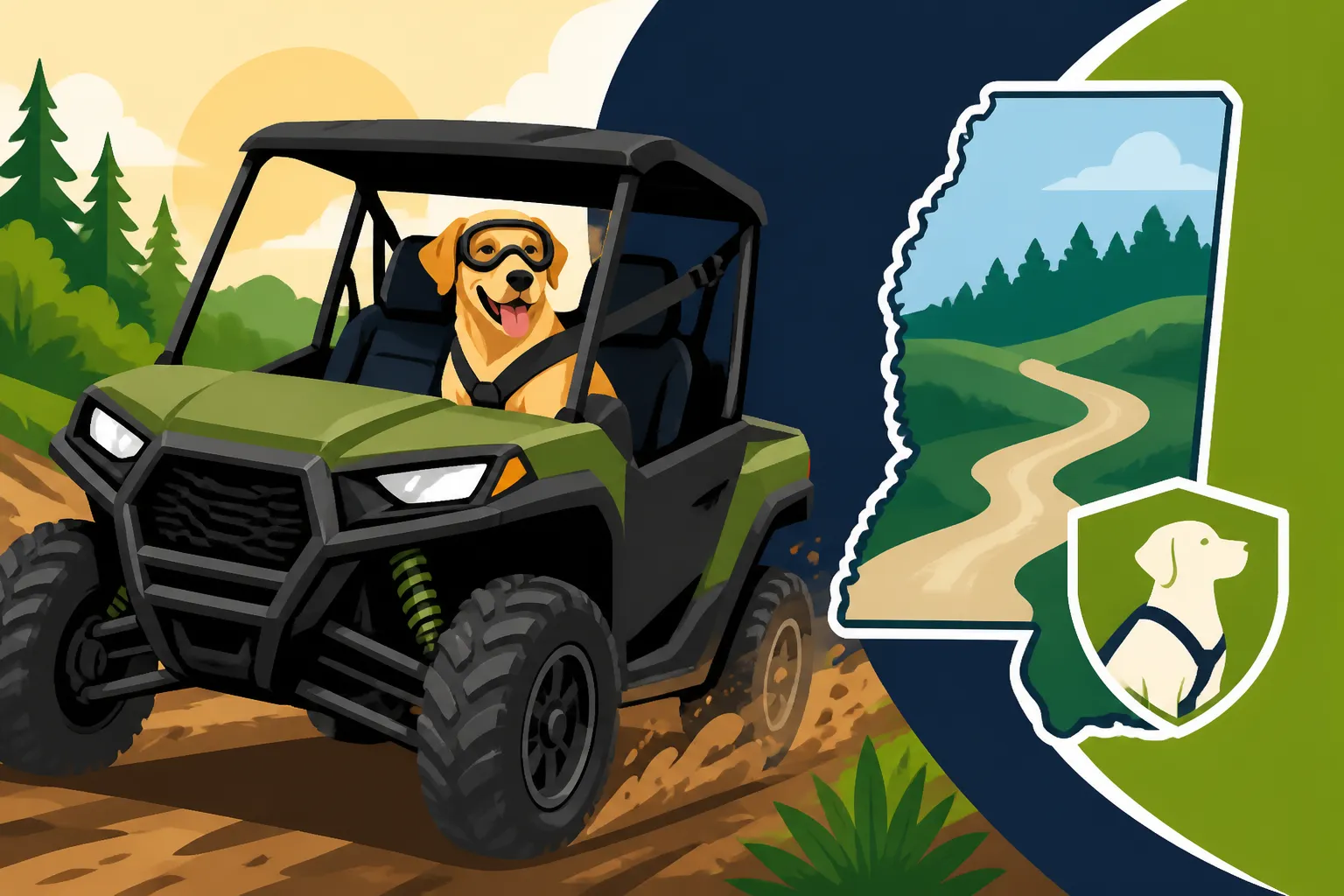
With UTVs, you have more options thanks to their larger cargo beds and enclosed cabs. A sturdy dog crate secured in the bed is an excellent choice, especially for larger dogs. You'll want to make sure the crate is tied down with ratchet straps or bungees so it doesn't slide around. Some UTV owners even use custom-built dog boxes or bed enclosures, which offer more protection from debris and weather. Companies like SuperATV offer a range of cargo solutions, such as their cargo boxes and bed extenders, that can often be adapted with additional custom fabrication or tie-down points to create a secure space for a dog crate. Alternatively, smaller dogs can sometimes be secured in a special harness that attaches to a seatbelt in the cab, keeping them safely on the floorboard or a designated passenger seat, away from the controls.
| Transport Method | Pros | Cons | Ideal For |
|---|---|---|---|
| Secured Crate (UTV) | Highly secure, protects from elements, good for larger dogs | Takes up significant cargo space, can be bulky, adds weight | Longer trips, rough trails, multiple dogs |
| Rack-Mounted Carrier (ATV/UTV) | Frees up cab space, good visibility for dog, often ventilated | Exposed to elements, limited size, less protection in a rollover | Shorter trips, calmer trails, smaller dogs |
| Seatbelt Harness (UTV Cab) | Dog is inside cab, easier interaction, quick to secure | Only for smaller/medium dogs, can distract driver, limits human passenger space | Gentle rides, well-behaved dogs, short distances |
| Custom Enclosure (UTV Bed) | Tailored fit, maximum protection, can integrate features | High cost, permanent modification, specialized fabrication needed | Dedicated work/hunting rigs, frequent dog transport |
Protecting Paws, Eyes, and Ears
The trail can be a harsh environment for a dog's sensitive areas. Paws are constantly exposed to hot surfaces (especially in the Mississippi summer), sharp rocks, thorns, and abrasive terrain. Doggie booties can offer excellent protection, preventing cuts, scrapes, and burns. It takes some time for most dogs to get used to them, so introduce them during short walks before a big ride.
Eyes are another vulnerable spot. Dust, sand, low-hanging branches, and flying debris from tires (especially if riding in a group) can cause serious eye injuries. Doggles, or dog-specific goggles, are a fantastic investment. Again, gradual introduction and positive reinforcement will help your dog adapt. For instance, when you're loading up your machine or your SuperATV accessories, take a moment to put their Doggles on and offer a treat.
Finally, consider their ears. The sustained noise from the engine, wind, and even communication systems can be hard on a dog's hearing, especially over long periods. While less common, some owners use dog-specific ear protection, similar to those used by working dogs around loud machinery. This might seem extreme for a casual ride, but for dogs frequently exposed to engine noise, it's worth considering for their long-term health.
Hydration, Temperature, and Rest Breaks
Mississippi's climate, especially during the long, hot summers, poses a significant risk for dogs on any outdoor adventure. Dehydration and heatstroke are serious threats. Always carry plenty of fresh water and a collapsible bowl for your dog, even on what you think might be a short ride. Offer water frequently, even if they don't seem thirsty.
Monitor your dog for signs of overheating: excessive panting, drooling, lethargy, or a bright red tongue. If you see these signs, stop immediately, get them to shade, offer water, and consider pouring water over their paws and belly to help cool them down. A cooling vest can also be a lifesaver in extreme heat. Pay close attention to the ground temperature; if it's too hot for you to comfortably hold your hand on the ground for five seconds, it's too hot for your dog's paws, even with booties. Regularly check their paw pads for redness or blistering. Integrating [Mississippi Tick Season and Riding Gear] into your pre-ride routine also means thinking about preventing overheating in addition to parasite protection. Plan your rides to include regular rest breaks in shaded areas, allowing both you and your dog to cool down and rehydrate.
Practical Considerations for Different Riding Scenarios
The way you prepare for riding with your dog will often depend on the type of riding you plan to do. A seasoned hunting dog has different needs than a family pet out for a joyride, and a farm dog might have a different routine altogether.
Riding With a Working Dog or Hunting Companion
For many in Mississippi, ATVs and UTVs are indispensable tools for hunting, farming, or managing timberland. If your dog is a working animal – a retriever, a tracking dog, or a herding dog – their presence on the machine is often integral to the task at hand. When transporting a hunting dog, especially during deer or bird season, their role demands careful consideration. You need a setup that allows for efficient deployment when needed, but also secure containment during transit, especially when navigating dense woods or open fields.
Consider the layout of your UTV. A secured kennel in the bed is often ideal, providing a safe, enclosed space. If you're carrying firearms, make sure they are safely secured and unloaded, keeping in mind [Mississippi Rules for Carrying a Rifle] on your machine and ensuring separation from your dog's space to prevent any accidental discharge or injury. Your dog's natural instincts will be heightened in a hunting environment, so consistent training for commands like "stay" and "load up" is crucial. The goal is to get them to the working area safely, quietly, and ready to perform, without being overly stressed or exhausted by the journey itself.
Casual Trail Riding With Your Pet
If your intention is simply to enjoy the scenic beauty of Mississippi's trails with your beloved pet, the focus shifts slightly from work efficiency to pure companionship and shared experience. While safety remains paramount, the pace might be more leisurely, and the emphasis on enjoying the ride together. On public trails, like those in the De Soto National Forest or at private parks, it's crucial to be mindful of other trail users. Not everyone is comfortable with dogs, and an off-leash dog, no matter how friendly, can cause problems. Always have a leash readily accessible and be prepared to use it when encountering hikers, other riders, or entering designated common areas.
Adhering to [Mississippi Trail Etiquette Locals Expect] means keeping your dog under control and cleaning up after them. Consider the trail conditions – deep mud, rocky terrain, or extensive water crossings might be fun for you, but they can be incredibly taxing or even dangerous for your dog. If your dog isn't secured in a waterproof crate, avoid deep water that could swamp them. For a more relaxed experience, look for trails with gentler terrain and ample opportunities for shaded breaks, making sure the journey is enjoyable for both of you.
Farm and Property Use
For many Mississippi landowners, ATVs and UTVs are daily workhorses, and their dogs are often right there alongside them, whether checking fences, moving livestock, or just supervising chores. On private farm or timberland, the rules might feel a bit more relaxed than on public land, but the principles of safety and comfort for your dog remain just as important. Speeds are typically lower, and you're familiar with the terrain, but unexpected hazards like sudden turns, unseen holes, or equipment still exist.
Even on the farm, an unsecured dog can still fall off, get injured by machinery, or interfere with your driving. While you might not be worried about state road laws like [Mississippi Has No Farm Road Exception] when working on your own property, you should still ensure your dog isn't wandering into dangerous areas or disturbing livestock. Hydration and protection from the elements are still key, especially during long days of chores under the Mississippi sun. A dedicated, comfortable spot for your dog on the UTV, even if it's just a mat in the passenger footwell or a secured crate in the bed, ensures they can be a part of your daily routine without being put at unnecessary risk.
Essential Gear and Preparations for Dog-Friendly Adventures
Taking your dog on an ATV or UTV ride isn't something to do on a whim. Just like you wouldn't head out on a serious trail ride without the right tires, winch, or safety gear, you shouldn't bring your dog without proper preparation. Equipping both your machine and your dog correctly can make all the difference between a joyful outing and a stressful, or even dangerous, one.
Choosing the Right Carrier or Harness System
The foundation of safe dog transport on your off-road machine is selecting the appropriate carrier or harness. For ATVs, options are somewhat limited but effective. Look for front or rear rack-mounted baskets or carriers that are specifically designed for pets. These often have durable construction, good ventilation, and secure attachment points. Ensure it’s robust enough to handle the vibrations and jostling of off-road travel.
For UTVs, you have a wider array of choices. A hard-sided dog crate is a popular and secure option. When choosing a crate, consider its size relative to your dog and the UTV bed. It needs to be large enough for your dog to stand up, turn around, and lie down comfortably, but not so large that it slides excessively even when secured. Products from SuperATV, known for their rugged accessories, could be used as a base. For example, their cargo boxes or bed storage solutions might not be dog carriers themselves, but they can provide excellent platforms or secure mounting points for a dog crate, or even be modified to become custom dog boxes for ultimate protection. For smaller dogs riding in the cab, a crash-tested car harness combined with a seatbelt attachment can keep them secure and prevent them from becoming a projectile or distraction during sudden movements.
Safety Accessories for Your Canine Co-Pilot
Beyond the primary carrier, several accessories can significantly enhance your dog's safety and comfort. As mentioned earlier, Doggles are invaluable for eye protection against dust, debris, and UV rays. Paw protection, such as rugged dog booties, shields against sharp objects, hot surfaces, and abrasive terrain. These also offer better grip on the machine's surfaces.
Considering Mississippi's often humid and hot climate, a cooling vest or bandanna can help prevent overheating, especially for breeds prone to heat exhaustion. Reflective gear, like a vest or collar, improves visibility, which is important if your dog is ever out of the machine during dusk or dawn, or if you encounter others on the trail. Always ensure your dog has up-to-date ID tags on their collar, and consider a GPS tracker for hunting dogs or those prone to wandering, particularly in vast areas like national forests where it's easy to get disoriented. Lastly, a basic canine first-aid kit, equipped with essentials like antiseptic wipes, bandages, paw balm, and tick tweezers, should always be part of your riding gear. This could be critical, especially if an [Mississippi Accident Reporting for an ATV Crash] involves your furry friend.
Pre-Ride Checks and Training
Preparation extends beyond just gear; it includes preparing your dog. Not all dogs are natural adventurers, and the loud noises, vibrations, and movements of an ATV or UTV can be startling or frightening for some. Start with short, gentle rides around the yard or property, gradually increasing duration and intensity. This helps your dog acclimate to the machine and their carrier.
Teach commands like "load up," "stay," and "off" (meaning to dismount or exit the carrier). These commands are crucial for safety when moving around the machine or at trailheads. Ensure your dog is comfortable with their Doggles and booties before hitting the trails; you don't want them trying to paw them off mid-ride. Finally, a visit to the vet for a check-up, especially before the start of a busy riding season, is always a good idea. Discuss any concerns about their physical condition, joint health (especially for older dogs enduring bumps), and ensure their vaccinations and parasite prevention are up to date for Mississippi's environment. Remember, while [Mississippi Has No Insurance Mandate] for ATVs, having good pet insurance might provide peace of mind in case of an unforeseen injury to your adventurous companion.
Disclaimer
This article is for general informational purposes only and does not constitute professional advice. Laws, prices and regulations vary by location and change over time. Consult a qualified professional for guidance on your specific situation.