Mississippi Passenger Rules on Public Land
Riding an ATV or UTV in Mississippi offers incredible freedom and the chance to explore some truly beautiful landscapes, but it also comes with a maze of rules and regulations, especially when it comes to who can ride with you and where. It's incredibly frustrating to plan a family outing or a trip with friends only to realize you might be breaking the law by simply having a passenger. This guide aims to clear up the confusion surrounding Mississippi's passenger rules for ATVs and UTVs specifically on public lands, helping you understand what's allowed, what's not, and how to keep everyone safe and legal.
The Foundation: Mississippi's General Stance on ATVs and Roads
Before we dive into the specifics of carrying passengers, it's crucial to understand the overarching legal framework for off-road vehicles in Mississippi. Many riders assume that if they can ride with a passenger on their own private land, the same rules apply everywhere, but that’s simply not the case, especially when you venture onto public property. The state's approach to ATVs and UTVs is generally conservative, prioritizing safety and often restricting their use more heavily than some other states.
Why State Law is So Sparse
You might be surprised to learn that Mississippi's state law regarding ATVs and UTVs is remarkably brief. Unlike some states with extensive rulebooks covering everything from mirror requirements to turn signals, Mississippi's primary statute, Mississippi Code Section 63-31-1, is quite concise. This brevity often leads to confusion because what isn't explicitly forbidden might feel like it's allowed, but that's a dangerous assumption to make. The lack of detailed state-level regulation means that the specifics often fall to the individual agencies or entities that manage public lands, like the U.S. Forest Service, the Mississippi Department of Wildlife, Fisheries, and Parks, or even individual state park superintendents. This patchwork of rules makes it even more vital to know where you're riding and what that specific location's regulations entail. You can learn more about [Mississippi's ATV Law Is Only Two Sections Long].
When state law provides minimal guidance, local entities step in to fill the void, and this is where things can get tricky. You might find vastly different rules for carrying passengers from one national forest district to another, or even between two different state parks. This isn't an intentional effort to confuse riders; rather, it’s a reflection of local management teams trying to address specific safety concerns, environmental impacts, or user group conflicts unique to their areas. For the rider, it means checking multiple sources before hitting the trails, which can be a real headache.
The Core Prohibition: No ATVs on Public Roads
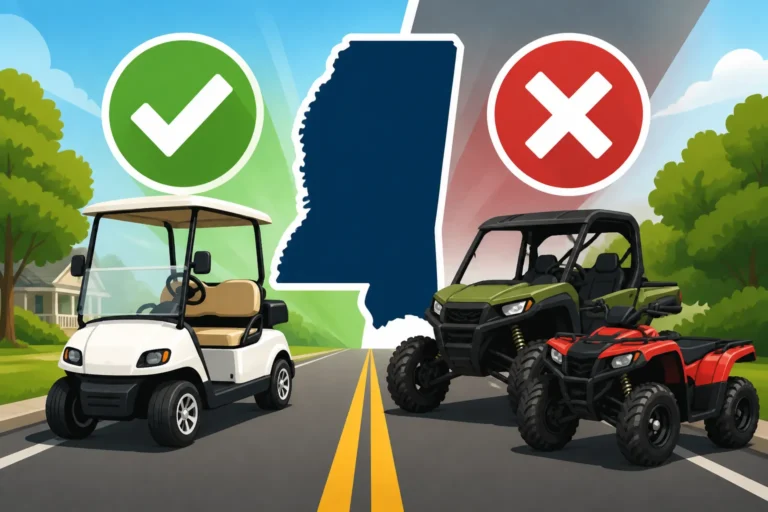
One of the most fundamental rules in Mississippi, and one that impacts passenger considerations significantly, is the flat-out ban on operating ATVs on public roads. [Mississippi Bans ATVs on Public Roads] is a point that cannot be stressed enough. This isn't just about highways; it extends to county roads, city streets, and any other thoroughfare maintained by public funds. The only exceptions are specific, limited circumstances like crossing a road at a 90-degree angle to get to another trail, and even then, strict rules apply.
This road ban is crucial because it immediately limits where you can legally carry passengers. If you can’t even operate your machine on a public road, then the idea of loading up with friends and cruising through town is simply off the table. This restriction pushes all ATV and UTV riding, including any passenger activities, strictly into designated off-road areas. It also means that any rules you encounter about passengers will almost exclusively apply to these off-road, public land settings, rather than everyday road use. It truly sets the stage for understanding all other regulations you'll encounter.
Understanding Public Land Categories and Their Nuances
Public lands in Mississippi offer diverse riding opportunities, from vast national forests to specific state park trails and wildlife management areas. Each category of public land operates under its own set of rules, and these variations are especially critical when it comes to understanding who can ride with you. Assuming that rules from one public land will carry over to another is a common mistake that can lead to fines or even more serious consequences.
National Forests and Designated Trails
Mississippi is home to several beautiful national forests, including the Bienville, Delta, De Soto, Holly Springs, Homochitto, and Tombigbee National Forests. These forests often contain designated OHV (Off-Highway Vehicle) trail systems, like the popular Bethel OHV Trails. For riding in these areas, you'll generally need a National Forest OHV Pass, which is a separate requirement from any state permits. The crucial point for passengers is that these trails are managed by the U.S. Forest Service, which has its own set of regulations.
The Forest Service typically adheres to the manufacturer's design for ATVs regarding passenger capacity. This means that if your ATV was designed by the manufacturer as a single-rider machine, that's how it must be operated on national forest trails. For UTVs, or side-by-sides, the rules are more accommodating, allowing passengers up to the manufacturer's designed seating capacity, provided all occupants have a designated seat and seatbelt. Safety is paramount here; overcrowding a machine not built for multiple passengers can drastically affect its balance and handling on challenging terrain. Remember to always check the specific rules for the district you plan to visit, as they might have additional local provisions. You can find information about [Mississippi National Forest Riding Explained] to help plan your trips.
State Parks and Their Specific Rules
Mississippi State Parks are another potential option for off-road enthusiasts, though not all state parks permit ATV or UTV riding. Those that do usually have very specific, often more restrictive, rules than what you might find in a national forest. For instance, a state park might require every rider, regardless of age, to wear a helmet, even if state law only mandates it for those under 16. These parks are often smaller, with more mixed-use trails, and thus have a heightened focus on safety and minimizing conflict between different user groups.
When it comes to passengers in Mississippi State Parks, you can expect strict adherence to manufacturer specifications. If your ATV is a single-seater, you'll be riding solo. Side-by-sides, however, are usually allowed to carry as many passengers as they have factory-installed seats and seatbelts. It is common for state parks to require everyone to sign a liability waiver, and sometimes they'll even check identification to verify age, particularly for younger riders or passengers. Always call ahead or check the specific state park’s website for their current OHV policies before you load up the trailer. Details on [Mississippi State Park Waiver Requirements] can give you a head start on what to expect.
Wildlife Management Areas WMAs and Limited Access
Wildlife Management Areas (WMAs) in Mississippi are managed by the Mississippi Department of Wildlife, Fisheries, and Parks and are primarily designated for hunting, fishing, and other wildlife-related activities. While ATVs and UTVs are often used within WMAs, their use is typically much more restricted than in national forests or dedicated OHV parks. Most WMAs only allow ATVs and UTVs on designated roads or trails, and often only for specific purposes like game retrieval or accessing hunting stands.
Passenger rules within WMAs reflect this restricted use. On designated WMA roads, if an ATV is factory-designed for one rider, only one rider is permitted. For UTVs, passengers are generally allowed up to the manufacturer's seating capacity, as long as they remain on designated roads or trails. However, it's crucial to understand that WMAs are not recreational riding parks. The emphasis is on wildlife management, and off-road vehicle use is a means to an end, not an end in itself. You might find further restrictions during hunting seasons, or even temporary closures. Always check the specific WMA’s regulations, which can be found on the MDWFP website, before you go. Riding with an extra person just for fun might not be permitted if the WMA's rules specify use only for hunters or those accessing permitted areas. Understanding [Mississippi WMA Road Riding] is essential for navigating these areas.
Deconstructing Passenger Rules for ATVs (Quads)
ATVs, often referred to as quads, are designed with a specific rider experience in mind. Unlike UTVs, which frequently boast multiple seats, most ATVs are built for a single operator. This fundamental design difference is the most critical factor in Mississippi's passenger rules, especially on public lands. Trying to squeeze an extra person onto an ATV not designed for it is not only illegal in most public settings but also incredibly dangerous.
The "Factory-Designed" Rule for ATVs
The golden rule for carrying passengers on an ATV in Mississippi, particularly on public lands, revolves entirely around its original design. If your ATV was "factory-designed" for only one operator, then that's exactly how many people should be on it. This means no "straddling the seat behind the driver," no "sitting on the fender," and certainly no "standing on the footpegs." This rule is consistently enforced across national forests, state parks, and wildlife management areas. The rationale is simple: ATVs are designed for dynamic weight shifting by the operator to maintain balance and control, especially when navigating uneven terrain, making turns, or climbing hills. Adding a passenger, especially one without proper handholds or footrests, dramatically alters the machine's center of gravity and severely impairs the operator's ability to react safely.
Think about the way an ATV handles: the rider leans into turns, shifts their weight to manage inclines and declines, and uses their body to absorb bumps. A passenger, particularly one who isn't experienced in off-road riding, can't effectively mimic these movements and will instead become a dead weight, making the machine unstable and much harder to control. This increases the risk of rollovers, losing control, and serious injury to both the operator and the passenger. When a ranger or deputy sees two people on a single-rider ATV, they aren't just looking for a technical violation; they are seeing a significant safety hazard.
The Realities of Riding Solo (Mostly)
For the vast majority of ATVs sold, the reality is that they are single-rider machines. While there might be a few specialized, larger ATVs designed with a factory-installed second seat (sometimes called "two-up" or "tandem" ATVs), these are the exception rather than the rule. If your ATV does have a legitimate, factory-designed second seat with integrated handholds and footrests for a passenger, then carrying a passenger on public lands in Mississippi is generally permissible, provided all other age and safety requirements are met. However, it's crucial to distinguish these legitimate "two-up" models from aftermarket seat attachments or simply trying to make do with a single seat.
If you have a standard, single-rider quad, prepare to ride solo on public trails. This can be a bit of a bummer if you hoped to share the experience closely with a friend or family member. However, it’s a non-negotiable safety standard on public land. Instead of trying to bend the rules, consider investing in a UTV if you frequently want to bring passengers, or plan your rides where each person has their own approved machine. Trying to circumvent these rules can lead to citations, and more importantly, risks serious injury.
Deconstructing Passenger Rules for UTVs (Side-by-Sides)
UTVs, or side-by-sides, were designed from the ground up with multiple occupants in mind, setting them apart significantly from traditional ATVs when it comes to passenger rules on public land in Mississippi. The very configuration of a UTV, with its bucket or bench seats, seatbelts, and roll cages, is inherently more accommodating for carrying multiple people. This design difference is key to understanding why UTVs have much more lenient passenger regulations compared to ATVs.
Side-by-Side Seating Capacity: The Key Difference
The main distinction for UTVs is that they are designed to carry passengers in a side-by-side configuration. This is why they're often called "side-by-sides." The rule for UTVs on public lands in Mississippi is generally straightforward: you can carry as many passengers as there are factory-installed seating positions with corresponding seatbelts. If your UTV has two seats, you can have a driver and one passenger. If it's a four-seater, you can have a driver and three passengers, and so on.
This rule emphasizes two critical components: a dedicated seat and a seatbelt. It's not enough to simply have space; each person must be in their own designated spot, securely fastened. This is a vital safety measure because, despite their stability, UTVs can still encounter challenging terrain, sudden stops, or even rollovers. The seatbelt system, combined with the roll cage, is designed to keep occupants contained and protected in such events. Modifications that add extra seating without proper engineering and safety features are usually not permitted on public lands and would likely violate the "factory-designed" standard. Therefore, if you're looking to upgrade or add to your machine, ensure any accessories, perhaps from brands like SuperATV, are designed for safety and comply with regulations for additional riders.
Youth Riders and UTV Passengers
When it comes to younger riders, UTVs often provide a safer environment for passengers than ATVs. While a child under 16 is prohibited from operating an ATV without proper certification and supervision, they can often be a passenger in a UTV, provided they meet certain criteria and the UTV has appropriate seating. The key here is that the child must be able to sit upright, with their back against the seat and their feet flat on the floor, and be properly secured by the UTV's seatbelt system. If a child is too small for the seatbelt to fit securely, or if their feet dangle, they may not be safe, even if there's a designated seat.
Parents and guardians must use common sense and prioritize safety. Just because there's a seat doesn't mean it's suitable for every child. Some UTVs might offer youth-specific seating accessories or booster seats that integrate with the factory seatbelts, which can enhance safety for smaller passengers. However, these still need to meet the public land agency's approval. Also, remember that even as a passenger, [Mississippi Helmet Law for Riders Under 16] likely still applies if the child is under that age, especially in state parks or national forests that enforce a helmet rule for all occupants. Always confirm the specific park or forest's age and helmet mandates for passengers before your trip.
Age, Supervision, and Safety Certificates for Passengers
Beyond the physical capacity of your machine, Mississippi also has rules regarding the age of riders and passengers, particularly for those under 16. These regulations are designed to protect younger individuals who may lack the judgment, strength, or experience to safely operate or even ride as a passenger on an off-road vehicle. Understanding these age and supervision requirements is just as important as knowing your machine's passenger capacity.
The Under-16 Helmet Mandate
Mississippi law is clear that any person under 16 years of age operating or riding as a passenger on an ATV (this explicitly includes ATVs and off-road motorcycles, and is often applied to UTVs by park regulations) must wear an approved safety helmet. This isn't just a suggestion; it's a legal requirement. The helmet must be properly fastened and fit correctly to provide maximum protection. This rule is universally enforced across all public lands in Mississippi, whether it's a national forest, state park, or WMA.
This mandate acknowledges the significant risks involved in off-road riding. Head injuries are among the most severe consequences of ATV/UTV accidents, and helmets are proven to drastically reduce the risk of serious injury or fatality. Even as a passenger in a UTV with a roll cage and seatbelts, a helmet provides an extra layer of protection, particularly from impacts with the ground or internal components during a sudden jolt or rollover. As the operator, it's your responsibility to ensure all underage passengers are wearing appropriate head protection. Failure to do so can result in a citation and, more importantly, put a child at grave risk.
Supervision Requirements on Public Land
For young riders who are operating an ATV or UTV, Mississippi law typically requires supervision by an adult. While this usually applies more to the operator than a passive passenger, the spirit of safe operation extends to all occupants. For example, if a minor is driving a UTV with a passenger, the adult supervising the minor operator would also be indirectly supervising the safety of the passenger. Specific rules can vary by public land type. For instance, national forests might stipulate that youth operators must be directly supervised by an adult who is also on an OHV and within line of sight.
The core idea is that an experienced adult should be present and responsible for ensuring all rules are followed, including passenger safety. This supervision goes beyond just physical presence; it means actively monitoring the ride, the terrain, and the behavior of all occupants. If a young passenger is acting unsafely, or if the terrain becomes too challenging for the combination of operator and passenger, the supervising adult is expected to intervene. This adult oversight is a critical layer of protection for minors enjoying public land riding. You can learn more about [Mississippi Rules for a Teen Rider].
Safety Certificates for Young Operators (and their implications for passengers)
While safety certificates are primarily aimed at young operators of ATVs and UTVs, they have indirect implications for passengers. In Mississippi, if a rider is under 16, they must possess an ATV safety certificate issued or approved by the Department of Public Safety to operate an ATV on public lands. While this doesn't directly apply to a child merely riding as a passenger, it underscores the state's commitment to safety education for youth in off-road environments.
A certified young operator is theoretically better equipped to handle a machine safely, which in turn reduces the risk for any passengers they might be carrying (in a UTV, for example, as ATVs are typically single-rider). Parents who have gone through the process of getting their child certified will also be more attuned to general off-road safety practices, which naturally extends to how they manage passengers. Even if a child is only ever a passenger, understanding the content of these safety courses can inform parents about best practices for gear, riding conditions, and avoiding hazards. It's all part of a broader culture of safety that Mississippi promotes for its off-road enthusiasts. For detailed information on courses, consider checking [Mississippi Safety Course Certificates].
Practical Considerations and Common Mistakes
Navigating the rules for passengers on public lands in Mississippi can feel like a minefield, and it's easy to make assumptions or overlook small details that can lead to big problems. Beyond the written laws, there are practical considerations and common mistakes that riders often make, impacting not only their legal standing but also the safety and enjoyment of their ride.
What a Deputy Can Ask to See
When you're out riding on public land, whether it's a national forest or a state park, law enforcement officers – typically Forest Service rangers, park rangers, or county deputies – have the authority to stop you and check for compliance. They're not just looking for reckless riding; they're also ensuring everyone on your machine is legal and safe. For passenger rules, they'll primarily be looking at:
- Machine Type and Capacity: Is your ATV factory-designed for one, and you have two? Or is your UTV overloaded beyond its designated seats?
- Helmet Compliance: Is everyone under 16 wearing a properly fitted and fastened helmet?
- Seatbelt Use (UTVs): Are all UTV passengers, regardless of age, wearing their seatbelts?
- Operator Age/Certification: For younger operators, they'll ask for proof of age and any required safety certificates. While not directly about passengers, an underage or uncertified operator immediately makes the entire ride illegal, including any passengers.
- Forest Pass/Permit: Are you riding in a designated area and do you have the required pass, such as the [Mississippi Forest Pass Cost]?
It’s advisable to carry identification for all adult riders and for any minors (e.g., a school ID or copy of a birth certificate) to verify age if questioned. Being cooperative and having your paperwork in order can make a big difference if you're stopped. Remember, these officers are primarily concerned with safety and protecting the resources they manage.
Why Local Ordinances Don't Apply to Public Lands
A common misconception among riders in Mississippi is confusing local municipal or county ordinances with state or federal public land rules. While some towns in Mississippi have passed ordinances allowing or restricting golf carts and sometimes even ATVs on local streets, these ordinances almost never extend to state parks, national forests, or wildlife management areas. The legal jurisdictions are entirely separate. A rule you see posted in Hattiesburg about golf carts on city streets has no bearing on whether you can carry a passenger on a trail in the De Soto National Forest.
Public lands operate under the authority of their respective managing agencies (e.g., U.S. Forest Service, MDWFP), and their rules supersede local city or county regulations within their boundaries. Trying to cite a local golf cart ordinance to a Forest Ranger regarding your side-by-side passengers will likely be met with confusion and firm insistence on federal or state land rules. Always verify the rules specific to the public land you are visiting, not your hometown's local laws.
Gear and Modifications for Passenger Safety
Even when legally permitted to carry passengers, safety gear and appropriate machine modifications are paramount. While helmets are mandatory for those under 16, every rider and passenger, regardless of age, should strongly consider wearing one. Additionally, eye protection, sturdy over-the-ankle boots, long pants, and long-sleeved shirts are highly recommended to protect against debris, branches, and potential abrasions.
For UTVs, maintaining your machine is critical, especially when carrying precious cargo. Ensure all seatbelts are functional and in good condition. Check your tires, brakes, and suspension regularly. If you're frequently carrying passengers and venturing into challenging terrain, you might consider certain aftermarket upgrades to enhance safety and comfort. For example, some riders add extra grab handles for passengers, or upgraded suspension components that can better handle the additional weight. Companies like SuperATV offer a range of accessories designed to improve the off-road experience, including items like stronger roofs, upgraded doors, or more robust tires, all of which contribute to a safer ride, especially with passengers on board. However, remember to ensure any modifications comply with public land regulations and do not exceed the machine's original safety specifications. Always prioritize safety over convenience or aesthetics when making choices about your machine and its occupants.
Summary of Passenger Rules on Mississippi Public Lands
To help clarify the differences between ATVs and UTVs when it comes to carrying passengers on public lands in Mississippi, here’s a quick overview:
| Feature/Requirement | ATV (Quad) | UTV (Side-by-Side) |
|---|---|---|
| Basic Passenger Rule | Only if factory-designed for two riders (rare) | Allowed up to manufacturer's seating capacity |
| Seating | Dedicated, integrated second seat (if two-up model) | Dedicated seat for each passenger |
| Seatbelts | Not applicable for standard ATVs; integrated for two-up models | Required for all occupants in designated seats |
| Helmet (Under 16) | Mandatory for both operator and passenger | Mandatory for both operator and passenger |
| Supervision (Minor Operator) | Required by an adult on an OHV within sight | Required by an adult |
| Age for Passenger | No explicit minimum, but safety fit is key if two-up | Must be able to sit upright, feet flat, secured by belt |
| Legal Authority | State law & specific public land agency rules | State law & specific public land agency rules |
| Common Use | Primarily single-rider experience | Family/group outings, utility work |
This table serves as a general guide. Always consult the specific rules of the national forest, state park, or WMA you plan to visit, as they may have additional or more restrictive requirements. Prioritizing safety and adherence to regulations ensures everyone has a fun and incident-free off-road adventure.
Disclaimer
This article is for general informational purposes only and does not constitute professional advice. Laws, prices and regulations vary by location and change over time. Consult a qualified professional for guidance on your specific situation.