Mississippi Code Section 63-31-3
Navigating the world of ATVs and UTVs in Mississippi can feel like trying to solve a riddle wrapped in an enigma, especially when it comes to riding anywhere near a public road. Many folks invest in these powerful machines for hunting, farming, or just plain fun, only to hit a wall when they realize how restrictive the state's laws are regarding road use. This guide will cut through the confusion surrounding Mississippi Code Section 63-31-3, explaining exactly what it means for you as a rider and how to stay on the right side of the law without sacrificing your passion for off-road adventure.
Decoding Mississippi Code Section 63-31-3: The Core of the Matter
Let's be honest, trying to decipher legal code can feel like reading a foreign language. It's often dense, formal, and doesn't always make immediate sense to the everyday person. But for anyone who owns an ATV or UTV in Mississippi, understanding Code Section 63-31-3 isn't just helpful, it's absolutely crucial. This short but impactful section of state law defines the fundamental relationship between your off-road vehicle and public roadways in the Magnolia State, and frankly, it doesn't leave much room for interpretation.
What the Law Explicitly States About ATVs and UTVs
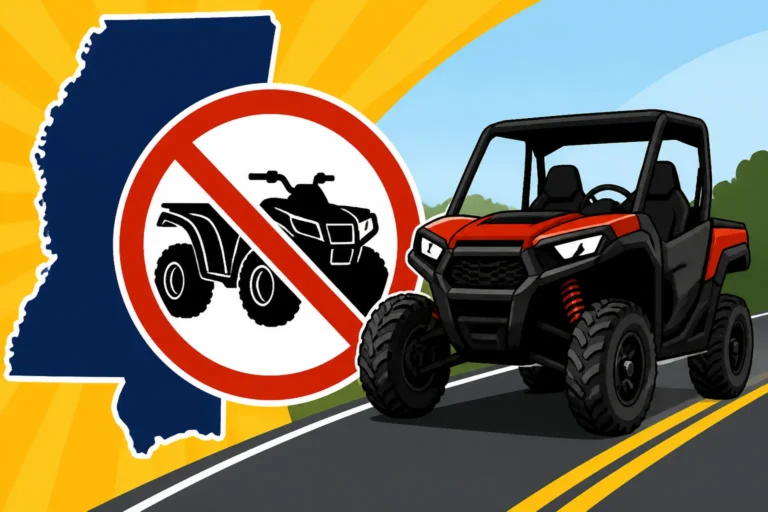
At its heart, Mississippi Code Section 63-31-3 is remarkably clear: it flatly prohibits the operation of off-road vehicles on public roads and highways within the state. There’s no gray area here, no "ifs, ands, or buts" that magically create loopholes for certain situations. It doesn't matter if you're just trying to cross a paved road to get to another trail, or if you think a short jaunt down a county road won't hurt anyone. The law is unambiguous. If it's a public road, your ATV or UTV is generally not allowed on it. This directness can be frustrating for riders, especially those coming from states with more lenient laws or who use their machines as practical tools for property management. The text itself is quite brief, which only emphasizes its universal application across the state for all public thoroughfares.
Many riders, myself included, have spent countless hours poring over this, hoping to find some hidden clause or exception. But the truth is, the state legislature crafted this section with a very specific intent: to keep off-road machines off public roads. It's a black-and-white rule that governs every county and municipality unless a specific, local ordinance says otherwise (and we'll get into that in a bit). So, before you even think about putting tires on pavement, remember that Mississippi's state law is decidedly against it. It's vital to have a clear understanding of [Mississippi's ATV Law Is Only Two Sections Long] as a starting point.
Understanding the "Off-Road Vehicle" Definition
A significant part of understanding the law hinges on how Mississippi legally defines an "off-road vehicle." Section 63-31-3 doesn't just arbitrarily ban certain machines; it first establishes what it's talking about. Generally, an off-road vehicle (often abbreviated as ORV) in Mississippi's eyes encompasses everything from your traditional four-wheeled ATV to your larger, multi-passenger side-by-side UTV. The key characteristics usually involve being designed primarily for off-highway use, having features that make them unsuitable for conventional road travel (like knobby tires or a lack of street-legal lighting), and often falling outside the traditional motor vehicle classifications for registration and licensing.
This broad definition means that if your machine looks like an ATV or a UTV, and it's not explicitly registered as a low-speed vehicle (LSV) or a golf cart under specific circumstances, it's almost certainly going to be classified as an off-road vehicle by law enforcement. This is why attempting to "street-legalize" an ATV or UTV with aftermarket parts, even high-quality ones from companies like SuperATV, won't change its fundamental classification under state law. These accessories might enhance off-road performance or add a layer of safety for trail riding, but they do not magically transform an ORV into a street-legal vehicle in the eyes of the state of Mississippi. The state's focus is on the original design intent and classification, not subsequent modifications.
It's common for riders to mistakenly believe that if they add turn signals, a horn, or a rearview mirror, they've met some unwritten criteria for road use. However, these additions, while good for trail safety, do not override the state's legal definition of an off-road vehicle. [What the Law Counts as an Off-Road Vehicle] is an important piece of the puzzle here. The law focuses on the inherent nature of the machine, not what you bolt onto it.
Why the Law is So Short and Direct
You might wonder why a law with such significant implications for thousands of riders is so brief and to the point. The simplicity of Mississippi Code Section 63-31-3 is precisely what gives it its power and broad application. Unlike other states that have lengthy, nuanced statutes with pages of exceptions for agricultural use, crossing roads, or riding on specific unpaved county roads, Mississippi's legislature chose a direct approach. It avoids complexity by simply stating the prohibition, leaving little room for misinterpretation at the state level.
This succinctness means there aren't many state-level exceptions to debate or apply. It streamlines enforcement for law enforcement officers, as they don't need to delve into a long checklist of conditions to determine if an ORV is legally on a public road. While this directness is frustrating for many, it provides a clear, consistent message across the state. This contrasts sharply with the often convoluted and lengthy traffic codes for traditional automobiles. For a deeper dive into the brevity of the law, consider reading [Mississippi's ATV Law Is Only Two Sections Long]. It's a testament to the legislature's clear intent to keep off-road machines off of public roads, period.
The Reality of Mississippi's Road Ban: No Exceptions
For many ATV and UTV enthusiasts, the idea of not being able to ride a machine on any public road, even for a quick crossing or a short distance, seems almost unthinkable. Other states often have provisions for these scenarios, allowing riders to get from one trail section to another, access gas stations, or even use their machines for agricultural purposes on specific rural roads. However, in Mississippi, the reality of the state's road ban, as dictated by Code Section 63-31-3, is that it truly means "no exceptions" at the state level. This can be a bitter pill to swallow for many, leading to confusion and, sometimes, unintentional violations.
Why State Law Offers No "Farm Use" or "Crossing" Exceptions
One of the most common misconceptions among riders, particularly those in rural areas, is that there must be an unwritten or implied exception for "farm use" or simply "crossing" a road. Many farmers rely on their ATVs and UTVs as essential tools for everything from checking fences to hauling feed, and the idea of not being able to take their machine across a public road to reach another field can be incredibly inconvenient. Similarly, riders often assume they can cross a paved road if they're just getting to another section of trail. Unfortunately, Mississippi state law, specifically Code Section 63-31-3, offers no such allowances.
The absence of these common exceptions is a key differentiator for Mississippi. In states like Alabama or Louisiana, you might find specific statutes that permit ORVs on public roads for agricultural purposes or allow them to cross at designated intersections. Mississippi, however, chose not to include these provisions in its state law. This means that even if you're operating a rugged utility vehicle, perhaps outfitted with work-oriented accessories from a brand like SuperATV, it still falls under the statewide prohibition on public roads. The law makes no distinction between a sport quad ripping down the highway and a farmer's UTV slowly crossing a county road; both are generally prohibited by state statute. This is a point of significant frustration for many and highlights why it's crucial to understand [Why Mississippi's Road Ban Lists No Exceptions].
The Difference Between State Law and Local Ordinances
Here's where things get a tiny bit more complex, but also where a glimmer of possibility emerges for some riders. While Mississippi's state law is very clear about banning ATVs and UTVs from public roads, it doesn't entirely prevent local municipalities from enacting their own ordinances. Think of it like this: the state sets the overarching rule, but individual cities, towns, or even counties can (but don't have to) pass their own, more specific rules for roads within their jurisdiction.
This means that while statewide, you can't ride your ATV on a public road, a specific city might have passed an ordinance allowing golf carts or even certain types of UTVs on their city streets, usually under very strict conditions. This is a crucial distinction: a local ordinance only applies to the roads within that specific municipality's boundaries and never overrides state highways or roads outside that city's limits. It's not a blanket permission slip for the whole state. For example, [Hattiesburg's Cart Ordinance in Mississippi] is a prime example of a local rule, but it applies specifically to golf carts within Hattiesburg, not ATVs statewide. It is important to know that [Mississippi Golf Cart and LSV Ordinances] generally do not apply to ATVs and UTVs. You must verify what is allowed in each specific area.
What a Deputy Can Ask to See on the Road
If you happen to be stopped by a law enforcement officer while operating your ATV or UTV on a public road in Mississippi, even if you believe you're within the bounds of a local ordinance, there are certain things they will likely ask to see. First and foremost, they will want to confirm your identity, so a valid driver's license (if you're driving on public property, which includes designated trails) or a safety certificate (for younger riders on public land) is essential. They'll also be checking for any proof of ownership, such as a bill of sale, or a title if your machine was manufactured after the specific cutoff date (July 2025).
A deputy will also be assessing whether your machine meets any specific requirements outlined in a local ordinance, such as proper lighting, mirrors, or a slow-moving vehicle sign. They might also inquire about where you came from, where you're going, and your understanding of the local laws. It's crucial to remember that even if you think you're compliant, the burden of proof is often on you. This is why carrying all necessary documentation and knowing the precise wording of any relevant local ordinance is paramount. Understanding [Mississippi Equipment Checks by Deputies] can help you be prepared. Be polite, cooperative, and have your paperwork ready, as a stop can quickly escalate if you appear uncooperative or cannot provide the requested information.
Navigating the Legal Landscape: Local Ordinances as the Only Path
Given Mississippi's strict state law prohibiting ATVs and UTVs on public roads, many riders find themselves in a quandary. How can they possibly get from point A to point B if their journey involves even a short stretch of public pavement? The answer, as we've touched upon, lies solely in the realm of local ordinances. These are the specific rules and regulations enacted by individual cities, towns, or sometimes counties that may create limited, conditional road access for off-road vehicles. However, relying on these local rules requires careful research and a deep understanding of their limitations.
How Towns and Cities Can Create Road Access
While the state of Mississippi says "no" to ATVs and UTVs on public roads, local governing bodies—your city councils, boards of aldermen, or county supervisors—have the authority to say "yes," but only within their specific jurisdictional limits and under their own prescribed conditions. This usually happens when a community recognizes a practical need or a desire among its residents for limited road access. For instance, a small, rural town might pass an ordinance allowing residents to drive their UTVs on certain low-speed streets to reach businesses or specific recreational areas.
These ordinances are not arbitrary. They often come with a long list of requirements designed to ensure public safety. You might see stipulations about speed limits (often 25 or 30 mph), required safety equipment (like headlights, taillights, turn signals, mirrors, or a slow-moving vehicle emblem), specific hours of operation (daylight hours only), and even restrictions on the type of machine (e.g., only golf carts, or only UTVs, explicitly excluding ATVs). [Mississippi Towns That Refuse ATVs on Streets] provides important context, as many communities still opt to ban them entirely. It's a localized patchwork, not a statewide solution, and each community's rules can be vastly different.
What to Look For in a Valid Local Ordinance
If you hear whispers of a town near you allowing ATVs or UTVs on its streets, don't just take someone's word for it. It's absolutely critical to find and read the actual written ordinance. This isn't just a suggestion; it's a necessity. You're looking for an official document, passed by the local governing body, that explicitly mentions ATVs or UTVs and outlines the precise conditions for their use on public roads. A good ordinance will clearly define:
- The types of vehicles allowed: Does it say "golf carts only," "low-speed vehicles," or does it specifically include "ATVs" or "UTVs"?
- The roads allowed: Are they all city streets, only those with a certain speed limit (e.g., 30 mph or less), or designated routes?
- Required equipment: What safety features must your machine have (lights, mirrors, horn, turn signals, seatbelts, etc.)? Even if you've kitted out your machine with high-quality components from SuperATV, if the ordinance doesn't specifically list those requirements, it might not matter.
- Operating restrictions: Are there age limits for drivers, passenger restrictions, speed limits, or specific times of day for operation?
- Permit requirements: Does the city require you to get a special permit or register your machine with them?
The best way to find this information is to contact the city clerk's office, the mayor's office, or the local police department. Don't rely on hearsay or old forum posts. Get the current, official document. This is your best defense against an unintentional violation. For context, you might also want to look at [Mississippi Towns That Name Machines They Bar], as some ordinances can be very specific.
Why Many Towns Still Bar ATVs
Despite the potential for local ordinances to create some road access, the reality is that many towns and cities in Mississippi still flatly prohibit ATVs and UTVs on their streets. There are several reasons for this, often rooted in public safety concerns, liability issues, and simply maintaining order on their roadways. Many municipal leaders view ATVs and UTVs as fundamentally different from traditional vehicles, citing concerns about their speed, lack of standardized safety features, and the potential for accidents involving heavier, faster-moving traffic.
Local officials may worry about increased accident rates, the difficulty of enforcing various equipment requirements, and the potential for noise complaints. Furthermore, some towns see allowing these machines on streets as opening a Pandora's Box, potentially leading to more recreational riding and less controlled use. The administrative burden of creating, enforcing, and updating such ordinances can also be a deterrent. For a deeper understanding of the state-level prohibition, [Mississippi Bans ATVs on Public Roads] offers more context. Ultimately, the decision rests with each individual municipality, and many choose to stick with the clear, unambiguous statewide ban, making it crucial for riders to always check local rules.
Consequences of Violating the Road Ban: What to Expect
Ignoring Mississippi Code Section 63-31-3, or any local ordinance that prohibits ATV and UTV use on public roads, is not a minor oversight. It carries real, tangible consequences that can range from a slap on the wrist to a significant financial burden and legal headache. Many riders mistakenly believe that the fines are negligible or that they'll simply get a warning. While individual officer discretion can play a role, the law provides for specific penalties that you absolutely need to be aware of before ever considering a ride on a public thoroughfare.
Fines, Court Costs, and Your Record
The most immediate consequence of violating the road ban is typically a citation, which comes with a fine. While the state-level fine for illegal road riding might seem relatively low compared to other traffic infractions, often around $50, that's rarely the full story. You'll almost certainly incur additional court costs and administrative fees, which can quickly multiply the initial fine. These additional charges are a standard part of the judicial process, even for minor offenses. This is detailed further in [Mississippi Fines for Road Riding] and [Mississippi Penalties for Illegal Road Riding].
Furthermore, a citation for illegal operation of an off-road vehicle on a public road could potentially go on your driving record. While it might not carry the same weight as a speeding ticket in a car, it's still a mark against you. Depending on your insurance company, it could even impact your premiums, especially if they see it as reckless behavior. Even if you're riding a utility-focused side-by-side, equipped with aftermarket safety gear from a company like SuperATV, the state doesn't differentiate based on the machine's purpose; the violation is operating an ORV where it's not permitted.
The Risk of Impoundment and Recovery Fees
This is where the consequences can become truly painful for your wallet and your peace of mind. In addition to a fine and court costs, law enforcement has the authority to impound your ATV or UTV if it's being operated illegally on a public road. This is not a guaranteed outcome of every stop, but it's a very real possibility, especially if you're uncooperative, have prior offenses, or are riding in a particularly egregious manner. If your machine is impounded, you're not just looking at the initial fine; you're also on the hook for towing fees and daily storage fees, which can add up rapidly.
Retrieving an impounded machine can be a frustrating and expensive process. You'll typically have to go to the impound lot, pay all accumulated fees, and sometimes even prove ownership and show that you've addressed the initial violation (e.g., paid your fine). These fees can easily dwarf the cost of the original citation, turning a relatively minor infraction into a multi-hundred-dollar nightmare. Imagine having to explain that cost just because you took a "shortcut" down a paved road. It's a compelling reason to stick to designated trails and private land.
Insurance Implications for an Illegal Road Ride
Many ATV and UTV owners wisely choose to carry insurance on their machines, even though [Mississippi Has No Insurance Mandate] for off-road vehicles. This coverage typically protects against theft, damage, or liability if you're involved in an accident while riding legally. However, operating your machine illegally on a public road can severely complicate any insurance claim you might need to make.
If you have an accident while operating your ATV or UTV on a public road where it's prohibited, your insurance company could potentially deny coverage for damages or injuries. This is because most policies contain clauses that exclude coverage for illegal activities or activities that fall outside the intended use of the vehicle. Imagine a scenario where you're involved in a collision with a car while illegally crossing a highway. Not only could you face fines and impoundment, but your own insurance might refuse to pay for damages to your machine or for any liability claims from the other driver. This could leave you personally responsible for tens of thousands of dollars in damages, medical bills, and legal fees. It's a huge financial risk that simply isn't worth taking.
Practical Advice for Mississippi ATV and UTV Owners
Understanding Mississippi Code Section 63-31-3 can feel like a downer, especially with its strict stance on road riding. But knowing the rules doesn't mean you have to give up your passion for ATVs and UTVs! It simply means you need to be smart, prepared, and strategic about how and where you ride. My goal is always to help fellow riders make the most of their machines safely and legally, even within these restrictions. With a bit of planning, you can still enjoy all the mud-slinging, trail-blazing fun that Mississippi has to offer.
Safely Transporting Your Machine to Trails
Since you generally can't ride your ATV or UTV on public roads in Mississippi, the obvious solution for getting to your favorite riding spots is safe transportation. This usually means a truck and trailer, or in some cases, a robust truck bed setup. Investing in a good quality trailer and reliable tie-downs is not just a convenience; it's a safety imperative.
When hauling your machine, remember these tips:
- Secure it properly: Use multiple tie-down points, front and rear, to prevent movement. Don't skimp on quality; cheap straps can fail. A well-secured machine won't shift during transport, preventing accidents on the highway.
- Check your lights and tires: Make sure your trailer's lights are working correctly and that your trailer tires are properly inflated and in good condition. A blown trailer tire or faulty brake light is an invitation for a roadside stop, which is the last thing you want when trying to get to the trails.
- Plan your route: Know exactly where you're going and consider potential obstacles like low bridges or tight turns. If you're heading to a public trail system like Bethel OHV Trails or a private mud park, know the access points and parking areas ahead of time.
- Consider a tow vehicle with appropriate capacity: Ensure your truck or SUV is rated to safely tow the weight of your trailer and machine. Overloading can be dangerous and damage your vehicle.
This careful preparation allows you to enjoy Mississippi's fantastic off-road opportunities, like those found at [Red Creek Off-Road in Mississippi] or within the national forests, without any worries about illegal road riding.
Making Smart Choices About Accessories and Modifications
It's natural to want to personalize and enhance your ATV or UTV. The aftermarket is full of incredible accessories, from lift kits and larger tires to improved lighting and powerful winches. Companies like SuperATV offer a vast array of high-quality parts designed to boost performance, utility, and safety for off-road conditions. However, it's crucial to remember that in Mississippi, no amount of aftermarket modification will transform your off-road vehicle into a street-legal one under state law.
Here's how to think about accessories smartly:
- Focus on off-road performance and safety: Invest in upgrades that genuinely improve your experience on trails, hunting leases, or farm properties. Skid plates, snorkels for mudding, upgraded suspension, and stronger axles are all excellent choices for their intended environment.
- Enhance visibility for trail riding: Adding brighter LED lights, a horn, or mirrors (even if not strictly required off-road) can significantly improve safety when sharing trails or operating in low-light conditions on private land. These are smart safety choices, but don't confuse them with making your machine road-legal.
- Be wary of "street legal kits": While some companies sell kits advertised to make your machine "street legal," these kits are generally designed for states with different laws than Mississippi. Installing such a kit here won't change the state's classification of your ORV and won't exempt you from Code Section 63-31-3. Always understand the specific legal context of your state and local area before making modifications based on generalized "street legal" claims.
- Maintain your machine: Regardless of modifications, keeping your ATV or UTV in top mechanical condition is paramount for safety and longevity. Regular maintenance, especially after intense mud riding or water crossings, will protect your investment.
By focusing on enhancing your machine for its intended off-road purpose, you can enjoy all the benefits of high-quality accessories without falling into the trap of believing they grant you illegal road access.
Advocating for Change and Understanding Limitations
It's completely understandable to feel frustrated by Mississippi's strict ATV and UTV road laws. Many riders believe the laws are outdated or don't account for the responsible use of these machines. If you're passionate about seeing change, there are avenues for advocacy, but it's important to approach them realistically and understand the limitations.
- Engage with local officials: Start at the local level. Attend city council or county supervisor meetings. Present well-reseated arguments for specific, limited road access (e.g., connecting trails, agricultural use on unpaved roads). Focus on public safety plans and how an ordinance would be enforced. Local change is often more achievable than statewide legislative reform. Asking [Questions Worth Asking a Tax Collector] or your local officials can open a dialogue.
- Join rider organizations: ATV and UTV clubs or organizations can pool resources and present a united front for legislative change. A collective voice often carries more weight than individual complaints. These groups can lobby state legislators and educate the public on responsible riding.
- Understand the legislative process: Changing state law is a long, complex process. [Mississippi's Failed 2025 Road Access Bill] and [Earlier Road Access Bills From 2022 and 2024] show that attempts have been made, but they face significant hurdles, often dying in committee. Realize that even popular bills can fail for various reasons.
- Focus on safe, legal riding: Even while advocating for change, always prioritize safe and legal riding. This demonstrates that ATV and UTV owners are responsible members of the community, which can help build goodwill for future legislative efforts. Respect private property and always follow designated trail rules, such as those for [Mississippi WMA Riding Rules] or private parks.
Ultimately, while the desire for more road access is strong for many, understanding the current legal landscape and working within its boundaries is essential for every Mississippi ATV and UTV owner. Enjoy your machine, ride responsibly, and stay safe out there!
Disclaimer
This article is for general informational purposes only and does not constitute professional advice. Laws, prices and regulations vary by location and change over time. Consult a qualified professional for guidance on your specific situation.