Carrying Papers on a Southern Back Road
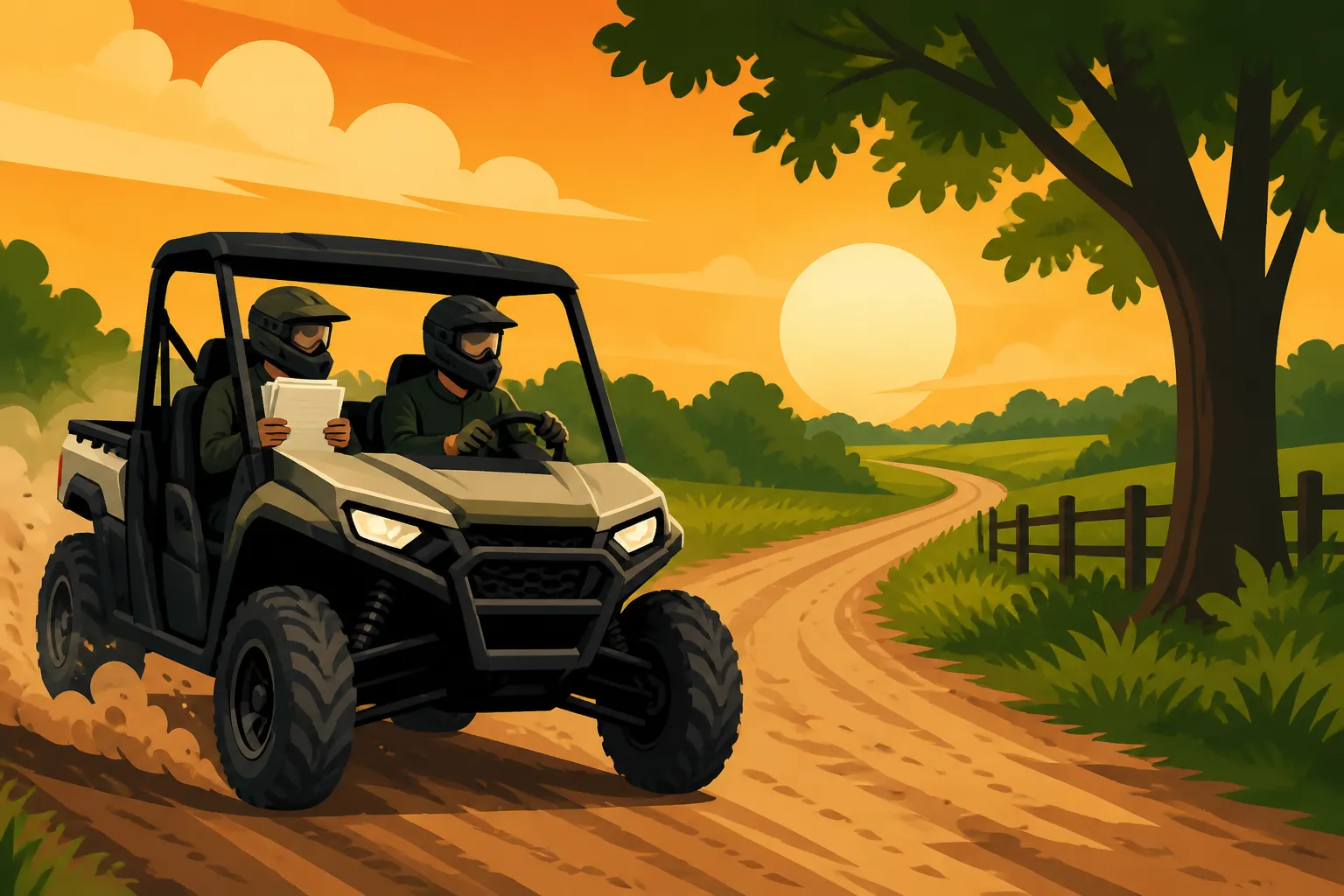
Riding your ATV or UTV through Mississippi's beautiful backroads, whether it's on a designated trail, private hunting land, or just a friend's sprawling property, is one of life's true pleasures. But that peace can quickly turn to a sinking feeling if you're stopped by a deputy or a landowner and realize you don't have the right paperwork on hand. It's a common oversight, especially with machines that aren't typically "registered" like cars, but it can lead to frustrating delays or even bigger headaches. This guide will walk you through exactly which papers you should carry when you're out on a southern back road and why having them ready can save you a world of trouble.
What Papers Should You Carry on Mississippi Back Roads?
It's easy to think of your ATV or UTV as a recreational toy that doesn't need much official attention once you've bought it. After all, [Mississippi Does Not Register ATVs]. However, treating it like a glorified bicycle when it comes to documentation is a mistake that many riders learn the hard way. While you might not need a stack of documents for every casual spin, certain situations demand proof of ownership, legality, and even personal information.
The key here is being prepared for different scenarios. Are you riding on public land? Are you crossing a county road for a quick hop to the next field? Are you on someone else's private property? Each situation can subtly change what you might be expected to produce if a question arises. Think of it as a small, portable "go bag" of documents for your machine, just in case.
Proof of Ownership: Title and Bill of Sale
This is arguably the most crucial set of documents you can carry, especially for machines purchased after the cutoff date of July 2025. For any ATV or UTV manufactured after that date, a title will eventually be issued. While you won't be expected to carry the original paper title itself – that's something you want to keep safe at home – having a clear, legible copy is incredibly smart. This copy demonstrates that you are the rightful owner of the machine you're operating.
If you bought your machine new, you would have received a Manufacturer's Certificate of Origin (MCO) from the dealer. [Mississippi Requires an MCO for a New Machine] to get a title. For used machines, a bill of sale is your primary proof of ownership, especially for older quads that might not have a formal title. [Mississippi Bills of Sale for a Used Machine] should clearly state who bought it, who sold it, the date, and the machine's Vehicle Identification Number (VIN). Even if you're getting a formal title, always keep a copy of that bill of sale. It's your historical record of how the machine came into your possession, and a good one, perhaps drafted using a service like LawDepot, can provide crucial details if ownership is ever questioned.
What if your machine is financed? It's important to understand how a lender’s interest appears on the official title. [How a Lender's Lien Appears on Your Title] means your financial institution is listed as a lienholder. While this doesn't change your right to operate the machine, it is another layer of documentation that confirms the machine's identity and its legal standing, even if you are still making payments. A copy of your loan agreement, alongside a copy of any title or bill of sale, reinforces your legitimate possession.
Proof of Legality: Permits, Safety Cards, and IDs
Operating an ATV or UTV on certain public lands or even crossing public roads (where permitted, which is rare in Mississippi) often requires more than just proof of ownership. You might need to show that you're legally allowed to operate the machine and that you, as the operator, meet specific requirements. For instance, if you're riding on public lands like those managed by the National Forest Service, there might be a permit fee or a pass required.
For younger riders, or anyone using public land, a safety course certificate or a valid driver's license can be a critical piece of identification. [Mississippi Driver's License on Public Property] is generally accepted as proof of operator competency. For those under 16, [Mississippi Safety Course Certificates] are often required, especially when riding on public lands, or if you're operating on a road where local ordinances permit. It's not just about knowing how to ride; it's about proving you've learned the rules and safety guidelines. These aren't just suggestions; they are often legal requirements to ride in certain areas or for certain age groups.
Consider the rare instances where you might be permitted to cross a public road. While [Mississippi Law Flatly Bars ATVs From Public Roads] in most cases, there might be very specific, limited exceptions in local ordinances or for designated agricultural use. In such scenarios, if you are allowed to make a quick crossing, carrying your driver's license and perhaps a copy of the specific local ordinance that permits your action would be prudent. Otherwise, you risk a citation.
Emergency Information: Insurance and Contacts
While [Mississippi Has No Insurance Mandate] for ATVs or UTVs, carrying proof of insurance (if you have it, which is highly recommended) is still a very good idea. If you're involved in an accident, whether it's on private land or a public trail, having your insurance information readily available can streamline the process of reporting the incident and dealing with any damages. It shows you're a responsible rider, even if the law doesn't strictly demand it.
Beyond insurance, think about personal emergency information. A small card with contact numbers for family members, any known allergies, or important medical conditions can be a lifesaver if you're ever injured and unable to communicate. This isn't just about legal compliance; it's about personal safety. A simple laminated card can make a huge difference to first responders.
Finally, if you're riding on private land that isn't your own, you absolutely need [Written Permission From a Southern Landowner]. A simple, signed document stating that you have permission to be there, along with the landowner's contact information, can prevent accusations of trespass. This is especially true on large timberlands or hunting properties. A template for such a permission form can often be found on legal document sites like LawDepot, ensuring all necessary details are included.
Why Carrying Physical Papers is Still Important in Mississippi
In our increasingly digital world, it’s tempting to rely solely on smartphone photos of your documents. While digital copies have their place, relying only on them when you’re out on a southern back road in Mississippi can be a gamble. There are practical reasons why a physical copy of key documents remains the gold standard, especially when dealing with official inquiries or unexpected situations.
Picture this: you're deep in the De Soto National Forest, enjoying a ride, and you come across a Forest Service ranger or a local deputy. Maybe there's been a complaint, or they're just checking to ensure everyone is compliant with rules. Their ability to quickly verify your information is paramount. Waiting for a phone to charge, struggling with poor signal, or fumbling through an unorganized photo album can easily escalate a simple check into a drawn-out, uncomfortable encounter.
Dealing with Law Enforcement Stops
When a deputy pulls you over, whether it's on a gravel logging road or a dirt path, they need to quickly establish your identity and your right to be operating the machine. While many officers are equipped with tablets or radios, they often prefer or even require to see physical documentation. A clear, physical copy of your bill of sale, a title copy, or your driver's license is undeniable proof. [What a Mississippi Deputy Can Ask to See] will almost certainly include proof of identity and ownership.
Consider a scenario where the machine you're riding is suspected of being stolen, perhaps because a similar model was reported missing in the area. Having immediate, physical proof of ownership, like a bill of sale or a title copy, can quickly clear your name. Without it, the situation could mean an impounded machine and a lengthy process to prove your innocence later. This is where those LawDepot-generated bills of sale, filled out completely and correctly, really shine.
Furthermore, a dead phone battery or a cracked screen can render your digital documents inaccessible. Out in the woods, charging opportunities are scarce, and cell service is often nonexistent. Relying on a phone for critical documents is a risk you simply don't need to take when a laminated paper copy can do the job reliably, every time.
Proof for Private Land Access
If you're riding on land owned by a timber company, a hunting club, or a private individual, the rules about access are often strict. Landowners or their representatives are within their rights to stop you and ask for proof that you have permission to be there. [Mississippi Trespass Law for Riders] means you can face serious penalties if you're found on private land without explicit permission.
A printed copy of a signed permission slip or a hunting lease agreement is incredibly powerful in these situations. It leaves no room for ambiguity. A quick glance at a physical document can satisfy a landowner's concerns, whereas trying to show a screenshot on a small phone screen might not be as convincing or easy to verify, especially if they are not tech-savvy or have poor eyesight.
This documentation isn't just about avoiding trouble; it's about respecting property rights and maintaining good relationships with landowners. Many valuable riding opportunities in Mississippi are on private lands, and demonstrating responsibility by carrying the correct paperwork helps ensure these opportunities remain available for everyone.
What About Digital Copies?
Digital copies certainly have their place as a backup. Taking photos of all your important documents and storing them on your phone or in cloud storage is a smart move. In a perfect world with perfect cell service and fully charged devices, they might suffice. However, as discussed, the reality of remote Mississippi riding often involves spotty reception and limited power.
Think of digital copies as your "plan B" or for situations where a physical copy isn't immediately required, like when you're back home and need to reference a VIN. But for on-the-spot verification, especially in potentially adversarial situations, a physical document remains superior. It's readily accessible, doesn't rely on technology, and is easily accepted by anyone needing to verify your information. It also provides a clear, tangible record for both you and the person reviewing it.
Best Practices for Protecting Your Documents on the Trail
So, you're convinced that carrying physical papers is a good idea. The next challenge is how to carry them effectively without them getting ruined by mud, water, sweat, or simply getting lost during a bumpy ride. Southern riding conditions, with their humidity, sudden downpours, and dusty trails, are notoriously tough on paper.
Waterproof and Secure Storage
This is paramount. A simple Ziploc bag might work in a pinch, but for long-term protection and ease of access, invest in dedicated waterproof solutions. Small, dry bags designed for kayaking or boating are excellent. They are rugged, completely seal out water and dust, and often have clips or loops that can be secured inside a storage compartment or strapped to the machine. Another great option is a waterproof document holder, often found in camping or outdoor gear stores.
Consider where on your machine you’ll store these documents. Under the seat, in a secure glove box, or a dedicated storage compartment on a side-by-side are good spots. Avoid open racks or anything that could easily bounce off on rough terrain. The goal is to keep them protected from the elements and securely fastened so they don't get lost.
| Document Type | Primary Location (Home) | Recommended Trail Carry | Best Storage Method for Trail |
|---|---|---|---|
| Title | Original paper | Legible copy | Small dry bag or waterproof case |
| Bill of Sale | Original paper | Legible copy | Small dry bag or waterproof case |
| MCO (new machine) | Original paper | Legible copy (if applicable) | Small dry bag or waterproof case |
| Driver's License/ID | Original card | Original card or very clear copy* | Wallet (protected) or waterproof pouch |
| Safety Certificate | Original paper/card | Legible copy | Small dry bag or waterproof case |
| Insurance Card | Original card | Legible copy | Small dry bag or waterproof case |
| Land Permission | Original signed copy | Original or clear copy | Small dry bag or waterproof case |
| Emergency Contacts | Laminated card | Laminated card | Waterproof pouch, easily accessible |
| *Always carry your original driver's license for identification; a copy is a backup for the vehicle documents. |
Making Copies and Backups
Before you even think about hitting the trail, make multiple copies of your essential documents. Keep the originals in a safe, secure place at home, like a fireproof safe or a secure file cabinet. Then, make a set of clear, readable photocopies. Laminating these copies can add an extra layer of protection against moisture and wear and tear, especially for items like safety certificates or landowner permission slips.
Beyond physical copies, remember your digital backups. Scan all your documents and save them to a cloud storage service (like Google Drive, Dropbox, or iCloud) and/or email them to yourself. This way, if your physical trail copies are ever lost or destroyed, and your phone also goes missing or breaks, you still have a way to retrieve important information from another device. This strategy creates redundant layers of security for your crucial papers.
Remember, documents like [Mississippi Titles Take About Six Weeks] to process, so if you lose your proof of ownership, getting new official copies can be a time-consuming hassle. Proactive copying and secure storage prevent this.
What to Do if Papers are Lost or Damaged
Even with the best precautions, things can happen. A tear in your dry bag, an unexpected dunk in a mud hole, or simply a bumpy ride can lead to damaged or lost papers. Don't panic, but do act quickly.
If you lose a critical document like a copy of your title or bill of sale, start by checking your digital backups. If you need a new official copy of your title, you'll need to contact the Mississippi Department of Revenue or, for some matters, your local county tax collector's office. [Replacing a Lost ATV Title in Mississippi] is a process, but it's manageable. If it was a bill of sale, and you used a service like LawDepot to create it, you might be able to access and print a new copy from your account.
For documents like a safety certificate, you might need to contact the issuing organization for a replacement. And if a landowner permission slip is lost, immediately contact the landowner to explain and obtain a new one. Open communication is always the best policy. The key is to address the loss or damage promptly, using your backups and knowledge of the replacement procedures to minimize any potential disruption to your riding adventures.
Disclaimer
This article is for general informational purposes only and does not constitute professional advice. Laws, prices and regulations vary by location and change over time. Consult a qualified professional for guidance on your specific situation.